Non Contact Voltage Tester Vs Multimeter: In-Depth Comparison for Safer Electrical Work
Working with electricity brings both opportunity and risk. Whether you’re a professional electrician or a DIY enthusiast, you’ve probably heard of a non contact voltage tester and a multimeter. These two tools seem similar at first glance, but they serve different purposes and have unique advantages. Choosing the right tool can mean the difference between a simple job and a dangerous mistake.
Many people buy the wrong tool because they don’t fully understand the differences. Some think a non contact voltage tester can do everything a multimeter does, or vice versa. This confusion can lead to missed problems, wasted money, or even safety hazards.
In this article, you will learn exactly how these tools work, what they can and cannot do, and how to decide which is right for your needs.
By the end, you’ll have a clear understanding of the non contact voltage tester vs multimeter debate. You’ll also discover practical tips, real-world examples, and insights that many beginners overlook. Whether you want to diagnose a dead outlet, test batteries, or simply check if a wire is live, this guide has you covered.
What Is A Non Contact Voltage Tester?
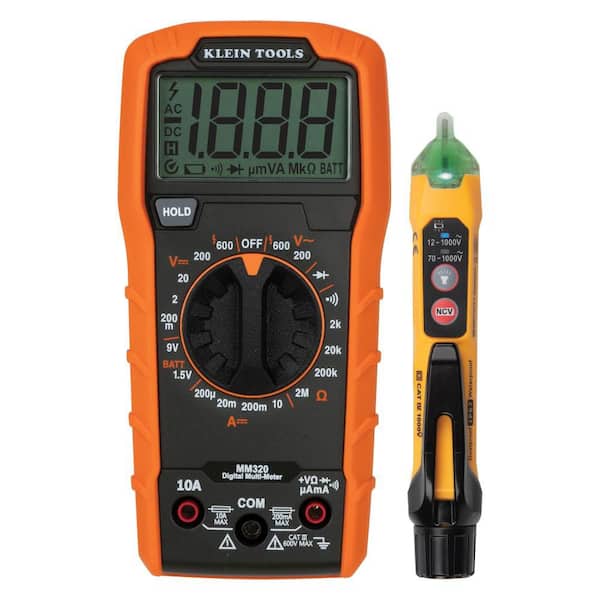
A non contact voltage tester (sometimes called a voltage detector or “pen tester”) is a simple, handheld tool designed to detect the presence of electrical voltage without touching any exposed wires or metal parts. It usually looks like a thick pen, with a plastic tip that glows or beeps when it senses voltage nearby.
How It Works
This tool uses electromagnetic fields to sense if AC voltage is present in a wire, outlet, or device. All you have to do is bring the tip close to the wire or outlet—no need to make direct contact. If voltage is detected, the tip lights up (usually red or green) and sometimes emits a sound.
Key Features
- Contactless detection: No need to touch wires directly, reducing risk.
- Simple operation: Just point and check; no settings to adjust.
- Pocket-sized: Easy to carry and use with one hand.
- Battery powered: Usually runs on AAA or coin cell batteries.
Common Uses
- Checking if an outlet or wire is live before starting work
- Finding the “hot” wire in a switch or fixture
- Quickly verifying power in extension cords or power strips
- Basic troubleshooting in home electrical systems
Limitations
While non contact voltage testers are great for quick checks, they can only tell you if voltage is present—not how much, or whether current is flowing. They also work only with AC voltage, usually in the range of 90–1000 volts. They cannot test DC voltage, resistance, or continuity.
What Is A Multimeter?
A multimeter is a versatile electrical testing tool that can measure multiple things: voltage, current (amperes), and resistance (ohms). There are two main types: analog (with a needle display) and digital (with an LCD display). Most modern models are digital.
How It Works
A multimeter has two test leads (red and black) that must touch the points you want to measure. You select the function (voltage, current, or resistance) and the range, then read the value on the display.
Key Features
- Measures AC and DC voltage: Can check batteries, circuits, and power supplies.
- Measures current: Useful for troubleshooting motors or appliances.
- Measures resistance: Helps find broken wires or faulty connections.
- Some models test continuity: Emits a beep if a circuit is complete.
- Manual and auto-ranging: Some models choose the right range automatically.
Common Uses
- Diagnosing dead outlets, switches, and light fixtures
- Testing fuses, batteries, and circuit breakers
- Checking car electrical systems
- Measuring voltage drop or tracking down electrical faults
- Confirming continuity in wires and connections
Limitations
A multimeter requires physical contact with wires or terminals. If you don’t know what you’re doing, there’s a risk of electric shock or short circuits. Multimeters can also be confusing for beginners due to multiple settings and ranges.
Key Differences At A Glance
Here’s a quick look at how these tools compare:
| Feature | Non Contact Voltage Tester | Multimeter |
|---|---|---|
| Detection Method | Contactless (senses fields) | Direct contact (probe required) |
| Measures AC Voltage | Yes (presence only) | Yes (exact value) |
| Measures DC Voltage | No | Yes |
| Measures Current | No | Yes |
| Measures Resistance | No | Yes |
| Checks Continuity | No | Yes |
| Ease of Use | Very easy | Moderate to advanced |
| Safety | Very safe | Requires caution |
When To Use A Non Contact Voltage Tester
If you want fast, safe detection of live wires or outlets, a non contact voltage tester is the best tool. There’s no need to expose wires or touch metal. Here are some situations where this tool shines:
- Before electrical work: Always check if power is off before touching wires.
- Finding live wires in a bundle: Just hover the tip near each wire.
- Checking outlets quickly: Insert the tip in each slot—if it lights up, there’s voltage.
- Identifying faulty switches: If the tester doesn’t light up, the switch may be bad or the power is off.
Non-obvious Insight: False Positives And Negatives
Many beginners don’t realize that non contact voltage testers can sometimes give false readings. For example, they might light up from static electricity, or miss voltage if the wires are too deep in the wall. Always double-check with another method before starting work.
Best Practices
- Always test your voltage tester on a known live outlet before and after use.
- Do not trust it as the only check for critical work—use a multimeter for confirmation.

Credit: www.differencebetween.net
When To Use A Multimeter
A multimeter is your go-to tool for detailed electrical measurements. If you need to know the actual voltage, check a battery, or find a broken wire, the multimeter is essential.
- Measuring voltage: Find out if an outlet is giving 120V (US) or 230V (Europe).
- Testing batteries: See if a battery is fully charged or needs replacement.
- Checking fuses: Measure continuity to see if a fuse is blown.
- Diagnosing appliances: Track down which part is faulty.
- Measuring current: Diagnose why a device is not working properly.
Non-obvious Insight: Range Selection Matters
Many beginners set the wrong range on the multimeter. If you measure 230V on a 20V range, you might damage the tool or get a wrong reading. If you’re unsure, start with the highest range, then go lower.
Best Practices
- Always connect the black lead to “COM” and red lead to the correct input.
- Start with the highest range for voltage or current.
- Never try to measure current in a live AC outlet unless you are trained—it can be dangerous.
Safety Considerations
Both tools are designed for safety, but their levels of protection differ.
Non Contact Voltage Tester Safety
Because you don’t touch wires or metal parts, the risk of electric shock is very low. However, don’t trust the tester alone—always turn off power and confirm with another method if you’re doing major work.
Multimeter Safety
A multimeter requires you to touch wires or terminals. Using the wrong setting (like testing current when you should test voltage) can create sparks or damage the device. Always read the manual and use insulated gloves if you’re unsure.
| Action | Non Contact Voltage Tester | Multimeter |
|---|---|---|
| Detects live wires without contact | Yes | No |
| Measures battery voltage | No | Yes |
| Tests continuity | No | Yes |
| Risk of electric shock | Very low | Moderate |
Which Tool Should You Buy?
For most homeowners and beginners, start with a non contact voltage tester. It’s affordable, simple, and keeps you safe when checking for live wires. If you plan to do more advanced troubleshooting—like checking batteries, diagnosing appliances, or measuring current—a multimeter is worth the investment.
Some professionals carry both. The voltage tester is used for quick checks, while the multimeter is used for detailed measurements. Here’s how to decide:
- If you mostly check outlets or light switches: Non contact voltage tester
- If you repair appliances or electronics: Multimeter
- If you do both: Get both tools
Cost Comparison
Non contact voltage testers are usually cheaper, starting around $10–$25. Basic digital multimeters range from $15–$50, with advanced models costing much more.
Real-world Scenarios
Let’s look at some common situations and see which tool you should use.
Scenario 1: Checking If A Light Switch Is Live
You want to replace a light switch. Before unscrewing anything, you use a non contact voltage tester near the wires. If the tester lights up, you know there’s voltage—turn off the breaker before continuing.
Scenario 2: Diagnosing A Dead Outlet
You plug in a lamp, but it doesn’t work. First, use a non contact voltage tester at the outlet. If it doesn’t light up, the outlet might be dead. To be sure, use a multimeter to measure the exact voltage. If it reads zero, you know the outlet has no power.
Scenario 3: Testing A Car Battery
A non contact voltage tester won’t work on a car battery—it can’t measure DC voltage. Use a multimeter to check if the battery gives 12.6V (fully charged) or less.
Scenario 4: Verifying Power Is Off Before Repairs
Before replacing a ceiling light, always use a non contact voltage tester to double-check for live wires. Then, use a multimeter to confirm zero voltage if you want to be extra sure.
Scenario 5: Finding A Faulty Extension Cord
Plug the extension cord in, then use a non contact voltage tester at the other end. If there’s no light or beep, the cord may be broken. A multimeter can confirm by testing continuity.
Credit: www.homedepot.com
Advantages And Disadvantages Summarized
Here’s a final comparison to help you decide:
| Tool | Advantages | Disadvantages |
|---|---|---|
| Non Contact Voltage Tester | – Safe, no contact – Easy to use – Quick checks |
– Only detects AC voltage – No measurement – Can give false readings |
| Multimeter | – Measures AC/DC voltage – Checks resistance and current – Tests continuity |
– Needs contact – More complex – Risk of shock if misused |
Common Mistakes To Avoid
- Trusting only one tool: Always double-check before working on wires.
- Using a non contact tester for DC circuits: It won’t work on car batteries or electronics.
- Measuring current in the wrong port on a multimeter: This can blow a fuse or damage the device.
- Forgetting to check the tester’s battery: A weak battery can give false negatives.
- Not reading the manual: Every multimeter is slightly different; know your tool.
How To Choose A Good Non Contact Voltage Tester
Not all testers are equal. Here’s what to look for:
- Voltage range: Make sure it covers your home’s voltage (usually 90–1000V AC).
- Sensitivity adjustment: Some models let you tune sensitivity for better accuracy.
- Bright LED and loud beep: Easier to notice in noisy or dark areas.
- Durable build: Look for solid plastic and good reviews.
- Auto power-off: Saves battery when not in use.
How To Choose A Good Multimeter
If you want a multimeter, consider these factors:
- AC/DC voltage and current: Essential for most tasks.
- Auto-ranging: Easier for beginners; no need to pick the range.
- Continuity test with buzzer: Handy for finding broken wires.
- Clear display: Big numbers help prevent mistakes.
- Safety rating: Look for CAT II or CAT III for home use.
Avoid buying the cheapest tool with poor reviews. Spending a bit more for a reliable brand (like Fluke or Klein Tools) often means better accuracy and safety.
:max_bytes(150000):strip_icc()/Top-electrical-testers-11522571-v1-f9cdf41a3e854bbfa684f2a86461dcd7.png)
Credit: www.thespruce.com
Advanced Tips And Insights
- Non contact testers can sometimes detect voltage through insulation or even drywall. This is helpful but can also cause confusion—know what’s behind the wall.
- Multimeters with “hold” functions let you freeze the reading, which is useful in tight spaces.
- Test your tools regularly on known live and dead outlets to ensure they work as expected.
- Carry spare batteries for both tools to avoid being caught off guard.
When You Might Need Both Tools
Professional electricians often carry both tools. The non contact voltage tester is great for fast, frequent checks. The multimeter is used for precise diagnostics. If you do regular electrical work, owning both saves time and keeps you safer.
Industry Standards And Recommendations
The Occupational Safety and Health Administration (OSHA) recommends always verifying that circuits are de-energized before working on them. This means using both a non contact voltage tester and a multimeter for confirmation. For more details on electrical safety, see the official OSHA Electrical Safety Page.
Frequently Asked Questions
What Is The Main Difference Between A Non Contact Voltage Tester And A Multimeter?
A non contact voltage tester tells you if AC voltage is present without touching wires. A multimeter measures the actual voltage, current, and resistance by making contact with the circuit.
Can I Use A Non Contact Voltage Tester To Test Batteries?
No. Non contact voltage testers only detect AC voltage, not DC. To test batteries, use a multimeter set to DC voltage.
Is A Multimeter Dangerous To Use?
A multimeter is safe if used correctly, but there is a risk of electric shock if you select the wrong setting or touch live wires. Always read the manual and follow safety guidelines.
Why Does My Non Contact Voltage Tester Beep Even When There Is No Wire?
Sometimes, non contact voltage testers react to static electricity or nearby electronics. Always test the tool on a known live outlet to confirm it works correctly.
Should I Buy Both Tools For Home Use?
If you do basic checks, a non contact voltage tester is enough. For more advanced troubleshooting, or if you want to measure batteries and diagnose devices, consider buying a multimeter as well.
Understanding the differences between these tools helps you work safer and smarter. With the right knowledge, you can choose the tool that fits your needs and avoid costly mistakes. Whether you’re fixing a light switch or solving complex electrical problems, the right tool makes all the difference.