Lcr Meter Vs Multimeter: Which Tool Suits Your Needs Best?
If you work with electronics, you know that the right measuring tool can make your job easier. But with so many options available, it’s easy to get confused—especially when it comes to choosing between an LCR meter and a multimeter. At first glance, they both look similar. Both have probes, displays, and measure electrical values. But what do they really do? And when do you need one instead of the other?
Many beginners buy a multimeter, thinking it does everything. Others get an LCR meter without knowing its full power. Understanding the differences, strengths, and weaknesses of each tool helps you avoid mistakes, save money, and work more efficiently.
This guide breaks down the LCR meter vs multimeter debate for you. You’ll learn what each tool is, how they work, what they measure, and when to use them. We’ll compare real-life scenarios, look at features, and give practical advice so you can pick the right tool for your next project.
What Is An Lcr Meter?
An LCR meter is a specialized instrument used to measure three key properties of electronic components: inductance (L), capacitance (C), and resistance (R). These are basic characteristics of coils, capacitors, and resistors, respectively. Some advanced LCR meters can also measure related values like quality factor (Q), dissipation factor (D), and impedance.
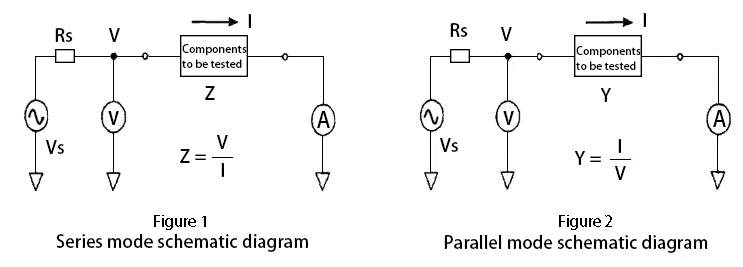
LCR meters work by applying an AC signal to a component and analyzing its response. This method gives very accurate readings, especially at different frequencies. For example, testing a capacitor at 1 kHz reveals how it behaves in real circuits, not just at zero frequency.
Most LCR meters have multiple test frequencies, ranging from a few hertz to 100 kHz or more. This is important because real components can behave differently depending on the signal applied. For those designing or repairing high-frequency circuits, this is a major advantage.
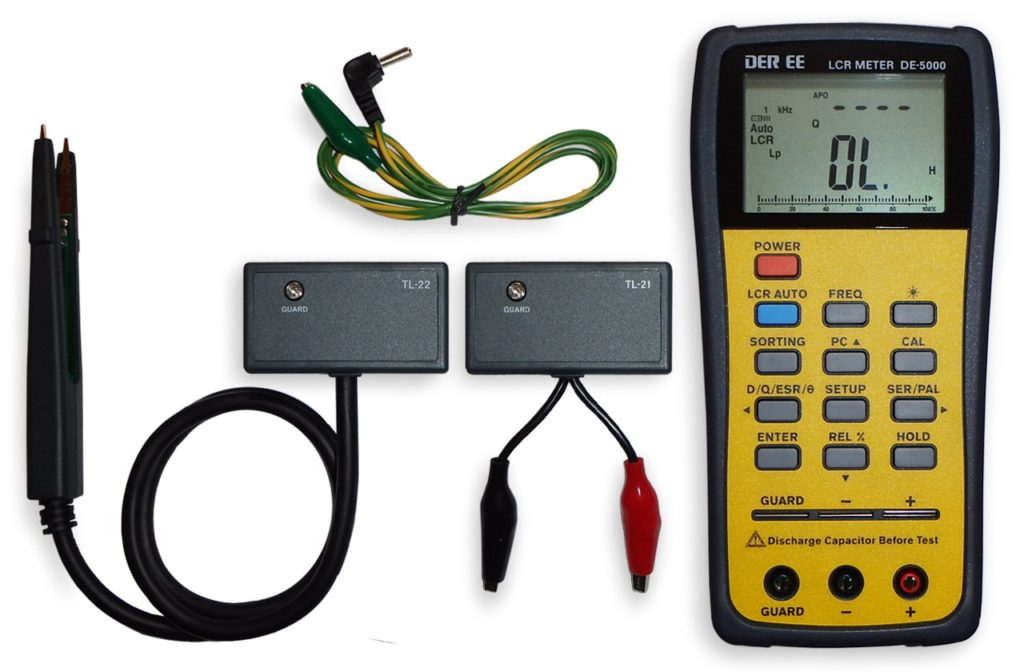
LCR meters come in handheld and benchtop versions. Handheld units are portable and useful for field work, while benchtop models offer higher precision and more features, but are larger and more expensive.
What Is A Multimeter?
A multimeter is an all-in-one test device that measures several basic electrical quantities. The three main functions are:
- Voltage (V) – Both AC and DC
- Current (A) – Both AC and DC
- Resistance (Ω)
Most modern multimeters are digital (often called DMMs), but analog versions still exist. Some advanced models include extra features, such as:
- Continuity check (with a beep)
- Diode test
- Capacitance measurement
- Frequency measurement
- Temperature (with a special probe)
Multimeters are the essential tool for electricians, repair technicians, and hobbyists. They help with troubleshooting, circuit testing, and basic measurements. Their versatility is their main advantage—you can check a battery, find a broken wire, or measure the current through a motor.
However, while some multimeters claim to measure capacitance or even inductance, their accuracy for these values is usually limited. They are not designed for detailed testing of capacitors, inductors, or advanced electronic components.
Core Differences: Lcr Meter Vs Multimeter
While both tools measure electrical values, their design, accuracy, and intended use are quite different. Let’s compare them side by side.
| Feature | LCR Meter | Multimeter |
|---|---|---|
| Main Measurements | Inductance, Capacitance, Resistance (L, C, R) | Voltage, Current, Resistance (V, A, Ω) |
| Other Measurements | Q, D, ESR, impedance, phase angle (advanced models) | Continuity, diode, temperature, frequency (some models) |
| Accuracy (L, C, R) | High (especially for L and C) | Good for R, poor for L and C |
| Test Signal | AC at selectable frequencies | DC for R, sometimes low-frequency AC for C |
| Component Testing | Ideal for loose (unmounted) components | Basic checks, often in-circuit |
| Price Range | $50–$2000+ | $10–$500 |
| Portability | Handheld or benchtop (less portable at high accuracy) | Mostly handheld |
| Typical Users | Engineers, designers, repair techs, quality control | Electricians, hobbyists, repair techs, students |
Key Insight For Beginners
Many people do not realize that LCR meters use an AC signal to test components, which gives more realistic readings for how parts behave in real circuits. Multimeters usually use DC, so they miss frequency-dependent behavior. This can be critical in designing or repairing audio, radio, or high-speed digital devices.
When Should You Use An Lcr Meter?
The LCR meter shines in specific situations where you need to know the exact properties of passive components.
1. Testing New Or Unknown Components
Suppose you find a box of unmarked capacitors or coils. An LCR meter can quickly identify their values with high precision. This is crucial in quality control, repair shops, or when salvaging old parts.
2. Selecting Components For Circuits
Designers often need parts with tight tolerances. For example, a filter circuit may require an inductor of exactly 10 microhenries. The LCR meter helps you pick the right component from a batch, ensuring your circuit works as designed.
3. Measuring Small Or Large Values
Standard multimeters often cannot measure very small capacitors (picofarads) or very large inductors (henries). LCR meters cover a much wider range, often from femtofarads (fF) to kilohenries (kH).
4. Checking Quality Of Components
Advanced LCR meters can measure ESR (Equivalent Series Resistance), dissipation factor (D), and quality factor (Q). These values show how “ideal” a component is—important for high-frequency applications or when troubleshooting power supplies.
5. Testing Components At Different Frequencies
Some capacitors or inductors behave well at low frequencies but fail at high frequencies. Only an LCR meter lets you test at multiple frequencies and see how a component performs in real-world conditions.
6. Manufacturing And Research
In factories and labs, LCR meters are used for incoming inspection and research. They help ensure that parts meet specifications before assembly.

Credit: www.youtube.com
When Should You Use A Multimeter?
A multimeter is the Swiss Army knife of electrical testing. While not as precise as an LCR meter for L and C, it is unmatched for general troubleshooting.
1. Basic Electrical Checks
Checking batteries, power supplies, or wall outlets for the correct voltage is easy with a multimeter. You can test AC and DC supplies, find faulty fuses, and verify connections.
2. Measuring Current
Whether checking how much current a device is drawing or troubleshooting a short circuit, the multimeter is your go-to tool. LCR meters cannot measure current.
3. Continuity And Diode Tests
Locating broken wires or checking if a switch works is fast with the continuity mode. The diode mode helps test semiconductors (like LEDs or regular diodes).
4. Resistance Measurements
Multimeters measure resistance well, suitable for checking resistors, sensors, or heater elements. While LCR meters are more precise, for most daily work, a multimeter’s accuracy is enough.
5. In-circuit Testing
Many multimeters let you test some values without removing components from the circuit. This saves time during repairs or installation.
6. Field Work And Safety
Because they’re compact and battery-powered, multimeters are easy to carry. Electricians use them to check wiring in buildings, cars, and industrial machines—often in hard-to-reach places.
How Lcr Meters And Multimeters Measure Values
Understanding how each tool works helps you choose the right one.
How An Lcr Meter Works
The LCR meter sends a precise AC signal (often sine wave) through the component. It measures the voltage and current, then calculates inductance, capacitance, and resistance using formulas.
For example, if you test a capacitor, the LCR meter measures how much current flows at a set frequency and calculates the value. If you change the frequency, the reading may change, showing you the real-world behavior.
Advanced LCR meters offer 4-wire Kelvin measurement, reducing error from test leads—important for low-resistance testing.
How A Multimeter Works
A typical digital multimeter measures voltage by connecting its probes across a circuit and displaying the difference. For resistance, it sends a small DC current through the part and measures the voltage drop.
Some multimeters add a simple AC signal for capacitance, but the test frequency is usually low, so readings are less accurate. Most do not offer true inductance measurement, or if they do, it’s only approximate.
Pros And Cons
No tool is perfect. Here’s a breakdown of the strengths and weaknesses of each.
| Tool | Pros | Cons |
|---|---|---|
| LCR Meter | – Highly accurate for L, C, R – Tests at different frequencies – Measures ESR, Q, D (advanced models) – Essential for component selection and quality control |
– Usually cannot measure voltage or current – More expensive – Larger (benchtop models) – Not as useful for field troubleshooting |
| Multimeter | – Measures voltage, current, resistance – Portable and affordable – Versatile for general electrical work – Good for quick checks and basic troubleshooting |
– Limited or poor accuracy for capacitance/inductance – Few models measure inductance – Cannot test at multiple frequencies – Fewer advanced component tests (ESR, Q, D) |
Common Mistakes To Avoid
Beginners often make errors when choosing or using these instruments. Here are things to watch out for:
1. Assuming A Multimeter Does Everything
Many think a multimeter can accurately measure capacitance or inductance. In reality, these readings are often rough estimates.
2. Using The Wrong Tool For The Job
If you need to match a capacitor in a filter network, a multimeter’s value may be off by 20%. For circuit design, only an LCR meter gives the needed precision.
3. Ignoring Test Frequency
Measuring a capacitor at 100 Hz vs 10 kHz can give very different results. Choose an LCR meter with adjustable test frequencies for advanced work.
4. Not Checking Test Leads
Both tools can give false readings if the test leads are damaged or dirty. For low-resistance measurements, use 4-wire Kelvin leads if available.
5. Testing Components In-circuit
Multimeters may give wrong values if the component is still soldered in place, due to parallel paths. LCR meters are best for testing loose components.
6. Overlooking Safety
Never use an LCR meter on live circuits—they’re designed for unpowered parts. Multimeters can be used on live circuits, but always check the voltage rating.
Real-world Examples
To see the value of each tool, let’s look at some scenarios.
Example 1: Repairing A Power Supply
The power supply fails, and you suspect a bad capacitor. A multimeter measures capacitance, but it shows the capacitor is “okay.” However, the real problem is high ESR, which only an LCR meter can measure. Replacing the capacitor based on the LCR meter reading fixes the issue.
Example 2: Building A Radio Receiver
You need a coil of exactly 15 microhenries for a tuning circuit. Using a multimeter is useless—no reading. The LCR meter quickly identifies the right coil and also shows its quality factor at different frequencies, ensuring the radio works perfectly.
Example 3: Troubleshooting Home Wiring
A circuit in your home stops working. The multimeter helps you check fuses, measure voltage at outlets, and test continuity in wires. An LCR meter is not helpful here.
Example 4: Salvaging Old Parts
You find a box of old resistors, some with faded color codes. The multimeter checks their resistance, but the LCR meter can test both resistance and possible inductance (if they’re wire-wound), helping you sort usable parts.
Example 5: Inspecting Surface-mount Components
Modern devices use tiny SMD capacitors and inductors. An LCR meter with tweezers attachment can accurately test these small parts, even those too small for standard multimeter probes.
How To Choose: Lcr Meter Or Multimeter?
The right choice depends on your needs, experience, and budget. Here’s a checklist to help you decide:
- If you mostly work with live circuits, troubleshooting wiring, or general electronics, a multimeter is essential.
- If your focus is on component-level testing, matching, or quality control, invest in a good LCR meter.
- For students and hobbyists, start with a multimeter. Add an LCR meter if you build or repair advanced circuits.
- In some cases, having both tools is best. They complement each other, and each covers jobs the other cannot.
Key Buying Tips
- For LCR meters, check the range of frequencies, supported values, and accuracy. Some offer PC connectivity for logging results.
- For multimeters, look for safety ratings (CAT II/III/IV), auto-ranging, and clear displays.
- Avoid the cheapest models; accuracy and reliability matter.
- Read reviews and compare specifications, not just features.
Advanced Features To Consider
Both tools have advanced versions with extra capabilities.
Lcr Meter Features
- Selectable Test Frequencies: Useful for simulating real circuit conditions.
- ESR and D/Q Measurement: Important for power supplies and RF circuits.
- SMD Tweezers: Handy for surface-mount parts.
- Data Logging: For quality control or research.
Multimeter Features
- True RMS Measurement: Gives accurate readings for non-sinusoidal signals.
- Auto-Ranging: Easy switching between ranges.
- Backlit Display: For working in low light.
- Temperature Probe: For testing heating or cooling systems.
Cost And Value For Money
LCR meters generally cost more than multimeters. Entry-level LCR meters start around $50, but reliable models are $150–$300. High-end benchtop units can exceed $2000.
Multimeters range from $10 for basic models to $500 for high-end professional units. For most users, a $40–$80 multimeter covers almost all daily needs.
Remember, accuracy and reliability are more important than extra features you may never use.
Credit: www.yamanelectronics.com
Practical Advice: Which Should You Buy First?
If you’re just starting in electronics, buy a multimeter first. It handles 90% of everyday tasks, from checking batteries to fixing home appliances.
If you move into circuit design, radio, or advanced repair, add an LCR meter. For most hobbyists, a simple LCR meter is enough—no need for expensive lab models. If you work in a factory or design lab, the investment in a quality LCR meter pays off quickly.
One tip beginners miss: Even a basic LCR meter can help you “sort” cheap bulk components or verify parts from online suppliers. This avoids frustration and failed projects.
Frequently Asked Questions
What Is The Main Difference Between An Lcr Meter And A Multimeter?
The main difference is that an LCR meter is designed to accurately measure inductance, capacitance, and resistance, especially for loose components and at different frequencies. A multimeter is a general-purpose tool for measuring voltage, current, and resistance, with basic or no support for L and C values.
Can A Multimeter Replace An Lcr Meter?
No. While some multimeters offer capacitance and inductance modes, their accuracy is limited. For precise measurement of L and C, especially for selecting or matching components, you need an LCR meter.
Is It Safe To Use An Lcr Meter On Live Circuits?
Never use an LCR meter on powered circuits. They are designed for unpowered, loose components only. For live circuits, always use a multimeter with the correct safety rating.
How Accurate Are Multimeters For Capacitance And Inductance?
Most multimeters are accurate for resistance, but capacitance and inductance readings are usually only rough estimates. Advanced digital multimeters may be better, but still not as accurate as dedicated LCR meters.
Where Can I Find More Information About Lcr Meters And Multimeters?
A good place to start is the Wikipedia page on LCR meters. It explains the principles, types, and applications in detail.
Choosing between an LCR meter and a multimeter depends on your work, budget, and the level of precision you need. If you understand their differences and use them correctly, both can be powerful tools in your electronics toolbox.
Credit: www.ato.com