Choosing the right multimeter can feel confusing, especially when you hear terms like high impedance and low impedance. Whether you work in electronics, electrical engineering, or you’re just a curious hobbyist, understanding the difference between these two types is critical. Many people make mistakes that damage equipment, cause safety hazards, or simply waste time—just because they didn’t understand this basic concept.
Let’s break down high impedance vs low impedance multimeter in everyday language. We’ll look at how they work, where each one is best, and what you need to watch out for. By the end, you’ll know how to pick the right tool for the job and avoid costly errors.
What Is Impedance In A Multimeter?
When you use a multimeter to measure voltage, it’s not just reading the number. The meter itself becomes part of the circuit. Impedance is the resistance the meter presents to the circuit it’s measuring.
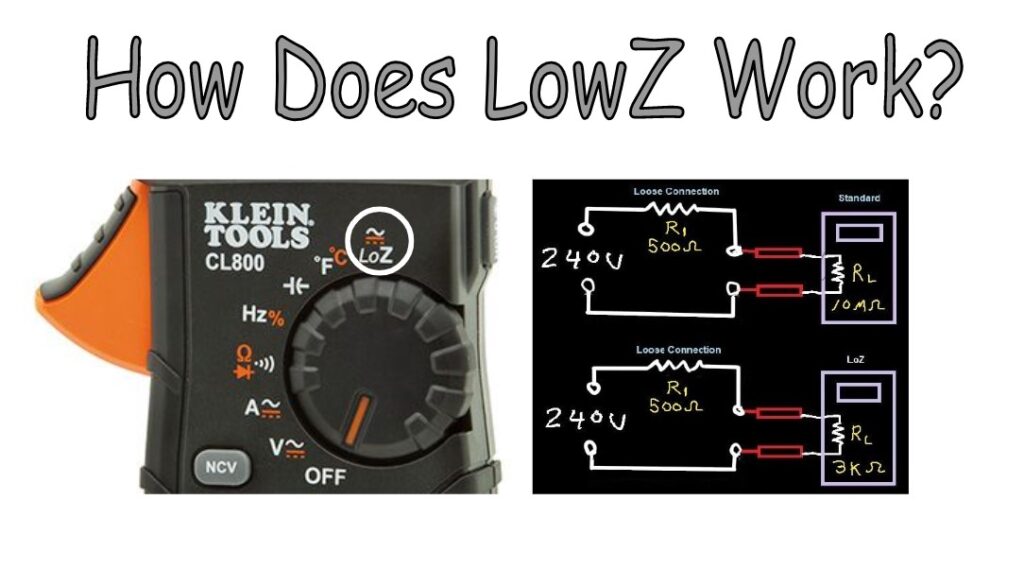
A high impedance multimeter has a very high resistance—often 10 megaohms (10 MΩ) or more. This means it draws almost no current from the circuit. A low impedance multimeter has a lower resistance, sometimes just a few thousand ohms. This means it draws more current when measuring.
Why does this matter? The higher the impedance, the less the meter interferes with the circuit. But sometimes, you actually want a lower impedance. Understanding when and why is the key.
How High Impedance Multimeters Work
High impedance multimeters are sometimes called standard digital multimeters (DMMs). Their input resistance is usually 10 MΩ or higher. This is high enough to avoid “loading” most circuits. When you use a high impedance meter, it’s almost like the meter isn’t even there. This is especially important in electronics with delicate signals, like in computers, amplifiers, or control systems.
Why High Impedance Matters
Imagine you’re measuring the voltage in a small electronic circuit. If your meter draws even a tiny current, it can pull down the voltage and give you a wrong reading. High impedance meters avoid this by taking almost no current.
Key advantages:
- Accurate voltage measurement in sensitive electronics
- Prevents circuit disturbance, so you see the real signal
- Safer for modern devices with low power components
How Low Impedance Multimeters Work
Low impedance meters are sometimes called LoZ meters (Low-Z). They might have input resistance as low as 1,000 to 10,000 ohms. That’s much lower than the standard 10 MΩ of a high impedance DMM.
Why would anyone want that? In some electrical work, especially with power wiring, a high impedance meter can be “fooled” by stray or “ghost” voltages. These are voltages that appear due to capacitive coupling, not real power. A low impedance meter draws more current, which quickly drains away these ghost voltages, so you see only real, usable voltage.
Key advantages:
- Filters out ghost voltages so you don’t get false readings
- Safer diagnosis in electrical panels and outlets
- Confirms live wires in complex power systems
Real-world Example: Why Impedance Selection Matters
Suppose you’re troubleshooting a power outlet. You use a high impedance meter and see 90 volts, but the outlet should be 120 volts. What’s happening? That 90V could be a ghost voltage, not real power. If you plug in a lamp, it won’t light up.
Now, use a low impedance meter. It reads 0 volts—the correct answer. The low impedance “bleeds off” the ghost voltage, giving you a true reading. That’s why many electricians use LoZ meters for building wiring.
But if you use a low impedance meter to measure a tiny signal on a microcontroller, you might load down the circuit, and the circuit could stop working or give a wrong reading. That’s why electronics engineers use high impedance meters.
Key Differences: High Impedance Vs Low Impedance Multimeters
Let’s compare the two types side by side.
| Feature | High Impedance Multimeter | Low Impedance Multimeter |
|---|---|---|
| Input Resistance | 10 MΩ or higher | 1 kΩ to 10 kΩ (sometimes switchable) |
| Best For | Electronics, sensitive circuits | Power wiring, ghost voltage detection |
| Risk of False Readings | Can be fooled by ghost voltages | Almost no ghost voltage errors |
| Risk of Loading Circuit | Very low | Can be high in sensitive circuits |
| Price & Availability | Most digital meters | Specialty models or feature in some DMMs |
When To Use High Impedance Multimeters
High impedance multimeters are best for:
- Electronic circuits: Measuring signals in microcontrollers, audio equipment, or any device with low current.
- Troubleshooting PCBs: You won’t risk damaging tiny components.
- Measuring sensor outputs: Sensors often provide very low current signals.
- Testing batteries: Accurate voltage without draining the battery.
Most standard digital multimeters are high impedance by default. If you’re testing a home stereo, computer board, or any sensitive gadget, high impedance is almost always the right choice.
When To Use Low Impedance Multimeters
Low impedance meters are best for:
- Building wiring: Outlets, switches, breaker panels.
- Finding ghost voltages: Quickly tells you if a wire is truly live.
- Industrial electrical work: Motors, heavy equipment, and large circuits.
- Safety checks: Ensures power is really off before working.
Some advanced multimeters have a button or switch to select LoZ mode. Electricians often choose these for daily work. For example, the Fluke T5 and similar tools are designed with low impedance for exactly this reason.
Common Myths And Mistakes
Many beginners assume “higher impedance is always better.” That’s not true. Here are two mistakes people often make:
- Using a high impedance meter for home wiring: You might get a reading even on a disconnected wire because of ghost voltage. This can be dangerous if you think the wire is live when it’s not, or worse, dead when it’s live.
- Using a low impedance meter on a delicate circuit: The meter can become a heavy load. It can drag down the voltage, causing the circuit to malfunction or even stop.
A good rule: Match the meter to the job. Don’t use the same tool for everything.
The Science Behind Ghost Voltages
Ghost voltages are a common source of confusion. They appear when a wire runs near another wire that carries real voltage. The electric field from the live wire induces a small voltage in the “dead” wire. High impedance meters pick up this tiny voltage, but there’s no power behind it.
A low impedance meter “loads” the circuit, draining away this weak voltage. That’s why electricians trust LoZ meters for checking if a circuit is truly live or dead.
Safety: Multimeter Impedance And Shock Risk
Safety is one area where impedance matters a lot. If you use a high impedance meter and see voltage, you can’t always be sure it’s safe to touch the wire. The voltage could be real, or just a ghost. Always double-check with a low impedance setting before handling wires.
Low impedance meters also protect you from making a dangerous mistake—like turning off a breaker, seeing “zero” with a high impedance meter (but it’s a ghost), and touching a live wire.

Credit: www.kleintools.com
Digital Multimeter Evolution: Why Impedance Matters More Now
Modern digital multimeters are almost always high impedance by default. That’s because electronics are everywhere, and sensitive devices need gentle testing. But as building wiring got more complex, the need for LoZ meters grew.
Some new meters have both modes: standard (high impedance) and LoZ (low impedance). This lets you switch based on the job. For example, the Fluke 117 has a selectable LoZ mode, making it a favorite for both electricians and electronics techs.
Choosing The Right Multimeter For Your Needs
Here’s how to choose:
- Mostly electronics? Go for a high impedance DMM. Most are 10 MΩ or higher.
- Mostly electrical work? Get a LoZ meter or a DMM with selectable impedance.
- Do both? Choose a meter with both modes, or own one of each.
For most hobbyists, a good quality high impedance multimeter is enough. But if you work with building wiring or do safety checks, a LoZ meter is a smart investment.
Credit: techcircuit.org
What To Look For In A High Impedance Multimeter
- Input resistance: Should be 10 MΩ or higher
- Accuracy: Look for at least 0.5% DC voltage accuracy
- Range: Should cover your expected voltage levels
- Brand reputation: Fluke, Keysight, and Extech are well-known
- Build quality: Durable body, clear display
- Extra features: Auto-ranging, data hold, backlight
Most high impedance DMMs are affordable and reliable. Popular models include the Fluke 115, Extech EX330, and Klein Tools MM400.
What To Look For In A Low Impedance Multimeter
- Input resistance: 1,000 to 10,000 ohms in LoZ mode
- Clear LoZ indication: So you know when you’re in the right mode
- Safety ratings: CAT III or CAT IV for building wiring
- Rugged build: Can handle drops and rough use
- Simple interface: Quick access to LoZ mode (button or switch)
Recommended models include the Fluke 117, Fluke T5-600, and Amprobe AM-570. These are trusted by electricians worldwide.
Table: Popular High And Low Impedance Multimeter Models
Here’s a quick comparison of popular models:
| Model | High Impedance | Low Impedance (LoZ) | Main Use |
|---|---|---|---|
| Fluke 115 | Yes (10 MΩ) | No | Electronics, general use |
| Fluke 117 | Yes | Yes | Electricians, hybrid |
| Extech EX330 | Yes | No | Hobbyist, electronics |
| Fluke T5-600 | No | Yes | Industrial, electrical |
| Amprobe AM-570 | Yes | Yes | Hybrid, field work |
How To Use Each Type Correctly
High Impedance Multimeter
- Connect probes as usual.
- Measure voltage or current in sensitive circuits.
- Trust the reading, since the meter won’t disturb the circuit.
- Avoid using on building wiring if you suspect ghost voltages.
Low Impedance Multimeter
- Make sure you select LoZ mode if your meter has it.
- Measure in outlets, breaker panels, or industrial wiring.
- Use to confirm wires are truly live or dead.
- Avoid using on sensitive electronics.
Advanced Tip: Some Meters Have Both Modes
Many professional meters now have selectable impedance. This is great for people who work in both electronics and electrical fields. For example, you can use high impedance to troubleshoot a stereo, then switch to LoZ for checking an outlet.
Practical advice: Always check your meter’s manual before measuring. Some meters change impedance based on the range or mode. If you’re not sure, test on a known live and dead circuit to see how the readings behave.
Common Questions Beginners Miss
1. Does Higher Impedance Always Mean Better Accuracy?
Not always. High impedance avoids loading, but low impedance avoids ghost voltages. Accuracy depends on using the right tool for the situation.
2. Can Using The Wrong Meter Damage Equipment?
Yes. A low impedance meter on a sensitive circuit can overload and damage components. A high impedance meter on power wiring can give a false safe reading.
Non-obvious Insights Most Beginners Overlook
- Some high-end meters automatically switch input impedance based on what you’re measuring. This feature protects both your equipment and your readings, but it’s not in all models. Always check your manual.
- Voltage readings can be different on the same outlet with different meters. This surprises many people. That’s why electricians use LoZ meters for safety checks, while engineers use high impedance for accuracy in electronics.
Pros And Cons At A Glance
| Type | Pros | Cons |
|---|---|---|
| High Impedance | – Accurate for electronics – No circuit loading – Good for sensors, PCBs |
– Ghost voltage errors – Not ideal for wiring safety checks |
| Low Impedance | – Filters ghost voltages – Safer for building wiring – Confirms live/dead wires |
– Can load down electronics – Not for delicate signals |
Maintenance And Care Tips
- Always store meters in a dry, dust-free place.
- Check probes regularly for wear or broken insulation.
- Replace batteries before they run low to keep readings accurate.
- Calibrate your meter once a year if you use it professionally.
- Read the manual—some meters have hidden features, such as auto LoZ mode.
Price Range And Value
High impedance meters are usually less expensive. Good models start at $20-$50. Low impedance meters and hybrids are more expensive, often $80-$200, because of safety features and extra electronics.
When Should You Own Both Types?
If you work in both fields—electronics and building wiring—you really do need both. It’s a small investment compared to the risk of wrong readings or damaging equipment. Many professionals carry two meters for this reason.
Where To Learn More
If you want to dive deeper into how multimeters work, the Wikipedia Multimeter Page is a solid resource.
Credit: www.toacanada.com
Frequently Asked Questions
What Is “input Impedance” In A Multimeter?
Input impedance is the resistance the meter shows to the circuit being tested. High impedance means very little current is drawn, which is good for electronics. Low impedance draws more current, which helps filter out ghost voltages.
Can A High Impedance Multimeter Give A False Voltage Reading?
Yes. High impedance meters can show “ghost voltages” on disconnected or dead wires, especially in building wiring. Always double-check with a low impedance meter if you’re unsure.
Is It Dangerous To Use The Wrong Type Of Multimeter?
It can be. Using a high impedance meter in electrical wiring might not warn you about a live wire. Using a low impedance meter on sensitive circuits can damage components. Always choose the right tool.
How Do I Know If My Meter Is High Or Low Impedance?
Check the specifications in your meter’s manual or on the back. High impedance is usually 10 MΩ or higher. Low impedance is 1,000 to 10,000 ohms. Some meters have a LoZ button or switch.
Are There Multimeters With Both High And Low Impedance Modes?
Yes. Many modern meters offer both modes, often called “LoZ” or “Low Z” mode. These are especially popular with electricians who also do electronics work.
—
Understanding high impedance vs low impedance multimeter is more than just a technical detail—it’s about getting the job done safely and accurately. Choose the right meter for your work, learn its features, and you’ll avoid mistakes that cost time, money, or even your safety. With this knowledge, you’ll measure confidently, whether you’re debugging a circuit board or checking home wiring.