Every electronics engineer, hobbyist, or lab technician eventually faces the same challenge: choosing the right test equipment. Two names often rise to the top of the conversation—Instek and Rigol. Both brands have built strong reputations for quality, but their products, features, and support can differ in ways that truly matter. If you’re wondering which is the better fit for your bench, this in-depth comparison will help you make a confident, informed decision.
The Background: Who Are Instek And Rigol?
Instek (officially Good Will Instrument Co., Ltd.) is a Taiwanese company with a long history in the test and measurement market. Since 1975, Instek has focused on oscilloscopes, power supplies, spectrum analyzers, and other lab essentials. Their products are known for reliability and robust design, particularly in academic and industrial settings.
Rigol, founded in 1998 in China, has quickly become a major player by offering advanced features at competitive prices. They are especially popular among startups, hobbyists, and universities needing modern digital equipment without breaking the bank. Rigol’s approach is often to add more value per dollar, sometimes surprising the market with features once found only in much pricier gear.
Both brands are global, with extensive sales and support networks. Yet, their product philosophies and user experiences can be quite different.
Product Lineup Comparison
Choosing between Instek and Rigol often starts with what’s available in their product ranges. Here’s how their main categories stack up:
Oscilloscopes
Oscilloscopes are the backbone of any electronics lab. Both Instek and Rigol have strong offerings, but their focus varies.
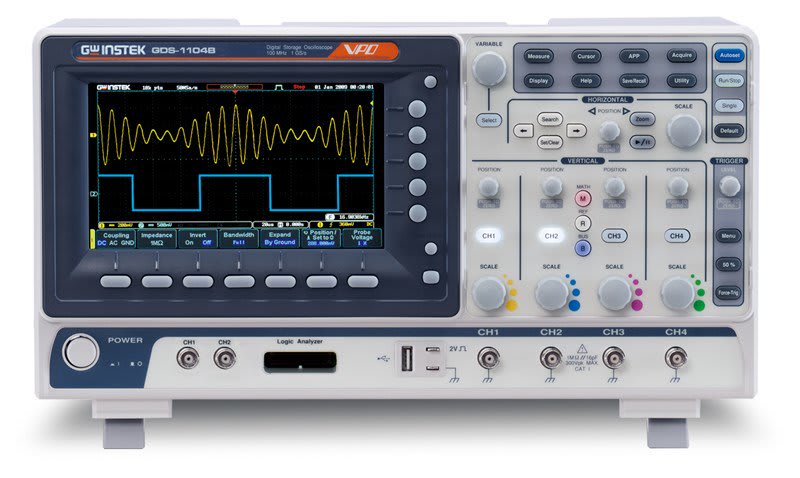
- Instek: Offers both analog and digital models, with a strong emphasis on educational and industrial applications. Models like the GDS-1000B series are popular for their solid build and straightforward interface. Instek often includes features like larger display screens and intuitive controls.
- Rigol: Mostly digital, with a reputation for packing in advanced features at lower prices. The DS1000Z series is a favorite among hobbyists for its deep memory, large waveform capture rates, and extensive math functions. Rigol oscilloscopes often include options for bandwidth upgrades via software, giving users future flexibility.
Signal Generators
Both brands produce function and arbitrary waveform generators, but user experience can differ:
- Instek: Focuses on stability and durability. Their AFG-2000 series offers precise waveforms and reliable amplitude accuracy, which is important for precision testing.
- Rigol: Known for intuitive menu systems and advanced features like dual-channel outputs and high-frequency ranges even in budget models. The DG1000Z series is often praised for usability and deep customization.
Power Supplies
Bench power supplies are critical for safe and accurate circuit testing.
- Instek: Has a legacy of making rugged, long-lasting power supplies. Their GPD and GPS series are found in many university and industrial labs. You’ll find linear and switching models, often with very fine voltage/current adjustments and excellent load regulation.
- Rigol: Offers modern programmable supplies with USB, LAN, or even WiFi interfaces. Many models, like the DP800 series, are compact and feature-rich, supporting remote control and precise readbacks.
Spectrum Analyzers
For RF and communications work, spectrum analyzers are essential.
- Instek: Delivers stable and traditional spectrum analyzers with easy-to-understand controls. Their GSP-9300C is well regarded for its robust EMI pre-compliance features.
- Rigol: Known for affordable entry-level spectrum analyzers like the DSA800 series, which bring high-frequency analysis to smaller labs. Features like tracking generators are often included at little extra cost.
Specialized Instruments
Both brands also offer LCR meters, logic analyzers, and other specialty instruments. Instek tends to focus on educational and teaching tools, while Rigol often aims for compact, multifunction devices.

Credit: www.youtube.com
Feature-by-feature Comparison
Let’s take a closer look at how Instek and Rigol compare in the features that usually matter most to buyers.
| Feature | Instek | Rigol |
|---|---|---|
| Build Quality | Sturdy, industrial-grade | Modern, compact, sometimes lighter plastics |
| User Interface | Traditional, easy for experienced users | Modern menus, touch screens in some models |
| Firmware Updates | Less frequent, but stable | Regular, adds features, sometimes unlocks options |
| Warranty Support | Strong, especially in Asia and Europe | Global, but response can vary by region |
| Price-to-Features Ratio | Good for reliability | Excellent for features |
Pricing And Value
Price is often a deciding factor, especially for small businesses and students. Rigol has built its reputation on aggressive pricing, but Instek’s value is found in durability and long-term reliability.
Instek Pricing
Instek products often cost a bit more up front, but their reliability means less maintenance and fewer replacements. For example, an Instek oscilloscope might cost 15–20% more than an equivalent Rigol, but you’ll see these units in labs for ten years or longer.
Institutions that need to equip many labs often prefer Instek for this reason.
Rigol Pricing
Rigol’s pricing is hard to beat. Their entry-level oscilloscopes, for instance, can be hundreds of dollars less than the competition, often with bandwidth and memory upgrades available via simple software keys. For makers and startups, this means you can buy a feature-rich instrument on a tight budget.
Non-obvious Insight
One thing many new buyers miss: Rigol’s firmware-upgradable models sometimes allow advanced features to be unlocked later. This means your device can “grow” with your needs, which is a rare perk at this price point. Instek, on the other hand, tends to keep hardware and software fixed at purchase.
Credit: www.tequipment.net
Performance And Accuracy
When it comes to test equipment, accuracy and reliability are everything.
Oscilloscopes
- Instek: Generally offers excellent baseline accuracy and signal fidelity. Their analog front ends are well designed, with low noise and minimal distortion. For repetitive lab use, Instek models often outlast their competitors.
- Rigol: Known for high sampling rates and deep memory, especially in digital oscilloscopes. However, some advanced users have noted that certain models can exhibit higher noise levels on sensitive measurements. For most applications, this is not a problem, but for precision analog work, Instek sometimes has the edge.
Power Supplies
Both brands offer models with precise voltage and current control, but Instek’s power supplies are famous for stability under load. Rigol’s programmable supplies are convenient for automated test setups, but may not offer the same absolute voltage stability as Instek’s classic linear models.
Spectrum Analyzers
Rigol’s spectrum analyzers are a revelation for budget labs, delivering high-frequency analysis at a fraction of the price of Western brands. Instek’s models are often chosen for EMI testing and compliance work due to their trusted measurement accuracy.
Software And Connectivity
Modern test equipment relies on software integration for data logging and remote control.
| Aspect | Instek | Rigol |
|---|---|---|
| PC Software | Basic, reliable | Feature-rich, regular updates |
| Remote Control | USB, LAN (select models) | USB, LAN, WiFi (select models) |
| Data Export | CSV, screenshot | CSV, screenshot, waveform files |
| API/Programming | SCPI, limited examples | SCPI, extensive documentation |
Rigol leads in software features, making it easier for users to automate tests, log data, and integrate instruments into custom setups. Instek focuses more on straightforward, stable software—less flashy, but very dependable.
Support And Warranty
Support can be a make-or-break factor, especially if you rely on your equipment for business or research.
- Instek: Offers strong regional support, especially in Asia and Europe. Their warranty terms are clear, and repairs are known to be prompt. Manuals and documentation are sometimes more technical but are generally complete.
- Rigol: Provides global support, but the experience can vary by region. In some countries, warranty claims and technical support are very responsive; in others, users may experience delays. Rigol’s online community is active, and many problems are solved through forums and peer support.
Non-obvious Insight
A detail many overlook: Rigol’s firmware and community support can sometimes solve minor bugs or add features unofficially. Instek’s firmware is more “locked down,” so you rely more on official channels for updates or fixes.
Real-world Examples
To see the differences in action, let’s look at two typical users.
University Lab
A large university wants to equip a teaching lab for analog and digital electronics. They need oscilloscopes, power supplies, and signal generators that will survive years of student use.
Why Instek? Their products are built to handle daily wear and tear, with sturdy knobs and clear labeling. Replacement parts are easy to source, and their educational pricing is competitive. Instek’s straightforward controls make training new students simple.
Maker Space
A community maker space wants versatile, modern tools for prototyping. They have a limited budget but want advanced features for their members.
Why Rigol? Their oscilloscopes offer deep memory, USB connectivity, and upgradeable bandwidth at entry-level prices. Programmable power supplies and compact spectrum analyzers let users tackle RF, audio, and digital projects without spending much.
User Experience: Day-to-day Use
How do Instek and Rigol products feel in daily use? Here are some real-life impressions:
- Instek: Feels like classic lab gear—robust, no-nonsense, and built to last. If you grew up using Tektronix or HP instruments, Instek’s layout and controls will feel familiar. Displays are bright and easy to read, even in harsh lighting.
- Rigol: Modern and intuitive, with lots of features accessible through menus. Screens are often large and high-resolution, and many models have shortcut buttons for common tasks. Some users report a learning curve for advanced features, but the manuals are well written.
Common Buyer Mistakes
When choosing between Instek and Rigol, some mistakes come up again and again:
- Overvaluing headline specs: Buyers sometimes fixate on maximum bandwidth or sample rate. In practice, build quality, support, and ease of use often matter more—especially for educational or production environments.
- Ignoring software compatibility: Not all instruments play nicely with every operating system. Rigol’s software is generally better supported on Windows, while Instek’s basic software is more universally compatible.
- Missing upgrade paths: Rigol’s software-upgradeable models can save money long term. Instek’s upgrades often require hardware swaps.
- Assuming warranty is equal worldwide: Both brands offer global support, but the experience can be very different depending on your country. Check local distributor reputation.
- Not considering accessories: Some models include probes, cables, or software in the box—others do not. This can affect your real cost.
Popular Models Head-to-head
Here’s a quick side-by-side look at two of the most popular mid-range oscilloscopes:
| Model | Instek GDS-1102B | Rigol DS1054Z |
|---|---|---|
| Bandwidth | 100 MHz | 50 MHz (upgradeable to 100 MHz) |
| Channels | 2 | 4 |
| Sample Rate | 1 GSa/s | 1 GSa/s |
| Memory Depth | 10 kpts | 24 Mpts |
| Screen Size | 7” TFT LCD | 7” TFT LCD |
| MSRP (USD) | ~$400 | ~$350 |
This comparison highlights the typical trade-off: Instek’s model is solid and straightforward, while Rigol gives you more channels and memory for less money—if you don’t mind extra menus and the possibility of firmware quirks.
Which Brand Is Right For You?
It all comes down to priorities:
- Choose Instek if: You want rugged, reliable instruments that will last for years with minimal fuss. This is often the best choice for schools, traditional labs, and environments where equipment takes a beating.
- Choose Rigol if: You value features, software flexibility, and price. Rigol is a favorite for makers, small startups, and anyone who wants maximum tech for their dollar. If you’re comfortable with regular firmware updates and learning new menu systems, you’ll get more functions for less money.
Where To Buy And What To Ask
Both Instek and Rigol have global distribution. Always buy from an authorized dealer to ensure warranty coverage. Before you commit, ask:
- What’s included (probes, cables, software)?
- What’s the local support reputation?
- Are firmware updates easy to apply?
- Are software upgrades available for features you might need later?
- Is calibration service available locally?
Also, check reviews on forums like EEVblog, and look for long-term durability reports—not just initial impressions.
The Future: How Are Instek And Rigol Evolving?
Both companies are investing in new technologies. Instek is adding more digital features and network capabilities to its sturdy designs. Rigol is pushing further into software, cloud connectivity, and higher-frequency instruments, aiming to compete with Western giants like Keysight and Tektronix.
A smart buyer considers not just today’s needs, but where their lab or business will be in a few years. Both Instek and Rigol can serve you well, but their upgrade paths and support models are different.
For official specs and the latest model releases, you can visit the Rigol official website.

Credit: www.youtube.com
Frequently Asked Questions
What Is The Main Difference Between Instek And Rigol?
Instek focuses on rugged, reliable instruments for education and industry, while Rigol offers advanced features and strong software integration at lower prices. Instek is often preferred for long-term use, Rigol for value and modern features.
Which Brand Is Better For Beginners?
Rigol is usually better for beginners because of its user-friendly interface, helpful online communities, and affordable prices. Instek is excellent for those who prefer traditional controls and robust hardware.
Can I Upgrade My Rigol Or Instek Device After Purchase?
Many Rigol models allow upgrades (such as increased bandwidth or extra features) through software keys. Instek upgrades usually require hardware changes, so it’s important to choose the right model from the start.
How Do Warranties Compare Between Instek And Rigol?
Both brands offer global warranties, but the quality of support depends on your local distributor or dealer. Instek tends to have faster service in Asia and Europe, while Rigol’s experience can vary more depending on region.
Are Instek And Rigol Products Suitable For Professional Use?
Yes. Both brands are used in professional labs, universities, and industries worldwide. Instek is often chosen for environments needing high durability, while Rigol is popular for startups and research projects needing advanced features at lower cost.
Making the right choice between Instek and Rigol is about understanding your priorities—whether it’s long-term reliability, feature set, or price. Both brands offer excellent value in their own way, and with the insights above, you’re ready to choose what’s best for your bench.