When working with automotive electronics or general electrical troubleshooting, having the right tools is crucial. Two of the most popular brands in this field are Power Probe and Fluke. Both offer multimeters, but they are built with different users in mind. Choosing between a Power Probe multimeter and a Fluke multimeter might feel confusing, especially if you are not yet an expert. This article breaks down their main differences, strengths, and weaknesses, so you can make a smart choice for your needs.
Many beginners focus only on price or brand reputation. However, it is the features, safety, and usability that often matter more in real-world work. This comparison goes beyond surface-level details and highlights what most reviews miss. You’ll learn how each brand handles automotive testing, electrical safety, accuracy, and even durability—plus tips to avoid common mistakes when buying or using a multimeter.
Understanding Power Probe Multimeters
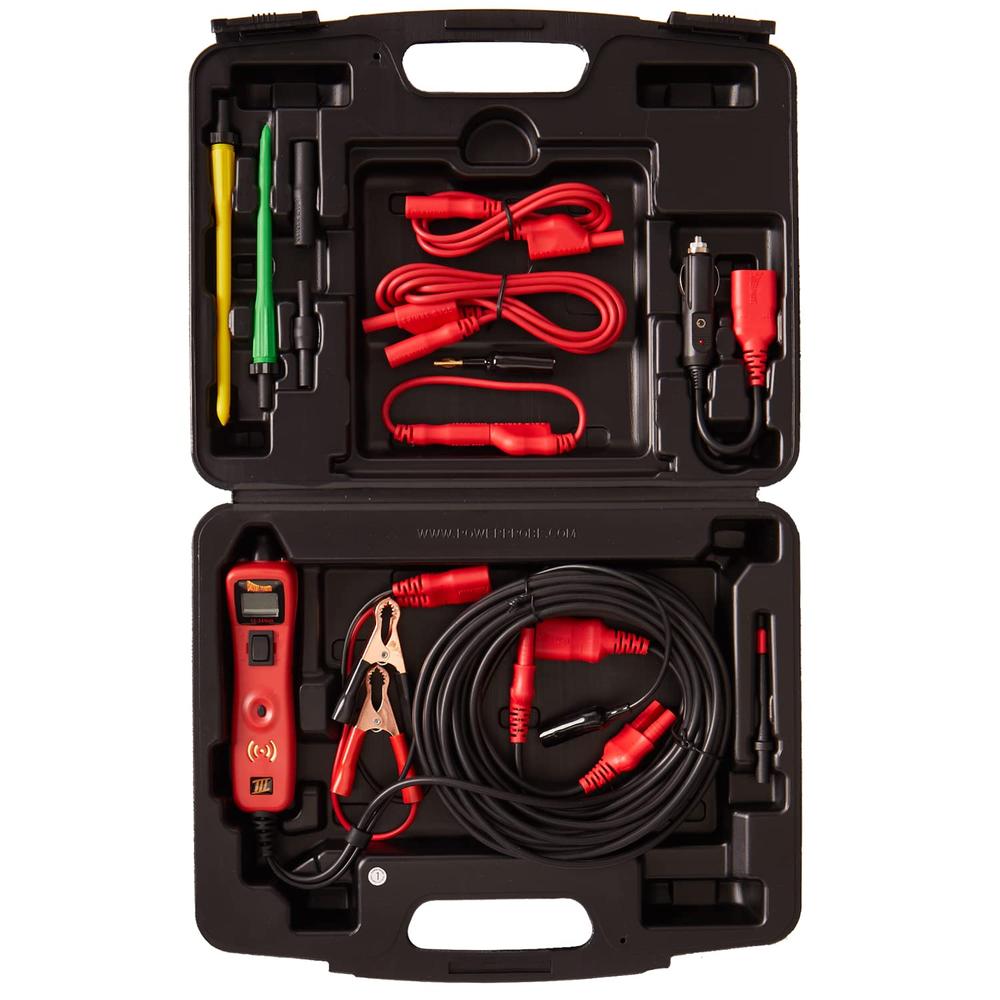
Power Probe is a brand famous for tools made for automotive technicians. Their multimeters are not just for measuring voltage or resistance. They combine several functions for vehicle work, such as circuit testing, tracing wires, and even powering up components.
Unlike regular digital multimeters, Power Probe models like the Power Probe 3 or Power Probe 4 are often called “automotive circuit testers.” They can apply voltage to a circuit, check polarity, and even help you find shorts or open wires. Some advanced models include features like signal testing and relay testing.
Key Features Of Power Probe Multimeters
- Automotive Focus: Designed mainly for 12V and 24V vehicle systems.
- Power Injection: You can send power or ground to a component for quick testing.
- Polarity Detection: Instantly shows if a wire is positive or negative.
- Continuity Testing: Fast audio/visual signals for open/closed circuits.
- Component Activation: Test lights, relays, fans, and more without removing them from the car.
- Built-in Flashlight: Useful for working in dark engine bays.
- Easy Interface: Large buttons and clear screens for quick readings.
Typical Power Probe Users
Most Power Probe customers are automotive mechanics or DIY car enthusiasts. If you often troubleshoot car wiring, sensors, or fuses, this tool saves a lot of time. It’s less useful for general home electrical work, or for working with high-voltage AC systems.
Popular Power Probe Models
- Power Probe 3: Simple, reliable, best for basic vehicle testing.
- Power Probe 4: Adds more digital features and a better interface.
- Power Probe Maestro: Top-end model with advanced diagnostics.
Understanding Fluke Multimeters
Fluke is a legendary name in the electrical and electronics industry. Their digital multimeters are known for high accuracy, safety, and long life. Fluke does not focus only on cars; their tools are used by electricians, engineers, and technicians in many industries.
A Fluke multimeter measures voltage (AC/DC), resistance, current, continuity, and often more. Models like the Fluke 115, Fluke 87V, and Fluke 117 are popular among professionals for their reliability and safety certifications.
Key Features Of Fluke Multimeters
- High Accuracy: Trusted for precise measurements, even in demanding settings.
- Safety Ratings: CAT III or CAT IV safety standards for high-voltage work.
- Multiple Functions: Measures voltage, current, resistance, frequency, capacitance, and temperature (some models).
- True RMS: Accurate readings with non-sinusoidal (distorted) signals.
- Rugged Design: Durable housing and drop-proof construction.
- Auto-Ranging: Automatically selects the best range for your measurement.
- Large Display: Easy-to-read numbers, often with backlight.
Typical Fluke Users
Fluke multimeters are for electricians, engineers, and anyone working with home or industrial electrical systems. They are also used in labs and factories. Some car technicians use Fluke for detailed sensor or circuit measurements, but the tool is less specialized for cars compared to Power Probe.
Popular Fluke Models
- Fluke 115: Compact, simple, ideal for basic electrical work.
- Fluke 117: Non-contact voltage detection, good for electricians.
- Fluke 87V: Advanced, highly accurate, used in industry.

Credit: shop.powerprobe.com
Direct Comparison: Power Probe Vs Fluke
When choosing between a Power Probe multimeter and a Fluke multimeter, it’s important to look at how each tool fits your actual work. Here is a side-by-side comparison for the most important factors:
| Feature | Power Probe | Fluke |
|---|---|---|
| Main Use | Automotive circuits (12V/24V) | General electrical/electronic work |
| Power Injection | Yes | No |
| Safety Ratings | Basic (for car systems) | High (CAT III/IV for high-voltage) |
| Accuracy | Good for automotive, basic | Very high, lab-grade |
| Durability | Strong, car shop ready | Very rugged, drop-tested |
| Functions | Voltage, continuity, power test | Voltage, current, resistance, more |
| Ease of Use | Simple, large buttons | Varies, some models have more settings |
Ease Of Use And Interface
Power Probe tools are designed for speed. Most models have simple controls, big buttons, and screens that show only what you need. You can test a wire’s polarity or send voltage with one hand. The interface is made for working in tight spaces under a car hood.
Fluke multimeters may have more buttons and options, depending on the model. For beginners, this can seem complex, but once you learn the basics, the menu and dial make sense. Most Fluke models include auto-ranging, which removes the guesswork of choosing measurement ranges. The display is usually large, with backlighting for dark areas.
One thing many new users miss: Power Probe’s simplicity is an advantage for repetitive car work, but Fluke’s extra functions offer more flexibility. If you move between cars and home wiring, a Fluke will cover both.
Credit: www.studioghielmetti.com
Accuracy And Reliability
Fluke is famous for its precision. Their meters are calibrated to high standards, and the readings are trusted in labs, factories, and even by safety inspectors. Many Fluke models offer True RMS readings, which is important for measuring modern electronic signals.
Power Probe accuracy is enough for most automotive jobs. You do not need lab-level precision to check a car wire, but the readings are usually within a few percent of real values. For injector testing, sensor checks, or finding a bad ground, Power Probe is good enough.
A key insight: If you work with sensitive sensors (like in hybrid cars or advanced electronics), Fluke’s accuracy could matter. For regular car circuits, Power Probe’s “close enough” approach is fine.
Durability And Build Quality
Both brands are strong, but in different ways. Fluke tools are built to survive drops, shocks, and even harsh environments. The casing is thick, the buttons are sealed, and the test leads are top quality. Many Fluke meters last for 10 years or more.
Power Probe tools are tough as well, built for the mess and vibration of a car shop. The probes are thick and the cords are long enough for working around a vehicle. However, they may not have the same waterproofing or drop protection as a Fluke.
A non-obvious tip: If you drop your tools often or work outside, Fluke’s higher safety rating and build might pay off. But Power Probe handles grease, dirt, and engine heat well.
Safety For The User
Fluke multimeters are designed with safety as a top priority. They have high CAT ratings (Category III or IV), which means they can safely measure circuits in homes, factories, and even power distribution. The fuses inside are high-energy and protect you from shocks or explosions if you make a mistake.
Power Probe is safe for car systems, but not for high-voltage work. Their tools are not rated for house wiring or industrial electricity. Using a Power Probe on a 120V or 240V circuit is dangerous and should never be done.
A common mistake: Many beginners use automotive testers for home jobs. Always check the safety rating before connecting to any high-voltage system.
Special Features: What Sets Them Apart
Power Probe Standout Features
- Power Injection: Instantly send voltage to a wire or component.
- Ground Testing: Check for bad grounds or shorts with a single touch.
- Component Activation: Turn on a headlight, relay, or fan from under the hood.
- Audio Feedback: Beeps and tones make it easy to work without looking at the screen.
- Wire Tracing: Some models can help follow wires through the car.
Fluke Standout Features
- True RMS: Accurate for all signal types, not just perfect sine waves.
- Temperature Measurement: Some models measure heat or cold directly.
- Data Logging: Save readings for later review (on higher-end models).
- Backlit Display: Easy to read in dark or bright conditions.
- Non-contact Voltage Detection: Safe checks for live wires (Fluke 117 and similar).
Price And Value
Power Probe tools are usually less expensive than high-end Fluke meters. Most Power Probe models cost between $100 and $200. You get a lot of automotive-specific functions for the price, and the kit often includes test leads and a case.
Fluke multimeters range from about $90 for basic models to $400 or more for advanced versions. You pay for accuracy, safety, and durability. Fluke also offers a strong warranty and good customer support.
A practical insight: If you only work on cars, Power Probe gives you more relevant features for the money. If you want a tool that does everything, including home and industrial work, Fluke is a better long-term investment.
When To Choose Power Probe
- Automotive Work Only: If your main job is fixing cars, especially electrical faults, Power Probe saves time.
- Quick Circuit Testing: For fast checks of fuses, wires, and relays, nothing is faster.
- Component Activation: You need to power a part without taking it out of the car.
- Simple Interface: You do not want to learn lots of buttons and settings.
- Working in Tight Spaces: The probe design and flashlight are great under the hood.
When To Choose Fluke
- General Electrical Work: For home, industrial, or all-purpose troubleshooting.
- High-Voltage Safety: You need a tool that is safe for house wiring or big machines.
- Accuracy Matters: Working with sensors, electronics, or where a small error could be costly.
- Long-Term Investment: You want a tool that will last for many years, even in tough environments.
- Extra Functions: Need to measure current, temperature, frequency, or save data.
Common Mistakes When Choosing A Multimeter
- Buying on Price Alone: A cheap meter may not be safe or accurate enough for your work.
- Using the Wrong Tool: Never use an automotive-only tester on home wiring.
- Ignoring Safety Ratings: Always check for CAT III or IV if you work with high voltage.
- Not Thinking Ahead: Choose a tool that fits your future needs, not just today’s problem.
- Forgetting About Support: Brands like Fluke offer better manuals, training, and support if you need help.
Real-world Examples
A car mechanic is chasing a parasitic drain in a customer’s car. With a Power Probe, they quickly check fuses, power up relays, and find a shorted wire behind the dashboard. The tool’s power injection and audio feedback cut the job time in half.
An electrician is troubleshooting a dead circuit in a house. Using a Fluke 117, they safely check for live voltage, measure resistance across outlets, and confirm the problem is a broken wire, not a failed breaker. The high safety rating and accuracy give peace of mind.
A DIYer is rewiring their garage. If they try to use a Power Probe, they risk serious injury, as the tool is not rated for 120V. With a Fluke, they can test outlets, check for faulty wiring, and stay safe.
Advanced Comparison: Features Breakdown
For a closer look at what each brand offers, here’s a feature matrix:
| Function | Power Probe 3/4 | Fluke 115/117/87V |
|---|---|---|
| Voltage (DC) | Yes, up to 48V | Yes, up to 600V+ |
| Voltage (AC) | No | Yes |
| Current Measurement | No | Yes |
| Power/Ground Injection | Yes | No |
| Continuity Test | Yes (audio/visual) | Yes |
| Temperature | No | Some models |
| Frequency/Capacitance | No | Some models |
| Data Logging | No | Some models |
| Polarity Detection | Yes | No |
| Auto-ranging | No | Yes |
| True RMS | No | Yes |
| Non-contact Voltage | No | Some models |
Which Is Best For You?
If you mostly work with car electronics, a Power Probe will make your job faster and easier. It is not just a meter; it’s also a power tool for circuits, with features built for the way cars are wired. But remember, it does not replace a regular multimeter for all jobs.
If you need a general-purpose multimeter for home, industrial, or mixed use, Fluke is the clear winner. The safety, accuracy, and wide range of functions justify the higher price. Even if you only use half the features, a Fluke often lasts through many years and different jobs.
A useful tip: Some professionals own both—a Power Probe for quick car checks, and a Fluke for detailed testing or safety-critical work.
For more details on safety standards and electrical measurement, see the official Multimeter Wikipedia page.
Frequently Asked Questions
What Is The Main Difference Between Power Probe And Fluke Multimeters?
The main difference is their focus. Power Probe is designed for automotive circuit testing, with features like power injection and polarity detection. Fluke is a general-purpose multimeter for electrical and electronic work, offering high accuracy, advanced safety, and more measurement functions.
Can I Use A Power Probe Multimeter For Home Electrical Work?
No, it is not safe to use a Power Probe on home or high-voltage circuits. Power Probe is designed for low-voltage automotive systems (12V/24V). For home wiring, always use a Fluke or similar multimeter with a high safety rating (CAT III/IV).
Which Brand Is Better For Beginners?
For automotive beginners, Power Probe is easier to use and speeds up car troubleshooting. For general electrical work or learning electronics, Fluke is better because it covers more measurement types and teaches you proper safety.
Do Fluke Multimeters Last Longer Than Power Probe?
In most cases, Fluke multimeters are more rugged and have a longer lifespan. They are built for harsh environments and have better drop and shock protection. However, Power Probe tools can also last many years with proper care.
Is It Worth Owning Both A Power Probe And A Fluke Multimeter?
Yes, if you work on both cars and home/industrial systems, owning both makes sense. Use Power Probe for quick car diagnostics and Fluke for detailed or high-voltage testing. This approach gives you speed, safety, and accuracy for every job.
In the end, the right tool depends on your main work, your safety needs, and your budget. Take time to match the tool’s features to your real tasks—and you’ll avoid frustration and wasted money.
Credit: shop.powerprobe.com