Is your water heater acting up and leaving you with cold showers? Before calling a technician, you can save time and money by testing your water heater yourself.
Using a multimeter to check your water heater is easier than you think. You’ll learn simple, step-by-step instructions to quickly find out if your water heater’s heating element or thermostat is working properly. By the end, you’ll have the confidence to diagnose the problem and decide the next move—whether it’s a repair or replacement.
Keep reading to master this handy skill and take control of your home’s comfort!
Credit: www.plumbersstock.com
Tools Needed
Testing a water heater with a multimeter requires specific tools. Having the right equipment makes the process easier and safer. Gather everything before starting the test to avoid interruptions.
Choosing The Right Multimeter
Select a multimeter that measures voltage, resistance, and continuity. A digital multimeter is best for clear readings. Ensure it has a range that covers 0-250 volts. This range fits most household water heaters. Check the multimeter’s battery before use. A low battery can give wrong readings.
Safety Equipment
Safety comes first when testing electrical devices. Wear insulated gloves to protect against shocks. Use safety goggles to guard your eyes. Work in a dry area to avoid slipping or electrical hazards. Turn off the water heater’s power before testing. Keep a fire extinguisher nearby for emergencies.
Preparing The Water Heater
Preparing the water heater is the first step before testing it with a multimeter. Safety is very important. Always make sure the water heater is not connected to power. This prevents electric shock and damage to your device.
Next, you need to find and access the heating elements inside the water heater. This allows you to test them properly. Careful handling is necessary to avoid breaking any parts.
Turning Off Power Supply
Locate the circuit breaker or power switch for the water heater. Turn it off to cut the electricity supply. Double-check by trying to turn on the water heater. If it stays off, you are safe to continue.
Do not skip this step. Electricity can cause serious injury or death. Use a voltage tester if you want extra safety checks.
Accessing The Heating Elements
Remove the cover panel on the water heater tank. Use a screwdriver to open it carefully. You will see the heating elements and wiring inside.
Keep track of screws and parts you remove. This makes reassembly easier. Avoid touching wires directly to prevent shocks.
Setting Up The Multimeter
Setting up the multimeter correctly is the first step to test your water heater safely. A proper setup helps get accurate readings and prevents damage to the device or yourself. Take your time to prepare the multimeter before starting any tests.
Selecting The Correct Measurement Mode
Turn on the multimeter. Most models have a dial or button for mode selection. Choose the mode that matches the test you want to perform.
For water heaters, you usually need to measure resistance or voltage. Use the “Ohms” (Ω) setting to check resistance in heating elements. Choose “AC Voltage” (V~) if measuring power supply voltage.
Selecting the right mode prevents wrong readings and keeps the multimeter safe.
Calibrating The Device
Before testing, calibrate the multimeter to ensure accuracy. Some models auto-calibrate when turned on. Others need manual calibration.
To manually calibrate, touch the two test leads together. The display should show zero or close to zero ohms. Adjust the device if needed.
Calibration helps avoid false readings and keeps your testing reliable.
Testing The Heating Element
Testing the heating element of a water heater helps find faults causing no hot water. The heating element warms the water inside the tank. If it fails, the water stays cold or heats slowly. Use a multimeter to check if the element works well.
Before starting, turn off power to the water heater. Safety first. Remove the access panel and insulation to see the heating element. Disconnect the wires from the element terminals. Now the testing begins.
Measuring Resistance
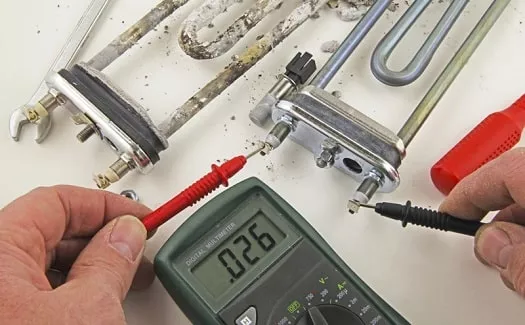
Set the multimeter to the resistance or ohms setting. Touch the two probes to the heating element terminals. Hold them steady. The meter shows the resistance value. Good elements usually read between 10 and 30 ohms. A very high or zero reading means a problem.
Interpreting Results
A normal resistance reading means the element is likely fine. A reading of zero or close to zero shows a short circuit. A very high or infinite reading means the element is broken or burnt out. Replace the element if readings are not normal. Testing helps avoid costly repairs later.
Checking The Thermostat
Checking the thermostat is a key step in testing a water heater. The thermostat controls the water temperature. A faulty thermostat can cause water to be too hot or cold. Testing it with a multimeter helps find if it works well or needs replacement.
Locating The Thermostat
First, turn off the power to the water heater. Safety is very important. Remove the access panel on the heater’s side. You will see the thermostat behind the panel. It looks like a small box with wires connected. Note there can be two thermostats in some models, one for the upper element and one for the lower.
Performing Continuity Test
Set your multimeter to the continuity or ohms setting. Touch the multimeter probes to the thermostat’s terminals. A beep or low resistance reading means the thermostat has continuity. No beep or high resistance shows the thermostat is broken. Test each thermostat if your heater has two. Replace the thermostat if it fails the test.

Credit: www.weltransim.eu
Identifying Common Issues
Testing a water heater with a multimeter starts with knowing what common problems to look for. Many issues come from parts like heating elements and thermostats. Spotting these problems early can save time and money. This section explains how to identify signs of faulty heating elements and thermostat malfunctions.
Signs Of Faulty Heating Elements
Heating elements are the parts that warm the water. When they fail, water stays cold or heats unevenly. One sign is water taking too long to heat. Another is strange noises from the heater. You may also notice a burning smell or the breaker tripping often. Using a multimeter helps check if the element has a break or short circuit. A good element shows a specific resistance. If the reading is zero or infinite, the element is faulty.
Thermostat Malfunctions
The thermostat controls water temperature. If it breaks, water may get too hot or stay cold. Check if the water temperature does not match the thermostat setting. Sometimes, the heater cycles on and off quickly. This is a sign the thermostat is not working right. Testing with a multimeter can find if the thermostat switches are open or closed properly. A bad thermostat will show no continuity where there should be some.
Safety Tips During Testing
Testing a water heater with a multimeter can be risky without proper safety steps. Water heaters connect to electricity and water, both can harm you. Follow safety tips closely to protect yourself during testing. Simple rules help you avoid accidents and damage.
Keep safety as your top priority. Prepare well before using a multimeter on a water heater. Clear your workspace and check your tools. Safety reduces risks and gives you better test results.
Avoiding Electrical Hazards
Turn off the power supply to the water heater before testing. Use a voltage tester to confirm no electricity flows. Never touch wires or terminals with wet hands. Wear insulated gloves to protect from shocks. Stand on a dry surface to avoid electric current. Avoid working in damp or wet areas near the heater. Keep all metal tools away from live parts.
Proper Handling Of Equipment
Use a multimeter with good insulation and a clear display. Check the multimeter’s leads for cracks or damage before use. Always hold the probes by their insulated handles. Do not force the probes into tight spaces. Use the correct multimeter setting for resistance or voltage. Store the multimeter safely after testing to avoid damage. Follow the manufacturer’s instructions for safe use.
When To Call A Professional
Testing a water heater with a multimeter can solve many simple issues. Still, some problems need expert help. Knowing when to call a professional saves time and prevents damage. It ensures the water heater works safely and correctly.
Complex Problems
Some water heater issues are too hard for basic testing. Electrical faults inside the heater need special tools and skills. Problems like faulty thermostats or heating elements require deep knowledge. A professional can spot hidden issues quickly and fix them safely. Trying to fix complex problems alone can cause more harm.
Ensuring Proper Repairs
Proper repairs keep your water heater running longer. A professional uses the right parts and follows safety rules. This reduces the risk of leaks, shorts, or fires. Experts also test the heater after repair to ensure it works well. Calling a professional gives peace of mind and saves money over time.

Credit: www.youtube.com
Frequently Asked Questions
How Do I Test A Water Heater With A Multimeter?
To test a water heater, set the multimeter to resistance mode. Disconnect power, remove access panels, and check heating elements for continuity. A reading near zero indicates a good element, while infinite or no reading suggests a faulty element needing replacement.
What Multimeter Setting Is Used For Water Heater Testing?
Use the multimeter’s resistance or ohms setting to test heating elements. This setting helps check for electrical continuity and element integrity. Avoid voltage settings to prevent inaccurate readings or damage during water heater testing.
Can A Multimeter Detect Water Heater Thermostat Issues?
Yes, a multimeter can check thermostat continuity. Set it to resistance mode and test across thermostat terminals. No continuity means a faulty thermostat, which may cause heating problems. Replace it if the multimeter shows no electrical connection.
Is It Safe To Test Water Heaters With A Multimeter?
Yes, but safety first. Always disconnect the water heater’s power supply before testing. Use insulated tools and follow manufacturer instructions. Avoid contact with water or wet surfaces to prevent electrical shock or damage to your multimeter.
Conclusion
Testing a water heater with a multimeter is simple and safe. Always turn off power before starting. Check each part step by step for faults or breaks. This helps find problems early and saves repair costs. Using a multimeter gives clear readings to guide repairs.
Regular checks keep your water heater working well longer. Practice these steps to feel confident handling basic tests. Stay careful and follow safety rules at all times. This small skill can make a big difference in home maintenance.