When you work with electronics, two instruments often appear on the lab bench: the oscilloscope and the function generator. At first glance, they might seem similar—both have screens, knobs, and cables. But their purposes and functions are very different. Understanding what each tool does, how they work, and when to use them is essential for students, hobbyists, or professionals in electronics and engineering.
Both devices are important in testing, designing, and troubleshooting electronic circuits. But if you’re not sure which one to use, or what makes them different, this guide will clear things up. Let’s explore how oscilloscopes and function generators compare, what makes each unique, and how to use them together for better results.
What Is An Oscilloscope?
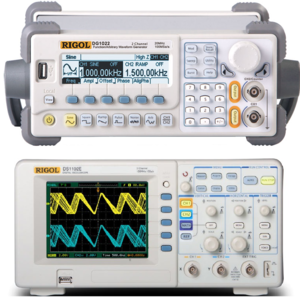
An oscilloscope is a test instrument that displays electrical signals as waveforms on a screen. You can see how voltage changes over time, which helps you analyze and understand circuits.
Imagine you want to see if a sensor is working. You connect the sensor output to the oscilloscope, and instantly, you see a moving line (the waveform) that tells you what the signal looks like. Oscilloscopes are sometimes called “scopes” for short.
Key Features Of Oscilloscopes
- Visualize Signals: Shows voltage versus time.
- Measure Waveforms: Find amplitude, frequency, period, and more.
- Multiple Channels: Observe more than one signal at once.
- Trigger Controls: Stabilize waveforms for better viewing.
- Advanced Analysis: Many digital oscilloscopes offer math functions, FFT, and automatic measurements.
Common Uses
- Debugging circuit problems
- Observing sensor or communication signals
- Checking for noise or distortion
- Measuring rise/fall times in digital circuits
Example
If you suspect a problem in a microcontroller’s clock, you can use an oscilloscope to check if the clock signal is stable and correct.
What Is A Function Generator?
A function generator is a device that creates electrical waveforms. It doesn’t measure signals—it produces them. You choose the type of waveform (like sine, square, triangle), set the frequency, and adjust the amplitude.
Function generators are sometimes called “signal generators” or “waveform generators. ” They help you test how circuits respond to different types of input signals.
Key Features Of Function Generators
- Various Waveforms: Sine, square, triangle, pulse, and more.
- Adjustable Frequency: From a few hertz (Hz) to several megahertz (MHz).
- Amplitude Control: Change the output voltage level.
- Modulation Options: Some can add AM, FM, or other effects.
Common Uses
- Testing amplifiers and filters
- Simulating sensor signals
- Checking frequency response
- Driving digital inputs with square waves
Example
You’ve built an audio amplifier. To test it, you connect a sine wave from the function generator to the input, then use an oscilloscope to see the output.

Credit: www.youtube.com
Oscilloscope Vs Function Generator: The Core Differences
It’s easy to confuse the two if you’re new to electronics. But their roles are very different. Here’s a direct comparison:
| Feature | Oscilloscope | Function Generator |
|---|---|---|
| Main Purpose | Measures and displays signals | Creates test signals |
| Input/Output | Receives signals from circuits | Sends signals to circuits |
| Typical Signals | Any voltage waveform | Sine, square, triangle, pulse, etc. |
| Frequency Range | Up to GHz (high-end models) | Up to 100 MHz (common) |
| Main Controls | Vertical, horizontal, trigger, math | Frequency, amplitude, offset, shape |
| Screen | Shows real-time waveform | Usually small or no screen |
| Key Use | Observe and analyze | Stimulate and test |
How They Work Together
Oscilloscopes and function generators are often used as a team. For example, when testing a new filter circuit, you can use the function generator to create a known signal and the oscilloscope to see what happens after the signal passes through the filter.
This combination lets you:
- Inject known waveforms and observe how your circuit changes them
- Compare input and output signals side by side
- Find faults or unexpected behavior quickly
A common beginner mistake is to think you only need one of these devices. But in reality, they serve different roles. Trying to use a function generator to measure a signal, or an oscilloscope to create one, simply won’t work.
Detailed Comparison: Technical Aspects
Let’s look more closely at the main technical differences between oscilloscopes and function generators.
Signal Handling
Oscilloscopes are designed to receive signals. They have high-impedance inputs, so they don’t load the circuit under test. Most oscilloscopes can handle a wide range of voltages, and some have special probes for high voltage.
Function generators are designed to output signals. Their output impedance is usually 50 ohms, matching the standard for test equipment. This matters if you’re testing RF or high-frequency circuits.
Frequency Range And Resolution
Oscilloscopes can display signals from DC (0 Hz) up to several GHz, depending on the model. Even basic digital oscilloscopes go up to 50–100 MHz. High-end scopes are much faster.
Function generators often output signals from 0. 1 Hz to tens of MHz. Some advanced models reach 100 MHz or more, but their output is limited compared to an oscilloscope’s measurement speed.
Waveform Flexibility
Oscilloscopes show any signal shape. If the signal is there, you’ll see it—no matter how odd or distorted.
Function generators are limited to preset waveforms, though modern ones can create complex shapes or even custom waveforms (called arbitrary waveform generators).
Measurement Vs. Stimulation
Oscilloscopes are for measuring. They help you check if a signal exists, if it’s correct, and what’s wrong if it isn’t.
Function generators are for stimulating. They give you a known signal to see how your circuit responds.
Cost And Complexity
Oscilloscopes tend to be more expensive and complex. Even entry-level digital models cost several hundred dollars, while advanced scopes can be thousands.
Function generators are usually cheaper, especially if you only need basic waveforms and frequencies.
Which One Do You Need?
If you are building or fixing electronic circuits, you’ll probably need both at some point. But your choice depends on what you want to do.
When To Use An Oscilloscope
- You want to see what is happening inside a circuit in real time.
- You need to check signal quality, timing, or noise.
- You’re troubleshooting a malfunctioning system.
When To Use A Function Generator
- You need to send a known signal into a circuit.
- You want to test how a device reacts to different frequencies or voltages.
- You’re developing or testing amplifiers, filters, or other signal-processing circuits.
Example Scenario
Suppose you’ve made a simple audio filter. To check if it works:
- Connect the function generator to the filter’s input, set it to a sine wave at 1 kHz.
- Connect the oscilloscope to the filter’s output.
- Sweep the frequency on the function generator and watch the oscilloscope to see how the filter responds.
This process is impossible with only one device.
Real-world Applications
Let’s look at some specific examples of how these tools are used in practice.
In Education
Students learning about electronics use function generators to send test signals to simple circuits. The oscilloscope helps them see and understand what the circuit does with those signals.
In Industry
Engineers developing new products use both tools every day. For instance, when designing a radio, the function generator simulates antenna signals, and the oscilloscope checks how the receiver handles those signals.
In Repair And Maintenance
If a device isn’t working, a technician uses the oscilloscope to find where the signal is lost or distorted. The function generator helps test parts of the circuit by injecting signals to see how they travel.
Pros And Cons: Oscilloscope Vs Function Generator
A quick look at the main strengths and weaknesses of each device:
| Device | Pros | Cons |
|---|---|---|
| Oscilloscope |
|
|
| Function Generator |
|
|
Credit: www.researchgate.net
Two Insights Beginners Miss
- Impedance Matching: When connecting a function generator to a circuit, matching the output impedance (usually 50 ohms) is critical for accurate signal delivery. If you connect to a high-impedance input (like an oscilloscope), the voltage can be higher than you set, leading to confusion. Always check and adjust for correct levels.
- Trigger Settings Matter: On oscilloscopes, the trigger controls are key to getting a steady, readable waveform. Many beginners ignore this and see a rolling, messy display. Learning how to set the trigger correctly will instantly improve your results.
Buying Tips: What To Look For
If you are choosing your first oscilloscope or function generator, keep these points in mind:
- Bandwidth: For oscilloscopes, higher bandwidth means you can see faster signals. Choose at least 5x the maximum frequency you plan to measure.
- Waveform Types: For function generators, check if you need only basic shapes or more advanced arbitrary waveforms.
- Ease of Use: Touchscreens and auto-setup features can help beginners.
- Price vs. Features: Entry-level models now have many features once found only in expensive versions.
- Reliability: Stick to brands with good support and documentation.
For more in-depth buying advice, consider checking a trusted resource like Tektronix.
Credit: june.uoregon.edu
Frequently Asked Questions
What Is The Main Difference Between An Oscilloscope And A Function Generator?
An oscilloscope measures and displays signals from a circuit, letting you see how voltage changes over time. A function generator creates signals and sends them into a circuit for testing. They do opposite jobs—one observes, the other stimulates.
Can I Use A Function Generator As An Oscilloscope?
No, you cannot. A function generator does not have the hardware or software to measure or display incoming signals. It is only for producing output signals.
Can I Use An Oscilloscope As A Function Generator?
No, an oscilloscope cannot generate or output test signals. It can only measure and display signals that are already present.
Why Do I Need Both Tools For Circuit Testing?
Using both lets you fully test and understand a circuit: you send in known signals with the function generator and observe the results with the oscilloscope. This approach finds problems faster and gives deeper insights.
What Should I Check Before Connecting These Devices To My Circuit?
Always check the voltage levels and impedance. Make sure the function generator output will not damage your circuit or exceed the oscilloscope’s input limits. Use proper cables and probes for safety and accuracy.
Understanding the roles and differences of oscilloscopes and function generators is the key to mastering electronics testing. Each tool has a unique job, and using them together opens up a world of possibilities for design, troubleshooting, and learning. Whether you’re a beginner or a pro, knowing when and how to use these instruments will make your work faster, easier, and more accurate.