Modern electronics and engineering rely on precise measurements and visualizations. This is where oscilloscopes come in. Whether you’re a student, hobbyist, or professional, choosing between a 2 channel oscilloscope and a 4 channel oscilloscope can make a big difference in your work. This article explores their differences, strengths, and practical uses, helping you pick the right tool for your needs.
What Is An Oscilloscope?
An oscilloscope is a device that shows how electrical signals change over time. Think of it as a screen that lets you see the “heartbeat” of electronics. With it, you can measure voltage, frequency, and timing. The number of channels is one of its most important features. A channel is simply an input where you connect a probe to measure a signal.
A 2 channel oscilloscope lets you view two signals at once. A 4 channel oscilloscope allows four signals to be displayed side by side. More channels mean more data, but also higher cost and complexity.
Understanding Channels: Why They Matter
Channels determine how many signals you can see and compare at the same time. For example, if you’re testing a digital circuit, you might want to check both input and output signals. With two channels, you can see both together.
If your circuit is more complex, like a microcontroller talking to multiple sensors, four channels help you track all conversations. More channels enable:
- Comparing multiple signals
- Timing analysis between inputs and outputs
- Troubleshooting multi-part circuits
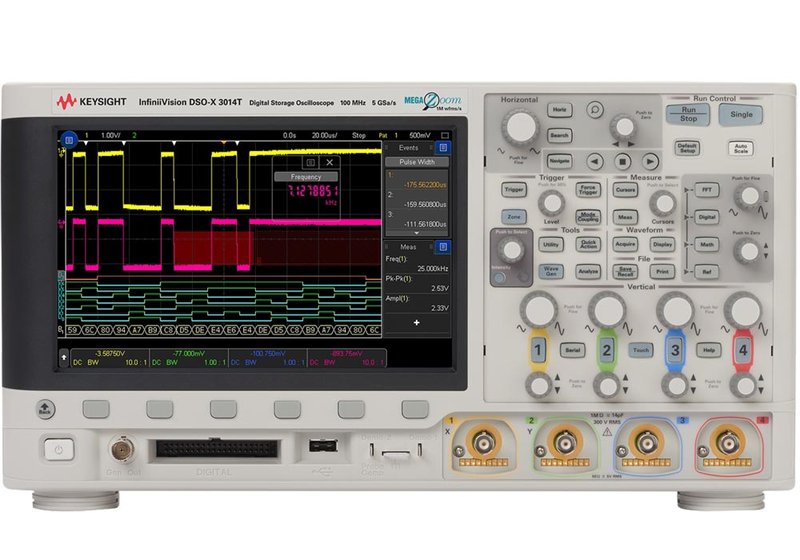
Credit: www.meilhaus.de
2 Channel Oscilloscope: Features And Use Cases
2 channel oscilloscopes are the most common for basic tasks. They are often cheaper and easier to use.
Typical features:
- Two signal inputs
- Bandwidth from 20 MHz to 200 MHz (most models)
- Sample rates from 500 MSa/s to 2 GSa/s
- Lightweight and portable
Common uses:
- Basic circuit analysis: For students or beginners, two channels are often enough to check simple circuits.
- Comparing input/output: When you want to see how an input affects an output, two channels let you view both.
- Audio testing: Many music engineers use two channels to check left and right audio signals.
Example: If you’re repairing a power supply, you might compare the voltage at the input and output. Two channels help you see both waveforms in real time.
4 Channel Oscilloscope: Features And Use Cases
A 4 channel oscilloscope offers more flexibility and is ideal for advanced work.
Typical features:
- Four signal inputs
- Higher bandwidth, often 100 MHz to 1 GHz
- Sample rates from 1 GSa/s to 5 GSa/s
- Extra options: Logic analysis, math functions
Common uses:
- Complex circuit debugging: Useful for microcontrollers, automotive electronics, or multi-phase motors.
- Timing analysis: Engineers can study how four signals interact, spot delays, or find glitches.
- Protocol decoding: Many 4 channel scopes can decode signals like SPI, I2C, or UART, which often need three or four wires.
Example: When analyzing a communication bus (like SPI), you might need to monitor clock, data in, data out, and chip select lines. Four channels give you full visibility.
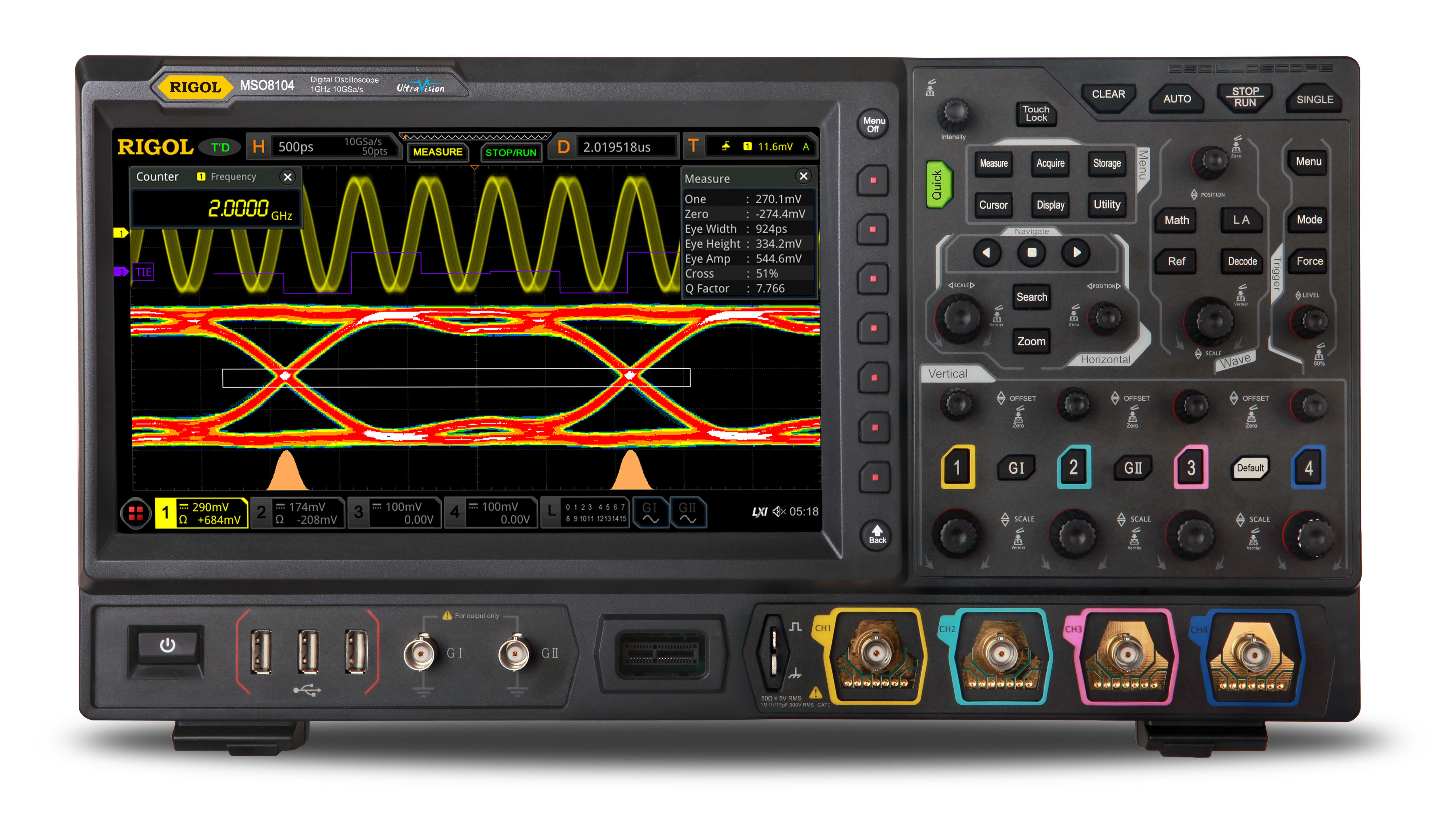
Credit: www.electronics-lab.com
Comparing 2 Vs 4 Channel Oscilloscope
Let’s look at the main differences side by side.
| Feature | 2 Channel | 4 Channel |
|---|---|---|
| Inputs | 2 | 4 |
| Typical Price | $250–$800 | $700–$2,500 |
| Bandwidth | 20–200 MHz | 100 MHz–1 GHz |
| Sample Rate | 500 MSa/s–2 GSa/s | 1–5 GSa/s |
| Size | Portable | Desktop |
| Complex Analysis | Limited | Advanced |
Key points:
- Price: 2 channel models are cheaper. Four channels cost more due to extra hardware.
- Bandwidth: Four channel scopes often have higher bandwidth, making them fit for fast signals.
- Complexity: More channels mean more setup and analysis, but also more insight.
Advantages Of 2 Channel Oscilloscopes
For many users, two channels are enough.
- Affordability: Entry-level models are budget-friendly.
- Simplicity: Easier to learn and operate.
- Portable: Often smaller and lighter.
- Low power needs: Less demanding on the power supply.
A beginner in electronics can start with two channels and handle most basic tasks. For example, a student learning about sine waves or square waves will find a 2 channel scope sufficient.
Advantages Of 4 Channel Oscilloscopes
Four channel models unlock advanced possibilities.
- Multi-signal analysis: View more signals at once.
- Better troubleshooting: Find hidden problems in complex systems.
- Protocol testing: Monitor digital buses and communication lines.
- Teamwork: In labs, several engineers can share a single oscilloscope for different tests.
If you work on automotive electronics or digital systems, you often need to check multiple signals together. For example, in a car’s engine control unit, you might check injector pulse, crank sensor, cam sensor, and throttle position—all at the same time.
Real-world Examples
Let’s see how each oscilloscope fits real tasks.
2 Channel Example:
Testing a small amplifier circuit. You connect channel 1 to the input, channel 2 to the output. You compare the waveforms to check distortion and gain.
4 Channel Example:
Debugging a microcontroller with SPI sensors. You connect four probes to clock, data out, data in, and chip select. You can now see how all signals interact and spot timing errors.
Data:
A recent survey by EEVblog found that 68% of hobbyists use 2 channel oscilloscopes, while 80% of professionals prefer 4 channel models for complex work.
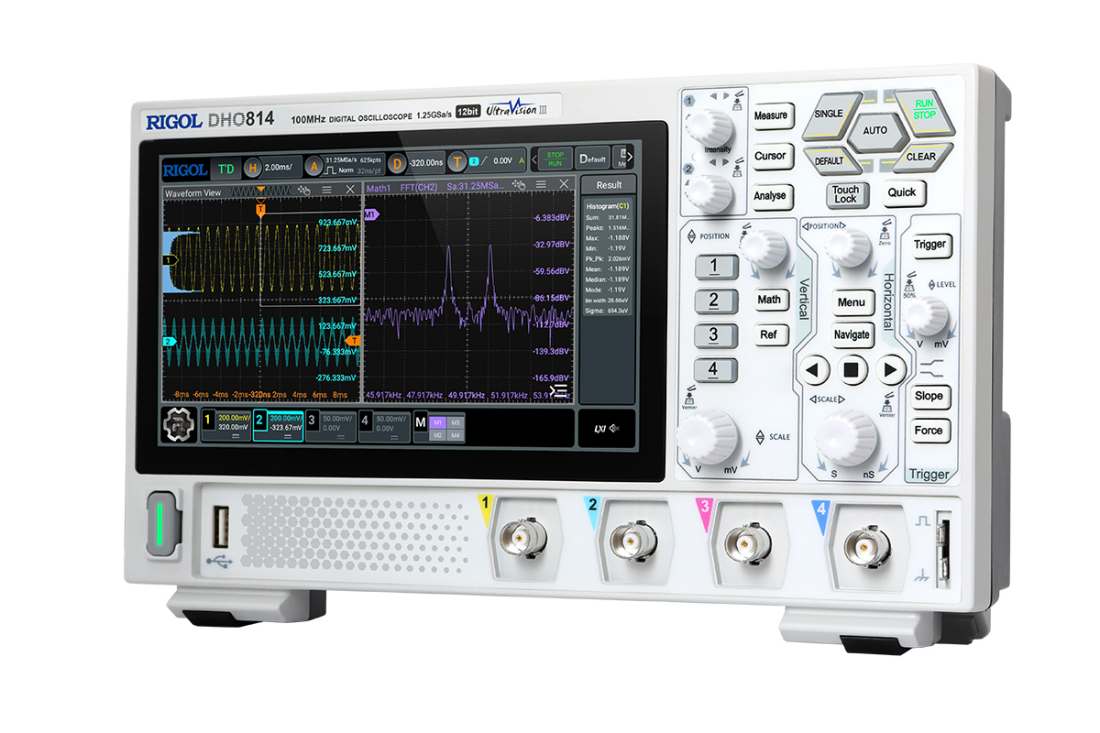
Credit: www.oscopes.info
Limitations And Common Mistakes
When choosing, it’s easy to overlook some details.
2 channel limitations:
- Can’t analyze more than two signals at once.
- Harder to spot timing issues between several signals.
- Not ideal for digital protocol debugging.
4 channel limitations:
- Higher price and learning curve.
- More noise risk if not used properly.
- Can overwhelm beginners with too many options.
Common mistakes:
- Underestimating future needs: Many buyers get a 2 channel scope, then later need more channels for advanced work.
- Ignoring bandwidth: Not checking if the oscilloscope’s bandwidth matches the signal speed can lead to missing details.
- Buying based on price only: Cheap models sometimes lack important features like memory depth or math functions.
Key Features To Consider
When comparing oscilloscopes, don’t focus only on channels. Other important features include:
- Bandwidth: Should be at least 5x the frequency of your signals.
- Sample rate: Higher is better for fast signals.
- Memory depth: More memory lets you capture longer events.
- Display quality: Sharp screens help spot small glitches.
- Connectivity: USB, LAN, and WiFi can help with data export.
- Software support: Some models offer PC software for deeper analysis.
| Feature | Importance | Beginner Recommendation |
|---|---|---|
| Bandwidth | High | 50–100 MHz |
| Sample Rate | Medium | 1 GSa/s |
| Memory Depth | High | 2M–10M points |
| Display | Medium | 7″ color |
Don’t forget to check the probe quality. Low-quality probes can affect your measurements and lead to errors.
Practical Tips For Choosing
If you’re unsure which oscilloscope to buy, consider these points:
- List your main tasks. If you mostly test simple circuits, two channels are fine.
- Think about future projects. If you plan to work on microcontrollers or automotive systems, four channels will help.
- Check your budget. Four channel scopes cost more, but avoid buying too cheap; it can limit your work.
- Try before you buy. Visit a lab or ask friends to test different models.
- Read reviews and specs. Look for feedback from real users on forums and sites.
For more in-depth comparisons, see this Wikipedia article.
Non-obvious Insights
Many beginners don’t realize these points:
- Signal synchronization: With four channels, you can check if signals are truly in sync, which is vital for digital systems.
- Noise troubleshooting: Sometimes, extra channels help identify where noise or glitches enter a circuit, especially in complex boards.
- Math channels: Some scopes let you create “virtual” channels by adding or subtracting signals. This can extend a 2 channel scope’s usefulness for math analysis.
Cost Vs. Value: Is Four Channels Worth It?
A four channel oscilloscope costs more, but for many users, the investment pays off over time. If you only test basic circuits, the extra channels may sit unused. But in professional settings, having four channels saves time and helps solve problems quickly.
Example:
A 2 channel oscilloscope might cost $400. A 4 channel model with similar specs could cost $1,200. If your work needs frequent multi-signal analysis, the extra expense is justified.
Which One Should You Choose?
If you’re a beginner, a 2 channel oscilloscope is usually enough. It covers most basic tasks and helps you learn. As your projects grow, or if you need to debug complex systems, a 4 channel oscilloscope is a smart upgrade. Professionals and labs almost always choose four channels for flexibility.
Think about your workflow. If you often need to check several signals together, four channels will make your life easier. If your projects are simple and you work alone, two channels will do the job.
Frequently Asked Questions
What Is The Main Difference Between 2 And 4 Channel Oscilloscopes?
The main difference is the number of signals you can view at once. A 2 channel oscilloscope shows two waveforms, while a 4 channel oscilloscope shows four. This impacts how many parts of a circuit you can analyze together.
Do 4 Channel Oscilloscopes Have Better Performance?
Usually, yes. Most 4 channel oscilloscopes offer higher bandwidth and sample rates. They’re also designed for advanced tasks and digital debugging.
Is A 2 Channel Oscilloscope Enough For Beginners?
Yes, for most students and hobbyists, two channels are enough. You can compare input and output signals, test audio, and learn basic electronics. As your skills grow, you may want more channels.
Can I Upgrade A 2 Channel Oscilloscope To 4 Channels Later?
No, most oscilloscopes cannot be upgraded. The number of channels is fixed by hardware. If you need more channels, you must buy a new model.
What Are Some Good Brands For Oscilloscopes?
Popular brands include Rigol, Tektronix, Keysight, and Siglent. These brands offer both 2 and 4 channel models with reliable performance.
Choosing between a 2 and 4 channel oscilloscope can feel confusing, but focusing on your real needs makes the decision easier. Start simple, and upgrade as your projects demand. With the right oscilloscope, you’ll have a powerful window into the world of electronics.