Choosing the right oscilloscope is a big decision for anyone working with electronics, from students to professional engineers. Among the most popular brands are Siglent and Rigol—two companies known for offering quality test equipment without breaking the bank. But which one should you pick? Understanding the differences can save you time, money, and frustration down the road. Let’s look closely at what sets Siglent and Rigol oscilloscopes apart and how you can choose the best one for your needs.
Why Siglent And Rigol Stand Out
Both Siglent and Rigol have become trusted names for affordable digital oscilloscopes. Their devices are popular in schools, repair shops, and home labs. The main reason? They offer a lot of features for a good price. But that’s not the whole story. Each brand has unique strengths and some hidden details that can make a big difference depending on your work style and projects.
Key Features Compared
To get a clear view, let’s compare the most important features and specs that affect real-world use.
| Feature | Siglent | Rigol |
|---|---|---|
| Bandwidth | 50 MHz – 2 GHz | 50 MHz – 1 GHz |
| Sample Rate | Up to 2 GSa/s | Up to 5 GSa/s |
| Memory Depth | Up to 200 Mpts | Up to 500 Mpts |
| Display | 7″–10.1″ color LCD | 7″–10.1″ color LCD |
| Price Range | $300 – $10,000+ | $300 – $8,000+ |
What This Means For You
- Bandwidth: More bandwidth means you can measure higher-frequency signals. Siglent offers models up to 2 GHz, while Rigol tops out at 1 GHz in most lines.
- Sample Rate: A higher sample rate lets you see fast-changing signals more clearly. Rigol sometimes wins here, but actual performance depends on other factors, like memory.
- Memory Depth: Deeper memory means longer signal capture without losing detail. Rigol often has an edge in raw numbers, but Siglent’s memory is still more than enough for most users.

Credit: www.youtube.com
User Interface And Experience
The user interface can make or break your experience, especially if you use your oscilloscope daily.
- Siglent: Their newer models, like the SDS2000X Plus, have a modern, intuitive interface. Touchscreens are becoming more common, and menus are logically organized. Navigation feels smooth, and beginners appreciate the clear layout.
- Rigol: Rigol’s user interface is also clean but sometimes feels a bit dated compared to Siglent’s latest models. However, many users find Rigol’s controls familiar if they’ve used oscilloscopes before.
Non-obvious insight: Siglent’s menu system often lets you access advanced features with fewer clicks. This small detail can make a big difference in a busy lab or during troubleshooting.
Build Quality And Reliability
Both brands have improved their hardware over the years, but there are some differences.
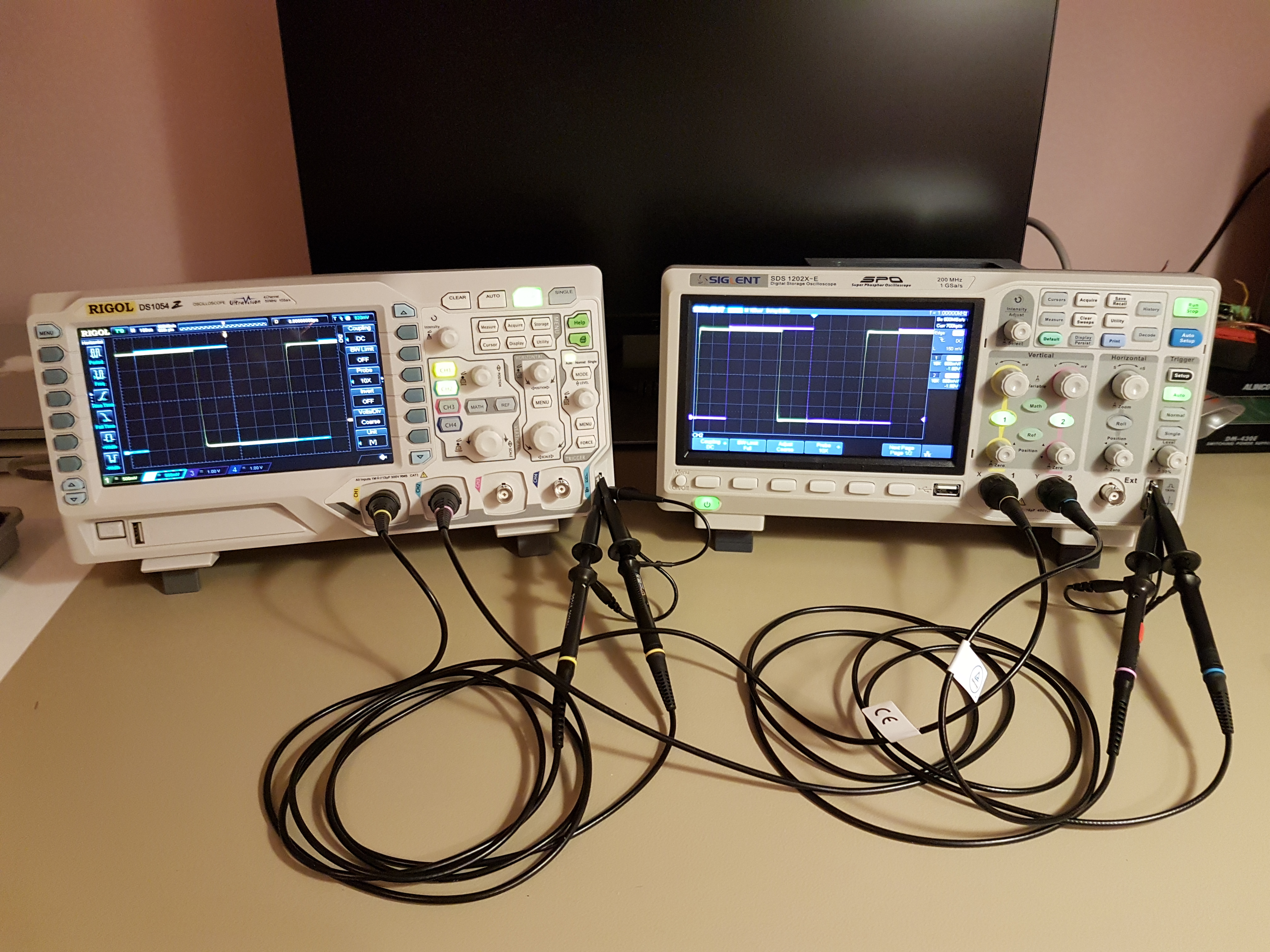
- Siglent: Known for solid build quality, especially in mid- to high-end models. Buttons feel sturdy, and the casing holds up well to daily use.
- Rigol: Earlier models sometimes felt less robust, but newer devices like the MSO5000 series are much improved. Probes and connectors are usually of good quality, though some users note the knobs can feel less premium.
Experience-based tip: If you plan to move your oscilloscope around a lot, check out Siglent’s rubber bumpers and handle design—they make transportation easier.
Credit: www.microfarad.de
Software And Connectivity
Modern oscilloscopes aren’t just about the screen. Software and connectivity options can help you automate tests, save data, and share results.
| Feature | Siglent | Rigol |
|---|---|---|
| PC Software | EasyScopeX, LabVIEW support | UltraSigma, UltraScope, LabVIEW support |
| Remote Control | LAN, USB, SCPI, Web Server | LAN, USB, SCPI, Web Control |
| File Formats | CSV, PNG, BMP, Waveform | CSV, PNG, BMP, Waveform |
| App Ecosystem | Growing, but smaller | More third-party tools |
Practical Considerations
- Both brands let you control the oscilloscope from your computer or even a phone.
- Rigol has a bigger ecosystem of third-party apps and scripts, which is helpful for automation or custom setups.
- Siglent’s web server is simple to use, letting you control the device through a browser without extra software.
Non-obvious insight: If you rely on Python or other scripting for lab automation, Rigol’s larger user community means more ready-made code examples are available online.
Advanced Features For Power Users
While basic scopes work for simple measurements, advanced features can make life much easier for professionals and hobbyists alike.
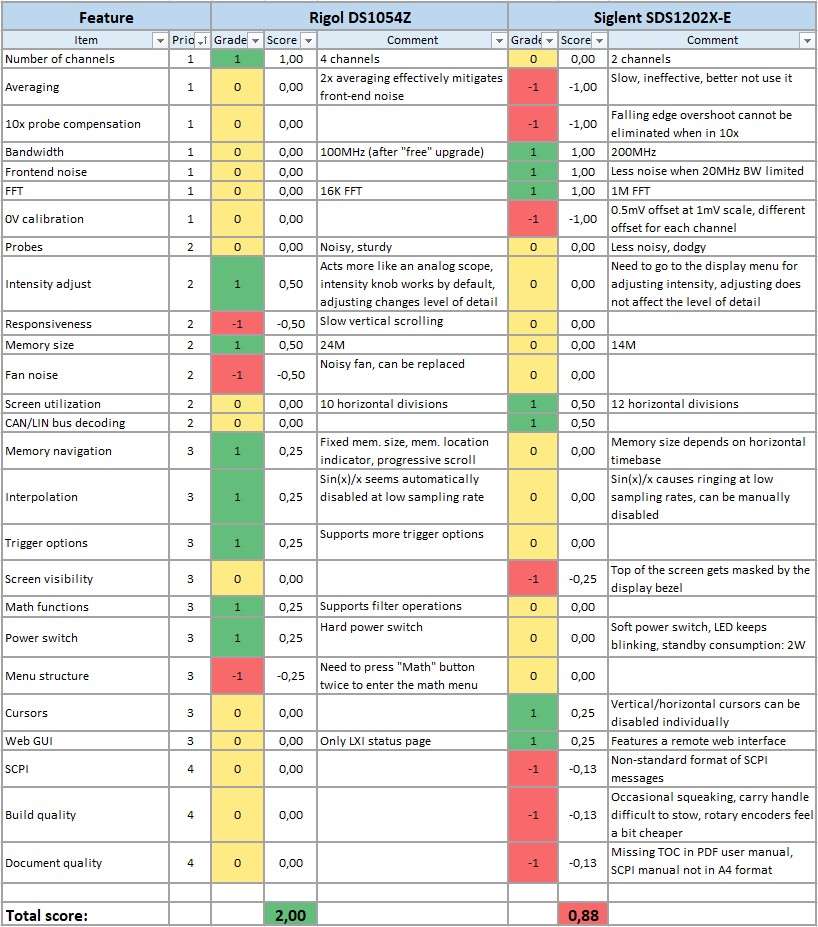
- Mixed Signal Oscilloscope (MSO) options: Both brands offer models that combine analog and digital channels, like the Siglent SDS1000X-E series and the Rigol MSO5000 series.
- Serial bus decoding: Most Siglent and Rigol scopes support I2C, SPI, UART, and CAN decoding, but some features are optional extras.
- Waveform recording and playback: Available on both brands, but Siglent’s implementation is often more user-friendly.
Confident guidance: Always check if key features (like serial decode or MSO) are included or need to be unlocked with a license. These extras can add $100–$500 to the price.
Credit: www.microfarad.de
Price And Value For Money
Price is often the deciding factor, especially for students and small labs.
- Entry-level models: Both Siglent’s SDS1102CML+ and Rigol’s DS1054Z are extremely popular for beginners, often priced under $400.
- Mid-range models: Around $700–$1,200, Siglent’s SDS2000X Plus and Rigol’s MSO5000 series deliver advanced features.
- High-end models: Siglent’s SDS6000A series rivals much more expensive scopes, sometimes at half the price of similar Tektronix or Keysight models.
Here’s a quick price comparison for popular models:
| Model | Brand | Bandwidth | Approx. Price |
|---|---|---|---|
| SDS1104X-E | Siglent | 100 MHz | $379 |
| DS1054Z | Rigol | 50 MHz | $329 |
| SDS2104X Plus | Siglent | 100 MHz | $1,049 |
| MSO5074 | Rigol | 70 MHz | $999 |
| SDS6204A | Siglent | 2 GHz | $9,999 |
| DS7014 | Rigol | 1 GHz | $7,499 |
Practical advisor tip: For most users, you can get a fully equipped Siglent or Rigol for about $500–$1,000. Spending more only makes sense if you need high bandwidth or advanced analysis.
Support, Warranty, And Upgrades
Buying an oscilloscope isn’t just about the hardware—you also need good support if something goes wrong.
- Siglent: Offers a standard 3-year warranty for most models. Customer support is responsive, and firmware updates are released regularly.
- Rigol: Warranty is usually 3 years. Rigol’s support can be slower to respond, but their forums and user community are very active.
Hidden detail: Siglent sometimes releases free firmware updates that add new features. Rigol is more likely to reserve new features for newer models.
Common Mistakes When Choosing
Many beginners and even experienced users make these mistakes:
- Focusing only on bandwidth: Higher bandwidth is nice, but it’s not always necessary. For most audio and microcontroller work, 50–100 MHz is enough.
- Ignoring memory depth: Deeper memory means better capture of long signals. Don’t overlook this—choose at least 14 Mpts if possible.
- Not checking software compatibility: Make sure the oscilloscope software works with your computer and operating system.
- Missing hidden costs: Some features (like serial decoding) may require paid licenses, which can add up.
Which Should You Choose?
There’s no single answer. Here’s a quick summary to help you decide:
- Go with Siglent if…
- You want a modern user interface and touchscreen options.
- You need high bandwidth (up to 2 GHz).
- You appreciate regular firmware updates and solid build quality.
- Choose Rigol if…
- You want the most memory and sample rate for your dollar.
- You value a large user community and many third-party tools.
- You’re looking for the most affordable entry-level option.
Still undecided? Try searching for specific model reviews and user feedback. Real-world experiences often reveal things you won’t find in spec sheets.
If you want more details about digital oscilloscopes and how they work, you can check the Oscilloscope Wikipedia page.
Frequently Asked Questions
Which Brand Is Better For Beginners, Siglent Or Rigol?
Both are good choices for beginners. Rigol’s DS1054Z is famous for its low price and wide support. Siglent’s SDS1104X-E offers a more modern interface and higher specs for a bit more money.
Can I Use Siglent Or Rigol Oscilloscopes For Professional Work?
Yes, both brands have models used in industry and research. For demanding applications, check the bandwidth, memory, and extra features before buying.
Do Siglent And Rigol Oscilloscopes Support Serial Protocol Decoding?
Most mid-range and high-end models support serial decoding like I2C, SPI, and UART. Some require a license or firmware upgrade to unlock these features.
Are Firmware Updates Free For Siglent And Rigol?
Firmware updates are usually free, but new features are sometimes only added to newer models. Siglent is more likely to add features via updates, while Rigol may focus on bug fixes.
How Important Is Bandwidth For General Electronics Work?
For most microcontroller, Arduino, or Raspberry Pi projects, 50–100 MHz is enough. Only choose higher bandwidth if you work with radio, RF, or very fast digital signals.
Choosing between Siglent and Rigol doesn’t have to be stressful. Focus on your real needs, not just the specs. Both brands deliver great value, and picking either will give you a solid tool for learning, troubleshooting, and designing electronic circuits.