
Keysight Vs Tektronix Oscilloscope: Detailed Comparison For Engineers
When you need to measure electronic signals, choosing the right oscilloscope is critical. Two brands stand out: Keysight and Tektronix. Both are respected, but each has its own strengths. If you are an engineer, student, or technician, picking between them can be tough. This article helps you understand their differences, features, and real-world performance so you can make a confident choice.
Oscilloscopes are used to view and analyze electrical signals. These tools are essential in electronics design, troubleshooting, and education. The best oscilloscope fits your needs, budget, and workflow. Keysight and Tektronix offer many models, from entry-level to advanced, but their approaches and designs are quite different.
Let’s explore what sets them apart.
Keysight Oscilloscope Overview
Keysight Technologies was formerly part of Agilent, which itself grew from Hewlett-Packard. Their oscilloscopes are known for high accuracy and advanced analysis features. Keysight models often appeal to professionals working in research, communications, or demanding laboratory environments.
Keysight’s oscilloscope lineup includes:
- InfiniiVision Series: For general and professional use.
- Infiniium Series: High-performance, deep analysis models.
- Entry-level DSO: For education and simple troubleshooting.
Features often found in Keysight scopes:
- Superior signal fidelity: High bandwidth and low noise.
- Touchscreen interfaces: Smooth navigation and easy operation.
- Deep memory: Captures long signal records for detailed analysis.
- Advanced triggering: Isolates rare events and glitches.
- Automated measurements: Saves time, especially in repetitive tasks.
Keysight focuses on precision and reliability. Their hardware and software are tightly integrated, making complex measurements easier and faster.
Tektronix Oscilloscope Overview
Tektronix is another industry leader, famous for user-friendly designs and robust build quality. Tektronix oscilloscopes are popular in education, manufacturing, and service labs. Many users appreciate their intuitive controls and strong support.
Tektronix models include:
- TBS Series: Entry-level and educational scopes.
- MSO Series: Mixed-signal oscilloscopes for advanced analysis.
- MDO Series: Integrates oscilloscope with spectrum analyzer functions.
Common Tektronix features:
- Easy-to-use interface: Clear menus and simple knobs.
- Flexible connectivity: USB, LAN, and HDMI options.
- Integrated analysis tools: Built-in math and automated measurement functions.
- Multi-instrument capability: Some models combine oscilloscope, logic analyzer, and spectrum analyzer.
- Strong support for education: Many resources and tutorials.
Tektronix emphasizes accessibility and multifunctionality. Their scopes are often chosen for teaching labs and field work.
Head-to-head Comparison: Keysight Vs Tektronix
To help you decide, here is a direct comparison of some key technical specifications and practical differences. This table compares typical mid-range models from each brand.
| Feature | Keysight (DSO-X 3000T) | Tektronix (MSO 2000 Series) |
|---|---|---|
| Bandwidth | 100 MHz – 1 GHz | 70 MHz – 500 MHz |
| Sample Rate | Up to 5 GS/s | Up to 2 GS/s |
| Memory Depth | 4 Mpts | 1 Mpts |
| Display | 8.5″ touchscreen | 7″ non-touch |
| Price Range | $2,000 – $8,000 | $1,500 – $6,000 |
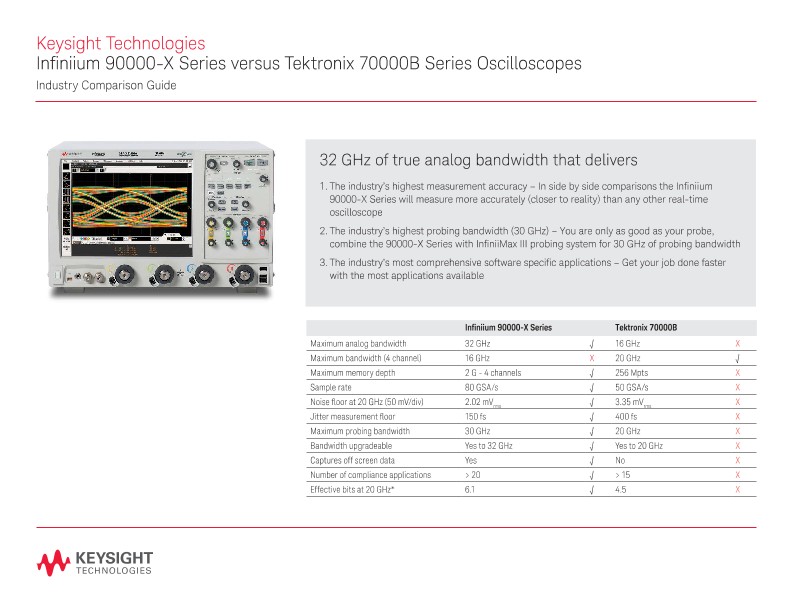
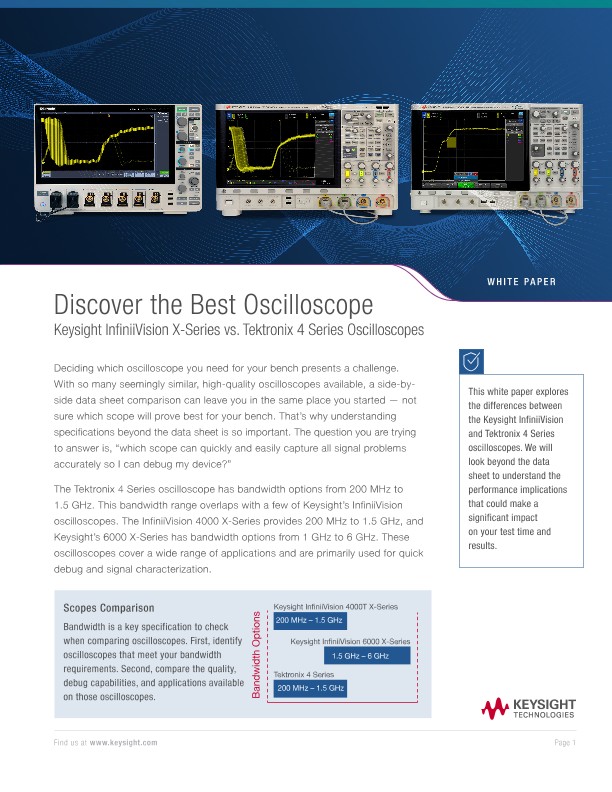
Keysight generally offers higher bandwidth and sample rates, plus deeper memory. Tektronix usually wins on price and ease of use. Both brands deliver reliable measurement, but the details matter.
User Experience And Software
Keysight
Keysight’s software is known for its advanced analysis options. The InfiniiVision and Infiniium series allow for complex math, signal decoding, and automated testing. Many models support remote access and integration with PC software. The touchscreen is responsive and supports gestures.
One practical insight: Keysight’s deep memory can be a real advantage when capturing long or complex signals. However, beginners may find the menus slightly overwhelming at first.
Tektronix
Tektronix scopes focus on clear, simple navigation. Their menus are straightforward, and physical buttons are easy to use. For education, Tektronix offers many free tutorials and online resources, helping new users learn quickly.
A non-obvious benefit: Tektronix’s multi-instrument models (like the MDO series) allow you to analyze both time and frequency domains without switching devices. This saves space and setup time.

Credit: www.tek.com
Build Quality And Reliability
Both brands are respected for durable construction. Keysight’s scopes are often compact and solid, with high-quality screens and connectors. Tektronix models are robust and designed to withstand frequent handling in busy labs.
Keysight tends to use more advanced materials and internal shielding, which improves signal fidelity. Tektronix prioritizes ruggedness, making their devices ideal for education and field work.
Typical Applications
Choosing between Keysight and Tektronix depends on your main tasks:
- Research and Development: Keysight is preferred for high-speed analysis and deep signal study.
- Education: Tektronix is favored for teaching due to its easy interface and strong support.
- Manufacturing: Both brands are used, but Tektronix’s price and durability often make it a favorite.
- Field Service: Tektronix scopes are lighter and simpler to operate.
- Advanced Debugging: Keysight’s triggering and analysis features are unmatched.
Price And Value
Oscilloscope prices vary widely. Here is a quick comparison of entry-level models:
| Model | Bandwidth | Channels | Price (Approx.) |
|---|---|---|---|
| Keysight DSOX1102G | 70 MHz | 2 | $850 |
| Tektronix TBS1102B | 100 MHz | 2 | $650 |
Tektronix often costs less for similar specs, but Keysight models may offer more advanced features at higher price points. Always check what is included: probes, software, and warranty can differ.
Connectivity And Expansion
Modern oscilloscopes connect to PCs, networks, and other devices. Both brands offer USB, LAN, and sometimes HDMI. Keysight’s higher-end models include more remote control features, while Tektronix focuses on easy export and sharing of data.
Expansion options are important if you plan to add logic analysis or protocol decoding. Keysight often supports more add-ons, but Tektronix offers multi-function models that combine several tools in one device.
Credit: www.keysight.com
Real-world Performance
In daily use, Keysight oscilloscopes are praised for clear signal visualization and stable operation. Their advanced triggering helps engineers capture rare glitches. Tektronix, on the other hand, is valued for fast setup and reliable results.
A practical tip: For high-frequency work, Keysight’s deep memory and high sample rate allow for better signal analysis. For routine measurements or teaching, Tektronix’s simple controls reduce errors and speed up learning.
Common Mistakes When Choosing
- Ignoring bandwidth needs: Always pick a scope with bandwidth at least five times higher than your signal frequency.
- Overlooking memory depth: Deep memory is important for capturing long signals.
- Not considering expansion: If you plan to add logic analysis or decoding, check compatibility.
- Focusing only on price: Cheaper scopes may lack features you need in the future.
- Missing software support: Some models offer powerful PC integration, others do not.
Credit: www.keysight.com
Industry Insights And Trends
Many engineers believe Keysight is best for high-end applications. Their Infiniium series is used in research labs and advanced design centers. Tektronix is often seen as the best value for education and entry-level work.
A less-known insight: Tektronix’s strong presence in teaching labs means many students start with their scopes, which can influence later purchasing decisions in companies. Keysight, meanwhile, is often chosen for mission-critical projects due to its precision.
For more technical details, you can visit the official Oscilloscope Wikipedia page.
Which Brand Should You Choose?
Your choice depends on your needs:
- If you require high bandwidth, deep memory, and advanced analysis, Keysight is the better choice.
- If you prefer ease of use, affordable pricing, and multi-functionality, Tektronix is ideal.
- For education, Tektronix’s support and resources are unmatched.
- For demanding lab work, Keysight offers the best signal fidelity and analysis.
Consider your main tasks, future needs, and budget. Both brands are leaders, but your personal workflow will guide the right decision.
Frequently Asked Questions
What Is The Main Difference Between Keysight And Tektronix Oscilloscopes?
The main difference is their focus. Keysight emphasizes precision, advanced analysis, and deep memory, making it ideal for research and high-speed testing. Tektronix prioritizes ease of use, multi-instrument capabilities, and affordability, which suits education and routine lab work.
Which Oscilloscope Is Better For Beginners?
Tektronix oscilloscopes are generally easier for beginners. Their interfaces are simple, and there are many tutorials. Keysight models offer more features but may require extra learning, especially for advanced settings.
Are Keysight Oscilloscopes Worth The Higher Price?
For tasks needing high accuracy, deep analysis, or advanced triggering, Keysight scopes justify their price. If your work is basic, or if you’re teaching, Tektronix may offer better value.
Can I Use Both Brands In The Same Lab?
Yes, many labs use both Keysight and Tektronix scopes. This allows engineers and students to choose the tool that best fits their task. Both brands have compatible probes and accessories, but always check before mixing.
How Important Is Memory Depth In An Oscilloscope?
Memory depth is critical for capturing long or complex signals. Keysight generally offers deeper memory, which helps in advanced analysis. Tektronix’s memory depth is enough for most educational and routine measurements.
Choosing between Keysight and Tektronix is not easy, but understanding your requirements and the strengths of each brand will help you make the best decision. Both companies provide powerful tools, so you cannot go wrong with either. Remember to consider features, support, and future needs before buying.