
Choosing the right oscilloscope is essential for accurate electronic measurements. If you are working with signals up to a few tens of megahertz, you may wonder whether a 50 MHz or 100 MHz oscilloscope suits your needs. Both are popular for engineers, students, and hobbyists. Their differences affect signal clarity, cost, and future flexibility. Understanding these points helps you buy the right tool and avoid common mistakes.
Core Differences Between 50 Mhz And 100 Mhz Oscilloscopes
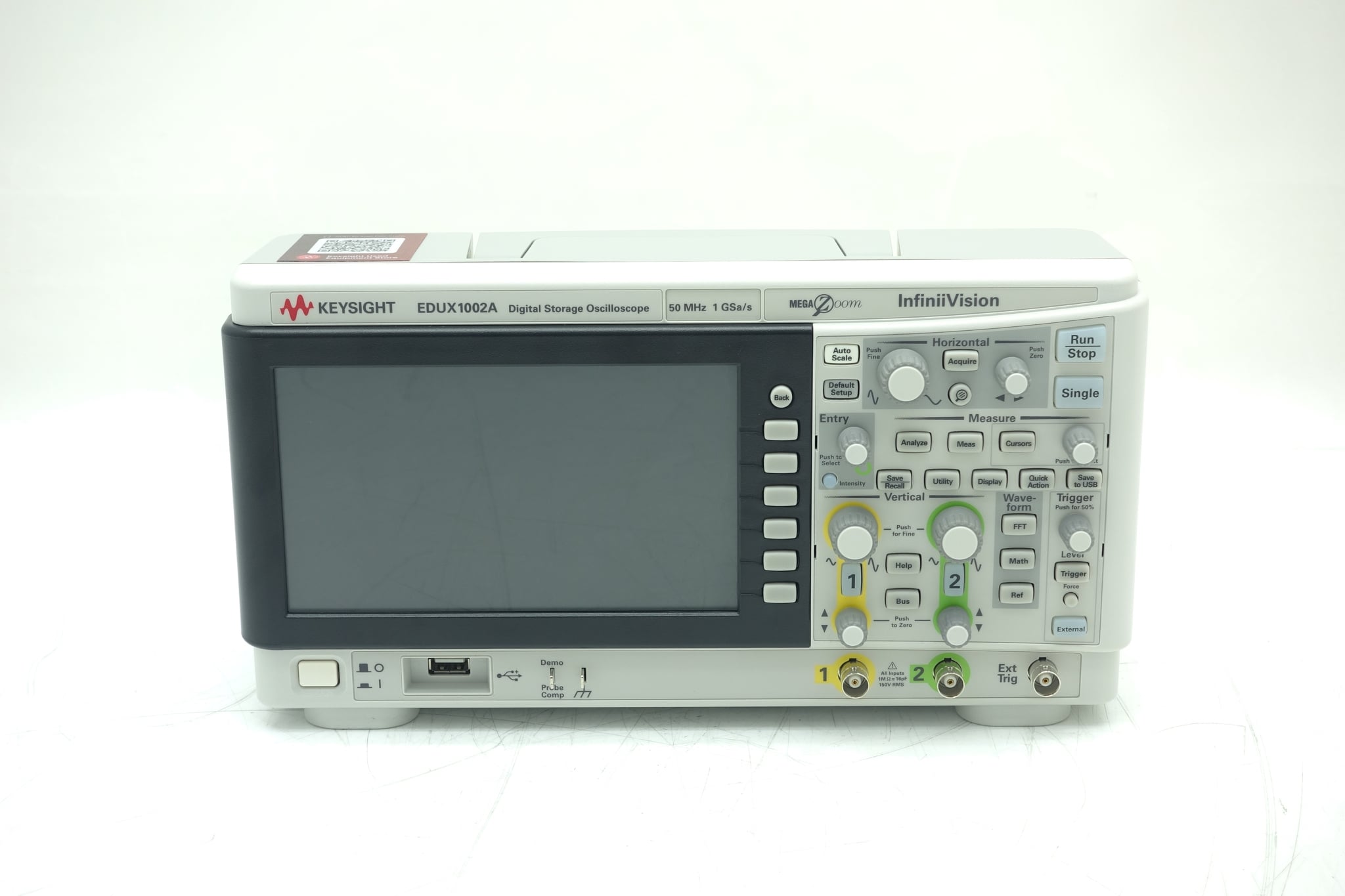
The bandwidth is the main technical difference. Bandwidth tells you the highest frequency an oscilloscope can measure with accuracy. A 50 MHz model handles signals up to 50 million cycles per second, while a 100 MHz scope doubles that range.
But bandwidth is not the only factor. Other elements—like sample rate, rise time, and cost—also matter. Below, we break down 50 key comparison points to help you decide.
1. Bandwidth
A 50 MHz oscilloscope captures signals up to 50 MHz. A 100 MHz oscilloscope goes up to 100 MHz. If your signals include higher frequencies, choose the higher bandwidth.
2. Signal Detail
The 100 MHz model shows more signal details, especially for fast edges or brief glitches, which a 50 MHz scope might miss.
3. Sample Rate
Most 100 MHz oscilloscopes have higher sample rates, usually 1 GS/s or more, compared to 500 MS/s in many 50 MHz scopes. This means better time resolution.
4. Rise Time Measurement
A 100 MHz scope can measure faster rise times (about 3.5 ns) compared to a 50 MHz model (about 7 ns). This is key for digital signals.
5. Signal Integrity
Higher bandwidth models keep signal shapes more accurate. Lower bandwidth scopes may round off sharp edges.
Credit: www.keysight.com
6. Price
50 MHz oscilloscopes are usually less expensive, making them attractive for tight budgets or beginners.
7. Size And Portability
Entry-level 50 MHz scopes may be smaller and lighter, making them easier to carry to classrooms or field sites.
8. Display Quality
Many 100 MHz oscilloscopes have higher resolution or larger displays, which helps analyze complex signals.
9. Probing Capability
100 MHz scopes require higher-spec probes, which can be more expensive but allow clearer measurements at high frequency.
10. Upgrade Options
Some 50 MHz scopes can be upgraded to 70 MHz or 100 MHz via software, but not all. If possible, pick a model with this flexibility.
11. Use In Education
For basic labs, a 50 MHz oscilloscope often covers standard experiments in electronics and physics.
12. Use In Embedded Systems
If you work with microcontrollers running at 16–40 MHz, a 50 MHz oscilloscope is usually enough. For faster systems (80 MHz+), 100 MHz is better.
13. Automotive Applications
Many automotive sensors and signals fit within 50 MHz, but diagnostics on modern vehicles may need 100 MHz for high-speed buses.
14. Power Electronics
Switching power supplies with high-speed edges may require 100 MHz to see ringing or fast transients.
15. Rf Applications
50 MHz is too low for most RF circuits. A 100 MHz scope is the minimum for amateur radio or wireless work.
16. Digital Communication
For protocols like CAN, SPI, or I2C, 50 MHz is usually adequate. For USB or high-speed serial, 100 MHz is preferred.
17. Future-proofing
A 100 MHz oscilloscope gives you more room as your projects grow. It’s less likely you’ll need to upgrade soon.
18. Triggering Options
100 MHz scopes often come with more advanced trigger functions for analyzing complex signals.
19. Memory Depth
Higher bandwidth scopes tend to have deeper memory, allowing you to capture longer waveforms at high sample rates.
20. Noise Floor
100 MHz oscilloscopes may have a slightly higher noise floor, but quality models keep this low.
21. Firmware Features
Manufacturers often include extra features in higher-end 100 MHz models, such as protocol decoders or math functions.
22. User Interface
Higher bandwidth scopes may offer more user-friendly or responsive interfaces, making analysis faster.
23. Waveform Update Rate
100 MHz scopes typically refresh the display faster, making it easier to catch rare glitches.
24. Connectivity
You may find more connectivity options (USB, LAN, Wi-Fi) in 100 MHz models, making data export easier.
25. Brand Choices
Both bandwidths are available from major brands like Tektronix, Rigol, Siglent, and Keysight, but 100 MHz has more high-end options.
26. Input Channels
Most scopes in this range have two or four channels. Channel count is often independent of bandwidth, but 100 MHz models may offer more channels.
27. Vertical Sensitivity
Both bandwidths typically offer similar voltage ranges (e. g. , 2 mV/div to 10 V/div), but the 100 MHz model maintains accuracy at high frequencies.
28. Math Functions
Advanced math features (FFT, addition, subtraction) are more common in 100 MHz models.
29. Cursor Measurements
Both types usually support cursors, but higher-end 100 MHz models may offer more flexible options.
30. Saving And Printing
You’re more likely to find direct screen capture or print functions in 100 MHz scopes.
31. Software Support
100 MHz oscilloscopes are more likely to support advanced PC software for remote control and analysis.
32. Build Quality
Higher-priced 100 MHz scopes often have sturdier construction, suitable for heavy lab or field use.
33. Fan Noise
Some higher bandwidth models have louder cooling fans. If noise is a concern, check reviews before buying.
34. Power Consumption
100 MHz oscilloscopes may consume more power, though differences are often small for benchtop models.
35. Battery Operation
Portable models in both bandwidths exist, but 50 MHz models are more common in battery-powered handheld units.
36. Calibration Needs
Higher bandwidth scopes may require more careful calibration to stay accurate over time.
37. Input Impedance
Both types typically offer 1 MΩ input impedance, suitable for most general-purpose measurements.

Credit: www.ebay.com
38. Maximum Input Voltage
Input voltage limits (e. g. , 300 V CAT II) are usually similar, but always check for high-voltage applications.
39. Menu Languages
Both bandwidths offer multi-language menus, but more advanced models may support additional languages.
Credit: www.keysight.com
40. Custom Probes
If you need current probes or high-voltage probes, 100 MHz oscilloscopes support a wider range.
41. Signal Recording
100 MHz models often have segmented memory for capturing multiple events in a single acquisition.
42. Serial Decoding
If you want to decode UART, SPI, I2C, etc. , 100 MHz scopes offer more protocols and better accuracy.
43. External Triggering
Both offer external trigger input, but 100 MHz models may support higher speeds.
44. Fft And Spectrum Analysis
FFT features are more precise on 100 MHz scopes, letting you analyze frequency components above 50 MHz.
45. Storage
100 MHz oscilloscopes usually have more internal memory and USB storage options.
46. Waveform Math
Advanced waveform math (multiplication, division) is more common in 100 MHz models.
47. Firmware Updates
Manufacturers tend to provide more updates and bug fixes for 100 MHz scopes.
48. Service And Support
More support resources and user communities exist for 100 MHz models.
49. Resale Value
100 MHz oscilloscopes hold their value better on the used market due to higher demand.
50. Learning Curve
Higher bandwidth scopes may include more features, which can be overwhelming. Beginners may find 50 MHz models simpler to start.
Example Comparison Table: Core Specs
To make the differences clear, here’s a side-by-side look at typical 50 MHz vs 100 MHz oscilloscopes:
| Feature | 50 MHz Oscilloscope | 100 MHz Oscilloscope |
|---|---|---|
| Bandwidth | 50 MHz | 100 MHz |
| Sample Rate | 500 MS/s | 1 GS/s |
| Rise Time | 7 ns | 3.5 ns |
| Price Range | $250–$400 | $350–$600 |
| Best For | Basic electronics, education | Advanced embedded, RF, automotive |
Practical Scenarios
Let’s see where each model fits best.
Hobbyist Use
If you mostly check audio signals, blink LEDs, or fix home electronics, a 50 MHz oscilloscope is enough. It’s simple and affordable.
Professional Lab
For engineers working on high-speed digital or RF, the 100 MHz oscilloscope is the smarter investment. It captures more detail and handles future needs.
Education
Most student labs run with 50 MHz scopes. They balance cost and capability for standard experiments.
Automotive Diagnostics
Modern vehicles use faster data lines. A 100 MHz scope can catch subtle issues that a 50 MHz model would miss.
Example Features Table: Upgrades And Options
If you’re thinking long-term, consider these model options:
| Feature | 50 MHz Model | 100 MHz Model |
|---|---|---|
| Software Upgradable | Some models | Usually included |
| Protocol Decoding | Basic (UART/SPI) | Advanced (I2C, CAN, LIN, USB) |
| PC Connectivity | USB only | USB, LAN, Wi-Fi |
| Advanced Math | Limited | Full support |
| Waveform Update Rate | 10,000 wfms/s | 40,000 wfms/s |
Key Insights Beginners Miss
- Bandwidth is not a hard limit. You need an oscilloscope with at least 5x the bandwidth of your signal’s highest frequency component for accurate shape capture. For a 20 MHz clock, even 50 MHz can be limiting.
- Sample rate matters. If your oscilloscope samples too slowly (e.g., 250 MS/s for a 50 MHz signal), you may miss important details or see aliasing.
How To Decide
Ask yourself:
- What’s the highest frequency or fastest edge you’ll measure?
- Do you plan to work on more complex or faster projects in the future?
- Is your budget flexible?
If you’re unsure, a 100 MHz oscilloscope gives you more room to grow. But if cost is a main concern and you know your signals will stay slow, a 50 MHz oscilloscope is a smart, affordable choice.
For more technical details, the Oscilloscope Wikipedia page offers an in-depth look at specifications and usage.
Frequently Asked Questions
What Is Oscilloscope Bandwidth?
Bandwidth is the highest frequency the oscilloscope can measure accurately. A 50 MHz oscilloscope measures signals up to 50 MHz, while a 100 MHz scope goes to 100 MHz.
Can I Upgrade A 50 Mhz Oscilloscope To 100 Mhz?
Some models allow a software upgrade to unlock higher bandwidth. Check with the manufacturer or product manual to see if this is possible for your oscilloscope.
Is A 100 Mhz Oscilloscope Always Better Than A 50 Mhz?
Not always. While 100 MHz scopes offer more detail and future flexibility, they cost more. Choose based on your signal frequencies and budget.
Does Higher Bandwidth Mean More Noise?
Sometimes. Higher bandwidth scopes may have a higher noise floor, but good models minimize this. Use proper probes and short ground leads for best results.
What Happens If I Use A 50 Mhz Oscilloscope For A 60 Mhz Signal?
You will see a distorted signal—the scope will miss fast edges or smooth out details. For best accuracy, choose a scope with bandwidth at least 5x your signal’s frequency.
Choosing between a 50 MHz and 100 MHz oscilloscope is about matching your needs, budget, and future plans. Pick the one that covers your current work but also supports your growth as your projects become more complex.