Lecroy Vs Tektronix: In-depth Comparison Of Two Oscilloscope Giants
When it comes to oscilloscopes, two names often stand out above the rest: Lecroy and Tektronix. Both have built strong reputations in the test and measurement industry, powering research labs, electronics manufacturing, and field troubleshooting worldwide. But which one is right for your needs? Choosing between Lecroy and Tektronix isn’t as simple as picking the most popular brand. Each has unique strengths, and the best option depends on your exact requirements, budget, and technical expertise.
This article will guide you through a detailed comparison of Lecroy and Tektronix oscilloscopes. We’ll cover their history, core features, performance, user experience, software, support, and more. Whether you’re a seasoned engineer or just starting to explore advanced test equipment, you’ll find real insights that go beyond surface-level product reviews.
Origins And Company Background
Understanding the roots of Lecroy and Tektronix helps explain why each brand has its own approach to innovation and customer focus.
Tektronix started in 1946 in Portland, Oregon. Their first oscilloscope changed how engineers saw and measured electrical signals. Over time, Tektronix set many industry standards and became known for their reliability and precision. Today, they are part of Fortive, a larger technology group, but the Tektronix brand remains strong and respected.
Lecroy, founded in 1964 in New York, began by focusing on advanced oscilloscopes for high-speed signal analysis. Now part of Teledyne Technologies, Lecroy has made a name for itself by pushing the limits in bandwidth, deep memory, and advanced analysis software. Their tools are often chosen for cutting-edge research and high-speed digital design.
Both companies have decades of experience and are trusted by engineers, scientists, and educators worldwide. But their focus areas are different. Tektronix aims for broad usability and reliability, while Lecroy targets specialized high-performance applications.
Product Lineup Overview
Both Lecroy and Tektronix offer a wide range of oscilloscopes, from entry-level models to top-of-the-line instruments. To compare them, let’s look at their main categories:
Lecroy Oscilloscope Families
- WaveSurfer: Mid-range, user-friendly, suitable for education and general electronics.
- WaveRunner: Higher bandwidth, deeper memory, advanced serial decoding.
- WavePro: Premium models with high bandwidth (up to 8 GHz) and fast sample rates.
- LabMaster: Modular, ultra-high bandwidth (up to 100 GHz), used in research labs.
Tektronix Oscilloscope Families
- TBS Series: Affordable, easy to use, for students and basic debugging.
- MDO/MSO Series: Mixed domain, integrates oscilloscope and logic analyzer, popular for embedded design.
- DPO Series: Digital phosphor, known for fast waveform capture.
- 5000/7000/8000 Series: High-performance, up to 70 GHz, designed for serial data, RF, and optical analysis.
Both brands cover entry-level to ultra-high-end needs. However, Lecroy often leads in extreme bandwidth and deep memory, while Tektronix has a broader range at the entry and mid-levels, with focus on usability and integration.

Credit: www.reddit.com
Hardware Performance: Bandwidth, Sample Rate, And Memory
When evaluating oscilloscopes, bandwidth, sample rate, and memory depth are critical specs. They determine what signals you can see and how accurately you can capture events.
| Feature | Lecroy | Tektronix |
|---|---|---|
| Max Bandwidth (LabMaster) | 100 GHz | 70 GHz (8000 series) |
| Max Sample Rate | 320 GS/s | 200 GS/s |
| Deepest Memory | Up to 4 Gpts/ch | Up to 2 Gpts/ch |
| Entry-level Bandwidth | 200 MHz (WaveSurfer 3000z) | 50 MHz (TBS1000) |
Key Insights:
- Lecroy leads in maximum bandwidth and memory, which is vital for cutting-edge research (e.g., 5G, high-speed serial data).
- Tektronix covers a broader range of entry-level and mid-range options, making them more accessible for many users.
For most everyday electronics troubleshooting, both brands offer suitable models. For ultra-high-speed analysis, Lecroy’s LabMaster family often sets the pace.
User Interface And Ease Of Use
A powerful oscilloscope is only useful if you can operate it efficiently. Here’s where Lecroy and Tektronix take different paths.
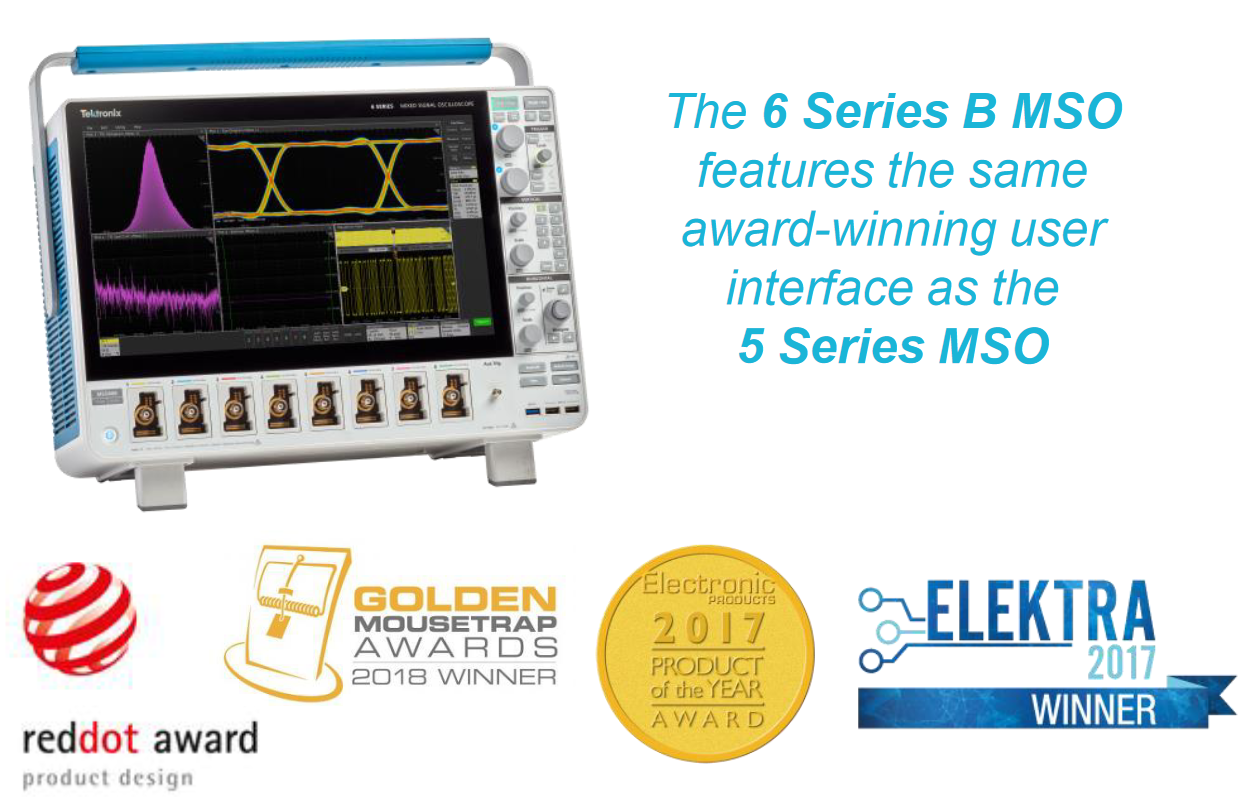
- Tektronix is famous for its intuitive front panel layout, easy-to-navigate menus, and responsive touchscreens on newer models. Many users say Tektronix oscilloscopes “just make sense” when you’re under time pressure. Their “One-touch” measurement buttons and clear labels are a big plus for beginners and busy engineers.
- Lecroy uses a more Windows-like interface with a focus on advanced customization. You can move, resize, and layer measurement windows, which is powerful for detailed analysis. However, this flexibility can be confusing for those new to oscilloscopes.
Non-obvious Insight: Many beginners overlook the learning curve with Lecroy’s advanced UI. If you’re switching from another brand, expect to spend extra time getting comfortable.
Tip: Try the user interface in person or through online demos before buying. Some engineers prefer Tektronix for fast setup, while others value Lecroy’s customizability for complex measurements.
Credit: www.tek.com
Signal Analysis And Built-in Tools
Modern oscilloscopes are more than waveform viewers—they’re powerful signal analysis platforms. Both brands offer math functions, protocol decoding, and advanced analysis tools, but with different strengths.
Lecroy Signal Analysis Features
- Serial Data Analysis: Deep support for protocols like PCIe, USB, MIPI, and more.
- Real-time math: Up to 16 simultaneous math traces, including FFT, custom equations, and statistical analysis.
- LabNotebook: Built-in documentation tool to save waveforms, settings, and screen captures for easy sharing.
Tektronix Signal Analysis Features
- Serial Bus Decoding: Wide protocol support, often included in base models (I2C, SPI, CAN, LIN, etc. ).
- Spectrum Analysis: MDO series provides spectrum analyzer integration for RF measurements.
- FastFrame: Captures multiple events in one acquisition, great for infrequent glitches.
Non-obvious Insight: Lecroy’s protocol analysis is often deeper and more customizable, especially for high-speed serial data. Tektronix focuses on integration—having multiple tools in one box.
Probing Solutions
Oscilloscope probes are as important as the scope itself. Both companies offer a range of active, passive, and differential probes.
- Tektronix is known for its low-noise, high-impedance active probes. Their TriMode probes allow users to switch between single-ended, differential, and common-mode measurements without changing probe tips.
- Lecroy offers specialized probes for high-speed serial, power electronics, and optical signals. Their high-voltage differential probes are popular in automotive and power industries.
Practical Tip: Probe compatibility can be a hidden cost. Check if your existing probes fit the new scope, especially for advanced differential or current probes. Lecroy’s and Tektronix’s probe interfaces are not always interchangeable.
Software And Connectivity
Modern oscilloscopes connect to PCs and networks for deeper analysis and automation. Here’s how Lecroy and Tektronix compare:
- Lecroy provides MAUI Studio for offline analysis, remote control via browser, and integration with MATLAB and LabVIEW. Their WaveStudio software is popular for quick data export and reporting.
- Tektronix offers TekScope (offline analysis), open API for automation, and solid support for SCPI commands. Their scopes are often easier to integrate with test benches using common protocols.
Both brands support USB, LAN, and sometimes Wi-Fi. Lecroy’s focus on post-processing is strong, but Tektronix may be easier for automated test setups.
Support, Documentation, And Community
Buying a high-end oscilloscope is a long-term investment. Technical support, documentation, and user community matter more than many beginners realize.
- Tektronix has a vast library of application notes, how-to videos, and an active user forum. Their support team is praised for quick responses and clear answers.
- Lecroy provides detailed manuals, webinars, and application engineers who can help with complex setups. Their support is more personalized for advanced users, but sometimes less accessible for beginners.
Non-obvious Insight: Tektronix’s documentation is often clearer for entry-level users, while Lecroy’s support shines for custom, high-end setups.
Price And Value For Money
Oscilloscope prices vary widely, from a few hundred dollars to hundreds of thousands. Here’s a general comparison:
| Model Family | Entry-level Price | High-end Price | Typical User |
|---|---|---|---|
| Lecroy WaveSurfer | $3,000 | $15,000 | Education, R&D |
| Tektronix TBS | $400 | $2,500 | Students, Hobbyists |
| Lecroy LabMaster | $100,000+ | $700,000 | Research Labs |
| Tektronix 8000 Series | $80,000 | $400,000 | Advanced R&D |
Value Tip: For routine electronics, Tektronix often offers better value and lower total cost. For advanced signal integrity work, Lecroy’s premium may be justified by unique features.
Real-world Application Scenarios
The right oscilloscope depends on what you need to measure. Here are examples of where each brand shines:
- University Labs: Tektronix TBS or MDO series, for easy learning and wide protocol support.
- Automotive Electronics: Lecroy WaveRunner, for deep CAN/LIN/FlexRay analysis and high-voltage probes.
- Wireless Research: Lecroy LabMaster, for 5G and high-speed optical signals.
- Embedded Systems: Tektronix MSO/DPO, for mixed signal analysis and fast triggering.
- Power Electronics: Lecroy’s high-voltage differential probes and advanced power analysis software.
Common Mistake: Beginners often buy the highest bandwidth they can afford, but for most debugging tasks, 200-500 MHz is enough. Save budget for good probes and software options.
Longevity, Calibration, And Maintenance
Oscilloscopes are precision instruments, and their accuracy depends on regular calibration and care.
- Tektronix scopes are known for durability and long life. Many 20-year-old Tek scopes are still in use today.
- Lecroy hardware is robust, but their most advanced models may require more frequent calibration due to higher specs.
Maintenance Tip: Check local calibration services before buying. Some advanced Lecroy models need factory calibration, which can add downtime and cost.
Industry Recognition And Awards
Both brands have won numerous industry awards, but with different focus areas.
- Tektronix is often awarded for ease of use, education initiatives, and test integration.
- Lecroy wins for technical innovation in bandwidth, memory, and protocol analysis.
This difference reflects their core philosophy—Tektronix as the reliable workhorse, Lecroy as the high-tech specialist.

Credit: www.reddit.com
What Beginners Often Miss
- Total Cost of Ownership: Software options, probes, and calibration can add 30-50% to the initial price. Always budget for the complete system, not just the main unit.
- Upgrade Paths: Tektronix and Lecroy offer bandwidth upgrades for some models, but not all. If you think you’ll need more bandwidth in the future, check upgrade costs before buying.
- Application Support: Some measurements (like jitter or eye diagrams) require extra software licenses. Compare what’s included and what’s optional.
Decision Factors: How To Choose Between Lecroy And Tektronix
To decide between Lecroy and Tektronix, focus on your real needs, not just specs.
- If you’re teaching or learning electronics: Tektronix’s intuitive interface and lower entry price make it the better choice.
- If you’re working on high-speed serial buses, advanced power analysis, or cutting-edge research: Lecroy’s deep memory, advanced math, and protocol tools are hard to beat.
- If you need a mixed-signal scope (oscilloscope + logic analyzer): Tektronix’s MSO and MDO lines are very strong.
- If you want lots of documentation and community support: Tektronix leads here.
Expert Guidance: If possible, borrow or demo both brands before buying. Your workflow and comfort with the interface often matter more than headline specs.
Looking To The Future
Both Lecroy and Tektronix are investing in AI-powered analysis, cloud connectivity, and real-time collaboration tools. Expect future models to offer smarter triggering, automated troubleshooting, and even more powerful integration with simulation and design tools.
For engineers and researchers, this means less time fighting with the instrument and more time solving real problems.
Summary Table: Lecroy Vs. Tektronix At A Glance
Here’s a quick side-by-side summary to help your decision:
| Feature | Lecroy | Tektronix |
|---|---|---|
| Max Bandwidth | Up to 100 GHz | Up to 70 GHz |
| Entry-level Price | ~$3,000 | ~$400 |
| Best For | High-speed analysis, advanced math | Education, mixed-signal, ease of use |
| UI Style | Advanced, customizable | Simple, intuitive |
| Support | Personalized for advanced users | Large community, broad documentation |
| Probes | Specialized, high-voltage | TriMode, low-noise |
Frequently Asked Questions
What Is The Main Difference Between Lecroy And Tektronix Oscilloscopes?
Lecroy is known for high bandwidth, deep memory, and advanced analysis tools, making them ideal for cutting-edge research. Tektronix focuses on usability, broad product range, and strong support, making them popular for education and general engineering.
Which Brand Is Better For Beginners?
Tektronix is usually the better choice for beginners because of its intuitive interface, clear documentation, and lower entry price. Lecroy’s advanced features are powerful but may overwhelm new users.
Are Lecroy And Tektronix Probes Interchangeable?
No, their probe interfaces and connectors are different. While some passive probes may fit with adapters, high-end active and differential probes are brand-specific. Always check compatibility before buying.
How Important Is Bandwidth When Choosing An Oscilloscope?
Bandwidth determines the highest frequency signal you can measure accurately. For most basic electronics, 200-500 MHz is enough. Only choose higher bandwidth (1 GHz or above) if you work with high-speed digital, RF, or advanced research.
Where Can I Find More Detailed Technical Reviews Of Lecroy And Tektronix Scopes?
For deep technical reviews and up-to-date product information, visit the Oscilloscope Wikipedia page or the official manufacturer websites.
Choosing between Lecroy and Tektronix is not just about specs or brand loyalty. It’s about matching the instrument to your workflow, technical challenges, and long-term goals. Both brands are leaders in their field. With the right information and a clear sense of your needs, you’ll make a decision that powers your projects for years to come.