A voltage tester pen and a multimeter are two of the most common tools you’ll find in any electrician’s toolkit. But for many beginners and even some DIY enthusiasts, the difference between these tools isn’t always clear. You might wonder, do you really need both?
Or, can one replace the other? Understanding what each tool does, their limitations, and when to use them can help you work safely and efficiently with electrical systems, whether at home or on the job.
It’s easy to think both devices do the same thing — after all, they’re both used for electrical testing. However, their functions, accuracy, and safety features are quite different. Choosing the wrong tool, or using it incorrectly, can lead to mistakes, wasted time, or even dangerous situations.
This article gives you a clear, practical comparison of voltage tester pens versus multimeters, including how they work, what they’re best for, and the most common mistakes people make when using them. You’ll also find expert tips, real-world examples, and answers to the most frequent questions asked by new users.
Let’s explore which tool you should use, when, and why.
What Is A Voltage Tester Pen?
A voltage tester pen is a small, lightweight device that checks for the presence of AC voltage in electrical wires, outlets, switches, or other fixtures. Most models are shaped like a thick pen or marker, and they’re often called “non-contact voltage testers” because you don’t need to touch bare metal for them to work.
You simply hold the tip of the pen near a wire or outlet. If voltage is present, the pen lights up or beeps. This makes it quick and safe to check if something is “live” without opening anything up or risking a shock.
They’re especially popular with electricians, maintenance workers, and anyone who does basic electrical repairs at home.
Some voltage tester pens are more advanced and can detect a range of voltages, while others only work within a specific range (for example, 90–1000 volts AC). It’s important to check the specifications of your pen before using it.
Key Features
- Non-contact detection (safe to use)
- Lightweight and portable
- Easy to operate
- Battery-powered
- Audible and/or visual alert
What A Voltage Tester Pen Can Do
- Detect live AC wires quickly and safely.
- Check if outlets or switches are energized before working on them.
- Find breaks in wires by moving the pen along the insulation.
- Test extension cords for power without plugging in a device.
- Verify de-energized circuits after turning off a breaker.
What It Can’t Do
- Cannot measure voltage value (just presence/absence).
- Cannot test DC voltage (most models).
- Cannot measure current, resistance, or continuity.
- May not work on shielded or deeply buried wires.
- Can give false positives/negatives near strong electromagnetic fields.
What Is A Multimeter?
A multimeter is a more advanced tool. It can measure multiple electrical values, including voltage (AC and DC), current (amps), resistance (ohms), and sometimes more (like capacitance, frequency, or temperature). There are two main types: analog (with a needle) and digital (with an LCD display). Today, digital multimeters (DMMs) are most common and much easier for beginners to use.
A multimeter has two test leads (black and red). You connect these to the circuit or component you want to measure. The display shows a numeric value — for example, the exact voltage at an outlet or the resistance of a wire.
Multimeters are essential for troubleshooting electrical problems, testing batteries, and diagnosing faults in appliances or car electronics.
Key Features
- Measures voltage, current, resistance
- AC and DC testing
- Displays precise values
- Multiple testing modes
- Some models include extra features (continuity, diode test, etc.)
What A Multimeter Can Do
- Measure exact voltage (AC or DC) in a circuit.
- Check battery charge level and health.
- Test fuses, light bulbs, or switches for continuity.
- Measure electrical resistance in wires or components.
- Diagnose electrical faults in household or automotive systems.
- Test current draw to prevent overloading circuits (with care).
What It Can’t Do
- Not always safe for quick “live wire” checks (requires contact).
- Needs correct settings and lead placement.
- Can be risky if user makes mistakes (wrong mode, touching live wires).
- Bulkier and slower to use than a voltage tester pen.

Credit: www.youtube.com
Comparing Voltage Tester Pen And Multimeter
Let’s look at the main differences side by side. This comparison will help you choose the right tool for your job and understand the strengths and weaknesses of each.
| Feature | Voltage Tester Pen | Multimeter |
|---|---|---|
| Function | Detects presence of AC voltage | Measures voltage, current, resistance, more |
| Contact Required | No (non-contact) | Yes (test leads must touch points) |
| Accuracy | Low (live/not live only) | High (precise values) |
| Ease of Use | Very easy | Requires setup, knowledge |
| Speed | Instant | Slower (setup needed) |
| Safety | Very safe | Safe if used correctly |
| Price | Low ($10–$30) | Low to high ($20–$200+) |
| Size | Pocket-size | Larger, not always pocketable |
| Best For | Quick live/dead checks | Detailed troubleshooting |
When To Use A Voltage Tester Pen
A voltage tester pen is the perfect tool for fast, simple safety checks. If you’re about to change a light fixture, fix an outlet, or install a ceiling fan, you need to know if the wires are live. Instead of poking around with metal tools or guessing, you just move the pen near the wire or socket.
If it lights up or beeps, you know there’s voltage. If not, you’re safe to work.
This tool is also great for checking extension cords, power strips, or surge protectors. For example, if a lamp isn’t working, you can quickly check if the cord or outlet is the problem without unplugging anything.
Example
Imagine you need to replace a wall outlet. You’ve turned off the circuit breaker, but you want to be sure the power is really off. You hold your voltage tester pen near the outlet slots. No light or beep means it’s safe to proceed.
If it does beep, you know the breaker is wrong or mislabeled.
Common Mistakes With Voltage Tester Pens
- Using on DC circuits – Most pens do not detect DC voltage (like from batteries or solar panels). Always check your pen’s specs.
- Relying too much on the pen – Some pens give false positives (beep without real voltage) if near strong magnetic fields or static electricity.
- Not checking batteries – If the pen’s battery is dead, it won’t warn you about live wires. Test the pen on a known live outlet before every use.
- Assuming neutral wires are always safe – In some wiring errors, neutral wires can be live too. Always test every wire.
- Probing shielded or armored cable – Tester pens may not sense voltage through thick insulation or metal sheathing.
Pro Tips
- Always test your voltage pen on a known live source before starting work.
- Move the pen slowly and steadily along wires to detect breaks or faults.
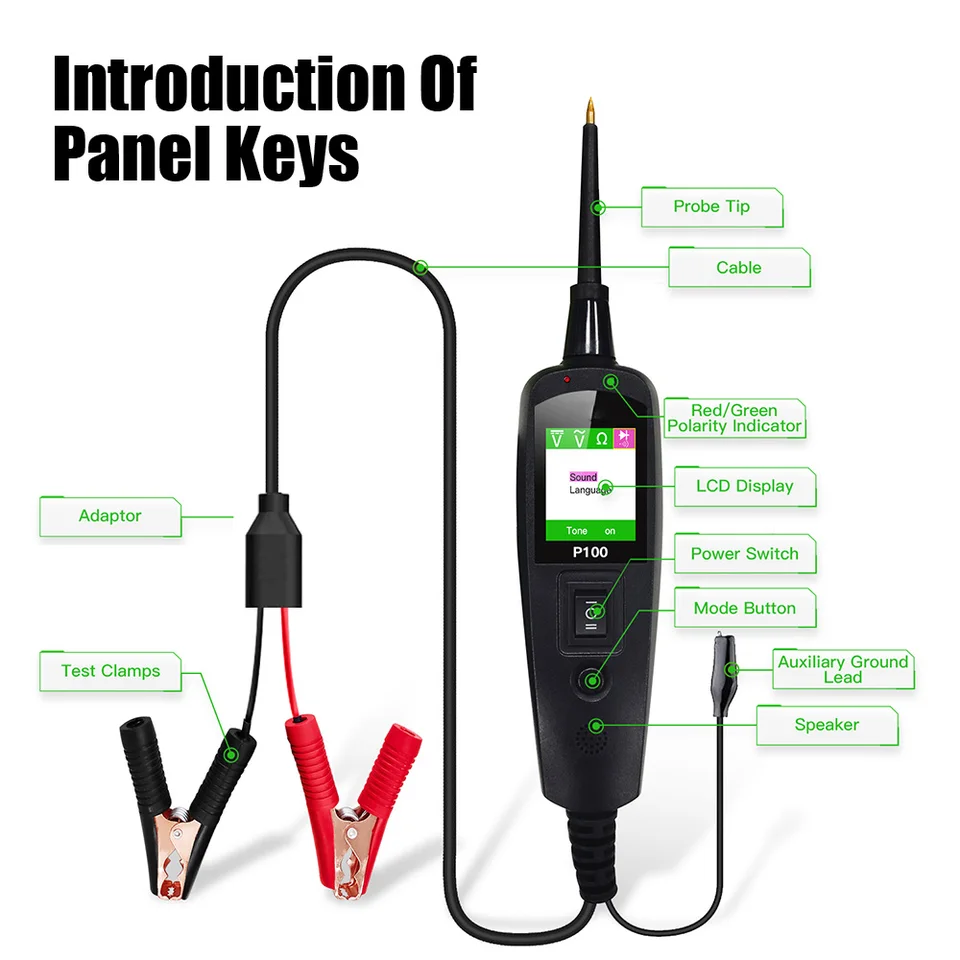
- Don’t use a voltage tester pen for “yes/no” checks on car wiring — they often use DC voltage.
Credit: www.fiberforce.it
When To Use A Multimeter
A multimeter is your go-to tool for diagnosis, repair, and verification. If you need to know the exact voltage, test a battery, check a fuse, or measure the resistance of a heating element, a multimeter is essential. It’s not just for electricians — anyone working on electronics, appliances, or cars will use a multimeter regularly.
Example
Suppose your TV is not turning on. You suspect a blown fuse inside. A voltage tester pen won’t help here — you need to measure continuity (whether electricity can flow through the fuse). Set your multimeter to continuity mode, touch the leads to both ends of the fuse, and listen for a beep or see a reading.
If there’s no beep, the fuse is blown.
Common Mistakes With Multimeters
- Wrong measurement mode – Choosing AC instead of DC (or vice versa) gives wrong readings or damages the meter.
- Touching live wires with fingers – Always use insulated leads and keep fingers behind the guards.
- Testing current (amps) in parallel – Always connect the meter in series for current measurements, or you could blow the fuse inside the meter.
- Setting range incorrectly – Some multimeters need you to pick the range manually. Too high, and you get no reading; too low, and the display overloads.
- Forgetting to switch off – Leaving a multimeter on drains the battery quickly.
Pro Tips
- Use the “hold” function to keep a reading visible if the display is hard to see.
- For batteries, compare the measured voltage to the rated value (e.g., 1.5V for AA) to know if they need replacement.
- Check the internal fuse in your multimeter if you get no readings on the amps setting.
Real-world Scenarios: Which Tool To Use?
| Scenario | Best Tool | Why |
|---|---|---|
| Checking if wall outlet is live | Voltage Tester Pen | Quick, safe, non-contact |
| Measuring how much voltage is present | Multimeter | Shows exact voltage value |
| Testing a battery | Multimeter | Tests DC voltage, not possible with pen |
| Finding a break in a lamp cord | Voltage Tester Pen | Move pen along cord for detection |
| Diagnosing why a device is not working | Multimeter | Checks continuity, voltage, resistance |
| Testing car electrical system | Multimeter | Needed for DC circuits |
| Verifying power is off before repairs | Voltage Tester Pen | Fast safety check |
Credit: www.alibaba.com
Limitations And Safety Considerations
Both tools are safe if used correctly, but each has limits. Understanding these can prevent accidents and wasted time.
Voltage Tester Pen Limitations
- Not accurate for voltage value — only “live” or “not live.”
- Most do not work with DC voltage (batteries, car wiring).
- Can be fooled by electromagnetic fields, static, or poor batteries.
- Won’t detect power through metal conduit or shielded wires.
- Can’t measure current, resistance, or continuity.
Multimeter Limitations
- Needs physical contact with wires — higher risk of shock if careless.
- Can be damaged if set incorrectly (wrong range, wrong mode).
- Some models are not “auto-ranging”; must choose range manually.
- Bulky for pocket carry compared to a pen.
- Not as fast or simple for basic “live/dead” checks.
Which Tool Should You Buy First?
If you’re a complete beginner, start with a voltage tester pen. It’s cheap, safe, and covers the most basic need: knowing if a wire or outlet is live. This is especially true if your main work is changing light bulbs, fixing outlets, or replacing switches in the home.
If you plan to do more electrical troubleshooting, appliance repair, or work on cars or electronics, invest in a good digital multimeter. It covers almost every other electrical measurement and gives you the numbers you need to diagnose problems.
Many professionals carry both. The voltage tester pen is used for a quick, safe check, and the multimeter is used for detailed measurements. If you’re serious about DIY, you’ll likely end up with both tools.
How To Choose The Right Model
Voltage Tester Pen
- Choose a model with CAT II or CAT III safety rating.
- Make sure it covers the voltage range you need (most home wiring is 110–240V AC).
- Prefer pens with both light and sound alerts.
- Check battery type and life.
- Read user reviews — some cheap pens are unreliable.
Multimeter
- Digital models are easier to read and use than analog.
- Check for auto-ranging (no need to pick voltage range).
- Look for safety ratings (CAT II/III/IV for home, industrial, or automotive use).
- Features like continuity, diode test, or temperature are useful extras.
- Consider brand reputation — trusted brands (Fluke, Klein, Extech) are more reliable.
Non-obvious Insights Beginners Miss
- Voltage tester pens can sometimes “see” ghost voltage — a harmless, induced voltage from nearby wires. If the pen beeps but there’s no real power, double-check with a multimeter or plug in a lamp.
- Multimeter test leads matter — cheap leads can break or give poor contact, leading to wrong readings. Investing in good quality, insulated leads boosts both accuracy and safety.
- Both tools can fail if batteries are low — but pens fail silently. Always check function on a known live outlet before trusting any test.
- Some multimeters have a “non-contact voltage” mode — but it’s usually less sensitive and reliable than a real voltage tester pen.
- Voltage tester pens are not a replacement for lockout/tagout procedures — always use proper safety steps when working on high-voltage or industrial systems.
Real-world Example: Home Renovation
During a kitchen renovation, you need to move a few outlets and install new lights. Before starting, you use your voltage tester pen to check every outlet and switch box, ensuring the power is off after you flip the breaker.
Later, you need to verify that your new LED lights are getting the correct voltage. Now, you use your multimeter to measure the voltage at the wires — confirming you have 120V AC, not too high or too low.
In one case, a wire shows “live” with the pen, but the light doesn’t work. Using the multimeter, you find there’s only 30 volts present — not enough for the light, likely due to a loose connection.
This combination of tools keeps you both safe and efficient.
Which Tool Is Safer?
Both tools are safe if used as intended, but for pure safety, the voltage tester pen wins because you never touch metal or live wires. Multimeters are also safe, but only if you set the correct mode and use insulated leads properly. For absolute beginners, the pen is less likely to lead to an accident.
For more safety tips and deeper reading on electrical tool safety, you can visit Wikipedia Electrical Safety.
Frequently Asked Questions
How Accurate Are Voltage Tester Pens?
Voltage tester pens are not very accurate for voltage values. They only tell you if voltage is present or not. They cannot measure the exact number of volts. Sometimes, they can be triggered by static electricity or “ghost voltage,” so always double-check if you’re unsure.
Can A Multimeter Replace A Voltage Tester Pen?
A multimeter can do almost everything a pen can do (and more), but it’s not as quick or safe for checking if a wire is live. You have to touch the leads to the circuit, which can be risky if you’re not careful.
For fast safety checks, a voltage tester pen is better.
Are Voltage Tester Pens Safe For Beginners?
Yes, voltage tester pens are very safe for beginners. They’re non-contact, so you don’t have to touch bare wires. Just remember to test the pen on a known live source first and never use it on DC circuits unless your model supports DC.
What Is The Best Way To Test Batteries?
Use a digital multimeter set to the correct DC voltage range. Touch the red lead to the positive end and the black lead to the negative. Compare the reading to the battery’s rated voltage. If it’s more than 10–15% below the rating, the battery is weak.
Do I Need Both Tools For Home Repairs?
If you’re doing only basic tasks like changing outlets or switches, a voltage tester pen is enough. For more advanced troubleshooting (finding why a device doesn’t work, testing batteries, etc. ), you’ll want a multimeter as well. Most professionals use both for maximum safety and flexibility.
In summary, a voltage tester pen and a multimeter are both valuable, but for different reasons. The pen keeps you safe and confident when checking for live wires, while the multimeter gives you the numbers and data you need to fix, test, and diagnose electrical problems.
Understanding their strengths and limitations helps you choose the right tool for every job — and avoid costly or dangerous mistakes.