When working with vehicle electrical systems, choosing the right diagnostic tool can save time, prevent mistakes, and even protect expensive components from accidental damage. Two of the most discussed products in this field are the Load Pro and the Power Probe. Both are popular in automotive repair and diagnostics, but they serve different purposes and have unique strengths. Whether you are a professional technician or a serious DIY enthusiast, understanding the differences between these tools will help you make a smarter decision—and avoid common pitfalls that many beginners face.
This guide takes a deep dive into both tools, explains how they work, and compares them side by side. You’ll learn not just what they do, but when to use each, what features really matter, and how to avoid mistakes that can cost you time and money. Let’s break down Load Pro vs Power Probe in detail, so you’ll walk away with the confidence to pick the right tool for your next project.
What Is The Load Pro?
The Load Pro is a specialized test lead designed primarily for circuit testing under load. Standard test leads used with a multimeter only measure voltage or continuity—they do not show how a circuit performs when it is actually powering a device. The Load Pro adds a small load (about 0.5 amps) to the circuit, which reveals hidden voltage drops or weak connections that a standard test might miss.
One key advantage of the Load Pro is its simplicity. It works with any standard multimeter. You simply connect the Load Pro test leads in place of your regular ones. By pressing the built-in load button, you can instantly see if a circuit can handle real-world power demands.
If a wire or connector is corroded or partially broken, voltage will drop when the load is applied, alerting you to a problem.
This makes the Load Pro especially useful for diagnosing tricky issues like intermittent power loss, dim lights, slow actuators, or sensors that only fail under actual use. Instead of guessing, you can quickly confirm if a circuit is healthy or not—with minimal risk to the vehicle’s electronics.
How Does The Load Pro Work?
The Load Pro’s main function is to simulate real-world electrical demand. By applying a small current (about 0.5A), it mimics the draw of many automotive circuits. This exposes problems that are invisible when testing without a load.
For example, a wire with a corroded connector might show 12 volts with a standard test lead. But when you press the Load Pro button, the voltage may drop to 9 or 10 volts, revealing a poor connection. This technique is called “voltage drop testing under load,” and it’s a proven method for finding hidden faults.
Typical Uses For The Load Pro
- Checking voltage drop in wiring harnesses and connectors
- Finding corroded, loose, or broken connections
- Diagnosing intermittent electrical faults
- Testing lighting, sensor, and actuator circuits
The Load Pro is most valuable when you suspect a problem but standard voltage or continuity tests show everything is “OK. ” It gives you the power to see what’s really happening under the surface.
What Is The Power Probe?
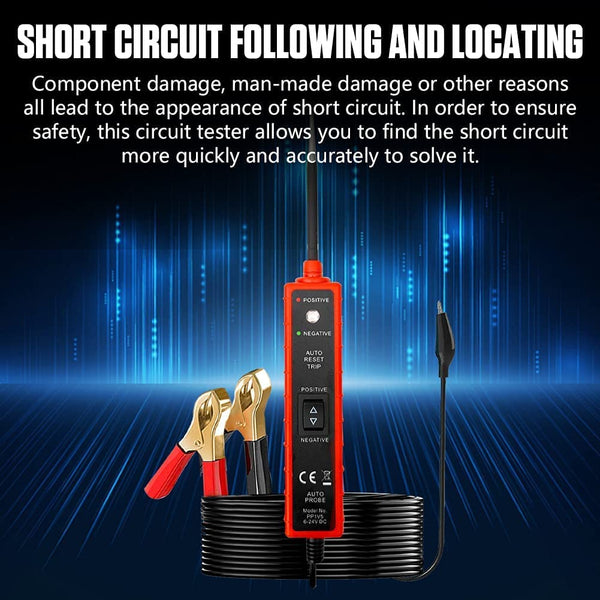
The Power Probe is a more advanced electronic tool designed for automotive circuit testing. Unlike the Load Pro, the Power Probe is an active device—it can not only read voltage and ground, but also supply power or ground to a circuit. This lets you operate components (like motors, relays, or lights) directly from the tool, making diagnosis and troubleshooting much faster.
Modern Power Probe models (such as Power Probe III and IV) include features like a built-in voltmeter, polarity tester, continuity checker, and even circuit protection. Some models can also test for short circuits, check for bad grounds, and activate relays or solenoids on the spot.
By connecting the Power Probe to the vehicle battery, you get a portable, versatile tool that can test, power, and troubleshoot almost any automotive circuit. It’s especially useful for tasks like tracing wires, verifying switch operation, and quickly activating components during repairs.
How Does The Power Probe Work?
The Power Probe connects directly to the vehicle’s battery. It has two main functions:
- Testing: It measures voltage (positive or negative) instantly when you touch a probe tip to a wire or terminal. A digital display shows the reading, and built-in lights or sounds signal polarity.
- Powering/grounding: By pressing a button, you can send battery voltage or ground through the probe tip, activating components for testing.
Most Power Probe models also include safety features. For example, if you accidentally short a circuit, the tool’s built-in circuit breaker or fuse will protect both the tool and the vehicle’s wiring.
Typical Uses For The Power Probe
- Activating components: Run a motor, light, or relay directly from the tool to check if it works
- Testing fuses and switches
- Checking for power and ground in seconds
- Quickly tracing wires and finding shorts
- Diagnosing open circuits or faulty grounds
The Power Probe is a versatile, time-saving device. However, it does require more caution—supplying power to the wrong circuit can cause damage if you’re not careful.

Credit: hlaw.at
Key Differences: Load Pro Vs Power Probe
While both tools help diagnose electrical problems, their approach and capabilities are very different. Here’s a side-by-side comparison:
| Feature | Load Pro | Power Probe |
|---|---|---|
| Primary Function | Test voltage drop under load | Test, power, or ground circuits |
| Works With | Any multimeter | Standalone tool (built-in meter) |
| Can Apply Power? | No | Yes |
| Circuit Protection | Safe (can’t damage circuit) | Has built-in fuse/circuit breaker |
| Skill Level Needed | Beginner to expert | Intermediate to expert |
| Best For | Finding voltage drops, poor connections | Activating parts, tracing wires, quick diagnosis |
The Load Pro’s strength is safe, accurate voltage drop testing under actual circuit load. The Power Probe’s strength is versatility—being able to power, test, and troubleshoot almost any circuit quickly.
Deep Dive: Features And Capabilities
Load Pro Main Features
- Simple to use: Connects like a standard test lead to any multimeter.
- Built-in load resistor: Applies a safe, small current for real-world testing.
- One-button operation: Press to load the circuit, release to test normally.
- No risk to electronics: Cannot apply external power, so it’s safe for sensitive modules.
- Color-coded leads: Easy to identify connections.
Power Probe Main Features
- Instant voltage/polarity display: See positive/negative and voltage level right away.
- Power/ground supply: Activate almost any 12V component directly.
- Built-in circuit protection: Resettable circuit breaker or fuse prevents damage.
- Continuity tester: Audible and visual signals for open/short circuits.
- Wire tracing: Some models include tone generators for following wires.
- Accessory options: Extensions, hooks, and adapters for various jobs.
Practical Example: Diagnosing A Faulty Headlight
Suppose a headlight is dim or not working.
- With the Load Pro, you would test the headlight circuit under load. If voltage drops below 12V when the load is applied, it means there’s resistance—likely a corroded connector or weak ground.
- With the Power Probe, you could check for voltage at the headlight connector. If voltage is present, you can also supply ground (or power, as needed) directly to the bulb to see if it lights up. If it works, the bulb is good; if not, the bulb is bad.
Both tools reveal important information, but in different ways.
Strengths And Weaknesses
Load Pro Strengths
- Extremely safe: No risk of damaging vehicle electronics.
- Reliable for finding voltage drops: Especially useful in complex wiring harnesses.
- Low cost: Much cheaper than the Power Probe.
- Works with your existing multimeter: No extra investment needed.
Load Pro Weaknesses
- Can’t activate components: Only tests voltage and voltage drop.
- Slower for some tasks: Can’t quickly power a motor or relay for testing.
- Limited to diagnosis: Not useful for wire tracing or fuse testing.
Power Probe Strengths
- Highly versatile: One tool can test, power, and activate circuits.
- Saves time: Instantly check power, ground, and component function.
- Built-in safety: Circuit protection prevents most accidents.
- Great for tracing wires: Especially in complex or hidden harnesses.
Power Probe Weaknesses
- More expensive: Costs several times more than Load Pro.
- Needs careful use: Supplying power to the wrong place can cause damage.
- Learning curve: Beginners can make mistakes, especially with sensitive electronics.
- Battery connection required: Needs to be connected to the car battery for full function.
When To Use Load Pro Vs Power Probe
The right choice depends on your needs, skill level, and the type of work you do.
- Choose Load Pro if: You want a simple, safe way to find voltage drops or diagnose intermittent faults, especially in older vehicles or basic circuits. It’s a great tool for beginners and those who want to avoid risk.
- Choose Power Probe if: You need speed, versatility, and the ability to power or ground components on the spot. It’s best for professionals or advanced DIYers who understand how to avoid mistakes.
There are many situations where both tools are useful together. For example, you might use the Load Pro to confirm wiring health, then use the Power Probe to activate a relay or motor during troubleshooting.

Credit: www.youtube.com
Real-world Applications And User Experiences
Load Pro In Action
Many experienced technicians use the Load Pro for tasks like:
- Diagnosing intermittent electrical problems that only happen under load (e.g., window motors that work sometimes)
- Quickly checking entire wiring harnesses for hidden corrosion or weak connectors
- Verifying the quality of ground connections before replacing expensive modules
A common insight that beginners miss: A circuit can show perfect voltage with no load, but fail completely when under load. This is why the Load Pro is so valuable for finding hidden problems.
Power Probe In Action
Power Probe fans often cite:
- Rapidly powering up door locks, fuel pumps, or lights to verify function without removing parts
- Finding broken wires by sending a tone through the circuit and tracing with an audio probe
- Quickly checking hundreds of fuses during diagnostic work
A less obvious tip: Supplying power directly to control circuits or sensitive modules can cause expensive damage. Always double-check wiring diagrams and be careful where you apply power.
Cost Comparison
Pricing is a major factor for many buyers.
- Load Pro: Usually costs between $40 and $60 USD. You must have a digital multimeter (DMM) to use it.
- Power Probe: Most models range from $90 to $180 USD, with advanced models (like Power Probe IV) costing even more.
While the Power Probe offers more features, the Load Pro is a cost-effective way to diagnose many electrical problems without risk.
Credit: televisionhellin.com
Choosing The Right Tool: What Really Matters
When selecting between these tools, focus on:
- Type of diagnostics you perform: If you mostly check for voltage drops, Load Pro is ideal. If you need to activate or power circuits, Power Probe is more suitable.
- Experience level: Beginners are less likely to damage vehicles with the Load Pro. Advanced users can take advantage of the Power Probe’s versatility.
- Budget: If cost is a concern, the Load Pro offers excellent value.
- Vehicle type: Modern vehicles with sensitive electronics require more caution. The Load Pro is safer for these systems.
A mistake many buyers make: Choosing the most expensive tool without considering their actual needs. If you rarely power up components, the extra features of the Power Probe may not be worth the cost or risk.
Feature Comparison Table
For easy reference, here’s a comparison of key features:
| Feature | Load Pro | Power Probe |
|---|---|---|
| Voltage drop testing | Yes | Limited |
| Component activation | No | Yes |
| Wire tracing | No | Yes (some models) |
| Continuity checking | Yes (with DMM) | Yes |
| Polarity detection | No | Yes |
| Circuit protection | Inherent (no external power) | Built-in fuse/breaker |
| Price | Low | Medium to High |
Common Mistakes To Avoid
- Supplying power to the wrong circuit with a Power Probe: This can damage electronic modules. Always check wiring diagrams and confirm before activating any circuit.
- Assuming voltage means a good circuit: Standard voltage testing without load can miss bad connections. Use the Load Pro to check under load.
- Over-relying on one tool: No tool is perfect for every situation. Sometimes you need both for a complete diagnosis.
- Skipping safety steps: Especially with Power Probe, always use the built-in circuit protection and never bypass fuses.
- Ignoring the learning curve: The Power Probe offers more, but requires more knowledge. Practice on non-critical circuits first.
User Reviews And Industry Opinions
Feedback from professional forums and automotive schools highlights a few key points:
- Load Pro is praised for its safety, ease of use, and effectiveness at finding hard-to-diagnose electrical problems. Many users say it paid for itself the first time they avoided an unnecessary part replacement.
- Power Probe is valued for speed and versatility. Some technicians use it daily for fuse testing, component activation, and wire tracing. However, most agree that training and caution are essential to avoid costly mistakes.
A respected external reference, such as the official Power Probe site, offers detailed guides and video tutorials for users who want to learn more before buying.
Which One Is Best For You?
There is no single “winner” in the Load Pro vs Power Probe debate. The right tool depends on your specific needs, budget, and experience level.
- Choose Load Pro for: Safe, reliable voltage drop testing, especially if you are new to automotive diagnostics or want to avoid risk.
- Choose Power Probe for: Maximum speed and flexibility, if you’re comfortable supplying power/ground and need to activate components during repairs.
Many professional shops keep both tools on hand, using each for the jobs they do best. If you start with the Load Pro, you can add a Power Probe as your skills and needs grow.
Frequently Asked Questions
What Is The Main Difference Between Load Pro And Power Probe?
The Load Pro tests circuits under load by adding a small current, revealing voltage drops and weak connections. The Power Probe can supply power or ground to a circuit, activate components, and quickly test for voltage, polarity, and continuity.
Can I Damage My Car Using A Power Probe?
Yes, if used incorrectly. Supplying power to sensitive circuits or modules can cause damage. Always check wiring diagrams and use the Power Probe’s built-in circuit protection. Beginners should practice on non-critical circuits first.
Is The Load Pro Enough For All Electrical Diagnostics?
No. The Load Pro is excellent for finding voltage drops and bad connections, but cannot activate or power components. For tasks like running a motor or tracing wires, a Power Probe is more effective.
Which Tool Is Safer For Beginners?
The Load Pro is safer for beginners because it cannot supply power or ground and works with any standard multimeter. It is almost impossible to damage vehicle electronics using the Load Pro.
Do Professionals Use Both Tools?
Yes. Many experienced technicians use both. The Load Pro is used for voltage drop testing, while the Power Probe is used for activating components, tracing wires, and quick testing. Each tool has unique strengths, and they work well together.
In the end, both tools are valuable additions to any automotive electrical toolkit. By understanding their differences and using them wisely, you’ll make faster, more accurate diagnoses—and avoid costly mistakes.