When you are working on car electronics or any electrical system, having the right tools can save you time, money, and a lot of frustration. Two of the most used tools by mechanics and DIY enthusiasts are the Power Probe and the test light. Both help you check circuits, find faults, and solve problems, but they are quite different in their abilities, price, and the way you use them. If you are confused about which one you really need, or want to know if one tool can replace the other, this article will give you a clear and deep comparison. Let’s look at what makes these tools special, when to use each, and the hidden tips that most beginners miss.
What Is A Power Probe?
A Power Probe is an advanced electrical testing tool designed to do more than just check if voltage exists. It helps mechanics and car owners test wires, trace faults, and even supply power or ground to a circuit. The tool typically has a digital display, buttons for control, and comes with extra leads and attachments.
Some of the main things a Power Probe can do include:
- Show voltage and ground instantly
- Feed power or ground to parts for direct testing
- Test continuity and resistance
- Locate short circuits or broken wires
- Test relays and fuses quickly
The tool connects to the car’s battery, which gives it the power to do active tests, not just passive checks. This is a key point: the Power Probe is not just a “fancy test light”—it’s a multifunction tool.
What Is A Test Light?
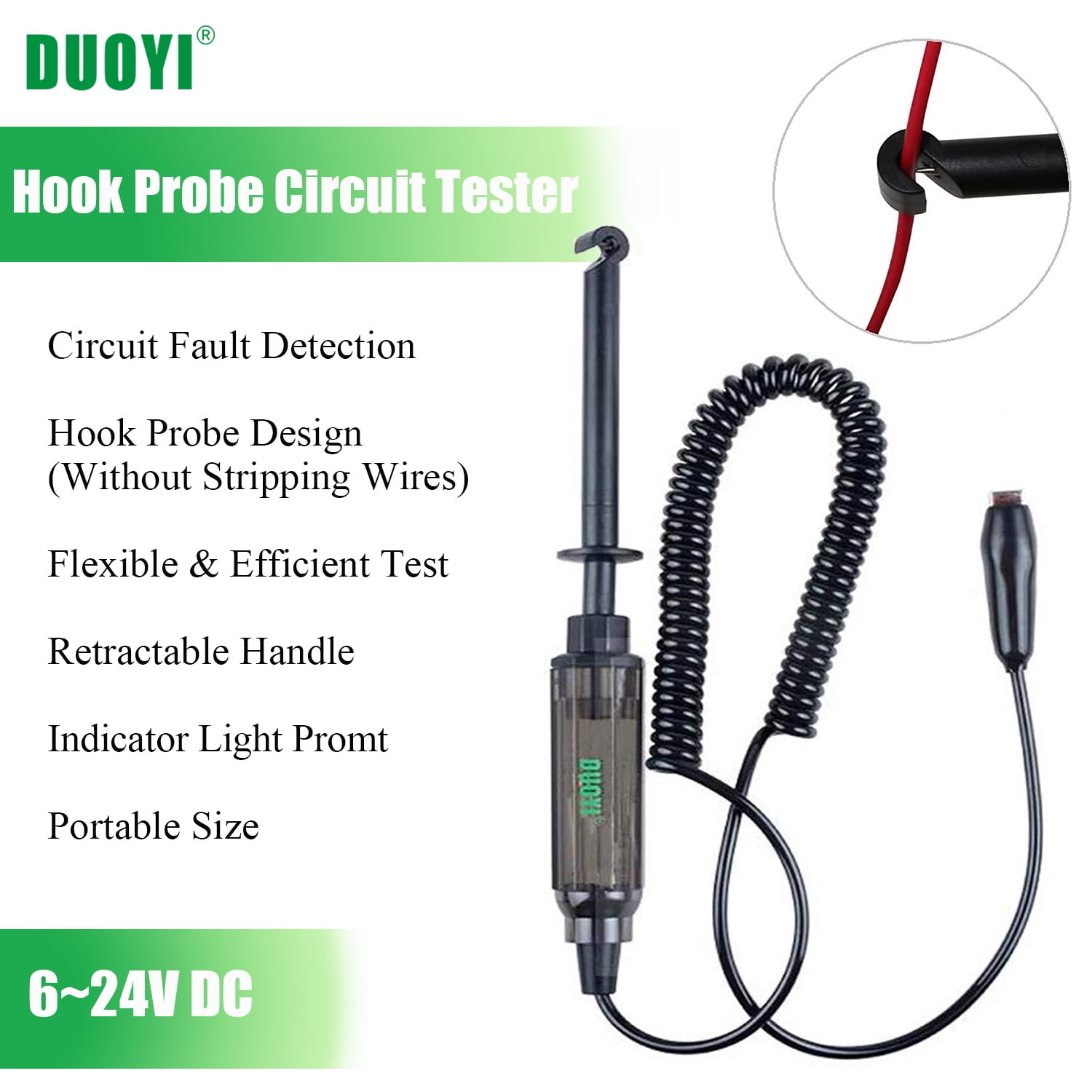
A test light is a simple but effective tool that has been used for decades. It’s usually a pointed metal probe with a small bulb inside and a wire lead with a clip. When you touch the probe to a live wire and clip the lead to ground, the bulb lights up if voltage is present.
Some main uses for a test light:
- Check for voltage in wires, fuses, and connectors
- Find blown fuses
- Test if switches are working
- Check ground circuits
The test light is very affordable, easy to use, and almost never breaks. But it has limits—you cannot feed power to a circuit, measure exact voltage, or safely test sensitive electronics.
Power Probe Vs Test Light: Main Differences
While both tools help you check car wiring, they are not equal. Here’s a quick look at how they compare:
| Feature | Power Probe | Test Light |
|---|---|---|
| Voltage Display | Digital (Exact value) | No (Only bulb lights up) |
| Feed Power/Ground | Yes | No |
| Continuity Test | Yes (beep/reading) | No |
| Price | High ($80-$200+) | Low ($5-$20) |
| Safe for Computers | Some models | No, can damage ECUs |
| Beginner Friendly | Medium (Needs learning) | Very easy |
The table shows that the Power Probe is much more powerful, but also more complex and expensive. For basic jobs, the test light is often enough.
How Each Tool Works In Real Life
Using A Test Light
Let’s say your car’s brake lights are not working. You suspect a fuse is blown. You grab your test light, clip the ground to a metal part, and touch the probe to both sides of the fuse. If the bulb lights up on both sides, the fuse is good. If not, you found the problem.
This method is fast and safe for simple circuits, like lights or old car wiring. However, if you try this on a modern car with complex electronics, you risk damaging sensitive computer parts.
Using A Power Probe
Now imagine you are trying to find out why a window motor won’t move. You connect the Power Probe to the battery, set it to feed power, and touch the wire going to the motor. If the window moves, the wiring is good and the problem is likely the switch.
If it doesn’t, you can use other Power Probe features to test ground, check continuity, or trace the wire for breaks.
The Power Probe makes these tests faster and gives more information. You can see the exact voltage, test in both directions, and avoid guessing.
Main Types Of Power Probes And Test Lights
There are different models and styles for each tool. Choosing the right one depends on your needs and budget.
Power Probe Types
- Basic Power Probe – Shows voltage, feeds power/ground, tests continuity. Good for most car work.
- Power Probe with Multimeter – Adds functions like measuring resistance, current, and more.
- Smart Power Probe – Has LCD screen, menu options, memory, and even audio tones.
Test Light Types
- Standard Bulb Test Light – Cheap, works for 6-24V systems.
- LED Test Light – Safer for computers, draws less current, but harder to see in sunlight.
- Computer Safe Test Light – Has a resistor inside to limit current, protecting ECUs and sensors.
When To Use A Power Probe
A Power Probe really shines when you need to go beyond simple checks. Here are some situations where it’s the best choice:
- Tracing broken or shorted wires: The tool can send a signal down the wire and help you find the break.
- Testing window motors, locks, and relays: You can directly feed power and see if the part works.
- Checking sensors and computer circuits: Some models are safe for ECUs and can read data without causing damage.
- Working on modern cars: New vehicles have many computers and “smart” parts. The Power Probe’s digital control is safer and more precise.
One insight beginners miss: The Power Probe can save you hours by quickly ruling out wiring or part problems, letting you focus on real faults. But you must learn its features to use it safely.
Credit: stpadarnsrcp.co.uk
When To Use A Test Light
A test light is still the fastest tool for many basic jobs:
- Checking fuses and simple switches: In older cars, nothing beats the speed of a test light.
- Testing brake lights, headlights, and signals: You see instantly if voltage is present.
- Finding bad grounds: If the test light glows dim or not at all, you likely found a poor connection.
A common mistake: Many beginners use test lights on computer circuits. This can send too much current and damage expensive ECUs. Always check your car’s repair manual before probing wires, especially on models after 2000.
Key Advantages Of Power Probe
The Power Probe’s strengths go beyond just “doing more” than a test light. Here are some unique benefits:
- Saves time: You don’t need to switch tools for different tests. One device does nearly everything.
- Reduces guesswork: Digital readings mean you know if a wire has 12.5V, 5V, or is just floating.
- No second person needed: You can activate motors or lights yourself, with the probe feeding power.
- Memory and logic testing: Advanced models store test results and can check data signals, which is impossible with a test light.
Here’s a summary of tasks that are much easier with a Power Probe:
| Task | Power Probe | Test Light |
|---|---|---|
| Feed power to motors | Yes | No |
| Read exact voltage | Yes | No |
| Test relays quickly | Yes | Harder |
| Trace broken wires | Yes | No |
| Safe for ECUs | Some models | No |

Credit: www.ebay.com
Key Advantages Of Test Light
While it may seem simple, the test light has some strong points:
- Low cost: You can buy several and never worry about breaking them.
- Fast setup: No need to connect to the battery, just clip and test.
- No batteries needed: It uses the car’s own power, so it’s always ready.
- Simple to understand: Even beginners can use it with almost no training.
For quick checks, a test light is often faster than a multimeter or Power Probe.
Limitations And Risks
Power Probe
- Cost: Good models are expensive. Not worth buying if you only do basic work.
- Learning curve: With more functions comes more risk of mistakes. Feeding power to the wrong wire can cause damage.
- Size: Some models are bulky and less handy in tight spaces.
Test Light
- No digital reading: You only know if voltage exists, not how much.
- Unsafe for computers: Can destroy ECUs if used on data lines or sensor wires.
- Cannot feed power or ground: Limits its use for testing motors or complex parts.
One advanced tip: Some mechanics use both tools together. For example, use the test light to quickly check for voltage, then grab the Power Probe if you need more details.
Common Mistakes To Avoid
- Using a test light on computer circuits: As mentioned, this can cause big damage. Always check the wiring diagram.
- Feeding power with a Power Probe without knowing the circuit: You can burn out sensors or wires.
- Not checking the ground connection: Both tools need a good ground. A weak ground gives false results.
- Ignoring the tool’s limits: If you need to measure current (amps), neither tool is enough—you need a multimeter.
Which Tool Is Best For You?
Here’s how to decide:
- If you only work on old cars, or do basic checks: A test light is cheap and enough for most jobs.
- If you want to diagnose modern cars, or work as a pro: A Power Probe is a smart investment.
- If you’re learning: Start with a test light, then upgrade as you need more features.
Remember, the best tool is the one you know how to use well. Both tools can be dangerous if used without understanding.
Practical Tips For Using Both Tools
- Label your tools: Write your name and date on them. In busy shops, tools get lost easily.
- Check your ground often: If your test light or Power Probe acts strange, clean the ground clip.
- Practice on a junk car: Try both tools on a scrap car to learn without risk.
- Store tools safely: Keep in a dry box or bag to avoid rust or damage.
Real-world Examples
Imagine you are working on a 2004 Honda Civic. The car’s horn does not work. Here’s how you might use both tools:
- Test light: Quickly check the fuse. If it lights, the fuse is good.
- Power Probe: At the horn connector, feed power directly. If the horn sounds, the wiring is good—the problem is likely the steering wheel switch.
Or, you are fixing a 2018 Ford F-150 with a window that does not move. The car has computer-controlled windows. Here, the Power Probe is safer (if it’s a computer-safe model), because it can measure low voltage signals without risk.
The test light could damage the window module.
How Professionals Choose
Most professional mechanics carry both tools. They use the test light for fast checks, and the Power Probe for deep diagnosis. The Power Probe is also useful for teaching apprentices, because it shows digital readings and makes it easier to explain faults.
One insight many people miss: Sometimes a “no light” on a test light is not a wiring problem, but a broken ground or a low battery. The Power Probe can quickly show if the problem is a weak voltage or no voltage at all.
Price And Value
A good test light costs around $10. A Power Probe can cost $100 or more. If you only fix your own car, a test light may be all you need for years. For people who fix many cars, the Power Probe quickly pays for itself by saving time and preventing wrong part replacements.
Some advanced Power Probes include features like voltage drop tests, polarity check, and even tone tracing. These are useful for finding hard-to-see wiring faults.
Safety Advice
- Never use a test light on airbag circuits. You could trigger the airbag and cause injury.
- Don’t use a Power Probe to feed power to unknown wires. Always check the wiring diagram first.
- Unplug modules before testing: If you are not sure if a wire goes to a computer, unplug the module before feeding power.
If you want more in-depth technical information, you can read about circuit testing on the Wikipedia Electrical Testing page.
Frequently Asked Questions
What Is The Main Difference Between A Power Probe And A Test Light?
The main difference is that the Power Probe can show exact voltage, feed power or ground, and do more tests (like continuity and tracing wires), while a test light only shows if voltage exists by lighting a bulb. The Power Probe is more advanced and expensive, while the test light is simple and cheap.
Can A Test Light Damage My Car’s Computer?
Yes, if you use a standard test light on sensitive circuits, especially in modern cars, it can send too much current and damage ECUs or sensors. For computer-safe testing, use a test light with a resistor or an advanced tool like a Power Probe designed for low current circuits.
Is A Power Probe Safe For All Cars?
Most Power Probes are safe for 12V and 24V systems, but you must check if your model is rated “computer safe” before testing ECUs or sensors. Always read the manual and wiring diagrams. Feeding power to the wrong wire can damage parts.
Do I Need Both Tools?
If you work on many different cars, especially modern ones, having both is very useful. The test light is great for quick checks, while the Power Probe is better for deep diagnosis. Many professionals use both every day.
How Long Do These Tools Last?
A test light can last for years, even decades, with almost no maintenance. A Power Probe is more complex but should last many years if stored well and not dropped or misused. Always check the wires and tips for wear before use.
Choosing between a Power Probe and a test light depends on your needs, skills, and the kind of cars you work on. Both have strong points, and knowing when to use each tool can make you faster, safer, and more confident when fixing electrical problems.

Credit: racetoolsdirect.com