Choosing a spectrum analyzer is a big decision for engineers, technicians, and hobbyists working with radio frequency (RF) and electronic signals. For many, the choice comes down to two popular brands: Siglent and Rigol. Both have built a strong reputation for affordable, feature-rich test equipment. But which one is right for you? This article takes an in-depth look at Siglent vs Rigol spectrum analyzer models, comparing their strengths, weaknesses, and the features that really matter. If you want to make a smart, confident choice, read on—you’ll find practical advice, real-world examples, and a clear breakdown of what separates these two giants.
Why The Siglent Vs Rigol Debate Matters
Anyone working with RF signals, from amateur radio operators to professional engineers, needs tools that are reliable, accurate, and easy to use. Spectrum analyzers are essential for measuring signal strength, analyzing frequency content, and finding sources of interference. Siglent and Rigol both offer affordable analyzers that bring advanced RF capabilities to smaller labs and individual users. But while their products often look similar on paper, user experience can be very different.
Understanding the differences between these brands is crucial. The wrong analyzer can slow your work, limit your measurements, or even give misleading results. On the other hand, the right tool can open up new possibilities and make troubleshooting much faster.
Company Backgrounds: Siglent And Rigol
Siglent Technologies, founded in 2002, is based in Shenzhen, China. The company focuses on electronic test and measurement equipment, including oscilloscopes, waveform generators, DC power supplies, and spectrum analyzers. Siglent has gained respect for building products that balance cost and advanced features, offering value for budget-conscious professionals and educators.
Rigol Technologies, started in 1998, is also based in China. Rigol quickly became popular for their affordable oscilloscopes, and later expanded into signal generators, spectrum analyzers, and other instruments. Rigol’s entry-level tools are now found in universities, repair shops, and R&D labs worldwide.
Both companies are known for pushing innovation in the lower-cost test equipment market. Their spectrum analyzers are among the most discussed and reviewed by engineers online.
What Is A Spectrum Analyzer And Why Do You Need One?
A spectrum analyzer measures the amplitude (strength) of signals as they vary with frequency. It lets you see which frequencies are present in a signal, how strong they are, and if there are unwanted signals (noise or spurious emissions).
Typical uses include:
- Finding and fixing RF interference
- Measuring transmitters and receivers
- Testing antennas and filters
- Designing wireless systems (Wi-Fi, Bluetooth, etc.)
- Amateur radio troubleshooting
For many users, the spectrum analyzer is the most important RF tool after the oscilloscope.
Key Models: Siglent Vs Rigol Spectrum Analyzers
To make a fair comparison, we’ll focus on popular models in the 1 GHz to 3. 2 GHz range—these are the most common for general lab and radio use.
Common Siglent Models
- SSA3021X: 2.1 GHz, 10 Hz minimum RBW, advanced features
- SSA3032X: 3.2 GHz, similar features to SSA3021X but higher frequency
- SSA3000X Plus Series: Improved display, better connectivity, up to 7.5 GHz
Common Rigol Models
- DSA815-TG: 1.5 GHz, tracking generator, entry-level favorite
- RSA3030-TG: 3 GHz, real-time analysis, modern UI
- RSA5000 Series: Up to 7.5 GHz, advanced analysis, more expensive
Core Features Compared
Let’s break down the features that matter most to users choosing between Siglent and Rigol.
Frequency Range
Frequency range determines what signals you can measure. Most labs need coverage up to at least 1. 5 GHz (for Wi-Fi, Bluetooth, and many radios). Some need more for advanced wireless or professional work.
| Model | Frequency Range |
|---|---|
| Siglent SSA3021X | 9 kHz – 2.1 GHz |
| Siglent SSA3032X | 9 kHz – 3.2 GHz |
| Rigol DSA815-TG | 9 kHz – 1.5 GHz |
| Rigol RSA3030-TG | 9 kHz – 3 GHz |
Insight: Siglent’s mid-range models often cover higher frequencies for similar prices, which is important if you need flexibility. Beginners sometimes overlook how quickly needs can grow—choosing a model with a higher frequency range can be a smart way to future-proof your investment.
Display And User Interface
A clear, responsive display makes analysis easier. Both brands have moved to color screens and modern interfaces, but there are differences.
- Siglent: Large, bright screens (10.1 inches for the Plus series); intuitive menus; multi-touch in newer models.
- Rigol: Slightly smaller screens (8–10 inches); some older models use physical buttons; new RSA series has touch screens.
Practical tip: If you’ll use your analyzer for hours at a time, or show results to others, screen quality and menu speed matter more than you think.
Resolution Bandwidth (rbw) And Sensitivity
Resolution Bandwidth (RBW) controls how finely the analyzer can separate close signals. Lower RBW means you can see signals that are very close together in frequency. Sensitivity is about how weak a signal you can detect.
| Model | Minimum RBW | Displayed Average Noise Level (DANL) |
|---|---|---|
| Siglent SSA3021X | 10 Hz | -161 dBm/Hz (typical, preamp on) |
| Rigol DSA815-TG | 100 Hz | -135 dBm/Hz (typical, preamp on) |
| Rigol RSA3030-TG | 1 Hz | -165 dBm/Hz (typical, preamp on) |
Non-obvious insight: While Rigol’s newer RSA series offers extremely low RBW (down to 1 Hz), the DSA815’s 100 Hz RBW can limit work with closely spaced signals. Many beginners overlook how much this impacts measuring crowded spectra.
Tracking Generator
A tracking generator is essential for measuring filters, amplifiers, and cable loss. Most mid-range models from both brands include this, but check carefully—it’s often a paid option.
- Siglent: TG built into most models, or available as an upgrade.
- Rigol: DSA815-TG includes TG; some lower models do not.
Tip: Always check if the TG is included. Buying it later can be expensive or require shipping the unit back for installation.
Real-time Analysis
Real-time spectrum analysis lets you see brief, fast-changing signals that a traditional analyzer might miss. This is crucial for troubleshooting modern digital radios, Wi-Fi, and Bluetooth.
- Siglent: Real-time capability in newer SSA3000X-R and SVA1000X series, but not in most standard models.
- Rigol: RSA series offers real-time analysis, even at entry level.
Example: If you’re working with modern wireless devices, Rigol’s RSA series can catch short bursts and hopping signals that standard models miss.
Connectivity And Software
Remote control and data export are important for automating tests or integrating with other equipment.
- Siglent: USB, LAN, GPIB (optional), SCPI command support, web-based interface in Plus series.
- Rigol: USB, LAN, some models with HDMI output; UltraSigma software for PC control.
Practical note: Both brands are strong here, but Siglent’s web interface is smoother and often easier for quick remote use.
Performance In Real-world Use
It’s easy to focus on specs, but real-world performance often depends on small details.
- Startup Time: Siglent analyzers boot faster than Rigol’s DSA815 (which can take over 60 seconds).
- Fan Noise: Early Rigol models (DSA815) are known for loud fans. Siglent is generally quieter—a big deal in small labs.
- Build Quality: Both use plastic cases, but Siglent’s controls feel slightly more solid. Rigol’s newer RSA series has improved a lot.
- Firmware Updates: Siglent is more active with free firmware upgrades. Rigol can be slower or require registration.
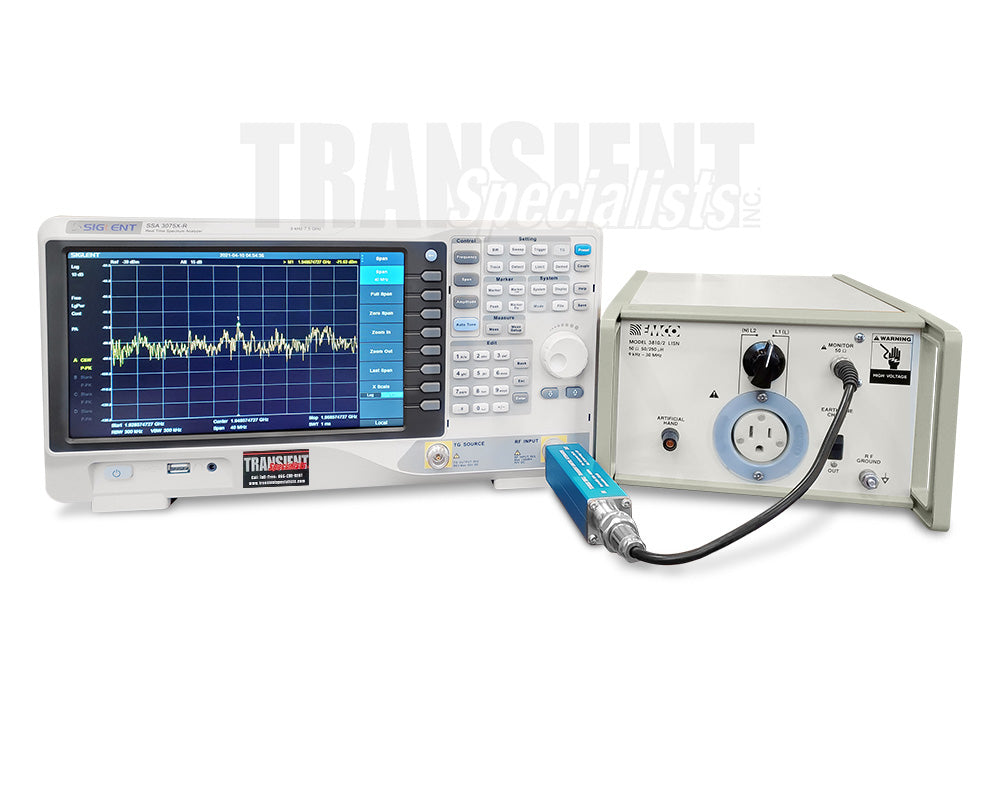
Credit: transientspecialists.com
Price And Value
Cost is a major factor for most users. Here’s a snapshot of typical prices (2024):
| Model | Typical Price (USD) |
|---|---|
| Siglent SSA3021X | $1,300 – $1,500 |
| Siglent SSA3032X | $1,800 – $2,100 |
| Rigol DSA815-TG | $1,250 – $1,400 |
| Rigol RSA3030-TG | $2,500 – $3,000 |
Observation: Rigol’s DSA815-TG is cheaper but offers less frequency range and a coarser RBW. Siglent’s SSA3021X is a better value for those who want to measure up to 2.1 GHz with finer detail. Rigol’s RSA series is feature-rich but costs more.
Software And Upgrades
Both Siglent and Rigol offer software options for extended features—like advanced measurements, EMI pre-compliance, or vector signal analysis.
- Siglent: Upgrades are often software-activated (no hardware needed); online activation is simple.
- Rigol: Some upgrades require license codes; a few need hardware changes.
Note: Not all features are free—budget for upgrades if you need advanced functions.
Application Examples
Amateur Radio
Many ham radio operators use the Rigol DSA815 because it’s affordable. But those working with higher bands (like 23 cm/1. 2 GHz or 13 cm/2. 3 GHz) find Siglent’s extra frequency range essential.
Emi Pre-compliance
Both brands offer EMI measurement modes. Siglent’s pre-compliance kit is praised for easy setup. Rigol’s RSA series is excellent for capturing short EMI bursts, thanks to real-time analysis.
Education And Training
Siglent’s intuitive menus make it easier for students to learn quickly. Rigol’s older models require more button presses but teach the basics well. Both are popular in technical colleges.
Non-obvious insight: If you plan to teach or train others, Siglent’s interface is less intimidating for beginners. Training time can be cut in half with a clearer menu system.
Support And Community
Support can make or break your experience.
- Siglent: Growing support network in North America and Europe; good documentation; active forums.
- Rigol: Longer-established user base; many online guides and videos; some complaints about slow support response.
For both brands, user forums are a goldmine for tips and troubleshooting. Try searching for your exact model before buying—if you see lots of answers, you’re less likely to get stuck.
Common Buyer Mistakes
- Ignoring Frequency Range: Many users buy a 1.5 GHz analyzer, then find they need 2+ GHz a year later.
- Skipping the Tracking Generator: Some models without TG can’t be upgraded later. Always check before buying.
- Focusing Only on Price: Saving $100 isn’t worth it if your analyzer can’t do what you need.
- Overlooking Noise and Fan Issues: Loud fans make long sessions uncomfortable. Check reviews for real-world feedback.
- Buying Without Future-Proofing: It’s better to spend a bit more for features you’ll need as you learn and grow.
How To Choose: Practical Guidance
When choosing between Siglent and Rigol, ask yourself:
- What is the highest frequency I need to measure now and in the next 3 years?
- Do I need a tracking generator for filter or cable tests?
- Is real-time analysis important for my work (e.g., wireless, IoT, EMI)?
- How much does screen size and interface matter for my workflow?
- Will I use remote control or automation?
- Is software upgradability important for future needs?
If you’re unsure, go for the model with more headroom. The extra cost is small compared to the hassle of upgrading later.

Credit: www.eevblog.com
Siglent Vs Rigol: Summary Table
To help you decide, here’s a side-by-side summary of the most popular models:
| Feature | Siglent SSA3021X | Rigol DSA815-TG | Rigol RSA3030-TG |
|---|---|---|---|
| Frequency Range | 9 kHz – 2.1 GHz | 9 kHz – 1.5 GHz | 9 kHz – 3 GHz |
| Minimum RBW | 10 Hz | 100 Hz | 1 Hz |
| Tracking Generator | Optional/Included | Included | Included |
| Real-Time Analysis | No | No | Yes |
| Display | 10.1″ Color | 8″ Color | 10.1″ Color Touch |
| Noise Level (DANL) | -161 dBm/Hz | -135 dBm/Hz | -165 dBm/Hz |
| Fan Noise | Low | High | Low |
| Price (USD) | $1,300 – $1,500 | $1,250 – $1,400 | $2,500 – $3,000 |
When To Choose Siglent
- You want the best value in the 2–3 GHz range
- Quiet operation is important
- You prefer a large, clear display
- You want simple, frequent firmware updates

Credit: www.youtube.com
When To Choose Rigol
- Budget is very tight (DSA815-TG)
- Real-time analysis is essential (RSA series)
- You need advanced features for EMI or wireless
- You prefer a brand with a longer history in test equipment
One More Thing: Consider The Used Market
Both Siglent and Rigol have active used markets. You can find gently used analyzers for 20–30% less than retail, especially older DSA815 or early SSA models. This is a good way to stretch your budget, but always check for software options and the TG before buying used.
External Resources
If you want to compare more models or see detailed user reviews, check the official manufacturer sites and trusted review sources like the Wikipedia Spectrum Analyzer page.
Frequently Asked Questions
What Is The Main Difference Between Siglent And Rigol Spectrum Analyzers?
The biggest differences are in frequency range, minimum resolution bandwidth, and real-time analysis. Siglent’s mid-range models offer higher frequency coverage for the price, while Rigol’s RSA series provides advanced real-time features. Siglent is quieter and often has a better display, but Rigol has a larger user base.
Can I Use These Analyzers For Emi Pre-compliance Testing?
Yes, both brands offer EMI pre-compliance modes. Siglent’s software is easier for beginners, while Rigol’s RSA series can capture short, fast EMI events better. Make sure to buy the right options (and accessories like near-field probes).
Do I Need A Tracking Generator For Basic Rf Work?
If you plan to test filters, amplifiers, or cables, a tracking generator is almost essential. It lets you measure frequency response directly. For just viewing signals, you can skip it—but most users find it useful sooner or later.
Which Analyzer Is Better For Beginners?
Siglent is usually better for new users because of its simple interface, clear display, and lower fan noise. Rigol’s DSA815 is also beginner-friendly, but the menus are less modern and the fan is louder.
Can I Upgrade Features Later?
Some features can be unlocked by software (like advanced measurements or EMI modes), but others (like real-time analysis) require different hardware. It’s smart to buy the model with the features you might need in the next few years.
Making the right choice between Siglent vs Rigol spectrum analyzer comes down to your needs, budget, and how you plan to use the tool. Both brands are excellent starting points, and your investment will pay off in better, faster RF work for years to come.