Rigol Vs Agilent: A Deep Dive into Oscilloscope and Test Equipment Brands
When it comes to electronic test and measurement equipment, two names often stand out: Rigol and Agilent. Both are respected, but they come from different backgrounds, offer different features, and target unique user groups. If you are planning to buy an oscilloscope, signal generator, or other lab tool, the choice between these brands can be confusing. This article will help you understand the true differences, strengths, and weaknesses of Rigol and Agilent. You’ll discover how they compare in price, performance, reliability, support, and much more. Whether you are a student, hobbyist, engineer, or lab manager, this guide will help you make a confident decision.
Brand Backgrounds And Market Position
Rigol: The Challenger
Rigol Technologies was founded in 1998 in Beijing, China. It started as a small company focused on digital oscilloscopes and quickly gained attention for offering advanced features at lower prices. Rigol’s reputation grew in the early 2010s when many electronics enthusiasts and makers realized they could get a professional-looking oscilloscope for a fraction of what established brands charged. Rigol’s low-cost DS1052E became almost a legend among hobbyists. Over time, Rigol expanded its range to include spectrum analyzers, function generators, power supplies, and even RF instruments.
Rigol’s core strength is affordability with solid features. The brand is known for:
- Competitive pricing
- Good value for money
- Modern interfaces (color screens, USB, LAN)
- Decent build quality for the price
However, Rigol has sometimes been criticized for:
- Limited long-term reliability compared to premium brands
- Entry-level models with lower bandwidth
- Less comprehensive support and calibration options
Agilent: The Benchmark (now Keysight)
Agilent Technologies was spun out from Hewlett-Packard (HP) in 1999. Agilent inherited HP’s legendary measurement division, which had been a gold standard since the mid-20th century. In 2014, the electronic test and measurement business was rebranded as Keysight Technologies. However, even today, many professionals and engineers still refer to these products as “Agilent” due to their reputation.
Agilent/Keysight is recognized for:
- Industry-leading accuracy and reliability
- Long-term product support and calibration services
- Advanced features for research, industry, and education
- Wide range of products, from bench oscilloscopes to high-end RF analyzers
But Agilent also comes with:
- High pricing (sometimes 3–10 times the cost of Rigol for similar specs)
- Some entry-level models are less accessible to hobbyists
- Steeper learning curve for advanced features
Product Line-up: Oscilloscopes, Analyzers, And More
Both brands offer a range of test equipment, but their focus and strengths differ.
Oscilloscopes
Oscilloscopes are the core tool for viewing and analyzing electrical signals.
Rigol Oscilloscopes
Popular models include:
- DS1054Z: 50 MHz, 4 channels, famous for its value
- MSO5000 series: 100–350 MHz, mixed signal, touch screen
- DS2000A series: 70–300 MHz, advanced triggering
Rigol scopes usually offer:
- Large color displays
- USB and LAN connectivity
- Decent sample rates (up to 8 GSa/s on newer models)
- Software upgradability (some features can be unlocked via license codes)
Agilent/keysight Oscilloscopes
Well-known lines include:
- InfiniiVision 1000X series: 50–200 MHz, entry-level
- InfiniiVision 3000T X-series: 100 MHz–1 GHz, advanced features
- Infiniium S-series: 500 MHz–8 GHz, research-grade
Agilent scopes are known for:
- High bandwidth and sample rates (up to 40 GSa/s)
- Advanced math and analysis functions
- Excellent signal fidelity
- Touch and multi-touch displays (on newer models)
- Deep memory depth for long captures
Spectrum Analyzers
Rigol
- DSA800 series: 9 kHz–2.1 GHz/3.2 GHz, very popular with radio hobbyists
- RSA3000 series: Real-time analysis, up to 4.5 GHz
Rigol analyzers are affordable and cover most needs for beginners and mid-level users.
Agilent/keysight
- N9320B: 9 kHz–3 GHz, portable
- FieldFox analyzers: Rugged, field-ready, up to 50 GHz
- MXA, EXA, and PXA series: Lab-grade, up to 50 GHz, advanced measurements
Agilent analyzers lead in speed, dynamic range, and advanced analysis options.
Other Test Equipment
Both brands produce:
- Function/Arbitrary waveform generators
- Programmable power supplies
- Digital multimeters
- Logic analyzers
Agilent’s lineup is deeper and often used in professional labs. Rigol’s are more affordable and cover the essentials for education and makers.
Price And Value Comparison
Cost is one of the biggest differences between Rigol and Agilent.
| Product Type | Rigol Typical Price (USD) | Agilent/Keysight Typical Price (USD) |
|---|---|---|
| Entry Oscilloscope (50–100 MHz, 2–4 ch) | $350–$700 | $900–$2,500 |
| Midrange Oscilloscope (100–350 MHz, 4 ch) | $700–$2,000 | $3,000–$10,000 |
| Spectrum Analyzer (up to 3 GHz) | $1,300–$3,000 | $8,000–$20,000 |
| Function Generator (25–60 MHz) | $350–$800 | $1,200–$4,500 |
As shown, Rigol gives you basic and mid-level capabilities at a much lower cost. Agilent/Keysight is usually for users who need top performance and are ready to pay a premium.
Performance: How Do They Measure Up?
Signal Integrity And Accuracy
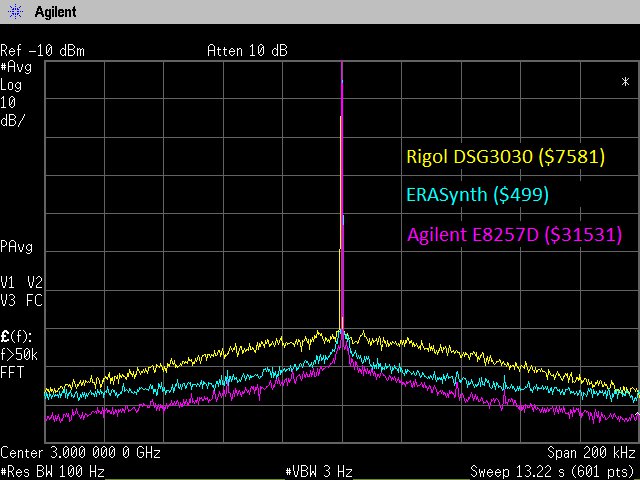
Agilent oscilloscopes and analyzers are famous for high signal fidelity. Their noise floor is lower, which means you can see smaller signals and more detail. For example, Agilent’s Infiniium S-series scopes can measure sub-millivolt signals with less distortion, which is critical in RF, medical, and scientific work.
Rigol, while generally “good enough” for most hobby and educational work, may show higher baseline noise or less accurate amplitude readings, especially at higher frequencies.
Sample Rate And Bandwidth
Sample rate matters for capturing fast signals. Agilent often offers sample rates 2–5 times higher than Rigol models of the same bandwidth. This means more precise signal capture, especially for fast or complex waveforms. For most electronics work under 200 MHz, Rigol’s sample rates are sufficient, but if you need to analyze high-speed serial buses, Agilent is the safer bet.
Features And User Interface
Rigol’s user interfaces have improved a lot in the past decade. Their touchscreens (on MSO5000) and menu systems are easy for beginners. Agilent’s UI is more complex, but offers more analysis tools and faster workflow for power users. Agilent’s deep memory lets you record longer signals without losing detail, a feature only found on top Rigol models.
Build Quality And Durability
When you pick up an Agilent instrument, you feel the difference. These devices are built for heavy use in industrial labs. The buttons, screens, and connectors are robust. Agilent’s input jacks and rotary encoders last for years, even with daily use.
Rigol’s build quality is good for the price but not at the same level. Most users report a solid experience, but a small number mention issues like loose knobs, fading screens, or noisy fans after extended use.
A non-obvious insight: Agilent scopes often pass stricter environmental and vibration tests, which matters for field or manufacturing use. Rigol’s are best kept in a stable lab environment.
Software, Connectivity, And Upgradability
Both brands offer PC software for remote control, data capture, and analysis.
- Rigol’s UltraSigma and UltraScope software is simple and works for basic tasks. Some open-source tools support Rigol as well.
- Agilent’s BenchVue and scope-specific apps provide advanced scripting, automation, and deep integration with other instruments.
Rigol often wins points for “unlockable” features. Many users buy a lower-bandwidth model and use software keys or community tools to unlock bandwidth or extra options (though this may void warranties).
Agilent’s upgrades are more professional (hardware or paid licenses) but are supported and legal. Their software integration is preferred in industrial and research labs.
Credit: www.crowdsupply.com
Support, Warranty, And Calibration
Rigol usually offers a 3-year warranty on most products. Support is available through distributors and their own service centers, but can be slow outside China. For calibration, Rigol’s authorized labs are fewer, which can be a challenge in some countries.
Agilent/Keysight provides a 3-year warranty (sometimes 5 years) and global support. Their instruments are supported for a decade or more, with calibration and repair centers worldwide. This is critical for companies that need traceable calibration for ISO or other standards.
A detail beginners miss: If you need regular traceable calibration (for medical, automotive, or aerospace work), Agilent’s global network can save time and money. Rigol may require shipping devices internationally for some services.
Target Users: Who Should Choose Which Brand?
Rigol Is Best For:
- Students and educators
- Hobbyists and makers
- Small startups with tight budgets
- Labs needing multiple basic instruments
Agilent/keysight Is Best For:
- Professional engineers in R&D, manufacturing, or repair
- Companies that need guaranteed accuracy and calibration
- Research labs working with high-speed or sensitive signals
- Users who need long-term support and advanced features
Practical Examples: Use Cases
Example 1: University Teaching Lab
A university needs 10 oscilloscopes for an electronics lab. Budgets are limited, and most experiments involve signals under 10 MHz. Rigol DS1054Z scopes provide enough bandwidth, 4 channels, and color displays for less than the price of 2 Agilent 1000X scopes.
For teaching, Rigol is the clear winner.
Example 2: Rf Research Lab
A research group is designing 2. 4 GHz wireless systems. They need to measure low-level signals and analyze modulated waveforms. Agilent’s MXA spectrum analyzer and Infiniium oscilloscope offer the dynamic range and measurement speed required. The instruments’ cost is justified by their performance and support.
Example 3: Startup Product Development
A startup is developing IoT devices. They have a small lab and a tight budget. They buy a Rigol MSO5074 oscilloscope and DSA815 spectrum analyzer. These cover PCB debugging, signal analysis, and firmware development at a manageable cost. If the company grows, they can add Agilent/Keysight equipment for final product compliance testing.
Data Table: Feature Comparison
Below is a direct comparison of two popular models from each brand (as of 2024):
| Feature | Rigol DS1054Z | Keysight 1000X Series |
|---|---|---|
| Bandwidth | 50 MHz (upgradable to 100 MHz) | 70 MHz/100 MHz/200 MHz |
| Channels | 4 | 2 or 4 |
| Sample Rate | 1 GSa/s | 2 GSa/s |
| Display | 7-inch color | 7-inch color |
| Memory Depth | 24 Mpts | 1 Mpts |
| Price (USD) | ~$350 | ~$1,100 |
| Warranty | 3 years | 3 years |

Credit: www.youtube.com
The Hidden Costs And Pitfalls
A mistake beginners make is to focus only on the purchase price. Some hidden costs and issues to consider:
- Probes and accessories: Agilent probes are higher quality but more expensive. Rigol probes are fine for most uses, but may not match Agilent at high frequencies.
- Calibration and certification: If you need ISO-certified calibration, Agilent’s process is smoother.
- Firmware updates and support: Rigol firmware updates may add features but sometimes introduce bugs. Agilent’s updates are more stable but less frequent.
- Resale value: Agilent/Keysight instruments hold value much longer.
Community And Third-party Ecosystem
Rigol has a strong community of hobbyists and educators. Many online forums and YouTube channels provide tips, hacks, and troubleshooting help. Some users unlock extra features unofficially, which is both a benefit and a risk.
Agilent/Keysight has a more professional user base. Their forums are active, with input from company engineers. More third-party accessories are certified for Agilent equipment.
For more about the history and impact of these brands, see the Keysight Technologies Wikipedia page.

Credit: www.eevblog.com
When To Mix Brands
Some labs use both Rigol and Agilent/Keysight. For basic tasks, Rigol saves money. For final testing and certification, Agilent provides the needed traceability and accuracy. This mixed approach works well for startups, education, and even some R&D labs.
Two Non-obvious Insights
- Feature Unlocking: Many Rigol scopes can be upgraded (often unofficially) to higher bandwidths via software. While this is popular among hobbyists, it can void warranties and may not be legal in all countries.
- Calibration Traceability: Agilent/Keysight maintains calibration records for years and can supply detailed traceable certificates. This can be essential for passing audits in medical, aviation, or automotive sectors—something Rigol cannot always match.
Final Thoughts
Choosing between Rigol and Agilent/Keysight depends on your real needs, not just the specs on paper. For most students, hobbyists, and even small companies, Rigol offers unbeatable value and solid performance. For professionals, especially those needing high accuracy, long-term support, or regulatory compliance, Agilent/Keysight is the safer and smarter investment.
Remember to consider future needs, not just today’s budget. Sometimes, a higher initial price saves money and trouble in the long run.
Frequently Asked Questions
What’s The Main Difference Between Rigol And Agilent/keysight?
The main difference is that Rigol offers more affordable instruments with good features for basic to mid-level work, while Agilent/Keysight provides higher accuracy, reliability, and advanced features at a higher price. Agilent/Keysight also offers better long-term support and calibration services.
Is Rigol Good Enough For Professional Use?
For many tasks, yes. Rigol instruments are used in small companies, teaching labs, and some professional environments. However, for critical measurements or where traceable calibration is needed, Agilent/Keysight is preferred.
Can I Use Rigol And Agilent Instruments Together?
Yes. Many labs use both brands. Rigol is often used for everyday tasks, while Agilent/Keysight is reserved for tasks requiring higher accuracy or certification.
Are Rigol’s “software Unlocks” Safe To Use?
While many users unlock extra features on Rigol scopes via software, this can void the warranty and may violate terms of use. It is not recommended for professional or regulated environments.
Which Brand Has Better Resale Value?
Agilent/Keysight instruments generally hold their value longer, especially in professional markets. Used Rigol instruments sell quickly, but for lower prices.
Making the right choice between Rigol and Agilent/Keysight starts with understanding your own needs, budget, and future plans. Both brands play important roles in modern electronics, and knowing their strengths and limits will help you build the lab you need.