If you work with electronics or radio signals, you may have heard about spectrum analyzers and oscilloscopes. These two tools are important in labs, repair shops, and classrooms. But they are not the same—and choosing the right one can make your work easier and faster. Many beginners confuse their uses, or think one device can replace the other. In this article, you’ll learn what each tool does, how they differ, and when to use them. You’ll also see practical examples, clear comparisons, and answers to common questions.
What Is A Spectrum Analyzer?
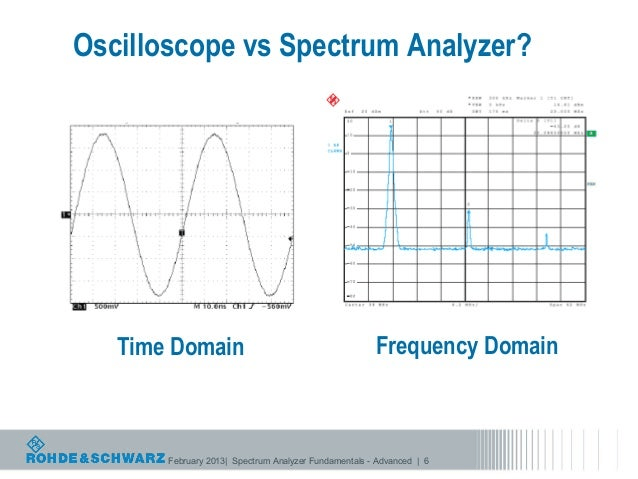
A spectrum analyzer is a device that measures signal strength across a range of frequencies. Instead of showing the signal in the time domain (how voltage changes over time), it shows the signal in the frequency domain (how much energy is at each frequency).
Engineers use spectrum analyzers to:
- Find unwanted signals, noise, or interference
- Check the quality of radio transmitters
- See the frequency content of audio, RF, or microwave signals
Spectrum analyzers are common in wireless communication, broadcasting, and radar. They help you spot problems that are invisible in the time domain.
How Does A Spectrum Analyzer Work?
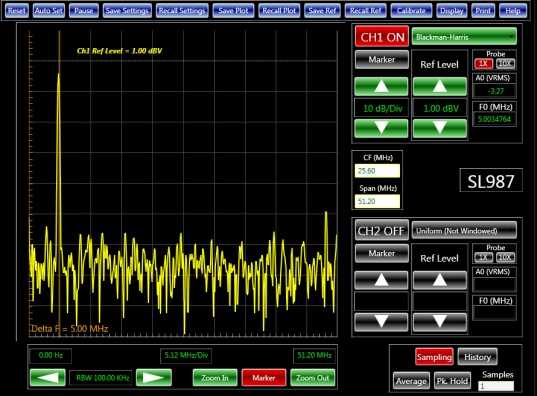
The spectrum analyzer sweeps through frequencies and displays the power level at each one. The result is a graph: frequency (horizontal axis), amplitude (vertical axis).
For example, if you transmit a radio signal at 100 MHz, the analyzer will show a strong peak at 100 MHz. If there’s noise at 110 MHz, you’ll see it as a smaller peak.
Most spectrum analyzers use superheterodyne receivers inside. This technology mixes the incoming signal with a known frequency and processes it, making it easier to measure weak signals.
Types Of Spectrum Analyzers
- Analog spectrum analyzers: Older models, less common today
- Digital spectrum analyzers: Modern, more accurate, can record and process data
- Portable: Handheld, used in the field for quick tests
- Benchtop: Larger, more powerful, used in labs
What Is An Oscilloscope?
An oscilloscope is a device that shows how a signal changes over time. It plots voltage on the vertical axis and time on the horizontal axis. If you want to see the shape of a waveform—like a sine wave, square wave, or pulse—an oscilloscope is the tool you need.
Oscilloscopes are essential for:
- Debugging circuits
- Measuring signal timing
- Checking for glitches, distortion, or noise
They are used in electronics, automotive, medical, and scientific fields. If you repair electronics or build circuits, you probably use an oscilloscope every day.
How Does An Oscilloscope Work?
The oscilloscope connects to a circuit and samples the voltage at regular intervals. It draws a graph of the signal, showing details like amplitude, frequency, and timing.
For example, if you want to measure a pulse’s width or see if a signal is noisy, you use an oscilloscope. You can freeze the display, zoom in, or measure parts of the waveform.
Modern oscilloscopes often have digital storage—they save waveforms for later analysis.
Types Of Oscilloscopes
- Analog oscilloscopes: Use cathode ray tubes, older but still found in labs
- Digital oscilloscopes: More common, with features like data storage, math functions, and USB ports
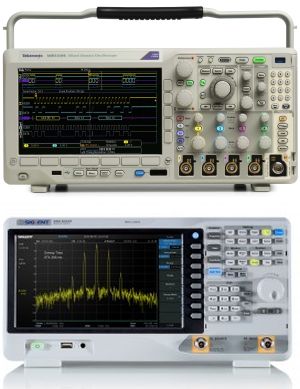
- Mixed signal oscilloscopes (MSOs): Can measure both analog and digital signals
- Portable: Handheld models for fieldwork
- Benchtop: Powerful, with large screens and advanced features
Credit: www.eeworldonline.com
Spectrum Analyzer Vs Oscilloscope: Core Differences
Although both devices measure signals, they do so in very different ways. Let’s break down the main differences:
| Feature | Spectrum Analyzer | Oscilloscope |
|---|---|---|
| Display | Frequency vs Amplitude | Time vs Voltage |
| Primary Use | Analyze frequency components | Observe waveform shape |
| Resolution | High frequency resolution | High time resolution |
| Common Applications | RF, audio, EMI testing | Electronics debugging, timing |
| Measurement Type | Power/amplitude at each frequency | Voltage at each instant |
A Real-world Example
Suppose you’re testing a radio transmitter. The spectrum analyzer will show you:
- If the transmitter is sending at the correct frequency
- If there is unwanted noise or harmonics
The oscilloscope will show you:
- The shape of the output wave (is it clean or distorted?)
- If the signal timing matches your design
Many professionals use both tools together for complete analysis.
Key Specifications: What Matters Most
When choosing between a spectrum analyzer and an oscilloscope, focus on these key specifications:
| Specification | Spectrum Analyzer | Oscilloscope |
|---|---|---|
| Bandwidth | How wide a frequency range it can measure | How fast a signal it can capture |
| Dynamic Range | Difference between weakest and strongest signals | Difference between smallest and largest voltages |
| Input Impedance | Typically 50 ohms | Typically 1 megaohm |
| Sample Rate | Not usually specified (frequency sweep) | Important—higher rates capture faster signals |
| Sensitivity | Ability to detect weak signals | Ability to show small voltage changes |
Non-obvious Insights
- Oscilloscopes can display frequency information using a mathematical tool called FFT (Fast Fourier Transform). However, their frequency resolution is usually lower than a dedicated spectrum analyzer.
- Spectrum analyzers often have higher input protection for strong signals. Oscilloscopes can be damaged more easily by high voltage spikes.
When To Use Each Tool
Both devices are valuable, but their strengths fit different tasks.
When Spectrum Analyzers Are Better
- Testing radio or wireless devices
- Looking for unwanted emissions or interference
- Measuring harmonics or spurious signals
- Audio spectrum analysis
When Oscilloscopes Are Better
- Troubleshooting electronic circuits
- Measuring timing and delays
- Checking signal shape and quality
- Capturing rare events or glitches
Common Mistakes Beginners Make
- Using an oscilloscope for frequency analysis: While it can show basic frequency info, it’s not accurate for detailed spectrum measurements.
- Connecting high-voltage signals to a spectrum analyzer: Most are designed for low-power signals. This can destroy the device.
- Ignoring bandwidth limitations: If you try to measure a signal outside the device’s range, results will be incorrect.
- Assuming one tool can do everything: Each device is specialized. Using both gives a complete picture.
Practical Examples And Applications
Let’s look at how these tools are used in real-life situations.
Wireless Communication
Testing a Wi-Fi router:
- Spectrum analyzer: Shows if the router is transmitting on the correct channel. Reveals interference from nearby devices.
- Oscilloscope: Checks the waveform of digital signals inside the router’s electronics.
Audio Engineering
Analyzing a microphone circuit:
- Spectrum analyzer: Shows the frequency response, reveals noise or distortion.
- Oscilloscope: Displays the waveform, helps measure timing and phase.
Automotive Electronics
Diagnosing sensor signals in a car:
- Oscilloscope: Tracks changing voltages, finds glitches or faulty connections.
- Spectrum analyzer: Used less often, but can help find electromagnetic interference.
Medical Devices
Testing ECG circuits:
- Oscilloscope: Essential for viewing heart pulse waveforms.
- Spectrum analyzer: Useful for checking noise or radio interference in sensitive medical equipment.
Credit: www.oscopes.info
Cost And Accessibility
Price can be a deciding factor, especially for hobbyists or small labs.
| Device | Entry-Level Price | Professional Price | Typical Features |
|---|---|---|---|
| Spectrum Analyzer | $500 – $2,000 | $10,000+ | Wide frequency range, high sensitivity |
| Oscilloscope | $150 – $1,000 | $5,000+ | High sample rate, multiple channels |
Oscilloscopes are generally cheaper and more available for beginners. Spectrum analyzers, especially high-frequency models, cost more.
Choosing The Right Tool
Ask yourself these questions before buying or using a device:
- Do you need to measure frequency content or waveform shape?
- What is the highest frequency or fastest event you must capture?
- Are you working with radio, audio, or digital electronics?
- Is portability important?
If possible, get both tools. Many modern oscilloscopes have limited spectrum analysis features (FFT), but a dedicated spectrum analyzer is better for frequency tasks.
Advanced Features And Trends
Today’s devices are smarter and more connected.
- USB and LAN connectivity: You can control and record data from your computer.
- Touch screens and user-friendly interfaces: Easier for beginners to operate.
- Automated measurements: Devices can calculate statistics, peak values, and more.
- Hybrid devices: Some combine oscilloscope and spectrum analyzer functions, but usually sacrifice performance in one area.
According to a recent market study, global oscilloscope sales reached $1. 5 billion in 2022, while spectrum analyzer sales were about $800 million. Demand for portable and digital models is rising fast.
For more details about device technology and history, see Wikipedia.
Frequently Asked Questions
What Is The Main Difference Between A Spectrum Analyzer And An Oscilloscope?
The main difference is what they measure. Spectrum analyzers display signal strength across frequencies, while oscilloscopes show signal changes over time.
Can An Oscilloscope Replace A Spectrum Analyzer?
No. Oscilloscopes can show basic frequency information using FFT, but their frequency resolution is limited. For detailed frequency analysis, a spectrum analyzer is necessary.
Is It Safe To Connect Any Signal To These Devices?
No. Always check the device’s input limits. High voltage or strong RF signals can damage both spectrum analyzers and oscilloscopes. Use proper probes and attenuators.
Which Device Is Better For Audio Testing?
Both are useful. Spectrum analyzers reveal frequency content and noise, while oscilloscopes show waveform shape and timing. For deep frequency analysis, the spectrum analyzer is best.
Do Modern Devices Combine Both Functions?
Some advanced oscilloscopes offer spectrum analysis features, and some spectrum analyzers have basic time-domain displays. However, professional work usually needs dedicated devices for each task.
Choosing between a spectrum analyzer and an oscilloscope depends on your project. Each tool has its strengths, and understanding their differences will help you work faster, safer, and more accurately. If you’re serious about electronics, consider learning both devices well—you’ll solve problems others miss and build a stronger foundation for future projects.
Credit: threevista.mystrikingly.com