
Flying Probe Test Vs ICT: Choosing the Best PCB Testing Method
Printed circuit boards (PCBs) are the heart of electronic devices. They connect components and make electronics work. But before PCBs go into products, they must be tested for faults. Two popular methods for this are the Flying Probe Test and In-Circuit Test (ICT). Choosing the right method is not always simple. Each has its strengths, weaknesses, and best use cases. If you are new to PCB manufacturing or want to improve your process, understanding these tests will help you make smart decisions.
This article compares Flying Probe Test and ICT in detail. You’ll learn how each works, their pros and cons, when to use them, and what mistakes to avoid. We’ll also share some real numbers, practical examples, and tips that beginners often miss.
By the end, you’ll know which method fits your needs best.
What Is Flying Probe Test?
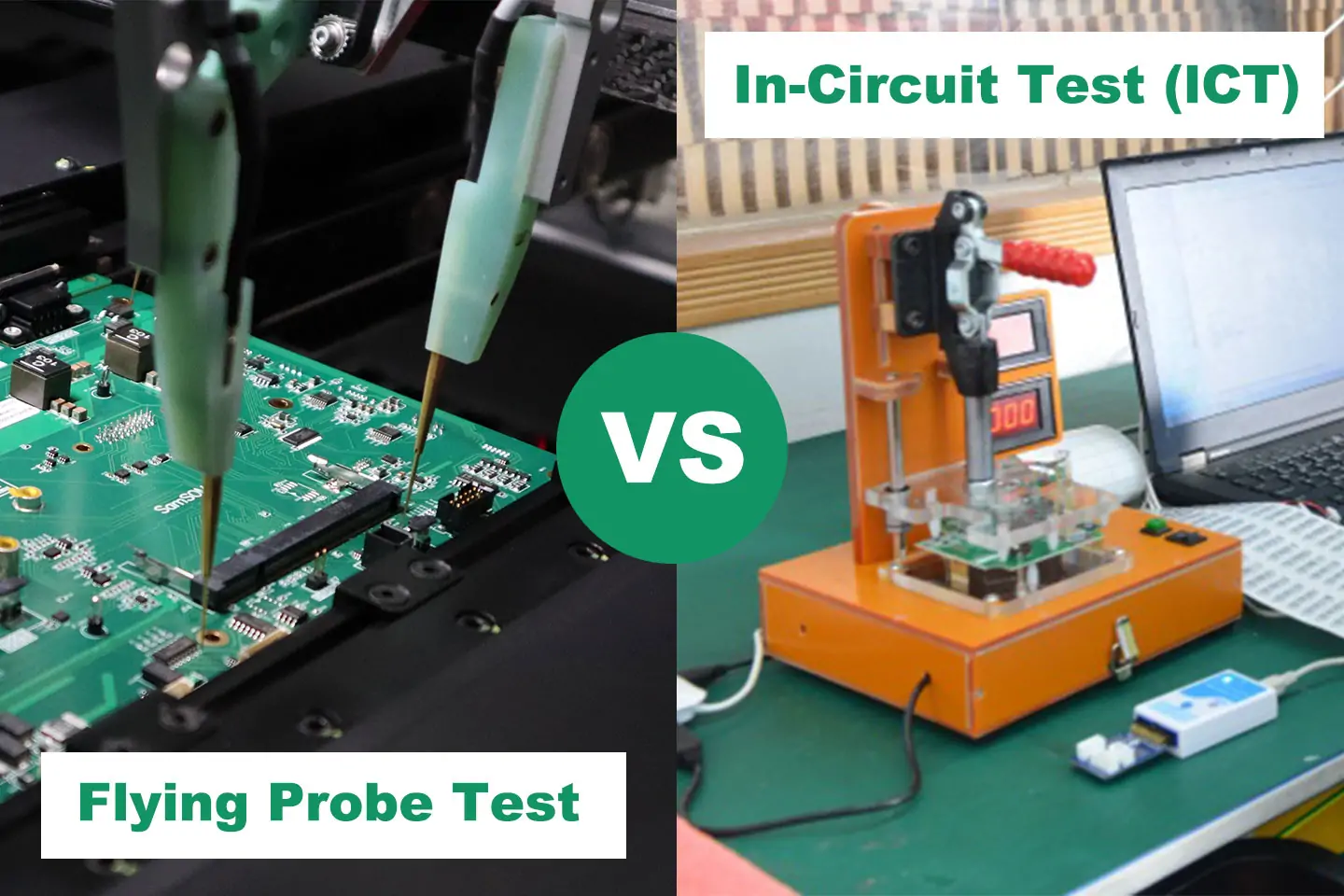
The Flying Probe Test is a modern, flexible way to check PCBs for electrical faults. It uses moving probes (needles) that touch different points on the PCB, one after another. The machine moves these probes quickly and accurately. It tests for open circuits, shorts, wrong values, and missing parts.
Flying Probe is especially useful for:
- Prototype boards (small batch)
- Complex PCBs with many layers
- Designs that change often
How Flying Probe Works
The test setup has multiple probes. The machine’s software controls their movement. It scans the PCB layout and moves the probes to specific test points—pads, vias, or component leads. It measures resistance, capacitance, and sometimes checks for correct part placement.
Flying Probe does not need a custom fixture. It uses the same hardware for different boards. This makes it fast to set up and flexible for different designs.
Key Advantages
- No expensive fixture needed
- Quick setup for new designs
- Tests many types of faults
- Low risk of mechanical damage to boards
Limitations
- Slower test speed for large batches
- Limited access to some hidden points
- Not ideal for mass production
What Is In-circuit Test (ict)?
The In-Circuit Test (ICT) is a traditional method for testing PCBs. It uses a custom-made fixture with hundreds or thousands of pins. These pins touch test points all at once. The ICT machine sends signals through the pins and checks how the circuit responds.
ICT is best for:
- High-volume production
- Stable designs (not changing often)
- Standard PCBs
How Ict Works
You need a fixture for each PCB design. The fixture has many pins in fixed places. The PCB is placed on the fixture, and the pins touch key points—component leads and pads. The ICT machine tests for:
- Open circuits
- Short circuits
- Component values
- Missing or wrong parts
Some ICT systems also check for correct part orientation and solder quality.
Key Advantages
- Very fast test for large batches
- Thorough coverage (tests most points)
- Can do functional checks (sometimes)
Limitations
- High fixture cost
- Long setup time for new designs
- Not flexible for design changes
Credit: www.allpcb.com
Flying Probe Vs Ict: Side-by-side Comparison
It’s easy to get confused about which test is better. Here’s a clear comparison to help you decide:
| Feature | Flying Probe Test | In-Circuit Test (ICT) |
|---|---|---|
| Setup Time | Minutes to hours | Days to weeks (fixture) |
| Fixture Cost | None | $5,000 – $20,000 per design |
| Test Speed | Slow (minutes per board) | Fast (seconds per board) |
| Best for | Prototypes, small batches | Mass production |
| Flexibility | High | Low |
| Coverage | Good, but not 100% | Excellent, nearly 100% |
| Damage Risk | Low | Medium (pin pressure) |
| Access to Test Points | Limited to accessible pads | Can test more internal points |
When To Use Flying Probe Test
Flying Probe shines in situations where flexibility and quick setup are more important than speed. Here are some cases:
- Prototype PCBs: When you’re making only a few boards, Flying Probe saves money and time. There’s no need for a costly fixture.
- Design Validation: If your design changes often, Flying Probe lets you update test programs without building new fixtures.
- Complex or Dense Boards: For boards with many layers and tiny parts, Flying Probe can access points that are hard to reach with ICT pins.
- Low-volume Production: If you produce only a few hundred boards per batch, Flying Probe is more cost-effective.
Practical Example
A startup designs a smart sensor. They make 20 boards for beta testing. Flying Probe lets them check for shorts, opens, and missing parts in one day. If they used ICT, they would wait weeks and pay thousands for a fixture.
Two Insights Beginners Miss
- Flying Probe can test boards without test pads. It can touch vias or component leads directly, which is helpful for dense layouts.
- Flying Probe can help debug new designs. You can change the test sequence in software and try new measurements without hardware changes.

Credit: www.technotronix.us
When To Use In-circuit Test (ict)
ICT is the best choice for large-scale production and when you want the fastest, most thorough test. Here’s when ICT makes sense:
- Mass Production: If you make thousands or millions of boards, ICT pays off. The fixture cost spreads over many units.
- Stable Designs: For boards that rarely change, ICT is efficient. You build one fixture and use it for years.
- Need for High Coverage: ICT can test almost every connection and component, reducing the risk of faulty products.
- Functional Testing: Some ICT machines do basic functional tests, such as LED lighting or relay switching.
Practical Example
A company produces 100,000 PCBs for a home router. ICT lets them test each board in 10 seconds. The fixture cost is high, but with such volume, the cost per board is low.
Two Insights Beginners Miss
- Fixture maintenance matters. ICT fixtures wear out over time. Pins may bend or break, affecting test quality. Regular checking is needed.
- Test program complexity. ICT test software can be hard to write. Good planning and experienced engineers are important.
Costs: More Than Just Money
Many people focus only on fixture cost. But there are hidden costs with both methods.
| Cost Type | Flying Probe | ICT |
|---|---|---|
| Initial Setup | Low | High |
| Per Board Test Time | 3–10 minutes | 10–30 seconds |
| Software Changes | Easy, quick | Hard, slow |
| Fixture Maintenance | None | Regular (pins, connectors) |
| Operator Skill | Medium (setup, troubleshooting) | Medium (fixture handling) |
| Risk of Board Damage | Low | Medium (pin pressure) |
Common Mistakes To Avoid
When choosing between Flying Probe and ICT, many beginners make mistakes. Here are some you should avoid:
- Ignoring volume: Don’t choose ICT for low-volume runs. The fixture cost will kill your budget.
- Underestimating fixture lead time: ICT fixtures take weeks to build. Plan ahead or risk production delays.
- Skipping test coverage analysis: Both methods can miss faults if test points are not planned well. Always review your PCB layout for test access.
- Not considering design changes: If your PCB design changes often, ICT will be costly and slow. Flying Probe adapts better.
- Believing Flying Probe is always slower: For small batches, Flying Probe may finish faster overall, since setup is so quick.
Real-world Data: Test Coverage And Yield
Test coverage means how much of the board is actually checked. High coverage reduces bad boards reaching customers.
- Flying Probe: Typical coverage is 80–90%. It depends on test point access and board layout.
- ICT: Coverage can reach 98–99% if the fixture is well designed.
Yield is the percent of boards passing test.
- Flying Probe: Yield rates are high for prototypes, since you can quickly fix design errors.
- ICT: Yield is high for mature designs. But fixture issues can lower yield if pins don’t contact correctly.

Credit: www.spea.com
Choosing The Right Test: A Simple Guide
Still not sure which to pick? Here’s a simple guide:
- If you make less than 500 boards per batch, use Flying Probe.
- If your design changes often, use Flying Probe.
- If you make over 1,000 boards per batch, use ICT.
- If you need the fastest test speed, use ICT.
- If you want flexible test setup, use Flying Probe.
- If you need highest coverage and lowest defect rate, use ICT.
Advanced Tips For Better Testing
- Combine methods: Some factories use Flying Probe for prototypes and ICT for mass production.
- Plan test points early: When designing your PCB, add test pads for both methods. This improves coverage.
- Invest in training: Both methods need skilled operators. Training reduces mistakes and improves yield.
- Review test data: Track failures and update test programs. This helps catch new issues and improve quality.
- Consider automation: ICT can be combined with robotic handling to speed up production.
For more in-depth information on PCB testing, see Wikipedia.
Frequently Asked Questions
What Faults Can Flying Probe Test Detect?
Flying Probe can find opens, shorts, missing components, wrong values, and sometimes wrong orientation. It’s good at checking basic electrical faults, but may miss some functional issues.
How Long Does It Take To Set Up An Ict Fixture?
Setting up an ICT fixture usually takes 2–4 weeks for design and fabrication. This is much longer than Flying Probe setup, which can be done in hours.
Can Ict Test Boards With No Test Pads?
ICT needs test pads or accessible points for its pins. If your board is dense and lacks pads, ICT coverage drops. Flying Probe can test vias and leads, so it’s better for such boards.
Is Flying Probe Suitable For Mass Production?
Flying Probe is not ideal for mass production. It’s slower per board. For large batches, ICT is much faster and cost-effective.
What Is The Typical Cost For An Ict Fixture?
An ICT fixture costs $5,000 to $20,000 per design. The price depends on board size, complexity, and number of test points.
PCB testing is a critical step in manufacturing. Whether you choose Flying Probe or ICT, knowing their strengths and limits will help you make better products and avoid costly mistakes.