When learning about electrical measurements, two tools often come up: the ammeter and the ohmmeter. Both are essential in electronics and physics, but they serve very different purposes. Understanding how they work, their applications, and their differences can help you avoid mistakes and choose the right instrument for your task. Whether you are a student, technician, or hobbyist, this guide will clear up confusion and give you practical advice for using ammeters and ohmmeters effectively.
What Is An Ammeter?
An ammeter is a device used to measure electric current. Current is the flow of electric charge, measured in amperes (A). The main job of an ammeter is to tell you how much current is flowing through a circuit.
Ammeters come in many shapes and sizes, from simple analog gauges to advanced digital meters. Analog ammeters use a needle to show the current value, while digital ammeters display numbers on a screen.
How Does An Ammeter Work?
To measure current, an ammeter must be connected in series with the load. This means the current you want to measure flows directly through the meter. If you connect it in parallel, you risk damaging the instrument or the circuit.
Inside an ammeter, there is a low-resistance coil. When current flows, the coil produces a magnetic field that moves the needle or powers the digital display. The resistance is kept low so the meter does not affect the circuit much.
Typical Uses Of Ammeters
Ammeters are used everywhere:
- Checking the current drawn by motors or appliances
- Testing batteries in cars or electronics
- Diagnosing circuit faults
- Measuring power consumption
For example, in a car, an ammeter can show if the battery is charging or discharging. In factories, ammeters monitor machines to prevent overloads.
Types Of Ammeters
There are several types of ammeters:
- Analog ammeters: Use a needle and scale. They are simple and affordable.
- Digital ammeters: Use electronic circuits and screens. They offer more accuracy.
- Clamp ammeters: Allow you to measure current without breaking the circuit. You simply clamp the meter around a wire.
Each type has its advantages. Analog meters are useful for quick checks, while digital meters are better for precise measurements.
What Is An Ohmmeter?
An ohmmeter measures electrical resistance, which is how much a material or circuit resists the flow of current. The unit of resistance is the ohm (Ω).
Resistance tells you how easily electricity can flow. High resistance means little current flows; low resistance means more current.
How Does An Ohmmeter Work?
Ohmmeters work by sending a small current through the component or circuit and measuring how much the current drops. This allows the meter to calculate resistance.
Unlike ammeters, ohmmeters are connected in parallel with the component. You must turn off the circuit power before measuring resistance. If the circuit is live, you may damage the meter or get incorrect readings.
Inside an ohmmeter, there is a battery or power supply, a resistor, and a measuring circuit. The meter compares the voltage and current to figure out resistance.
Typical Uses Of Ohmmeters
Ohmmeters are common in:
- Checking if wires or fuses are broken
- Testing resistors or other components
- Finding shorts or open circuits
- Measuring insulation resistance
For example, you can use an ohmmeter to check if a lightbulb filament is good. If the resistance is very high (or infinite), the filament is broken.
Types Of Ohmmeters
There are three main types:
- Analog ohmmeters: Use a needle and scale.
- Digital ohmmeters: Use digital circuits, often built into multimeters.
- Megohmmeters: Measure very high resistance, used for insulation testing.
Digital ohmmeters are popular because they are easy to read and often more accurate.

Credit: byjus.com
Ammeter Vs Ohmmeter: Key Differences
Many people confuse ammeters and ohmmeters because both are electrical meters, but their functions and usage are quite different. Let’s compare them directly.
| Feature | Ammeter | Ohmmeter |
|---|---|---|
| Measurement | Current (amperes) | Resistance (ohms) |
| Connection | Series | Parallel (power off) |
| Typical Range | μA to kA | mΩ to MΩ |
| Internal Resistance | Very low | Varies, usually high |
| Risk if Misused | Can blow fuse or damage circuit | Can give false reading or damage meter |
Practical Example
Imagine you want to test a circuit board. If you want to know how much current a motor uses, you use an ammeter. If you want to check if a resistor is working, you use an ohmmeter.
Trying to measure resistance with an ammeter or current with an ohmmeter won’t work and can cause damage.
How To Use An Ammeter Safely
Using an ammeter requires care. Here are the steps:
- Turn off power before connecting the meter.
- Connect in series with the component you want to measure.
- Select the correct range on the meter. Start with the highest range if you are unsure.
- Turn on power and read the value.
- Remove the meter after measurement.
Always check the meter’s maximum current rating. If the current is too high, the meter can be damaged.
Common Mistakes With Ammeters
- Connecting in parallel instead of series
- Measuring currents above the meter’s limit
- Using a damaged meter
A beginner mistake is forgetting to start with the highest range. If you start with a low range, a high current can instantly destroy the meter.

Credit: www.differencebetween.net
How To Use An Ohmmeter Correctly
Ohmmeters are easy to use, but you must follow these steps:
- Turn off power to the circuit.
- Set the correct range on the meter.
- Connect the probes to the component.
- Read the resistance value.
If you measure resistance with power on, you can get false readings or damage the meter.
Common Mistakes With Ohmmeters
- Measuring resistance in a live circuit
- Not zeroing the meter before use (for analog meters)
- Ignoring contact resistance
Contact resistance can cause errors. If the probe tips are dirty or not touching well, the reading may be too high. Clean the probes and make sure they touch firmly.
When Should You Use Each Meter?
Knowing when to use an ammeter or ohmmeter can save time and prevent mistakes.
- Use an ammeter when you need to measure how much current is flowing.
- Use an ohmmeter when you need to check resistance, find faults, or test components.
Many modern multimeters combine both functions. They allow you to measure current, resistance, and voltage with one tool. But you must switch modes and connect correctly for each measurement.
Data Comparison: Ammeter Vs Ohmmeter
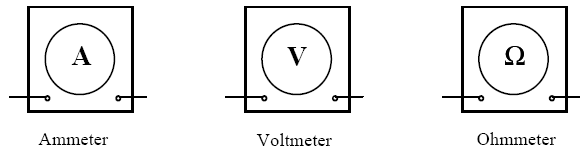
Here is another comparison showing typical values and use cases.
| Measurement Type | Typical Value Range | Common Use Case |
|---|---|---|
| Current (ammeter) | 0.01 A to 10 A | Checking appliance current |
| Resistance (ohmmeter) | 1 Ω to 10 MΩ | Testing resistor or wire |
| High resistance (megohmmeter) | 1 MΩ to 1000 MΩ | Insulation testing |
Credit: www.webassign.net
Advanced Insights: What Beginners Often Miss
Most beginners focus only on the main function, but there are deeper points:
- Circuit Impact: Ammeters add a small resistance to the circuit. In sensitive circuits, this can slightly change the current. Ohmmeters send a test current, which can affect delicate components, especially semiconductors.
- Reading Accuracy: Temperature changes can affect resistance measurements. If you measure a resistor after it has been heated, the value can be higher or lower than expected.
- Calibration Matters: Both ammeters and ohmmeters can drift over time. Professional labs calibrate meters regularly to ensure accuracy.
- Fuse Protection: Many ammeters have internal fuses. If you measure a high current, the fuse can blow, protecting the meter. Always check and replace the fuse if needed.
Choosing The Right Meter For Your Needs
If you only need to measure one type of value, buy a single-purpose meter. For most users, a digital multimeter is the best choice because it combines ammeter, ohmmeter, and voltmeter functions.
Here are key factors to consider:
- Accuracy: Digital meters are usually more accurate.
- Range: Make sure the meter covers the values you need.
- Safety: Look for meters with overcurrent protection.
- Display: Choose easy-to-read displays.
- Budget: Quality meters cost more but last longer.
Avoid buying very cheap meters, as they often have poor accuracy and limited safety features. Quality brands like Fluke or Klein offer reliable products.
For more details on meter types and usage, check this Wikipedia page.
Frequently Asked Questions
What Happens If I Connect An Ammeter In Parallel?
If you connect an ammeter in parallel with a circuit, it creates a low-resistance path. This can cause a large current to flow through the meter, often blowing its fuse or damaging the meter. Always connect ammeters in series.
Can I Measure Resistance In A Live Circuit?
No, you should never measure resistance in a live circuit. Power must be off. Measuring resistance with the circuit powered can give wrong readings and damage your ohmmeter.
Why Does My Ohmmeter Show Infinite Resistance?
If your ohmmeter shows infinite resistance, it means there is no connection or the component is open (broken). For example, a blown fuse or a broken wire will show infinite resistance.
Are Analog Meters Less Accurate Than Digital?
Analog meters can be less accurate and harder to read, especially for small values. Digital meters offer better accuracy and easier reading. However, analog meters are good for quick checks and for detecting trends.
Can I Use A Multimeter As Both An Ammeter And An Ohmmeter?
Yes, most multimeters can measure current, resistance, and voltage. You must set the correct mode and connect the probes properly. Follow safety instructions for each function.
Understanding the differences between ammeters and ohmmeters is not just about theory—it’s about using the right tool for the right job. With this knowledge, you can avoid costly mistakes, improve your projects, and work safely with electricity. Always read your meter’s manual, follow safety steps, and make sure your measurements are accurate.