Many people working with electricity—whether at home or on the job—depend on voltage testers to keep themselves safe. But not all voltage testers are the same. If you’ve ever looked for one online or at your local hardware store, you’ve likely seen both dual range and single range voltage testers. At first, the difference may seem small. In reality, choosing the right type can change how safely and accurately you work with electrical circuits. This article will break down what each type does, how they differ, and which situations suit them best. By the end, you’ll know exactly which tool fits your needs, and you’ll avoid mistakes that even seasoned electricians sometimes make.
What Is A Voltage Tester?
A voltage tester is a handheld tool used to check for the presence of electrical voltage in outlets, wires, circuit breakers, and other electrical components. Its job is simple: tell you if a wire or socket is “live” (carrying electrical current) or not. Some testers even show how much voltage is present. Most people use these tools to check for safety before handling electrical parts, or to diagnose issues when something isn’t working.
There are several types of voltage testers, including non-contact voltage testers (no metal tip, detects voltage through insulation), contact voltage testers (require touching the wire), and multimeters (give detailed readings for voltage, current, and resistance). But when it comes to voltage range, testers fall into two main groups: single range and dual range.
Single Range Voltage Tester: How It Works
A single range voltage tester is designed to detect voltage in one specific range. For example, it might be set to detect only high voltages (like 120–240V AC, used in homes and offices) or only low voltages (like 12–24V AC/DC, used in cars or doorbells).
When you use a single range tester, you touch the tester’s tip (or insert its probes) into the wire or socket. If voltage in the tester’s range is present, it lights up or beeps. If not, it stays silent.
Common Uses
- Home electrical systems: Most single range testers are set for 110–240V AC, perfect for checking wall sockets, switches, and light fixtures.
- Low-voltage electronics: Some are made for 12–24V AC/DC, used in cars, HVAC controls, or alarm systems.
Advantages
- Simplicity: One setting, less chance of confusion.
- Lower cost: Single range testers are often cheaper than their dual range counterparts.
- Speed: Just touch and test, no need to select a range.
Drawbacks
- Limited use: You can only test circuits within that one range. If you try to use it outside its range, you might get no reading—even if voltage is present.
- Missed problems: If you work with both household and low-voltage systems, you’ll need separate testers.
Dual Range Voltage Tester: How It Works
A dual range voltage tester can detect two different voltage ranges—usually low voltage (like 12–24V) and standard line voltage (like 110–240V). Some models switch automatically between ranges, while others let you select the range manually.
Dual range testers often use different indicators (like different colored lights or beeps) to show which voltage range they’ve detected. For example, a green light might mean low voltage, while a red light signals high voltage.
Common Uses
- Residential and commercial work: Perfect for electricians and DIYers who need to test both standard outlets and low-voltage circuits.
- Automotive and HVAC: Great for diagnosing car wiring or checking control circuits on furnaces or air conditioners.
Advantages
- Versatility: One tool for both low and high voltage.
- Safety: Reduces the chance of missing a live wire, even if it’s outside the range you expect.
- Efficiency: Fewer tools to carry and switch between.
Drawbacks
- Complexity: More features can mean a steeper learning curve.
- Slightly higher cost: More technology in one package.
- Misinterpretation: If you’re not careful, you might misread which range is active.
Key Differences: Dual Range Vs Single Range
When comparing dual range and single range voltage testers, it’s not just about the number of ranges—they affect your workflow, safety, and results.
| Feature | Single Range | Dual Range |
|---|---|---|
| Voltage Detection Range | One fixed range (e.g., 110–240V or 12–24V) | Two ranges (usually low & high voltage) |
| Use Case | Specific circuits | Multiple circuit types |
| Cost | Lower | Higher |
| Complexity | Simpler | More features |
| Risk of Missed Voltage | Higher if wrong range | Lower, covers more ranges |
Practical Example
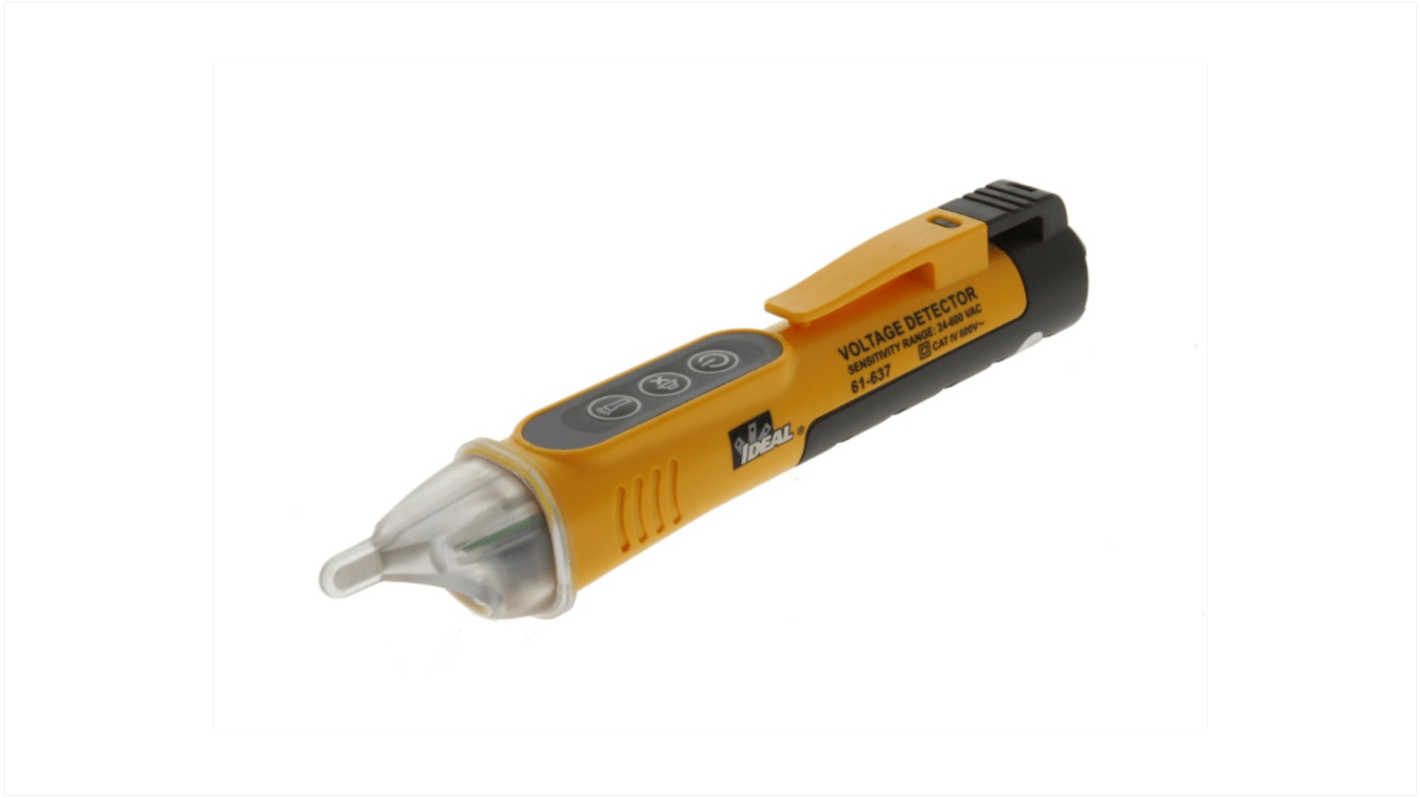
Imagine you’re troubleshooting a heating system. The thermostat runs on 24V, but the main power is 120V. A single range tester set for 120V will not detect the 24V circuit—so you might think there’s no power, when actually there is. With a dual range tester, both voltages are visible, making your diagnosis faster and safer.
Credit: my.rs-online.com
When To Choose Single Range Testers
While the flexibility of dual range testers is appealing, there are times when a single range voltage tester is actually the smarter choice.
- Budget constraints: If you only need to work on one type of circuit, a single range tester is cheaper.
- Simple household jobs: For basic outlet or light switch checks in the home, you don’t need multiple ranges.
- Beginner use: Fewer features mean less chance of mistakes for new users.
However, it’s important to understand that using a single range tester for the wrong application is a common mistake. For example, trying to check a car battery (12V DC) with a 120V AC tester will give you no reading at all.
When To Choose Dual Range Testers
If you do any of the following, a dual range voltage tester can save time and reduce risk:
- Work in different environments: Electricians and maintenance workers often face both line and low-voltage systems.
- Troubleshoot HVAC or security systems: These use a mix of voltages.
- Automotive repair: Modern vehicles use both high and low voltages.
- Want extra safety: Reduces the chance of missing a “live” wire, especially in mixed-use panels.
Some modern dual range testers also include extra features, such as flashlight tips or vibration alerts, which help in dark or noisy locations.
Mistakes To Avoid When Using Voltage Testers
Even with the best tool, common errors can lead to wrong results—or dangerous situations.
- Assuming your tester detects all voltages: Not true, especially with single range types.
- Ignoring the tester’s specifications: Always check if your tester matches the circuit’s voltage and type (AC or DC).
- Not checking the tester on a known live circuit: Before and after use, always confirm your tester works.
- Relying only on indicator lights: Some testers use similar colors for both ranges. Read the manual and learn the indicators.
- Using a tester on damaged insulation: Exposed metal can cause inaccurate readings or even injury.
Real-world Performance: Dual Vs Single Range
Different testers perform differently under real working conditions. Here’s how they compare in actual use.
| Scenario | Single Range Tester | Dual Range Tester |
|---|---|---|
| Testing 120V outlet | Accurate (if set for 120V) | Accurate |
| Testing 24V thermostat | No reading (if set for 120V) | Detects voltage, shows which range |
| Automotive fuse box (12V) | No reading (if set for 120V) | Detects voltage |
| Mixed panel (both voltages) | Need two testers | One tool is enough |
Notice how dual range testers reduce the number of tools you need and lower the chance of missing a problem.
Features That Really Matter
When choosing a voltage tester, don’t just go for the cheapest or most advanced. Focus on features that match your work.
- Voltage range: Does it detect the right voltages for your projects?
- Type of voltage: AC, DC, or both?
- Indicator clarity: Bright lights or loud beeps are safer in noisy or dark environments.
- Durability: Is it drop-tested, water-resistant, or dustproof?
- Battery life: Some testers drain fast if left on.
One less obvious insight: some dual range testers have a delay when switching between ranges. If you move too quickly from one circuit to another, you might get no reading or the wrong indicator. Wait a second or two for the tester to adapt.
Safety Tips For Using Voltage Testers
Your safety depends on both the tool and how you use it. Here are practical tips:
- Always test your tester on a known live circuit before trusting it.
- Wear insulated gloves when working on live wires, even if you use a tester.
- Keep your hands dry and stand on an insulated mat for extra protection.
- Do not use a damaged tester. Cracks or worn tips can cause inaccurate readings or shocks.
- Follow manufacturer’s instructions. Each tester has unique features and limitations.
A surprising fact: static electricity can sometimes trigger sensitive testers, especially non-contact models. If you get a reading in an unexpected place, double-check with a second tool or method.

Credit: tescobs.com
Expert Insights: What Beginners Often Miss
- Not all testers work on both AC and DC. Most household testers work only with AC (alternating current), but cars and batteries use DC (direct current). Always check the label.
- Indicator confusion: Some dual range testers use the same color light for both ranges, but blink at different speeds. If you don’t read the manual, it’s easy to miss this and get confused.
- False negatives: If you use a single range tester in a low-voltage circuit, you may think the circuit is dead when it’s not. This can lead to incorrect repairs or dangerous mistakes.
Comparing Popular Models
Here’s a quick look at some top-rated testers:
| Brand/Model | Type | Voltage Range | Special Features |
|---|---|---|---|
| Klein Tools NCVT-2 | Dual Range | 12–1000V AC | Non-contact, LED, buzzer |
| Fluke 1AC II | Single Range | 90–1000V AC | Non-contact, pocket clip |
| Gardner Bender GVD-3504 | Single Range | 50–600V AC | Non-contact, light indicator |
| Southwire 40150N | Dual Range | 24–1000V AC | Vibration alert, flashlight |

Credit: www.lowes.com
Frequently Asked Questions
What’s The Main Difference Between Dual Range And Single Range Voltage Testers?
A single range tester checks for voltage in one specific range, while a dual range tester can check for both low and high voltage. This makes dual range testers more flexible for people who work with different types of circuits.
Can I Use A Single Range Tester For Both Ac And Dc Circuits?
Most single range testers are made for either AC or DC, but not both. Always check your tester’s specs before using it on a different type of circuit, or you may get incorrect results.
Are Dual Range Voltage Testers Harder To Use?
Dual range testers have more features, which may seem complex at first. However, many are designed with clear lights or beeps to show which range is active. Reading the manual helps avoid confusion.
How Do I Know If My Tester Is Working Correctly?
Before you rely on any tester, always test it on a known live circuit—like a working outlet. If it doesn’t show power there, don’t trust it on your project.
Where Can I Learn More About Voltage Testers And Safe Electrical Work?
For more detailed information on voltage testers and electrical safety, check resources like the Wikipedia Voltage Detector page.
Choosing between a dual range and single range voltage tester is about understanding your own needs. For basic home jobs, a simple tester may be enough. For mixed environments or professional work, a dual range model adds safety and convenience.
Either way, always follow safety rules and use your tools wisely for the best results.