An electrician stands in a quiet room, holding two different tools. One is an insulation tester, the other a multimeter. Both look similar, with digital displays and probes. But if you ask, “Which one should I use? ” the answer is not always obvious.
Many people, even in technical fields, confuse these tools or think they can use one instead of the other. In reality, insulation testers and multimeters serve very different purposes. Choosing the right tool is not only about getting accurate results—it’s about safety, efficiency, and protecting expensive equipment.
Understanding the differences is essential whether you are a professional, student, or hobbyist working with electrical systems.
Let’s explore how insulation testers and multimeters work, what makes them unique, and when you should use each. Along the way, you’ll learn practical examples, see real-world scenarios, and discover insights that many beginners miss.
What Is An Insulation Tester?
An insulation tester is a special device used to check the quality of insulation in electrical wires and equipment. Insulation is the protective covering around wires that prevents electricity from leaking out. Over time, insulation can wear out due to heat, moisture, dirt, or mechanical damage. If insulation fails, it can cause dangerous situations like electric shock, short circuits, or even fire.
How Does An Insulation Tester Work?
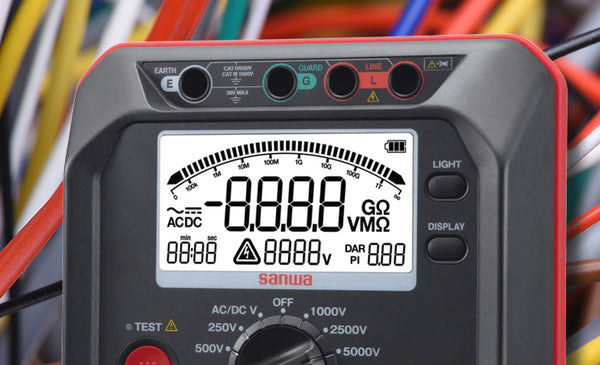
An insulation tester sends a high voltage, usually between 250 to 1000 volts or even higher, through the insulation of a wire or device. This voltage is much higher than the normal operating voltage. The tester then measures the resistance of the insulation. Good insulation has very high resistance (often in the megaohms, or millions of ohms). Low resistance means the insulation is damaged or dirty, allowing current to leak.
The main measurement from an insulation tester is called insulation resistance. The result tells you if the insulation is still good or if it needs repair or replacement.
Where Is An Insulation Tester Used?
Insulation testers are common in electrical maintenance, construction, and repair. Here are some typical uses:
- Checking electrical wiring in houses, offices, and factories.
- Testing motors, transformers, and cables after installation or during routine checks.
- Verifying insulation before energizing new equipment.
Why Not Use A Multimeter Instead?
Many people wonder if their regular multimeter can do the same job. The answer is no. Multimeters measure lower voltages and cannot detect small leaks in insulation because they do not stress the material enough. Only an insulation tester can find hidden problems in insulation.
What Is A Multimeter?
A multimeter is a versatile tool used to measure different electrical properties. Most people who work with electronics or electrical systems own a digital or analog multimeter.
Main Functions Of A Multimeter
Multimeters can usually measure:
- Voltage (V): Checks the electrical potential between two points.
- Current (A): Measures the flow of electric charge.
- Resistance (Ω): Shows how much a component resists current flow.
- Continuity: Tests if electricity can flow through a wire or circuit.
- Diode testing: Some models can test diodes and transistors.
Some advanced models also measure temperature, frequency, or even capacitance.
Where Is A Multimeter Used?
Multimeters are everywhere in electrical and electronic work:
- Troubleshooting faulty circuits.
- Checking if a fuse is blown.
- Measuring battery voltage.
- Diagnosing issues with home appliances.
- Testing electronic components in devices.
What Can’t A Multimeter Do?
A regular multimeter cannot test insulation resistance at high voltages. It is not designed for detecting tiny leaks in insulation or for stress testing cables and equipment.

Credit: www.youtube.com
Key Differences Between Insulation Testers And Multimeters
People often confuse these tools because they look similar. However, their functions and designs are very different. Below is a summary to help you see these differences clearly.
| Feature | Insulation Tester | Multimeter |
|---|---|---|
| Main Purpose | Checks insulation resistance | Measures voltage, current, resistance, etc. |
| Test Voltage | High (250V to 5000V+) | Low (usually under 12V for resistance) |
| Resistance Range | Megaohms to gigaohms | Ohms to megaohms |
| Use Case | Insulation quality check | General electrical troubleshooting |
| Safety Risk | High (due to test voltage) | Low |
Non-obvious Insight 1
Some electricians forget that using a multimeter to test insulation can give a false sense of security. A wire may show high resistance at low voltage, but insulation can break down under real operating conditions. Only an insulation tester reveals these “hidden” faults.
Non-obvious Insight 2
Insulation testers are not only for old equipment. Even new installations need testing, because shipping, storage, or installation errors can damage insulation before the system is even used.
Insulation Tester: Features, Types, And How To Use
Choosing the right insulation tester and using it correctly is vital. Let’s look at what you should know.
Key Features
- Test Voltage Settings: Most testers allow you to select different voltages (e.g., 250V, 500V, 1000V).
- Resistance Range: Good testers can measure up to several gigaohms.
- Display: Clear digital or analog readout.
- Data Storage: Some models save results for later analysis.
- Auto-discharge: Safely discharges the tested item after the test.
Types Of Insulation Testers
- Handheld Testers: Portable, powered by batteries. Suitable for quick checks.
- Bench Testers: Larger, used in labs or workshops. Offer more features and accuracy.
- Motor Insulation Testers: Specially designed for motors and generators.
How To Use An Insulation Tester
- Turn off Power: Never test live circuits.
- Connect Probes: Attach the tester leads to the device under test.
- Select Test Voltage: Choose the recommended voltage for the equipment.
- Start Test: Press the test button. The tester sends high voltage through the insulation.
- Read Result: Wait for the reading to stabilize, then check the resistance.
- Interpret Result: Compare with standards (e.g., 1 megaohm minimum for many circuits).
- Discharge: Let the tester discharge any voltage left in the equipment.
Practical Example
Suppose you are checking a motor. You use a 1000V test voltage and get a reading of 20 megaohms. This is generally considered safe. If you see 0. 2 megaohms, the insulation is failing, and the motor should not be used.
Common Mistakes
- Testing live equipment (dangerous! ).
- Using the wrong test voltage.
- Not discharging the circuit after testing.
- Misreading the scale (digital vs. analog).
Multimeter: Features, Types, And How To Use
Multimeters are everyday tools, but not all are created equal. Here’s how to get the most from yours.
Key Features
- Auto-ranging: Automatically selects the measurement range.
- Digital/Analog Display: Most modern ones are digital for easier reading.
- Backlight: Useful in low-light areas.
- Additional Functions: Some test temperature, frequency, or even capacitance.
Types Of Multimeters
- Digital Multimeter (DMM): Most common, accurate, easy to read.
- Analog Multimeter (AMM): Uses a needle. Good for observing slow changes.
- Clamp Meter: Measures current without breaking the circuit.
How To Use A Multimeter
- Select Measurement Type: Voltage, current, resistance, etc.
- Connect Probes: Black probe to COM (common), red to VΩmA.
- Set Range: If not auto-ranging, set the correct range.
- Test: Touch probes to the circuit.
- Read Value: Note the measurement.
- Turn Off: Remove probes and turn off the meter.
Practical Example
You need to check if a wall outlet is working. Set the meter to AC voltage, insert probes, and read the value. Should be around 110V or 220V, depending on your country.
Common Mistakes
- Measuring voltage in the current setting (can blow fuse).
- Forgetting to switch back to voltage after measuring current.
- Using the wrong range (can damage the meter or get wrong readings).
When To Use An Insulation Tester Vs. A Multimeter
Knowing which tool to use saves time and prevents costly errors.
Use An Insulation Tester When:
- You suspect insulation damage in wires, motors, or transformers.
- Testing before switching on new installations.
- After flooding or water damage.
- During routine maintenance of industrial equipment.
Use A Multimeter When:
- Troubleshooting everyday electrical problems.
- Checking voltage in sockets or circuits.
- Measuring resistance of components (not insulation).
- Testing continuity in wiring.
Real-world Scenario
Imagine you are called to fix a tripping circuit breaker. A multimeter shows no short circuit, but the problem keeps returning. An insulation tester, however, finds that the wire insulation is leaking current to ground, especially when humidity is high.
Without the insulation tester, you might miss this fault.
Safety Considerations
Both tools require care, but insulation testers are more dangerous because they generate high voltage.
Insulation Tester Safety
- Always disconnect equipment from power before testing.
- Warn others nearby before testing.
- Use one hand if possible to avoid current passing through your body.
- Wait for auto-discharge or manually discharge after testing.
Multimeter Safety
- Check that your meter is rated for the voltage you are measuring.
- Inspect leads for damage.
- Never switch measurement modes while connected to a live circuit.
Non-obvious Safety Tip
Some insulation testers can store dangerous voltage in the equipment even after the test. Always wait for the tester’s discharge indicator or use a proper discharge tool before touching the device.
Technical Specifications: Comparing Real-world Models
To make things clearer, here is a comparison between two popular tools on the market.
| Model | Type | Test Voltage (Insulation) | Max Resistance Measured | Other Functions | Approx. Price |
|---|---|---|---|---|---|
| Fluke 1507 | Insulation Tester | 50V, 100V, 250V, 500V, 1000V | 2 GΩ | Continuity, PI/DAR ratio | $500 |
| Fluke 117 | Digital Multimeter | N/A | 40 MΩ | Voltage, current, resistance, frequency | $200 |
From this, you can see insulation testers are specialized, more expensive, and can handle much higher resistance readings.

Credit: www.fluke.com
Understanding Measurement Results
Interpreting the numbers is as important as taking the measurement. Here are some guidelines.
Insulation Resistance Standards
- For most electrical equipment, 1 megaohm per 1000 volts of operating voltage is the minimum.
- Higher is always better. New equipment often shows readings in the hundreds of megaohms.
- If readings drop over time, it’s a warning sign.
Multimeter Readings
- Voltage: Must match expected values (e.g., 230V in Europe, 120V in USA).
- Resistance: Should be close to the component’s rating.
- Continuity: “Beep” means the circuit is good.
Non-obvious Insight
Sometimes insulation resistance drops after a rainstorm but recovers after drying. Regular testing lets you spot these trends before a major fault occurs.
What To Consider When Buying Each Tool
If you need to choose between an insulation tester and a multimeter, think about your needs.
For Insulation Testers
- Required test voltage: Do you need 500V, 1000V, or more?
- Maximum resistance measured: Can it handle gigaohms?
- Safety certifications: Look for CAT ratings and approvals.
- Portability: Battery powered or bench unit?
- Price: Good testers are an investment.
For Multimeters
- Measurement types: Do you need temperature, frequency, capacitance?
- Accuracy: Does the display show enough decimals for your work?
- Build quality: Is it rugged for field use?
- Auto-ranging: Makes work faster and safer.
- Budget: There are good models at different prices.
Common Buyer Mistakes
- Buying a multimeter thinking it can replace an insulation tester.
- Choosing an insulation tester with too low a test voltage for your application.
- Ignoring safety ratings (CAT III, CAT IV) for high-energy environments.
Advanced Features And Modern Trends
Technology has improved both tools in recent years.
Insulation Testers
- Bluetooth and data logging: Some testers send results to your phone.
- Automatic tests: Programs for quick, repeatable testing.
- PI (Polarization Index) and DAR (Dielectric Absorption Ratio): Help judge insulation quality over time.
Multimeters
- True RMS: Accurate readings even with non-sinusoidal waveforms.
- Low pass filters: Ignore noise in variable frequency drives.
- Non-contact voltage detection: Safer work in panels.
Non-obvious Insight
Some advanced insulation testers can also perform basic multimeter functions, but the reverse is not true. Multimeters do not generate the high voltage needed for insulation tests.
Real-world Examples And Case Studies
Here’s how these tools make a difference in real life.
Example 1: Factory Motor Shutdown
A food processing plant had motors shutting down unexpectedly. Multimeter checks found nothing wrong with voltage or current. An insulation tester found one motor winding at only 0. 5 megaohms—dangerously low. Replacing the motor avoided a costly fire.
Example 2: Home Renovation
A homeowner wanted to reuse old wiring after a renovation. A multimeter showed the wires were not shorted, but an insulation tester revealed two cables had degraded insulation, likely from rodent damage. Rewiring prevented future hazards.
Example 3: Solar Panel Installation
Before connecting a new solar panel array, installers used insulation testers to check every connection. High resistance readings confirmed no moisture or damage during shipping. The system worked perfectly from day one.
Summary Table: When To Use Each Tool
To help you decide quickly, here’s a summary.
| Situation | Best Tool | Why |
|---|---|---|
| Checking if a wire is live | Multimeter | Measures voltage safely |
| Finding hidden insulation faults | Insulation Tester | Stresses insulation with high voltage |
| Testing battery health | Multimeter | Measures voltage and current |
| Testing after water damage | Insulation Tester | Checks for leakage through insulation |
| General circuit troubleshooting | Multimeter | Versatile, handles many measurements |
Frequently Asked Questions
What Is The Main Difference Between An Insulation Tester And A Multimeter?
An insulation tester measures insulation resistance using high voltage to find leaks or breakdowns in wires and equipment. A multimeter measures voltage, current, and resistance at low voltages, mainly for troubleshooting and basic checks.
Can A Multimeter Replace An Insulation Tester?
No. A multimeter cannot stress-test insulation with high voltage. It may miss hidden faults that only appear under real working conditions. For safety and reliability, always use the correct tool.
Are Insulation Testers Dangerous To Use?
They can be if not used properly. Insulation testers send high voltage through the item under test. Always disconnect power, follow safety rules, and let the device discharge after testing.
How Often Should Insulation Testing Be Done?
For industrial or commercial settings, insulation testing is recommended at installation, after repairs, and as part of regular maintenance (often once a year). In homes, test after major events like flooding or before reusing old wiring.
Where Can I Find More Technical Details Or Standards?
For more detailed information, visit the Insulation Resistance Test Wikipedia page for technical explanations, standards, and reference charts.
Understanding the difference between an insulation tester and a multimeter can save time, money, and lives. Each tool has its place. Choose wisely, follow safety rules, and your electrical work will be safer and more reliable.
Credit: www.sanwa-america.com