A test light and a multimeter are two of the most popular tools for checking electrical circuits. Both are common in car garages, home workshops, and for anyone working with wires and electricity. But what really sets them apart? Is one better than the other for certain jobs? Many beginners mix them up or buy the wrong tool, losing time and money. This article explores the differences, uses, and best practices for the test light and the multimeter. You’ll learn when to reach for each tool, what mistakes to avoid, and how to make smarter choices for your electrical work.
What Is A Test Light?
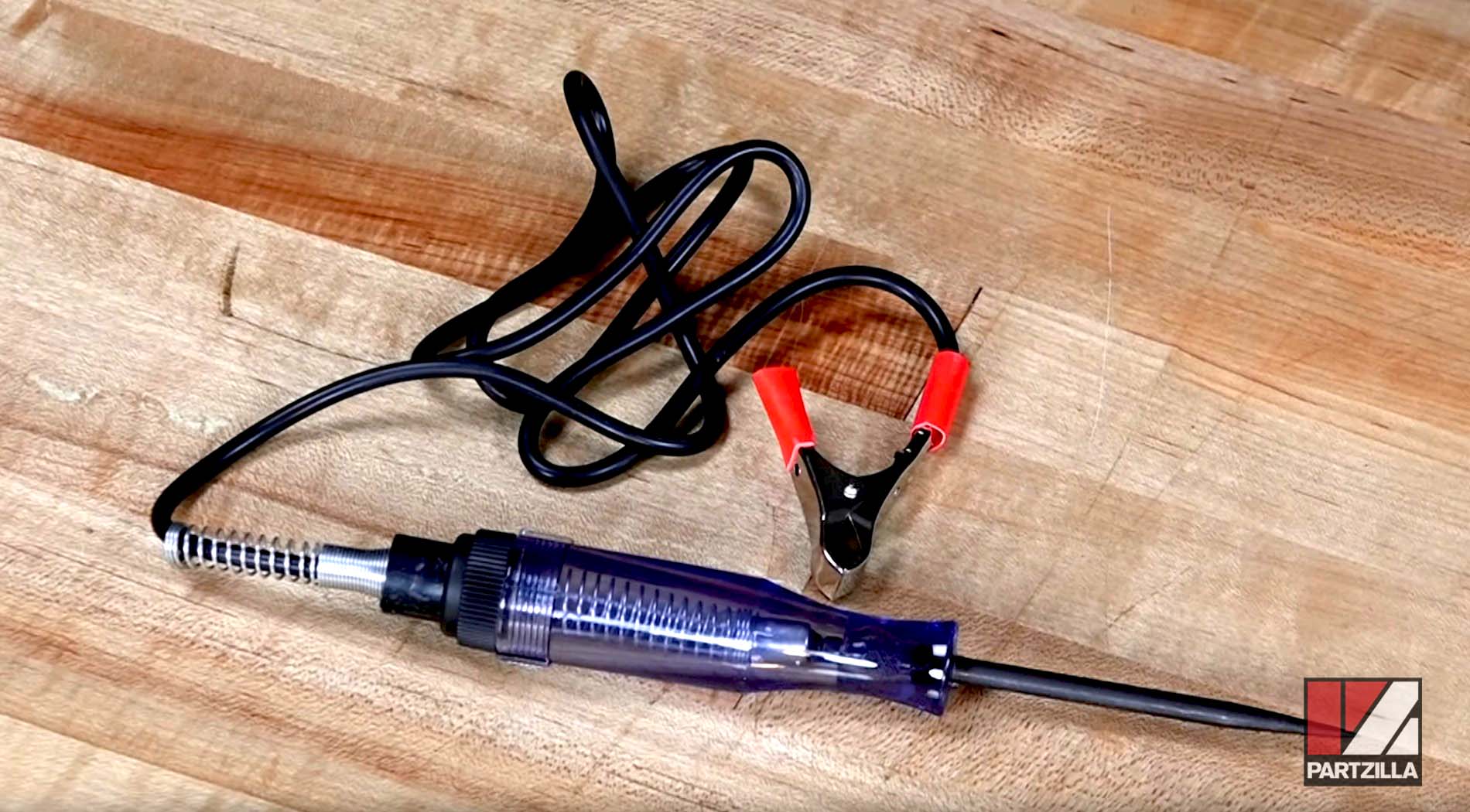
A test light is a simple electrical tool. It looks like a pen or screwdriver with a pointed metal tip and a wire with a clip on the end. Inside, there’s a small light bulb or LED. When you touch the tip to a wire or terminal and connect the clip to ground (or a known good voltage), the bulb lights up if voltage is present.
Test lights are most used in automotive work, but they also help in home wiring and troubleshooting low-voltage circuits. They are cheap, easy to use, and can quickly tell you if power is reaching a part.
How A Test Light Works
When you connect the clip to ground (in cars, usually bare metal) and touch the tip to a connection, electricity flows through the bulb inside. If the circuit has power, the bulb lights up. If not, the bulb stays dark.
Some test lights are made for 6V, 12V, or 24V systems. Others are safe for use on higher voltages. Always check the voltage rating before using one.
Common Uses For A Test Light
- Checking fuses – Quickly see if a fuse has power on both sides.
- Finding broken wires – Touch along a wire to see where power stops.
- Testing switches – See if a switch is passing power when turned on.
- Identifying power and ground – In cars, find out which wires carry power and which are ground.
Advantages Of A Test Light
- Simple to use. No settings or numbers to read.
- Very fast. You know instantly if power is present.
- Low cost. Most test lights cost just a few dollars.
- Great for beginners. No technical knowledge needed.
Limitations Of A Test Light
- Only detects presence of voltage. It doesn’t measure how much voltage.
- Can’t measure resistance or current.
- Not as safe for sensitive electronics. Some test lights draw more current and can damage computer circuits.
- No digital readout. You only see a light on or off.
Beginners often forget that a test light only shows if power is present, not if a circuit is safe to use. For example, a wire with very low voltage or weak current can still light up the bulb, but the device connected might not work.
What Is A Multimeter?
A multimeter is a more advanced tool. It can measure voltage, current (amperes), and resistance (ohms). Modern multimeters are digital (DMM), with a screen showing numbers, but analog types with moving needles still exist.
A multimeter has two test leads (usually red and black) and a rotary switch or buttons to choose the type of test. Some also test diodes, capacitors, or temperature.
How A Multimeter Works
To use a multimeter, you pick the function (voltage, current, resistance) and range. Then, you touch the leads to the circuit. The meter shows the value on the display.
Multimeters can test:
- AC and DC voltage (home and car circuits)
- Resistance (for checking wires, fuses, and components)
- Current (how much power is flowing)
- Continuity (if a wire is connected)
Common Uses For A Multimeter
- Measuring battery voltage – See the exact number, not just “power/no power.”
- Testing alternators and charging systems in vehicles.
- Checking home outlets – Is there 120V or 230V present?
- Finding bad connections – High resistance readings show a problem.
- Testing fuses and bulbs – Continuity check shows if the part is “open” or “closed.”
- Measuring amps – For current draw in circuits.
Advantages Of A Multimeter
- Gives exact numbers. You know not just “if” power is present but “how much.”
- Multiple functions. One tool replaces many.
- Safe for electronics. Most digital multimeters draw almost no current and are safe for computer circuits.
- Troubleshoots more problems. Measures voltage, resistance, and current.
Limitations Of A Multimeter
- More complex. Needs some understanding to use settings correctly.
- Slower for simple checks. Picking the right function and range takes time.
- Can break if misused. Setting to amps and touching high voltage, for example, can damage the meter.
- Costs more. Good quality meters are more expensive than test lights.
A common beginner’s mistake is using the wrong setting or range, leading to confusion or even blowing the meter’s internal fuse.
Key Differences Between Test Light And Multimeter
Let’s look at how a test light and multimeter compare side-by-side. This makes it clear where each tool shines.
| Feature | Test Light | Multimeter |
|---|---|---|
| Measures Voltage | Yes (power/no power) | Yes (exact value) |
| Measures Current | No | Yes |
| Measures Resistance | No | Yes |
| Checks Continuity | No | Yes |
| Shows Polarity | Yes (on DC circuits) | Yes |
| Safe for Electronics | Not always | Usually safe |
| Cost | Low | Medium to High |
| Learning Curve | Very Easy | Medium |
When To Use A Test Light
A test light is best for quick, basic troubleshooting in low-voltage circuits, especially in vehicles. If you want to see if a wire or fuse is getting power, this tool is the fastest way.
You should reach for a test light when:
- You need a “yes/no” answer. Is power present or not?
- Working on 6V, 12V, or 24V systems. Most test lights are built for these voltages.
- Testing old-style circuits. Older cars and simple machines without computers are perfect for test lights.
Example: You have a car that won’t start. You can use a test light to check if power is reaching the starter motor or ignition coil. If the light turns on, you know power is present. If not, you know where to check next.
Practical Tips For Using Test Lights
- Always connect the clip to a good ground. Paint or rust can block the flow, giving a false result.
- Use a low-current LED test light for modern cars. These won’t damage sensitive electronics.
- Never use a 120V or 230V test light on low-voltage circuits, and vice versa.

Credit: www.partzilla.com
When To Use A Multimeter
A multimeter is the better choice when you need detailed information, are working with electronics, or want to measure more than just voltage.
Use a multimeter when:
- You need an exact number. For example, a car battery should show 12.6V when fully charged. A test light only tells you “has power,” not “how much power.”
- Checking for voltage drops. If a wire or connection is faulty, you can measure the difference in voltage across it.
- Measuring resistance. For checking if a fuse, wire, or bulb is good (shows low resistance) or blown (shows infinite resistance).
- Testing continuity. The meter beeps if the wire is continuous.
- Measuring current. Useful for checking how much power a device draws.
Example: In a home outlet, you can use a multimeter to check if you have 120V (or 230V), if the wires are properly connected, or if the resistance to ground is safe.
Practical Tips For Using Multimeters
- Always start with the highest range if you’re unsure about voltage/current.
- For current measurement, you usually have to move the probe to a different hole (marked “10A” or “A”).
- Never try to measure amps by touching the leads across a battery; connect in series with the load.
- For resistance, always test with the power OFF to avoid damaging the meter.
Test Light Vs Multimeter: Real-world Examples
To make things clear, let’s compare how each tool performs in common situations.
Car Headlight Not Working
- Test Light: Touch the terminal at the headlight. If it lights up, power is reaching the headlight. If not, check the fuse or switch.
- Multimeter: Measure voltage at the headlight. If it shows 12V, the problem is in the bulb or ground. If it’s less than 12V, there may be a weak connection or voltage drop.
Home Outlet Not Working
- Test Light: Most test lights are not made for 120V/230V home outlets, but some are. If rated for high voltage, it will light up if power is present.
- Multimeter: Safely measure the exact voltage. You can also check between hot, neutral, and ground to spot wiring issues.
Testing A Car Fuse
- Test Light: Touch both ends of the fuse. If both light up, the fuse is good.
- Multimeter: Set to continuity. If the meter beeps, the fuse is good. Or, set to resistance and look for zero ohms.
Checking A Car Battery
- Test Light: Connect the clip to ground, touch the tip to the positive terminal. If it lights, the battery has some power, but you don’t know how much.
- Multimeter: Set to DC volts. A reading of 12.6V means fully charged. Below 12V means weak or dead battery.
Finding A Broken Wire
- Test Light: Move along the wire, checking for power. When the light stops working, you’ve found the break.
- Multimeter: Use the continuity setting. Connect each end of the wire to the leads. No beep means the wire is broken.
Choosing The Right Tool For The Job
It’s not about which tool is “better” overall, but which is better for your task.
- For quick checks and simple circuits, a test light is faster and easier.
- For detailed diagnosis, electronics, or where numbers matter, a multimeter is best.
One insight many beginners miss: Sometimes, using both tools together saves time. For example, start with a test light to quickly find the area of the problem, then switch to the multimeter for exact measurements.
Second insight: Using a test light on sensitive electronic systems (like car computers or airbags) can cause damage. Always check the manual, and use a digital multimeter instead.
Common Mistakes When Using Test Lights And Multimeters
Even experienced users make mistakes. Here are some to watch out for:
- Using the wrong voltage range. If your test light is rated for 12V, don’t use it on 120V AC.
- Not checking the ground. A rusty ground connection gives a false “no power” result.
- Touching the wrong settings. Setting a multimeter to amps and touching it to a live circuit can blow the fuse inside.
- Ignoring polarity. In DC circuits, test lights and meters show results only if connected the right way.
- Measuring resistance with power ON. This can damage the meter and give wrong results.
Credit: www.partzilla.com
Which Tool Should You Buy First?
If you’re just starting out, what should you buy first: a test light or a multimeter?
- If you work mostly on cars, motorcycles, or simple 12V systems, start with a test light. It’s cheap and solves most problems fast.
- If you plan to fix home wiring, electronics, or need more detail, buy a digital multimeter. It does everything a test light does, plus much more.
A good compromise is to own both. A test light for speed, a multimeter for accuracy.
How To Choose A Good Test Light
Not all test lights are the same. Here’s what to look for:
- Voltage rating. Make sure it matches your work (6V, 12V, 24V, or 120V/230V).
- Bulb type. LED test lights draw less current and are safer for electronics.
- Clip quality. Look for a strong, sharp clip for a solid ground connection.
- Wire length. A longer wire gives more reach.
- Build quality. Metal bodies last longer than plastic.
How To Choose A Good Multimeter
A multimeter has more features and price ranges. Here’s how to pick:
- Digital vs analog. Digital is easier to read and more accurate.
- Auto-ranging. This feature sets the range for you, making it easier for beginners.
- Safety ratings. Look for CAT ratings if using on home or industrial circuits.
- Backlight display. Helps in dark areas.
- Additional features. Some meters test temperature, frequency, or have a hold button.
- Brand reputation. Fluke, Klein, and Extech are trusted brands.
Test Light And Multimeter: Safety Tips
Safety is critical when working with electricity. Follow these rules:
- Check the tool rating before use. Never use a 12V test light on a 230V circuit.
- Wear gloves and eye protection when working on live circuits.
- Never touch metal parts of the tool when testing.
- Turn off power when measuring resistance or continuity.
- Inspect your tools for cracks, broken wires, or damage before use.
For more detailed safety information, see this guide from the Occupational Safety and Health Administration (OSHA).
Test Light Vs Multimeter: Which Is More Accurate?
A multimeter is more accurate, giving exact numbers. A test light only shows if power is present or not. For professional or sensitive work, a multimeter is always best.
However, for quick checks, a test light’s simplicity is a big advantage. Many mechanics and electricians use both tools, depending on the situation.
Test Light And Multimeter: Cost Comparison
Let’s compare the cost side-by-side:
| Tool | Entry Level | Mid-Range | Professional |
|---|---|---|---|
| Test Light | $5–$10 | $15–$30 | $40+ |
| Multimeter | $10–$20 | $30–$70 | $100–$300 |
A test light is always cheaper, but a multimeter offers more functions for the price.
Test Light Vs Multimeter: Which One Lasts Longer?
With careful use, both tools can last for many years. However, a high-quality multimeter usually lasts longer because it’s made for more demanding work. Cheap test lights can break if dropped or the wire gets pulled.
Pro tip: Always store your tools in a dry place. Moisture can damage both test lights and multimeters.
Frequently Asked Questions
What Can A Test Light Do That A Multimeter Cannot?
A test light gives a fast, “go/no-go” answer with a simple light. It can also be easier to use in tight spaces or when you need to test multiple points quickly. However, a multimeter covers nearly all the test light’s functions, plus many more.
Can I Damage My Car Or Electronics By Using A Test Light?
Yes, especially on modern cars with computer systems. Older test lights draw more current, which can damage sensitive components. Use a low-current LED test light or, even better, a digital multimeter for these systems.
Why Does My Test Light Glow Dimly Sometimes?
A dim light usually means there’s some voltage, but not enough. This can be caused by a weak battery, poor connection, or high resistance in the circuit. Always follow up with a multimeter to check the exact voltage.
Which Tool Is Safer For Beginners?
A test light is simpler, so it’s harder to make dangerous mistakes. However, if used on the wrong circuit (like 230V with a 12V test light), it can be dangerous. A multimeter is safer for electronics if you use it correctly and read the manual.
Should I Own Both A Test Light And A Multimeter?
Yes, if possible. They complement each other. A test light is fast for basic checks, while a multimeter gives you more detail and options. Professionals almost always have both in their toolbox.
Choosing between a test light and a multimeter depends on your work and skill level. For quick checks on simple circuits, a test light is hard to beat. For detailed troubleshooting, safety, and versatility, a multimeter is the winner. In the end, the smartest choice is to learn both tools, know their limits, and always work safely.
:max_bytes(150000):strip_icc()/Top-electrical-testers-11522571-v1-f9cdf41a3e854bbfa684f2a86461dcd7.png)
Credit: www.thespruce.com