Choosing the right tool for electrical work can make a big difference in safety and results. Two popular tools for measuring voltage are the voltmeter and the voltage tester. They may seem similar at first, but they serve different purposes. Understanding their differences can help you pick the best tool for your job, avoid mistakes, and stay safe around electricity.
Both tools help you detect voltage, but their accuracy, design, and functions are not the same. Whether you are an electrician, DIY enthusiast, or just want to check your outlets, knowing when to use a voltmeter versus a voltage tester is essential.
This article will guide you through their features, how they work, their pros and cons, and practical advice for choosing the right tool.
What Is A Voltmeter?
A voltmeter is a device designed to measure the exact voltage between two points in an electrical circuit. It displays the voltage value, usually in volts (V), on a digital or analog scale. Voltmeters are used for precise measurements, which makes them important for troubleshooting, testing batteries, and checking circuit performance.
Types Of Voltmeters
Voltmeters come in several varieties:
- Analog voltmeter: Uses a needle and scale. It is less common today but still used for certain tasks.
- Digital voltmeter: Shows voltage as a number on a screen. Most people prefer this type for accuracy and ease of reading.
- Multimeter: This is a popular tool that combines voltmeter, ammeter (for current), and ohmmeter (for resistance). Most digital multimeters can measure AC and DC voltage.
How Does A Voltmeter Work?
A voltmeter connects in parallel to the circuit. It measures the potential difference between two points. In digital models, the internal electronics convert the voltage into a readable number. Analog models use a needle that moves over a scale based on the voltage.
Common Uses
- Diagnosing electrical problems
- Checking battery voltage
- Testing power supplies
- Verifying circuit design
Example: Checking A Car Battery
If your car will not start, you can use a voltmeter to check the battery. Connect the voltmeter’s probes to the battery terminals. If it shows less than 12 volts, your battery may be weak or dead.
What Is A Voltage Tester?
A voltage tester is a simpler tool used to check if voltage is present in a wire, outlet, or device. It does not measure the exact voltage value. Instead, it shows whether electricity is there or not, often using a light or beep. Voltage testers are quick and easy, making them popular for basic safety checks.
Types Of Voltage Testers
There are a few main types:
- Non-contact voltage tester: Detects voltage without touching metal parts. You just hold it near the wire or outlet.
- Contact voltage tester: Requires touching the wire or terminal.
- Two-prong tester: Insert both prongs into the outlet to check for voltage.
How Does A Voltage Tester Work?
Non-contact testers sense the electric field around live wires. If voltage is present, they light up or beep. Contact testers use a simple circuit that closes when you touch the wire, signaling voltage.
Common Uses
- Checking if outlets are live
- Testing light switches
- Verifying power is off before repairs
- Avoiding electric shocks
Example: Finding A Live Wire
Before changing an outlet, you can use a non-contact voltage tester to check if the wire is live. If the tester lights up, turn off the power before working.
Key Differences Between Voltmeter And Voltage Tester
Choosing between a voltmeter and a voltage tester depends on your needs. Here are the main differences.
| Feature | Voltmeter | Voltage Tester |
|---|---|---|
| Measurement | Shows exact voltage value | Detects presence of voltage |
| Accuracy | High | Low (only yes/no) |
| Use Case | Detailed troubleshooting | Quick safety checks |
| Complexity | Requires some skill | Easy to use |
| Display | Numeric or needle | Light/beep indicator |
| Price | $15–$100+ | $5–$30 |
How To Use Each Tool Safely
Safety is important when working with electricity. Here are practical steps for using each tool.
Using A Voltmeter
- Turn off power to the circuit before connecting the voltmeter, unless measuring live voltage.
- Select the correct setting for AC or DC voltage.
- Connect probes: Red to positive, black to negative or ground.
- Read the value and note the result.
- Remove probes carefully.
Using A Voltage Tester
- Check the tester on a known live source to confirm it works.
- Hold or touch the tester to the wire or outlet.
- Watch for the indicator (light or beep).
- Turn off power if voltage is detected before starting repairs.
Safety Tips
- Never touch metal parts of probes or testers.
- Always double-check power is off before touching wires.
- Wear insulated gloves for extra protection.
- Test tools on a known live circuit before use.
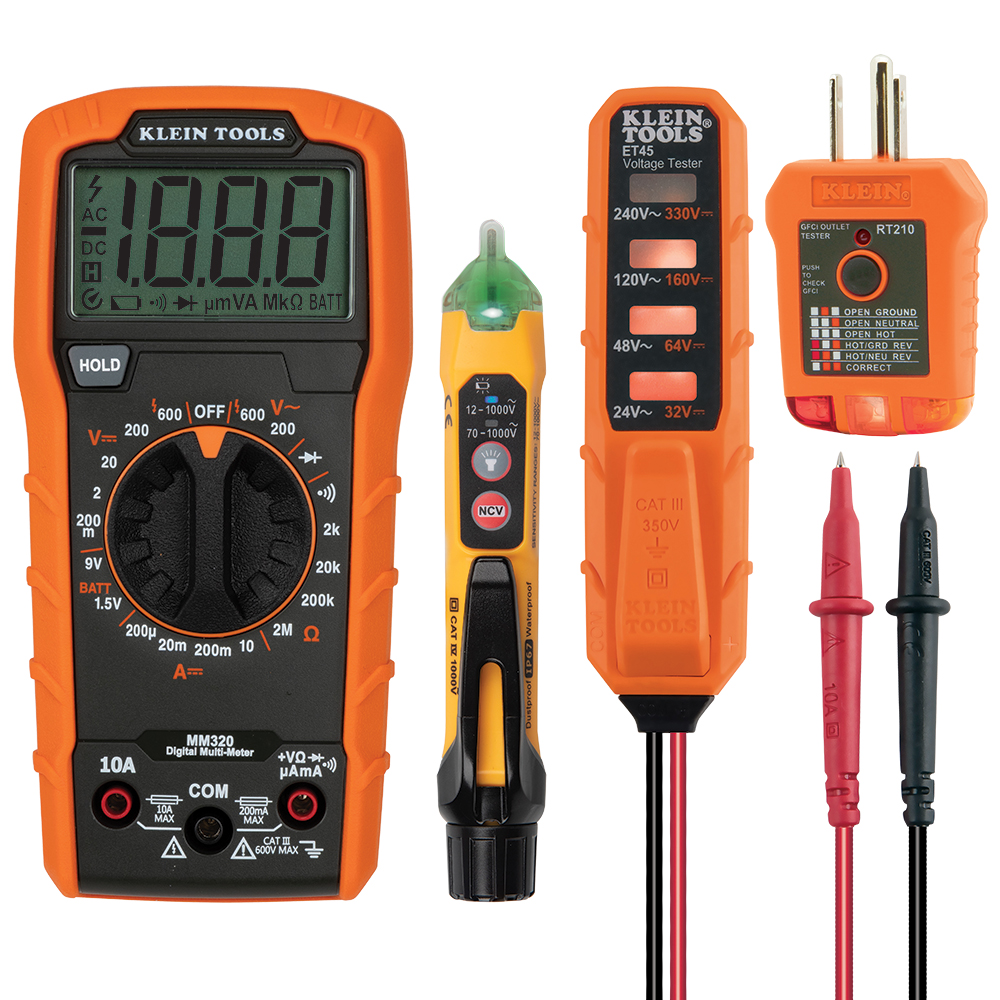
Credit: www.kleintools.com
Pros And Cons Of Each Tool
Both tools have strengths and weaknesses. Here is a summary.
| Tool | Pros | Cons |
|---|---|---|
| Voltmeter |
|
|
| Voltage Tester |
|
|
When Should You Use A Voltmeter Or Voltage Tester?
Choosing the right tool depends on your task. Here is guidance for common situations.
Use A Voltmeter When:
- You need to know the exact voltage (for example, checking battery health).
- Troubleshooting complex circuits.
- Designing or testing electronic devices.
- Measuring both AC and DC voltage.
Use A Voltage Tester When:
- Checking if an outlet or wire is live before repairs.
- Doing quick safety checks.
- Testing light switches and sockets.
- Ensuring power is off during installation.

Credit: www.dynamicgroup.net.au
Common Mistakes To Avoid
Many beginners make errors when using these tools. Here are mistakes to watch out for:
- Using the wrong setting: Always check if you need AC or DC voltage on the voltmeter.
- Not testing the tester first: Check your voltage tester on a known live source to confirm it works.
- Touching metal parts: This can lead to electric shock.
- Ignoring low voltage readings: Some voltage testers may miss weak voltage. Use a voltmeter for accuracy.
- Confusing tool purpose: Do not expect a voltage tester to show exact voltage.
Real-life Example: Home Electrical Safety
Imagine you want to replace a wall outlet at home. First, use a voltage tester to check if the outlet is live. If it beeps or lights up, turn off the circuit breaker. Test again to confirm power is off.
For deeper troubleshooting, such as checking if the outlet has proper voltage, use a voltmeter. This double-check ensures your work is safe and avoids mistakes.
How To Choose The Right Tool
Selecting the best tool depends on your needs, budget, and skill.
| Need | Recommended Tool |
|---|---|
| Quick safety check | Voltage Tester |
| Exact voltage measurement | Voltmeter (or Multimeter) |
| DIY repairs | Both tools (for safety and precision) |
| Testing batteries | Voltmeter |
| Checking live wires | Voltage Tester |
Practical Tips
- Buy a digital multimeter if you want versatility. It can act as a voltmeter and perform other functions.
- Keep a voltage tester in your toolbox for fast checks.
- For home repairs, having both tools is best.
- If you are unsure, ask an expert or check guides from trusted sources like Electrical Safety Foundation International.
Non-obvious Insights Most Beginners Miss
- Voltage testers cannot detect voltage in all situations. For example, some non-contact testers may not work well on shielded wires or in crowded panels. Always confirm with a voltmeter if you are unsure.
- Voltmeters can drain batteries if left connected. When testing battery-powered circuits, remove the voltmeter after taking a reading to avoid draining the battery.
- Voltage testers may give false positives near strong electromagnetic fields. In industrial areas, non-contact testers can light up even if the wire is not live. Use a voltmeter for confirmation.

Credit: www.differencebetween.net
Frequently Asked Questions
What Is The Main Difference Between A Voltmeter And A Voltage Tester?
The main difference is that a voltmeter gives the exact voltage value, while a voltage tester only shows if voltage is present. Voltmeters are used for detailed measurements, and voltage testers are used for quick safety checks.
Can A Voltage Tester Replace A Voltmeter?
No. A voltage tester cannot show the exact voltage. It is only for detecting if electricity is present. For detailed work, such as checking battery health or circuit troubleshooting, you need a voltmeter.
Are Digital Voltmeters Better Than Analog Ones?
Yes, digital voltmeters are generally more accurate and easier to read. Analog voltmeters can be harder to interpret, especially for beginners. Digital models are also safer and can offer more features.
Is It Safe To Use A Voltage Tester On All Types Of Wires?
Voltage testers are safe for most household wires. However, non-contact testers may not work on shielded or deeply buried wires. Always check the tool’s instructions and use a voltmeter for confirmation if needed.
What Should I Do If My Voltage Tester Gives A False Reading?
First, test the voltage tester on a known live circuit. If it still gives false readings, replace the batteries or buy a new tester. Sometimes, strong electromagnetic fields can cause errors, so use a voltmeter to double-check.
Understanding the difference between a voltmeter and a voltage tester helps you work safely and efficiently. Each tool has its place in electrical work. For quick safety checks, a voltage tester is best. For detailed measurements, use a voltmeter. Having both in your toolbox prepares you for any situation.
Always follow safety guidelines, and never guess when dealing with electricity. This knowledge will help you avoid mistakes and stay safe in your electrical projects.