Choosing the right tool for electrical testing is more important than many people realize. For electricians, maintenance technicians, and even curious hobbyists, the debate between using a Wiggy and a multimeter comes up often. Both are popular tools, but each one has unique features, benefits, and limitations. If you’re not sure which one you need, or you want to understand the differences, this guide will give you a complete, clear comparison.
Let’s break down what each tool does, how they work, and when you should use them. By the end, you’ll feel confident picking the right tool for any situation, and you’ll avoid common mistakes that can lead to wrong measurements or even safety risks.
What Is A Wiggy?
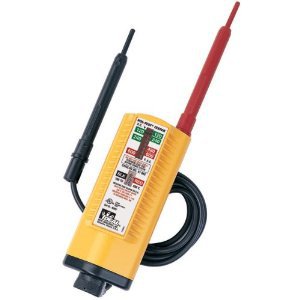
A Wiggy is a nickname for a solenoid voltage tester. The name “Wiggy” comes from a brand made by Square D, but over the years, people use it to describe any solenoid-type voltage tester. These tools have been around for decades and are trusted for fast, reliable voltage checks.
A Wiggy is simple. You place the two probes on a circuit or wire, and if there’s voltage, a solenoid inside moves, making a clear click and showing you the voltage range on a window. There’s no digital display, just a mechanical scale.
This makes the Wiggy easy to use and hard to break.
Electricians love Wiggy testers because they are:
- Rugged and durable. They can take drops and rough handling.
- Unaffected by ghost voltage. They only respond to real, working voltage.
- Simple to read. No batteries or complicated settings.
But there are limits. Wiggy testers do not measure current, resistance, or give precise voltage numbers. They show you a range, like 120V or 240V, not 127V.
What Is A Multimeter?
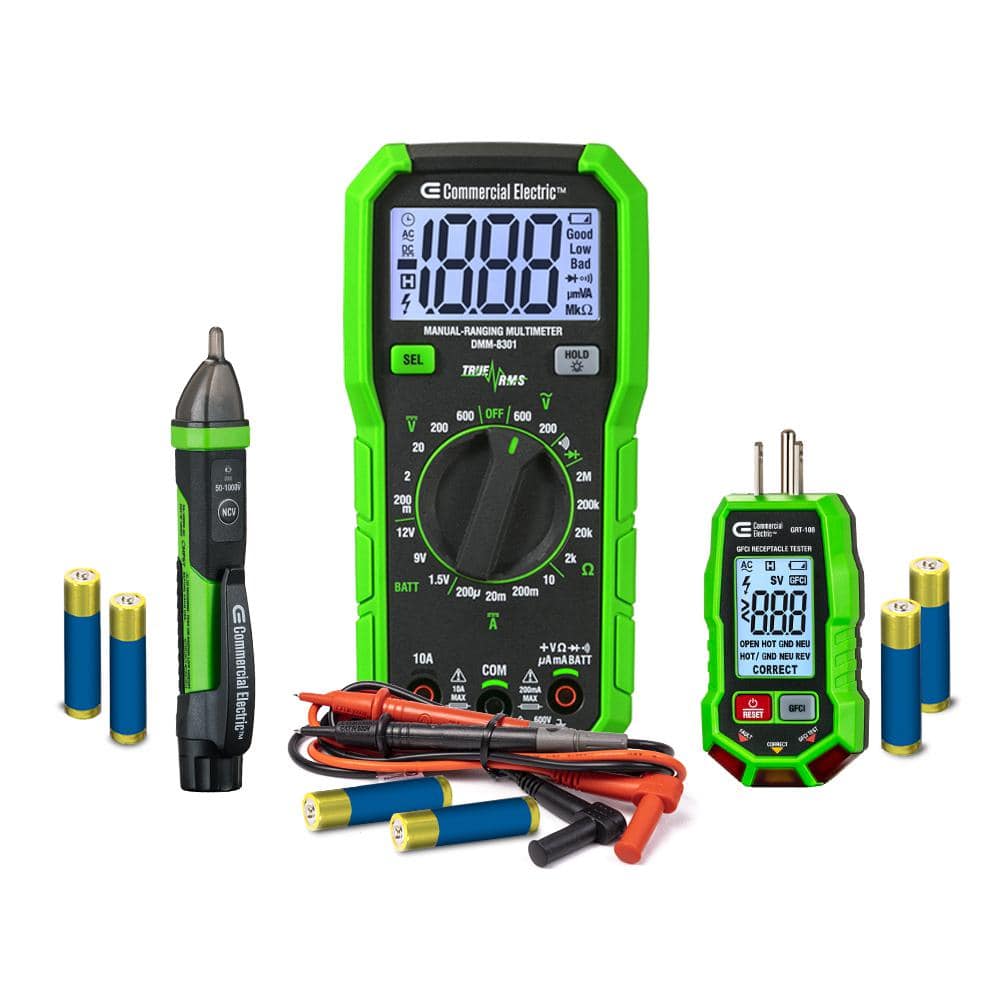
A multimeter is a more advanced tool used for electrical measurements. It can measure voltage, current (amps), resistance (ohms), and sometimes more (like capacitance, frequency, or temperature). Multimeters come in two main types: analog (with a moving needle) and digital (with an LCD screen).
Digital multimeters (DMMs) are now the most common. They are flexible and accurate, showing you the exact value, such as 123. 8V or 10. 2 ohms. Multimeters can test AC or DC circuits and have many features, but they also have a learning curve and require careful handling.
People choose multimeters because they:
- Measure many things. Not just voltage, but also current, resistance, and more.
- Give precise readings. You see the exact number, not just a range.
- Are widely available. Many brands and prices, from basic to advanced.
However, multimeters are sensitive. They can pick up ghost voltage (weak voltage from nearby wires), and their digital circuits can be damaged by high voltage or rough use. Batteries can also run out at the wrong time.

Credit: en.wikipedia.org
How Wiggy Testers Work
The inner design of a Wiggy is simple but effective. When you touch the probes to a live circuit, electricity flows through a coil (the solenoid). This magnetic field moves a metal rod, which then pushes a pointer to show the voltage range.
A unique feature is the “click” you feel or hear. This physical feedback is very helpful in noisy environments or when you’re wearing gloves.
Wiggy testers only work if enough current flows through the circuit. That means they will not show a voltage if the circuit cannot supply enough current — which helps avoid false positives from phantom or ghost voltages.
Some Wiggy models have a vibration feature, making them easy to use even in poor light or with limited visibility.
How Multimeters Work
A multimeter uses electronic circuits to measure and display values. When you select a function (voltage, current, resistance), the tool reroutes the electrical signal through the correct circuit. The result is shown on the screen.
Digital multimeters use microprocessors. They can auto-range (pick the right scale automatically) or let you choose the range manually. They are much more sensitive than Wiggy testers and can detect very low voltages and currents.
Multimeters need batteries, even for simple voltage checks. If the battery is low, the readings may be wrong or the display can fade.
Modern DMMs have safety features such as fuses, auto shut-off, and overload protection. However, misuse (like connecting to a high-voltage circuit on the wrong setting) can still cause damage.
Main Differences Between Wiggy And Multimeter
Let’s look at the core differences that set these tools apart. This will help you see which tool is better for your specific needs.
| Feature | Wiggy | Multimeter |
|---|---|---|
| Type of Measurement | Voltage (AC/DC), continuity | Voltage, current, resistance, and more |
| Accuracy | Shows voltage range only | Exact numeric values |
| Ghost Voltage Detection | Ignores ghost voltage | May show ghost voltage |
| Power Source | None (works mechanically) | Batteries required |
| Durability | Very rugged | Can be fragile |
| Ease of Use | Very simple | More complex |
| Other Functions | No | Yes (e.g., diode, capacitance, frequency) |
| Price Range | Low to moderate | Low to high (wide range) |
When To Use A Wiggy
A Wiggy is perfect for quick, tough jobs where safety and speed matter more than getting a precise number. Electricians often use Wiggy testers for:
- Checking for live voltage: Before working on a circuit, you want to know if it’s live or dead. A Wiggy tells you quickly, and the result is very reliable.
- Troubleshooting outlets and switches: If a plug or switch isn’t working, a Wiggy can show if voltage is present.
- Testing circuit breakers: Find out which breakers are live without worrying about ghost voltage.
- Verifying power off: Before starting repairs, a Wiggy helps confirm there is no dangerous voltage left.
Because Wiggy testers are so robust, they are a favorite in construction and industrial settings. You can drop them, bang them, or use them in rough weather without much worry.
When To Use A Multimeter
A multimeter is the better choice for more detailed electrical work. If you need to diagnose a problem, measure precise values, or work with electronics, a multimeter is essential. Common uses include:
- Measuring exact voltage: For sensitive circuits or electronics, you need to know the exact voltage, not just a range.
- Testing resistance and continuity: Checking if a wire or fuse is good, or if a connection is solid.
- Measuring current: Finding out how much current (amps) a device uses.
- Diagnosing electronic components: Checking diodes, capacitors, and transistors.
Multimeters are also needed for DC circuits, like batteries and automotive work. Some models even log data over time, which is helpful for advanced troubleshooting.
Strengths And Weaknesses: A Closer Look
Wiggy Strengths
- Simplicity: No settings to worry about. Just touch the probes and read the scale.
- Rugged design: They survive drops, dirt, and tough sites.
- No batteries needed: Always ready to use.
- Reliable for live/dead checks: No confusion from ghost voltage.
Wiggy Weaknesses
- Limited measurement: Only voltage and basic continuity.
- No precise numbers: Can’t give you an exact reading.
- Not for electronics: Not sensitive enough for small circuits.
Multimeter Strengths
- Versatility: Measures many things (voltage, current, resistance, etc. ).
- Precision: Shows the exact value.
- Useful for electronics: Can handle small signals and parts.
- Advanced features: Some models offer data logging, auto-ranging, and more.
Multimeter Weaknesses
- Fragile: Can break if dropped or misused.
- Battery dependent: Won’t work if the battery is dead.
- Can show false readings: Sensitive to ghost voltage.
Credit: www.homedepot.com
Typical Use Cases: Real World Examples
Let’s see how these tools are used in real life.
- Home Wiring Check: An electrician checks a power outlet. A Wiggy will quickly show if there is 120V present, and it won’t be fooled by ghost voltage from nearby wires. A multimeter might show a small voltage (like 15V) even if the outlet is off, which can be confusing.
- Replacing a Light Switch: Before removing the switch, the Wiggy is used to confirm the power is off. It’s fast, safe, and clear.
- Fixing Electronics: When repairing a stereo or computer, you need to know exact voltages and resistances. Only a multimeter can do this job.
- Testing Car Battery: To check if a battery is 12.6V or less, a multimeter is needed. A Wiggy can only tell you if there is voltage, not how much.
- Troubleshooting Industrial Motors: For quick checks on power lines, the Wiggy is best. For deeper diagnostics, the multimeter is used.
Ghost Voltage: What Beginners Miss
One detail that surprises many people is the problem of ghost voltage. This is a weak, harmless voltage that appears on wires due to induction from nearby live wires. Digital multimeters are so sensitive, they often show 20V, 40V, or more, even if the wire is not really live.
Wiggy testers, because they need real current to move the solenoid, ignore ghost voltage. If a Wiggy shows zero, you can trust the wire is dead. This is why professionals often keep both tools on hand.
A common mistake is relying only on a digital multimeter for live/dead checks. If you do, you might see a voltage that isn’t really there — and this can lead to confusion or unsafe work.
Safety Considerations
Electrical testing is never risk-free. Here’s what you need to know:
- Wiggy testers are safer for high-voltage circuits because they are less likely to be damaged by voltage spikes.
- Multimeters should always be used with the correct setting and range. Plugging the leads into the wrong ports or using the wrong function can damage the meter — or cause injury.
- Always check your tool before use. Cracked probes, broken cases, or weak batteries can give false readings.
- For both tools, use one hand when possible and keep your body off the ground to avoid making a circuit through your body.
Key Factors When Choosing Between Wiggy And Multimeter
When deciding between a Wiggy and a multimeter, consider these questions:
- What type of work do you do most? If you mostly check for live/dead circuits, a Wiggy is faster and more reliable. If you troubleshoot electronics or need precise measurements, a multimeter is necessary.
- How rough is your worksite? For harsh, dirty, or wet environments, a Wiggy is less likely to break.
- Do you need to measure current or resistance? Only a multimeter can do this.
- Is speed or detail more important? Wiggy is faster for basic checks, multimeter gives more information.
Buying Guide: What Matters Most
If you plan to buy either a Wiggy or a multimeter, here are the main things to watch for:
For Wiggy Testers
- Voltage Range: Make sure it covers the voltages you work with (usually up to 600V).
- Build Quality: Look for rugged designs, strong probes, and good strain relief.
- Brand: Trusted brands like Square D or Klein are usually more reliable.
- Vibration Feature: Some models vibrate when voltage is present, which can help in noisy places.
For Multimeters
- Measurement Functions: Check if it measures all you need (AC/DC voltage, current, resistance, etc. ).
- Safety Ratings: Look for CAT ratings (CAT III, CAT IV) if you work on high voltage.
- Display: A clear, backlit screen helps in dark places.
- Auto-Ranging: This feature makes measurement easier for beginners.
- Durability: Rubber casing or drop protection is a plus.
- Battery Life: Long battery life and easy battery change are helpful.
- Brand and Support: Fluke, Klein, Extech, and Amprobe are respected brands.
A common beginner mistake is choosing a multimeter with too many features, making it confusing to use. Start simple, and upgrade as your skills grow.
Price Comparison And Typical Lifespan
Let’s compare prices and how long these tools usually last.
| Tool Type | Price Range (USD) | Expected Lifespan |
|---|---|---|
| Wiggy | $25 – $90 | 10+ years |
| Basic Multimeter | $10 – $50 | 3-7 years |
| Advanced Multimeter | $50 – $400 | 5-10 years |
Wiggy testers often last longer because there are fewer electronic parts to fail. Multimeters, especially digital ones, are more sensitive to drops, water, and misuse.
Credit: electricalconnection.com.au
Practical Tips For Beginners
- Own both if possible: Many professionals have both a Wiggy and a multimeter. Use the right tool for the job.
- Test before you trust: Always check your tester on a known live circuit before trusting a “dead” reading.
- Learn the symbols: Multimeter dials can be confusing. Take time to learn the symbols and settings.
- Beware of ghost voltage: If your digital multimeter shows voltage but your Wiggy does not, the wire is probably safe.
- Store carefully: Keep your tools clean and dry for longer life.
Two Non-obvious Insights Most Beginners Miss
- Voltage testers (Wiggy) can serve as a basic load test: Because they draw real current, if a Wiggy does not show voltage, it often means the circuit cannot supply power, not just that voltage is missing. This helps spot weak connections or faulty wiring.
- Multimeters can be dangerous if probes are placed in the wrong ports: If you leave the red lead in the “amps” socket and try to measure voltage, you could blow a fuse or damage the meter. Always double-check probe placement before testing.
The Bottom Line
Choosing between a Wiggy and a multimeter isn’t about which one is better overall—it’s about which one fits your task. For fast, reliable voltage checks in rough environments, a Wiggy is hard to beat. For detail work, electronics, and precise measurements, a multimeter is essential.
Don’t be afraid to learn both tools. Knowing when and how to use each one can make you a safer, more effective electrician or technician. If you want to dig deeper into electrical testing safety, the Wikipedia Multimeter page is a solid resource.
Frequently Asked Questions
What Is Ghost Voltage, And Why Does It Matter?
Ghost voltage is a weak voltage that appears on wires due to electrical induction from nearby live wires. It’s not dangerous but can confuse digital multimeters, making them show voltage when the circuit is actually off. Wiggy testers ignore ghost voltage, so they’re more reliable for live/dead checks.
Can A Wiggy Damage Sensitive Electronics?
Yes, a Wiggy draws more current than a digital multimeter and is not designed for delicate electronic circuits. Using a Wiggy on small electronics can damage the components. Always use a multimeter for electronics work.
Why Does My Multimeter Show Voltage Even When The Circuit Is Off?
This usually happens because of ghost voltage. Digital multimeters are very sensitive and can pick up small, harmless induced voltages. If you want to confirm, use a Wiggy or put a small load (like a light bulb) across the circuit to see if the voltage disappears.
Is It Safe To Use A Wiggy Or Multimeter On High-voltage Circuits?
Both tools can be safe if they are rated for the voltage you’re testing. Always check the maximum voltage rating, and use tools with proper safety certifications. Never use a tool that is cracked, broken, or not rated for your application.
Do I Need Both A Wiggy And A Multimeter?
If you do a variety of electrical work, owning both is smart. A Wiggy is best for fast, safe voltage checks and live/dead testing. A multimeter gives you more measurement options and is necessary for electronics and detailed troubleshooting. Many professionals keep both tools in their toolkit.