Many people who work with electronics or electricity often hear about multimeters and ammeters. Sometimes, beginners think they are the same thing, or they wonder which tool to use for a task. If you have ever looked at a toolbox and wondered, “Should I use a multimeter or an ammeter?”—this article will clear things up. We will look at what each device does, how they are different, when to use each one, and what mistakes to avoid. You will also learn some tips that are not in most beginner guides. By the end, you will be confident about choosing and using the right tool for your electrical measurements.
What Is A Multimeter?
A multimeter is a very common tool for anyone working with electricity. It is called “multi” because it can measure different things. Most multimeters can check:
- Voltage (how strong the electrical force is in a circuit)
- Current (how much electricity is flowing)
- Resistance (how much the circuit resists the flow of electricity)
- Some can test other things, like continuity, diodes, or even temperature
Multimeters come in two main types: analog and digital. Analog multimeters use a needle and a moving scale. Digital multimeters (DMMs) show numbers on a screen. Today, most people use digital ones because they are easier to read and more accurate.
You might see a multimeter in the hands of an electrician, an engineer, or someone repairing a household appliance. For example, if your TV does not work, you can use a multimeter to check if the power supply is delivering the correct voltage.
How Multimeters Work
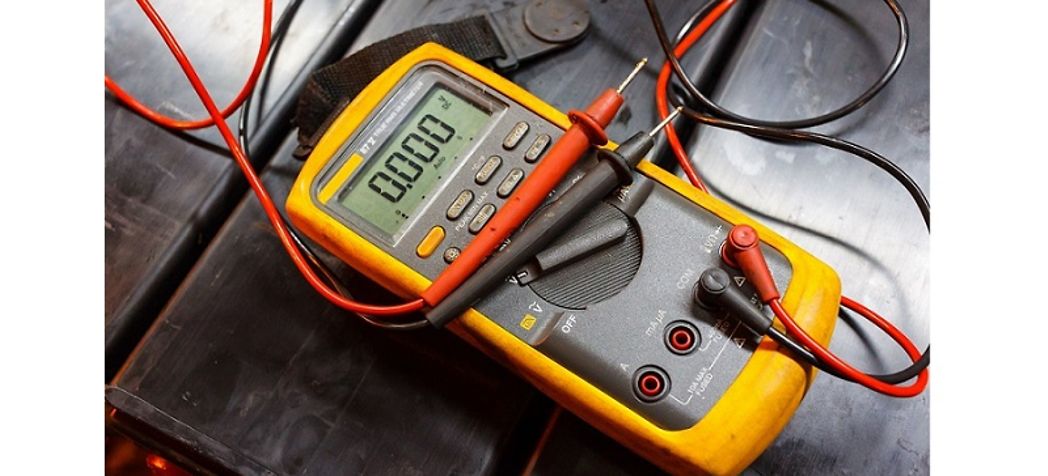
A multimeter has two probes—one red and one black. You touch these probes to the part of the circuit you want to test. Depending on what you want to measure, you turn the dial to the right setting (voltage, current, resistance, etc.
). The device then shows the result on its screen.
One thing many beginners do not realize: the way you connect the probes depends on what you are measuring. For voltage and resistance, you connect the probes across (in parallel) to the part you want to measure. For current, you must open the circuit and put the multimeter in line (in series) with the current.
Main Features Of A Multimeter
- Measures multiple things: Voltage, current, resistance, and sometimes more
- Can be analog or digital
- Usually portable and battery-powered
- Has a dial or buttons for changing functions
- Offers different ranges for each measurement
What Is An Ammeter?
An ammeter is a device designed to measure current only. The name comes from “ampere,” which is the unit for electric current. If you want to know how much current is flowing through a wire or device, you use an ammeter.
Ammeters are found in laboratories, schools, factories, or any place where it is important to monitor current. For example, when charging a battery, an ammeter can show exactly how much current is entering the battery.
Unlike a multimeter, an ammeter is usually built to be very accurate in measuring current. It does not measure voltage or resistance.
How Ammeters Work
To use an ammeter, you must connect it in series with the circuit. This means you open the circuit, break it, and insert the ammeter so all the current flows through it. If you connect it the wrong way (in parallel), you could damage the ammeter or create a short circuit.
Ammeters are made with very low internal resistance. This is important because you do not want the ammeter to slow down or change the current you are measuring.
Main Features Of An Ammeter
- Measures current only
- Can be analog or digital
- Must be connected in series
- Very low internal resistance for accurate results
- Often used in labs or industrial settings
Key Differences: Multimeter Vs Ammeter
To understand the differences, let’s look at them side by side. Here’s a table that highlights the main points:
| Feature | Multimeter | Ammeter |
|---|---|---|
| What it Measures | Voltage, current, resistance (and more) | Current only |
| Connection Type | Series (current), Parallel (voltage/resistance) | Series only |
| Internal Resistance | Varies with function | Very low |
| Accuracy for Current | Good, but less than ammeter | Very high |
| Portability | Very portable | Some are portable, some fixed |
| Cost | Usually more expensive | Usually less expensive (for current measurement only) |
Explanation Of Differences
- Purpose: Multimeters are “all-in-one” tools. Ammeters are specialists for current.
- Connection: Multimeters can measure in series (current) or parallel (voltage, resistance), but ammeters must be in series.
- Accuracy: Ammeters are designed for precise current measurements. Multimeters are good, but for very small or very large currents, an ammeter might be better.
- Complexity: Multimeters have more functions and buttons. Ammeters are simpler.
- Internal Resistance: Ammeters are built to have almost zero resistance, so they don’t affect the circuit. Some multimeters may have higher resistance, especially on low-cost models.
When To Use A Multimeter
A multimeter is your go-to tool when you need to measure different values in a circuit. Some common situations:
- Troubleshooting electronic devices: Checking if the power supply is working, testing batteries, or finding broken connections.
- Measuring unknown voltage or resistance: For example, checking how much voltage is coming from a wall outlet, or testing if a wire is broken.
- Checking continuity: Many multimeters have a “beep” function to show if two points are connected.
- Testing diodes or transistors: Some advanced multimeters can check these components.
- DIY projects and learning: If you are building simple circuits, a multimeter helps measure and check your work.
One beginner mistake is using a multimeter set to “current” mode when checking voltage. This can damage the device. Always double-check the dial and settings.
Practical Example
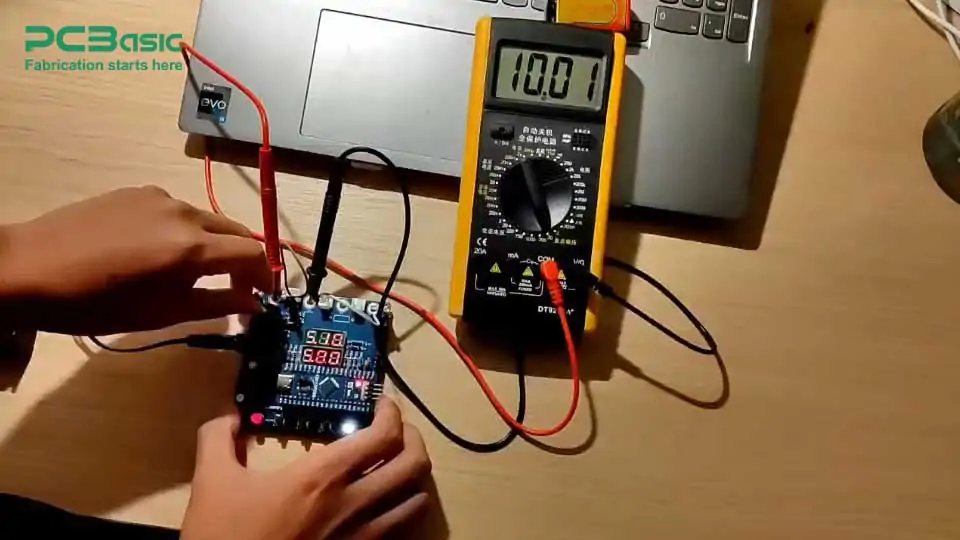
Imagine you are repairing a toy car. The car does not move, and you suspect the battery is dead. First, you use the multimeter to measure the voltage across the battery terminals. If it’s low, you know the battery is weak.
If the voltage is fine, you can switch to “continuity” mode to check if the motor wires are broken.
Credit: www.pcbasic.com
When To Use An Ammeter
An ammeter is best when you only care about measuring current, especially if you need high accuracy. Some situations:
- Monitoring battery charging: Knowing exactly how much current is charging a battery is important for safety and battery life.
- Testing motors or appliances: See how much current a motor or lamp draws under normal use.
- Laboratory experiments: For science experiments that require precise current data, an ammeter is the right choice.
- Industrial equipment: Many machines have built-in ammeters to show how much current is being used at any moment.
If you only need to check current, an ammeter is simple and reliable. If you try to use it for voltage or resistance, it will not work.
Practical Example
Suppose you work in a battery charging station. You want to make sure batteries are charged with the correct current. You connect an ammeter in series with the battery. If the current is too high, you can lower the charging rate to protect the battery.
Pros And Cons
Both devices are useful, but each has strengths and weaknesses.
Multimeter
Pros:
- Versatile (measures voltage, current, resistance)
- Portable and easy to use
- Good enough for most electrical tasks
- Useful for troubleshooting
Cons:
- Less accurate for high or low currents compared to dedicated ammeters
- More expensive than simple ammeters
- Can be confusing for beginners due to many settings
Ammeter
Pros:
- Very accurate for current measurement
- Simple to operate (just one main function)
- Usually more robust for current testing
Cons:
- Only measures current—cannot check voltage or resistance
- Must always be connected in series, which can be inconvenient
- Not as useful for general troubleshooting
Credit: www.partstown.com
How To Choose: Multimeter Or Ammeter?
Choosing between a multimeter and an ammeter depends on what you need.
- If you are a hobbyist, student, or electrician who works with different devices, a multimeter is the best choice.
- If your main job is to measure current, especially in a lab or industrial setting, an ammeter is better.
Here is a short checklist to help you decide:
- Do you need to measure more than just current?
- Yes: Get a multimeter.
- No: An ammeter is enough.
- How important is accuracy for current?
- Very important: Choose an ammeter.
- Good enough: Multimeter is fine.
- Do you often troubleshoot circuits?
- Yes: Multimeter is more helpful.
- No: Ammeter may be simpler.
Many professionals own both. They use the multimeter for general work, and the ammeter for tasks where only current matters.
Types And Variations
Multimeter Types
- Analog Multimeter: Uses a moving needle. Good for smooth, changing signals, but harder to read.
- Digital Multimeter (DMM): Shows numbers on a screen. Easier to use, more accurate, and more common today.
- Clamp Multimeter: Can measure current without opening the circuit—just clamp around a wire. Useful for large wires or high current.
Ammeter Types
- Analog Ammeter: Needle display. Simple, but less precise for small currents.
- Digital Ammeter: Digital display. More accurate and easier to read.
- Panel Ammeter: Fixed on machines or control panels. Always shows the current in a machine.
- Clamp Ammeter: Like a clamp multimeter, but only measures current.
Table: Types At A Glance
| Device | Type | Use Case |
|---|---|---|
| Multimeter | Analog | Basic checks, educational use |
| Multimeter | Digital | Most electrical work |
| Multimeter | Clamp | Non-contact current measurement |
| Ammeter | Analog | Simple, traditional labs |
| Ammeter | Digital | Accurate, easy reading |
| Ammeter | Panel | Permanent machine monitoring |
| Ammeter | Clamp | Quick current checks, no circuit break |
Common Mistakes And How To Avoid Them
Many beginners damage their tools or circuits by making simple mistakes. Here are some you should know:
- Wrong Connection: Never connect an ammeter in parallel. This can cause a short circuit.
- Wrong Setting on Multimeter: Setting the dial to “current” but measuring voltage can damage the meter.
- Wrong Range: Start with the highest range and work down. If you choose too low a range, you might blow a fuse inside the meter.
- Measuring Live Circuits: Always be careful. If you are not sure, practice on batteries or simple circuits before working on high voltage.
- Ignoring Polarity: For DC measurements, connect the red probe to positive and black to negative. Reversed connections can give wrong readings or damage the device.
Non-obvious insight: Cheaper multimeters often have less protection inside. If you accidentally connect them wrong, they can break easily. Professional multimeters have special fuses and protection circuits. Also, clamp meters are safer for measuring high current because you do not need to open the circuit.
Calibration And Maintenance
To keep your meter accurate, you need to care for it:
- Calibrate regularly: Over time, meters can become less accurate. High-quality meters can be calibrated by professionals.
- Check the battery: Low battery can give wrong readings.
- Keep probes clean and undamaged: Dirty or broken probes can cause errors.
- Store safely: Do not drop your meter or expose it to water.
For ammeters fixed in machines, maintenance is also important. Dust or loose connections can affect accuracy.
Safety Considerations
Working with electricity is always risky. Here are some safety tips:
- Never measure current in a high-voltage circuit unless you are trained
- Check your meter’s voltage and current ratings before use
- Replace damaged probes or wires immediately
- Do not touch metal parts when measuring live circuits
- Work with one hand when possible (keeps you safer if there is a shock)
- Always start with the highest range
Non-obvious insight: Some currents, even as low as 30 mA (0.03 amps), can be dangerous for humans. Always treat electricity with respect. For more information on electrical safety, see the Electrical Safety guide.
Cost And Availability
- Multimeters: Prices range from $10 for basic models to over $200 for professional ones with advanced features.
- Ammeters: Simple panel ammeters or handheld models can be found for $5 to $50. Clamp ammeters cost more.
- Where to buy: Electronics shops, hardware stores, online retailers.
Remember, you often get what you pay for. Higher-priced meters are usually more accurate and safer.
Credit: www.techtownforum.com
Real-life Applications
Electricians
Electricians use multimeters every day for checking outlets, circuit breakers, and finding electrical faults in homes or offices.
Auto Mechanics
Car mechanics use multimeters to test car batteries, alternators, and sensors. Ammeters are used in garages to check battery charging and starter currents.
Students And Teachers
In school labs, ammeters are often used for physics experiments to show students how current flows in different circuits.
Industrial Maintenance
Factories have panel ammeters on machines to monitor energy use. Maintenance staff use multimeters to troubleshoot and repair equipment quickly.
Which Is Best For You?
If you are just starting with electronics or want to fix things at home, a digital multimeter is the best choice. It is flexible and can handle most common tasks. If you work in a lab or need high-accuracy current measurements, get a good ammeter as well.
If you often measure large currents (like in power cables), consider a clamp meter—it is safer and easier to use. For small, sensitive electronics, accuracy is more important, so choose tools with good specifications and proper calibration.
Frequently Asked Questions
What Is The Main Difference Between A Multimeter And An Ammeter?
A multimeter can measure voltage, current, and resistance (and sometimes more), while an ammeter only measures current. Multimeters are more flexible, but ammeters are more accurate for current.
Can I Use A Multimeter As An Ammeter?
Yes, you can use a multimeter to measure current by turning the dial to the “current” setting and connecting it in series with the circuit. However, for very precise or high-current measurements, a dedicated ammeter is better.
Is It Safe To Measure Current With A Multimeter?
It is safe if you use the right settings, connect in series, and follow safety rules. Always start with the highest current range and check the meter’s limits. Never try to measure current in a high-voltage circuit unless you are trained.
Why Do Ammeters Have Low Resistance?
Ammeters have very low internal resistance to avoid changing the current they measure. If the resistance was high, it would reduce the current and give a wrong reading.
Can A Clamp Meter Replace A Multimeter Or Ammeter?
A clamp meter can measure current easily and safely, especially in large wires. Some clamp meters also have voltage and resistance functions, making them as flexible as multimeters. However, for very small currents or detailed electronic work, a traditional multimeter or ammeter may still be better.
Multimeters and ammeters are both important tools for anyone working with electricity. Knowing which to use, and how to use them safely, will help you solve problems faster and avoid mistakes. Choose the right tool for your needs, and always put safety first.