Testo Vs Fieldpiece: In-depth Comparison For Hvac Professionals
If you work in the HVAC (Heating, Ventilation, and Air Conditioning) industry, you know the importance of accurate tools. Testo and Fieldpiece are two of the most respected brands for HVAC measurement instruments. Choosing between them can be tricky. Each offers unique advantages, technology, and features. This article will give you a clear, practical comparison to help you decide which brand fits your needs best. We’ll look at their products, accuracy, usability, support, and real-life performance. By the end, you’ll have the knowledge to choose with confidence.
Brand Background: Testo And Fieldpiece
Before looking at their products, it helps to know where these companies come from.
Testo is a German company with over 60 years of experience. They are known worldwide for their precision measuring instruments. Testo’s focus is on innovation, accuracy, and reliability. Their products are used in many industries, including HVAC, food safety, and pharmaceuticals. Testo is especially known for their digital manifolds, smart probes, and advanced analyzers.
Fieldpiece is a U.S.-based company founded in 1990. Fieldpiece’s mission is to make HVACR (heating, ventilation, air conditioning, refrigeration) tools that are easy to use and tough enough for everyday work. They focus mainly on the needs of HVAC professionals. Fieldpiece is famous for their modular instruments, wireless tools, and rugged design.
Both brands have strong reputations, but they have different priorities. Testo leans toward high-tech innovation. Fieldpiece emphasizes practical features and job-site durability.
Product Range And Key Offerings
Testo and Fieldpiece each offer a wide range of HVAC tools. However, their product lines have some important differences.
Testo’s Main Product Categories
- Digital manifolds (for checking system pressures and temperatures)
- Refrigerant leak detectors
- Combustion analyzers
- Smart probes (wireless sensors for mobile devices)
- Thermal imagers
- Data loggers
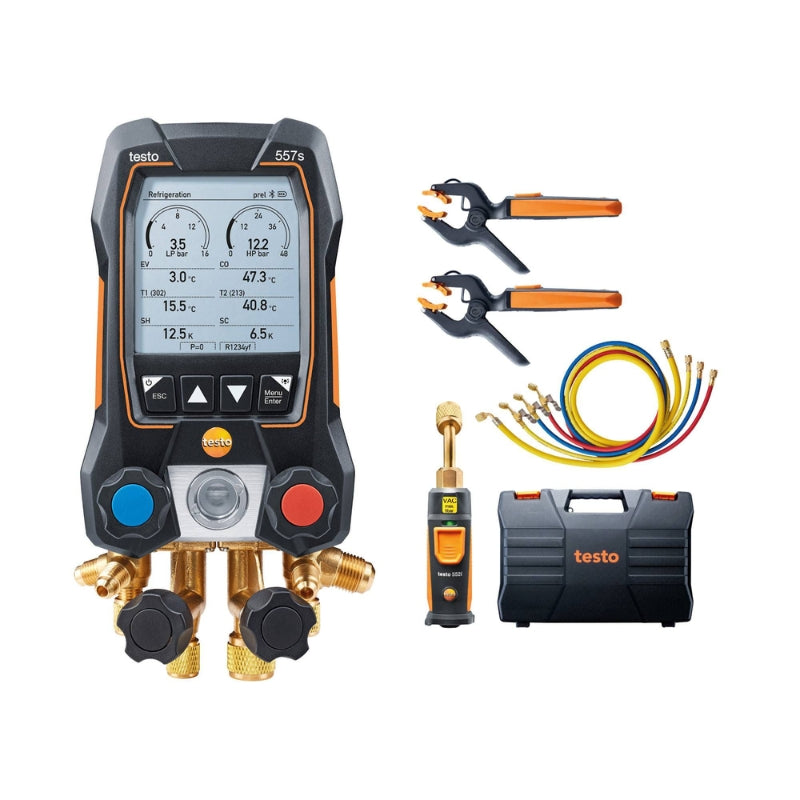
Testo’s digital manifolds, like the Testo 557s and Testo 550s, are popular for their accuracy and advanced data logging. Their smart probes connect to your phone via Bluetooth, making it easy to collect and share data.
Fieldpiece’s Main Product Categories
- Modular instruments (attachable heads for different tests)
- Wireless refrigerant scales
- Digital manifolds
- Leak detectors
- Clamp meters
- Vacuum pumps
- Wireless psychrometers
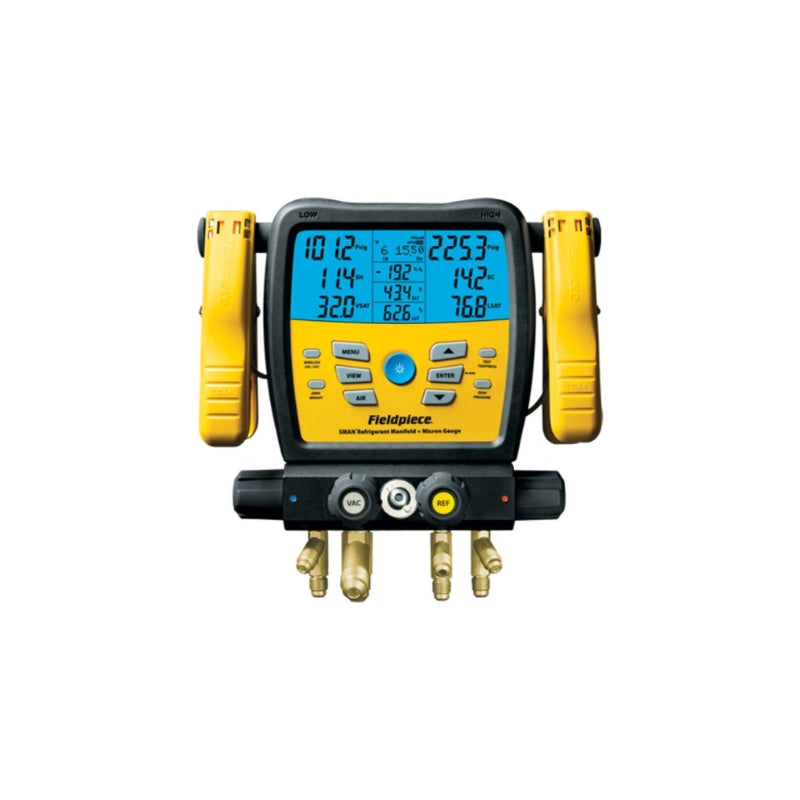
Fieldpiece is well known for their modular system. For example, you can buy a main meter body and then attach different heads for temperature, pressure, or air flow. Their wireless digital manifolds, like the SM380V and SM480V, are praised for their ruggedness and large screens.
Product Range Comparison Table
Here is a quick side-by-side overview of their main offerings:
| Product Type | Testo | Fieldpiece |
|---|---|---|
| Digital Manifolds | 550s, 557s, 570s | SM380V, SM480V |
| Wireless Probes | Yes (Smart Probes) | Yes (Job Link Probes) |
| Combustion Analyzers | Yes | Limited |
| Vacuum Pumps | Limited | Yes (VPX7, VP87) |
| Modular Instruments | No | Yes (Modular Heads) |
| Thermal Imaging | Yes | No |
Non-obvious insight: Testo’s product range is broader, especially in thermal imaging and combustion analysis, while Fieldpiece offers more modular solutions and job-site focused tools.

Credit: www.youtube.com
Accuracy And Performance
Accuracy is critical in HVAC work. A small measurement error can lead to wrong diagnoses and wasted time.
Testo’s Accuracy
Testo is known for precision. Their digital manifolds and probes often have measurement errors as low as ±0.5% for pressure and ±0.5°C for temperature. Their instruments are calibrated at the factory and meet strict European standards. Testo’s smart probes use NTC or thermistor sensors, which are less likely to drift over time.
Testo’s data logging is advanced. Many devices store hundreds of measurements and export them via Bluetooth or USB. This helps with detailed system analysis and reporting.
Fieldpiece’s Accuracy
Fieldpiece tools are accurate, but sometimes prioritize speed and usability over extreme precision. Typical pressure accuracy is about ±1% FS (full scale) and temperature sensors vary by model, usually within ±1°C. For most HVAC tasks, this is more than enough. Fieldpiece products are calibrated and reliable, but may need recalibration more often in harsh environments.
Fieldpiece focuses on real-world performance. Their tools are designed to give fast, stable readings, even in tough conditions like hot rooftops or cold basements.
Practical Example
When testing a residential air conditioning system, both Testo and Fieldpiece digital manifolds will give you readings that are “close enough” for everyday service. However, if you need to create detailed reports for a large building or meet government standards, Testo’s extra accuracy and data handling may be important.
Non-obvious insight: Fieldpiece’s accuracy is usually enough for repair and maintenance. Testo’s higher precision matters more in commercial projects or regulatory work.
Durability And Build Quality
HVAC work is tough. Tools get dropped, exposed to rain, or left in hot vans.
Testo’s Build Quality
Testo tools use high-quality plastics and solid construction. Their digital manifolds are often water-resistant (IP54 rated) and have protective rubber covers. However, some users say Testo tools feel “more delicate” than Fieldpiece, especially for the display and connectors. Dropping a Testo manifold from a high ladder can cause damage.
Fieldpiece’s Build Quality
Fieldpiece is famous for ruggedness. Most tools have thick rubber bumpers, reinforced housings, and large, easy-to-press buttons. Their digital manifolds are designed to survive tough drops and heavy use. Fieldpiece vacuum pumps are also built with sturdy aluminum and strong handles.
Fieldpiece tools are often “job-site tested. ” They may not look as sleek as Testo, but they are less likely to break if you’re rough with your gear.
Durability Comparison Table
Here’s a quick look at durability features:
| Feature | Testo | Fieldpiece |
|---|---|---|
| Water Resistance | IP54 (most models) | IP54 (select models) |
| Shock Protection | Rubber covers | Thick bumpers |
| Connector Strength | Good, can be delicate | Very strong |
| Display Protection | Plastic screens | Recessed, more protected |
Insight: If you drop tools often or work in extreme conditions, Fieldpiece is usually safer. Testo is tough, but not quite as “bulletproof.”
Credit: www.advancedtools.com.au
User Interface And Usability
A tool’s interface can save you time or cause frustration. Let’s see how Testo and Fieldpiece compare.
Testo’s Interface
Testo’s screens are usually high-contrast, backlit, and show a lot of data at once. Their digital manifolds use a combination of buttons and menus. Some newer models have color screens. Testo’s smart probes are controlled by your phone or tablet via the Testo Smart App. The app is well designed and supports data logging, live graphs, and report export.
Testo menus can be more complex, especially if you’re new to digital tools. However, once you learn, they offer deep functionality.
Fieldpiece’s Interface
Fieldpiece tools are designed for quick learning. Most products have big, labeled buttons and simple menus. Digital manifolds show key information clearly, with easy access to superheat, subcooling, and pressures. Fieldpiece’s Job Link app connects to wireless tools and is highly rated for simplicity and speed.
Fieldpiece modular meters use physical heads, so you change the function by snapping on a different module. This is fast and minimizes button-pushing.
Example: If you need to check superheat, subcooling, and pressures quickly, Fieldpiece gets you there with fewer button presses. Testo offers more advanced options, but may take more time to set up.
Tip for beginners: If you’re not comfortable with digital menus, Fieldpiece is easier to master. Testo rewards users who want to dig deeper.
Wireless Technology And Apps
Wireless technology has changed HVAC work. Both brands offer mobile apps and wireless probes.
Testo’s Wireless System
Testo’s Smart Probes use Bluetooth to connect to the Testo app. The app lets you view multiple probes at once, create reports, and share data by email. Testo’s system is reliable and works on both Android and iOS.
- Up to 6 probes can be connected at once
- Range: About 50 meters (unobstructed)
- App can store and export data as PDF or CSV
Fieldpiece’s Wireless System
Fieldpiece’s Job Link System is more “ecosystem-based.” Their wireless probes, scales, and manifolds all connect to the Job Link app. You can mix and match tools, and even connect up to 33 devices in one session.
- Range: Up to 350 meters (open space)
- App supports live data, job tracking, and cloud storage
- Works on Android and iOS
Non-obvious insight: Fieldpiece’s wireless range is much longer, which helps on large jobs or rooftops. Testo’s app is more detailed, especially for reporting.
Calibration And Maintenance
Keeping your tools accurate requires calibration and care.
Testo Calibration
Testo tools are factory-calibrated and come with certificates. Many models can be recalibrated at authorized service centers. Testo provides detailed instructions for routine maintenance, like cleaning sensors. Calibration intervals depend on use, but many users recalibrate every 1–2 years.
Fieldpiece Calibration
Fieldpiece tools can often be recalibrated in the field using reference measurements. Their modular heads are sometimes cheaper to replace than recalibrate. Fieldpiece offers a calibration reminder feature on some models. For most technicians, a yearly check is enough.
Common mistake: Ignoring calibration can make both brands inaccurate. Always follow the recommended schedule, especially for pressure and combustion tools.
Pricing And Value
Cost is always a factor. Let’s compare typical prices for popular tools.
Testo Pricing
Testo is often seen as “premium. ” Their digital manifolds range from $300 to $600. Smart probe kits are about $200–$350. Combustion analyzers can cost $700–$1,500, depending on features.
Fieldpiece Pricing
Fieldpiece is usually a bit less expensive. Digital manifolds cost $250–$500. Wireless probe sets are $150–$300. Vacuum pumps and modular meters range widely, with basic heads costing around $50–$100.
Value tip: Testo costs more upfront, but offers advanced features and data logging. Fieldpiece gives great value for everyday field work and modular flexibility.
Non-obvious insight: For small shops, Fieldpiece’s lower replacement cost for broken heads can save money over time.
Customer Support And Warranty
Support matters when things go wrong.
Testo Support
Testo offers a 2-year warranty on most tools, and up to 5 years on some probes. Their global support team is responsive but sometimes slower for U. S. users. They provide online manuals, firmware updates, and service centers in many countries.
Fieldpiece Support
Fieldpiece provides a 1-year warranty (some products up to 2 years). Their U. S. -based support is fast, with easy returns and repair service. Many users praise Fieldpiece for “no-hassle” replacements. Manuals and videos are available online.
Customer service tip: Fieldpiece is often faster for U.S. repairs. Testo’s longer warranty can be a plus, especially for expensive tools.
Real-world User Feedback
Beyond Specs, What Do Working Hvac Techs Say?
- Testo fans praise the accuracy, advanced features, and detailed reporting. Some users mention that Testo tools feel “less rugged” and can be costly to repair.
- Fieldpiece fans love the durability, ease of use, and field support. Some users note that Fieldpiece displays are “basic” and data logging is less powerful than Testo.
Practical example: Many techs own both brands. They use Fieldpiece for rough jobs and Testo for detailed analysis or reporting.
Choosing The Right Brand For You
Here’s a quick decision guide for different needs:
- If you want maximum accuracy, advanced reporting, and smart apps: Testo is best.
- If you need tough tools, simple menus, and lower cost: Fieldpiece is best.
- For large teams, Fieldpiece’s modular system saves money and time.
- For regulatory work or detailed system analysis, Testo’s data logging is a big advantage.
- For everyday repairs, both brands are reliable—choose the one that fits your workflow.
Common buyer mistake: Choosing only by price or brand loyalty. Consider your real-world tasks and how each tool fits your job.
Summary Comparison Table
To wrap up the head-to-head, here’s an overview:
| Feature | Testo | Fieldpiece |
|---|---|---|
| Accuracy | Very high | High |
| Durability | Good | Excellent |
| User Interface | Advanced, detailed | Simple, fast |
| Wireless Range | ~50m | ~350m |
| Modular Tools | No | Yes |
| Price | Higher | Lower |
| Warranty | 2–5 years | 1–2 years |
| Data Logging | Advanced | Basic |
| Support Speed (U.S.) | Average | Fast |
Frequently Asked Questions
What Is The Main Difference Between Testo And Fieldpiece?
Testo focuses on precision, advanced features, and broad product range. Fieldpiece emphasizes durability, simple use, and modular tools. Testo is popular for high-tech analysis; Fieldpiece is trusted for tough field work.
Which Brand Is Better For Beginners?
Fieldpiece is often better for beginners. Its tools are easier to use, with simple buttons and menus. You can learn quickly without reading long manuals. Testo is more advanced but needs more training.
Are Testo Tools More Expensive Than Fieldpiece?
Yes, in most cases. Testo tools usually cost more because of their extra features and higher accuracy. Fieldpiece is more affordable, especially for modular tools and replacement parts.
Can I Use Both Testo And Fieldpiece Tools Together?
Yes. Many HVAC pros own both brands. For example, you might use a Fieldpiece manifold for quick checks and a Testo smart probe for detailed reporting. The main limit is wireless app compatibility; each brand’s wireless tools use their own app.
Where Can I Find More Technical Details About Testo And Fieldpiece Products?
Check the official websites for full specs and manuals. For more technical details, see the ACHR News article on smart HVAC instruments.
Final Thoughts
Choosing between Testo and Fieldpiece depends on your job and working style. If you need the highest accuracy, advanced reporting, and a wide range of specialty tools, Testo is the best choice. If you want tools that are tough, simple, and flexible, Fieldpiece is the way to go. Both brands are respected by professionals and will serve you well. Take time to match your daily tasks with the strengths of each brand, and you’ll invest in tools that make your work easier, safer, and more efficient.
Credit: www.advancedtools.com.au