Kaiweets Vs Astroai: Which Multimeter Brand Should You Trust?
Choosing the right tools can make all the difference, especially if you deal with electronics or need to measure voltage, current, or resistance. Two brands often compared are Kaiweets and AstroAI. Both have built strong reputations, but they offer different features, strengths, and weaknesses. This guide will help you understand how these two brands compare, what you should look for, and which one might be better for your needs.
If you’re a hobbyist, a student, or a professional electrician, you have likely seen both names when searching for a new multimeter or electrical testing tool. The details, however, can get confusing, and reviews sometimes feel generic. In this in-depth article, you’ll find a clear, honest comparison and practical advice that goes beyond basic specs.
Brand Overview
Before comparing specific products, it’s important to know what sets these two brands apart.
Kaiweets
Kaiweets is a relatively new name in the electrical tool market, but it has quickly become well-known for offering reliable testing equipment at reasonable prices. The company focuses on multimeters, voltage testers, clamp meters, and similar devices. Their tools often stand out for their user-friendly design and safety features.
Kaiweets is popular among DIYers and professionals who want something durable but not overly expensive. Their products are often praised for bright displays, clear instructions, and innovative features like non-contact voltage detection.
Astroai
AstroAI is a brand with a broader product range. Besides multimeters, they make automotive accessories, air compressors, tire inflators, and even refrigerators. Their electrical measuring tools are known for being budget-friendly and widely available.
AstroAI multimeters are often chosen by beginners, students, and homeowners who need basic electrical testing without complex features. They tend to focus on offering good value and straightforward operation.
Product Range And Variety
Both brands offer several models, but their product lines have different strengths.
Kaiweets Multimeter Lineup
Kaiweets focuses on digital multimeters with modern features. Some of their popular models include:
- Kaiweets KM601: A smart digital multimeter with auto-ranging, colorful display, and multiple test modes.
- Kaiweets HT112B: Compact and portable, ideal for home and automotive use.
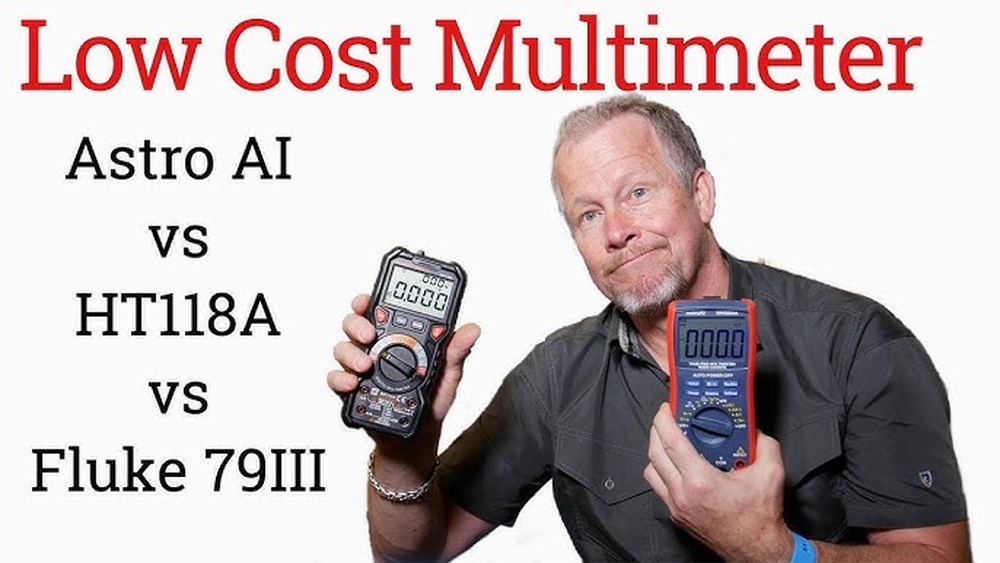
- Kaiweets HT118A: Designed for professionals, with high accuracy and advanced safety features.
Most Kaiweets multimeters offer:
- Auto-ranging capability
- Large, backlit LCD screens
- Non-contact voltage detection (NCV)
- Data hold and max/min functions
- CAT III or CAT IV safety ratings
Astroai Multimeter Lineup
AstroAI offers a range of digital and analog multimeters, including:
- AstroAI AM33D: An entry-level, manual-ranging multimeter suitable for basic household tasks.
- AstroAI DM6000AR: Auto-ranging with temperature measurement and multiple functions.
- AstroAI WH5000A: Advanced features for automotive and electronic work.
Common features in AstroAI models include:
- Manual and auto-ranging options
- Clear LCD displays (usually monochrome)
- Basic safety protections (fuses, overload)
- Simple button layouts
| Brand | Popular Model | Type | Main Features |
|---|---|---|---|
| Kaiweets | KM601 | Smart Digital | Auto-ranging, Color Display, NCV |
| AstroAI | DM6000AR | Digital | Auto-ranging, Temperature, Data Hold |
Build Quality And Design
Build quality is one of the main concerns for anyone buying a multimeter. Dropping a tool or using it in tough conditions can quickly reveal poor design.
Kaiweets
Kaiweets products are often praised for their solid construction. Many models have:
- Protective rubber cases for shock absorption
- Sturdy, well-fitted battery covers
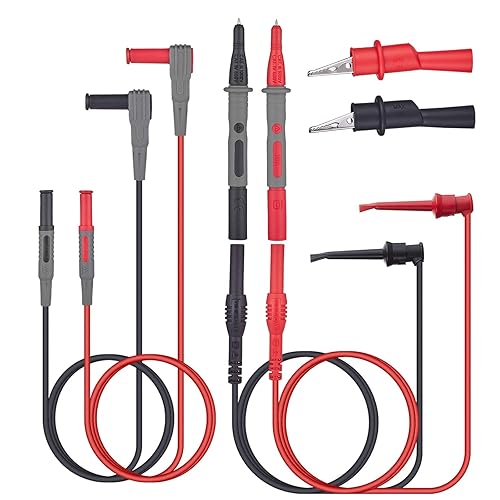
- High-quality probes with flexible cables
- Large, easy-to-read buttons
Their displays are usually colorful and backlit, making them easier to use in dim light. Kaiweets also tends to include thoughtful extras like built-in kickstands and probe holders.
Astroai
AstroAI multimeters are generally lighter and more compact. They often use basic plastic housings, which keep costs down but may feel less sturdy in hand. Some models have rubber bumpers, but these are thinner compared to Kaiweets.
Displays are usually monochrome LCDs, and the buttons can feel less tactile. While the build is good enough for home use, it may not handle repeated drops or rough work environments as well as Kaiweets.
Non-obvious insight: Many users overlook the importance of probe quality. Kaiweets probes are usually thicker and better insulated, which improves both safety and measurement accuracy. AstroAI’s probes are adequate but can feel flimsy, especially in lower-priced models.
Key Features Compared
Let’s compare the most important features side by side.
Display
- Kaiweets: Most models have large, colorful, and backlit screens. Some display multiple values (like voltage and frequency) at the same time.
- AstroAI: Usually monochrome, sometimes backlit. Displays tend to be smaller, with fewer advanced readouts.
Auto-ranging
- Kaiweets: Auto-ranging is standard in most models, saving time and reducing user error.
- AstroAI: Available in mid- and high-end models only. Entry-level models are manual-ranging, which can be slower and more confusing for beginners.
Non-contact Voltage Detection
- Kaiweets: Many models include NCV detection. This lets you check for live wires without direct contact.
- AstroAI: Some models have NCV, but it’s less common and sometimes less sensitive.
Safety Ratings
- Kaiweets: Often rated CAT III or CAT IV, which means they are safer for high-voltage work.
- AstroAI: Usually CAT II or CAT III. Suitable for home and automotive use but less robust for industrial settings.
Special Functions
- Kaiweets: Temperature, frequency, duty cycle, and even smart recognition in some models.
- AstroAI: Temperature and frequency in advanced models, but fewer extra features overall.
Battery Life
- Kaiweets: Many models use standard AAA batteries and have auto-off features.
- AstroAI: Battery life is good, but some models use 9V batteries, which are less common and more expensive.
| Feature | Kaiweets | AstroAI |
|---|---|---|
| Display Type | Color, Backlit | Monochrome, Some Backlit |
| Auto-Ranging | Standard | Only in Mid/High Models |
| NCV Detection | Common | Some Models |
| Safety Rating | CAT III/IV | CAT II/III |
Non-obvious insight: Many buyers ignore safety ratings. If you’re testing main electrical panels or circuits above 600V, always check for a CAT III or IV rating. Otherwise, you risk personal injury and equipment damage.

Credit: brandclub.com
Accuracy And Performance
How well do these brands perform when you need accurate measurements?
Kaiweets
Kaiweets multimeters are known for high accuracy, especially in their mid- and upper-range models. They often use true RMS (Root Mean Square) measurement, which gives better results for irregular AC signals. This is important if you measure the output of inverters, variable-speed drives, or non-standard waveforms.
Response times are fast, and readings are stable. The auto-ranging function helps avoid mistakes that can happen with manual settings.
Astroai
AstroAI models are accurate enough for most home and automotive tasks. Entry-level multimeters are not true RMS, so they may show wrong results with non-sinusoidal AC signals. Higher-end AstroAI models have true RMS, but at a slightly higher price point.
Manual-ranging models require you to set the range yourself. This can lead to mistakes and slower readings if you are not experienced.
User Experience And Usability
How Easy Are These Tools To Use, Especially For Beginners?
Kaiweets
Kaiweets focuses on user-friendly design:
- Smart features: Some models can auto-detect whether you’re measuring voltage, current, or resistance.
- Clear labeling: Buttons and input jacks are well marked.
- Easy instructions: Manuals are simple and often include diagrams.
- Good for beginners: Auto-ranging and smart recognition reduce the risk of errors.
Astroai
AstroAI keeps things simple:
- Straightforward layout: Fewer buttons and options mean less confusion.
- Clear instructions: Manuals are basic but easy to follow.
- Good for quick checks: Perfect for basic continuity tests or battery checks.
Common mistake: Beginners often forget to move the probe to the correct port when measuring current (amps). Both brands include warnings, but Kaiweets often uses colored lights or beeps to remind you, which can help avoid blown fuses or damaged meters.
Credit: oman.whizzcart.com
Price And Value For Money
Price is a big factor, especially for students and hobbyists.
Kaiweets
Kaiweets models are usually priced between $25 and $70. For this, you get advanced features, better build quality, and higher safety ratings. The value is especially good if you need features like NCV detection, true RMS, or a color display.
Astroai
AstroAI’s entry-level models start as low as $12, with mid-range models around $20–$35. Even their most advanced models rarely go above $50. This makes them ideal for people on a tight budget or those who only need basic measurements.
Non-obvious insight: If you only need a multimeter for simple tasks (like testing batteries or wall outlets), an AstroAI may be all you need. But for serious electronics or electrical work, the extra $10–$20 for a Kaiweets can add important safety and accuracy.
Reliability And Support
A multimeter is only helpful if it works when you need it.
Kaiweets
- Warranty: Most products come with a 36-month warranty.
- Customer service: Responsive, with support by email and phone.
- Manuals and tutorials: Good online resources, videos, and FAQs.
Astroai
- Warranty: Most products have a 1-year warranty.
- Customer service: Fast email support, but sometimes slow with replacements.
- Manuals: Basic guides, but fewer advanced resources.
Example: If you have a problem with a Kaiweets meter, you can usually get a replacement or help within a week. AstroAI users sometimes report waiting longer for resolution.
Applications And Best Use Cases
Which Brand Suits Which User?
Kaiweets: Best For
- Electricians and Technicians: CAT III/IV ratings and high accuracy make them safe for professional work.
- Enthusiasts and Students: Advanced features help with learning and experimentation.
- DIYers: Good for home repairs, car troubleshooting, and appliance checks.
Astroai: Best For
- Homeowners: Perfect for testing outlets, batteries, and small appliances.
- Automotive users: Good for car battery and fuse checks.
- Students: Cheap enough for classroom labs and experiments.
Real-world example: If you need to check solar panels and battery banks, Kaiweets’ true RMS and higher safety rating make it a safer choice. For checking if a wall socket is live or testing AA batteries, AstroAI is more than enough.
Detailed Model Comparison
To make things clearer, here’s a side-by-side look at two popular models: the Kaiweets KM601 and the AstroAI DM6000AR.
| Feature | Kaiweets KM601 | AstroAI DM6000AR |
|---|---|---|
| Display | 3.5” Color LCD, Backlit | 2.7” Monochrome LCD, Backlit |
| Auto-Ranging | Yes | Yes |
| NCV Detection | Yes | No |
| True RMS | Yes | Yes |
| Temperature | Yes | Yes |
| Safety Rating | CAT IV 600V | CAT III 600V |
| Warranty | 36 Months | 12 Months |
| Price | $50–$65 | $35–$45 |
Customer Reviews And Reputation
What Do Real Users Say?
Kaiweets
- Most reviews are positive, focusing on accuracy, display quality, and smart features.
- Users praise the safety and feel the meters are reliable for both home and professional use.
- Some say the extra features are more than they need for basic tasks.
Astroai
- Known for affordability and ease of use.
- Good feedback on customer service, but some reports of durability issues after a year of use.
- Best for simple jobs; not recommended for industrial or high-voltage work.
Non-obvious insight: Many negative reviews for both brands are due to user error, such as using the wrong input or not replacing the battery. Reading the manual carefully can prevent 80% of common problems.
Common Buyer Mistakes
- Ignoring Safety Ratings: Using a CAT II multimeter for panel work is dangerous. Always check the safety category.
- Choosing Manual Over Auto-Ranging: Beginners may struggle with manual-ranging meters, leading to frustration or incorrect readings.
- Overlooking Probe Quality: Cheap probes can cause inaccurate readings or even short circuits.
- Not Considering Warranty: A longer warranty means better support if something goes wrong.
- Buying More Than Needed: Don’t pay for features you’ll never use. Match your meter to your needs.
Which Brand Should You Choose?
It depends on your needs:
- Pick Kaiweets if you want advanced features, better safety, or plan to use your multimeter regularly in tough conditions.
- Choose AstroAI if you want something simple, affordable, and mainly for home or car use.
Both brands offer good value, but Kaiweets pulls ahead in build quality, display, and professional features. AstroAI wins on price and basic functionality.
For those who want to dig deeper into electrical safety standards, the Wikipedia CAT rating page is a great resource.
Frequently Asked Questions
Which Brand Is Better For Beginners, Kaiweets Or Astroai?
AstroAI is often better for beginners because of its simple interface and lower price. However, Kaiweets models with smart recognition and auto-ranging are also great for new users who want extra safety and features.
Can I Use An Astroai Multimeter For Car Repairs?
Yes, most AstroAI multimeters are suitable for automotive work, like checking batteries and fuses. Just make sure the model can handle the voltage and current ranges you need.
Are Kaiweets Multimeters Safe For High-voltage Work?
Many Kaiweets models have CAT III or CAT IV ratings, making them safe for higher voltage and industrial environments. Always check the exact rating before use.
How Long Do Kaiweets And Astroai Multimeters Last?
With proper care, both brands can last several years. Kaiweets generally offers longer warranties, which is a good sign of durability.
What Is The Main Difference Between Kaiweets And Astroai Multimeters?
Kaiweets focuses on advanced features, better build, and higher safety ratings. AstroAI offers simpler, more affordable tools for basic tasks.
Choosing between Kaiweets and AstroAI is not just about specs—it’s about matching the tool to your actual needs. Think about how you’ll use your multimeter, what safety level you require, and how much you want to spend. With this knowledge, you’ll make a confident and informed decision.
Credit: electrozlab.com