Are you trying to measure capacitance but unsure whether to use a capacitance meter or a multimeter? Choosing the right tool can save you time, avoid mistakes, and make your work much easier.
Both devices look similar, but they serve different purposes and offer unique features. You’ll discover the key differences between a capacitance meter and a multimeter, so you can pick the best option for your needs. Keep reading, and by the end, you’ll feel confident about which tool fits your project perfectly.
Capacitance Meter Basics
Understanding capacitance meters is essential for anyone working with electronic components. These devices measure the capacitance of capacitors, which is a key property in many circuits. Capacitance meters give precise readings that help check if a capacitor works correctly or needs replacement.
Capacitance meters differ from multimeters, which measure voltage, current, and resistance. Knowing how capacitance meters work and their features helps choose the right tool for your needs.
How Capacitance Meters Work
Capacitance meters send a small electrical signal through a capacitor. They measure the charge stored and the time it takes to charge. The meter then calculates the capacitance value based on this data. This process shows how much electrical energy the capacitor can hold.
Key Features And Functions
Capacitance meters often show values in microfarads (µF) or picofarads (pF). Many models include a digital screen for clear readings. Some meters test capacitor health by checking for leakage or damage. They are easy to use with simple controls and probes for connecting to the capacitor.
Common Applications
Capacitance meters help repair and maintain electronic devices. They are useful in testing power supplies, radios, and circuit boards. Hobbyists and professionals use them to find faulty capacitors quickly. These meters also assist in designing and building new circuits.

Credit: www.allumiax.com
Multimeter Essentials
A multimeter is a key tool for anyone working with electronics. It measures many electrical properties in one device. It helps test voltage, current, and resistance quickly and accurately.
Understanding a multimeter’s features helps choose the right one. Knowing how to use it makes electronics work easier and safer.
Multimeter Functions Explained
Multimeters measure voltage, current, and resistance. Voltage tells how strong the electric force is. Current shows the flow of electricity. Resistance measures how much a material slows down electricity.
Some multimeters also test continuity, diodes, and capacitance. Continuity checks if a circuit is complete. Diode testing shows if a diode works well.
Types Of Multimeters
There are two main types: analog and digital. Analog multimeters use a needle to show measurements. Digital multimeters display numbers on a screen. Digital types are easier to read and more common.
Some multimeters are simple, for basic tasks. Others are advanced, with more features for experts.
Typical Uses In Electronics
Multimeters check batteries to see if they have power. They test wires for breaks or shorts. They measure components like resistors and capacitors to ensure proper function.
Electricians use multimeters to find electrical faults. Hobbyists use them to build and fix gadgets. They are helpful in many electronic projects and repairs.
Measuring Capacitance With Multimeters
Measuring capacitance with a multimeter helps check the health of capacitors. Many digital multimeters include this function, making it easy to test capacitors without extra tools. Understanding how to use a multimeter for capacitance saves time and money.
This method works well for basic testing and quick checks. It shows if a capacitor is good or bad by measuring its capacity to store charge. Knowing the process and its limits improves testing accuracy.
Accuracy And Limitations
Multimeters provide decent accuracy for common capacitors. They work best with capacitors under 1 millifarad. Large capacitors may show less accurate readings.
Some multimeters may not measure polarized capacitors correctly. Accuracy also drops if the capacitor holds a charge. Discharge capacitors fully before measuring.
Environmental factors like temperature affect readings. Multimeters are not suitable for precise lab measurements. Use them mainly for quick, rough tests.
Step-by-step Measurement Process
Turn off power to the circuit before measuring. Remove the capacitor from the circuit if possible. This avoids interference from other parts.
Discharge the capacitor by shorting its leads with a metal tool. Set the multimeter to the capacitance mode. Connect the test leads to the capacitor terminals.
Wait for the reading to stabilize. Note the displayed value and compare it with the capacitor’s rated capacitance. If the reading is far off, the capacitor may be faulty.
Comparing Accuracy And Precision
Accuracy and precision are key when measuring electrical components. They affect how reliable and useful your measurements are. Capacitance meters and multimeters both measure capacitance but differ in how exact and consistent they are. Understanding these differences helps choose the right tool for your project needs.
Performance In Different Scenarios
Capacitance meters focus on measuring capacitance only. They give more accurate and stable readings for this task. Multimeters measure many things, including capacitance, but may be less precise. In circuits with small or sensitive capacitors, capacitance meters perform better. For quick checks or simple projects, multimeters can be enough. Each tool suits different situations based on its measurement focus.
Impact On Project Outcomes
Accurate measurements prevent errors in circuit design. Using a capacitance meter reduces guesswork and helps ensure components meet specs. Multimeters may cause slight errors, affecting performance in complex circuits. Precise readings help avoid costly mistakes and rework. Choosing the right meter improves efficiency and final results in your projects.
Portability And Ease Of Use
Portability and ease of use are key factors when choosing between a capacitance meter and a multimeter. Both tools serve different purposes but need to be easy to carry and simple to operate. This section compares their design, user interface, battery life, and maintenance to help you understand which device suits your needs better.
Design And User Interface
Capacitance meters usually have a straightforward design. They focus on measuring capacitance with minimal extra features. This keeps the device light and compact. The screen often shows clear, large numbers. Buttons are few and easy to press.
Multimeters tend to have more functions. They measure voltage, current, resistance, and capacitance. This adds complexity to the design. Multimeters can be bulkier due to extra parts and a larger screen. Their interface includes a dial or multiple buttons to select modes. This can be confusing for beginners but offers more control for advanced users.
Battery Life And Maintenance
Capacitance meters usually have longer battery life. They use less power because they focus on one main function. Batteries often last many hours or days of use. Maintenance is simple, mostly involving battery changes and keeping the device clean.
Multimeters may drain batteries faster. Their multiple functions and backlit screens consume more power. Some models use rechargeable batteries, which require regular charging. Maintenance involves checking battery health and ensuring test leads are intact. Proper care extends the tool’s lifespan and reliability.
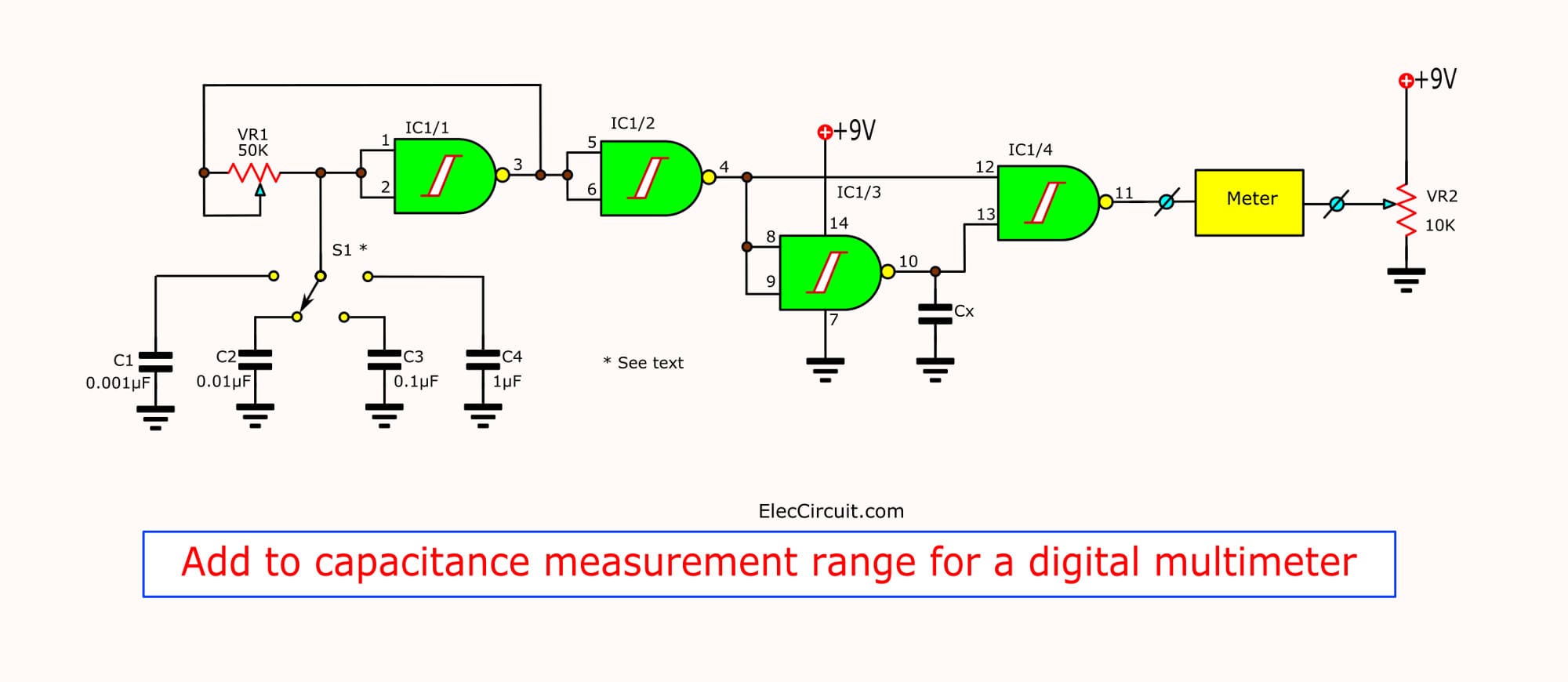
Credit: www.eleccircuit.com
Cost And Value Considerations
Choosing between a capacitance meter and a multimeter often depends on cost and value. Both tools serve different purposes, but budget plays a key role. Understanding the price and long-term benefits helps make a smart decision. This section breaks down these important factors clearly.
Price Ranges
Capacitance meters usually cost more than basic multimeters. Simple multimeters start at a low price, suitable for basic electrical tasks. Advanced multimeters with capacitance functions cost more but offer multiple features.
Standalone capacitance meters are often pricier because they focus on one task. Prices vary widely based on brand and accuracy. Entry-level models might suit beginners, while professionals prefer high-end devices.
Long-term Investment
A multimeter with capacitance measurement can save money over time. It combines several functions in one tool, reducing the need for multiple devices. This makes it a practical choice for hobbyists and technicians.
Buying a dedicated capacitance meter may pay off for specific tasks. It offers better precision and detailed readings. Professionals working frequently with capacitors benefit from this investment.
Consider how often you test capacitance and other measurements. Balance cost with the tool’s usefulness to get the best value.
Choosing The Right Tool For Your Needs
Choosing the right tool for measuring capacitance depends on what you need it for. Both capacitance meters and multimeters have their own strengths. Understanding your specific requirements helps in making the best choice. Here are some key factors to consider.
Hobbyist Vs Professional Use
Hobbyists often need simple tools for occasional use. A multimeter with capacitance measuring capability can be enough. Professionals require precise and reliable readings. Capacitance meters offer higher accuracy for complex tasks. Choose based on how detailed your work is.
Frequency Of Measurements
For rare measurements, a multimeter works well. It combines many functions in one device. If you measure capacitance frequently, a dedicated capacitance meter saves time. It provides faster and more consistent results. Consider how often you plan to test components.
Budget Constraints
Multimeters are usually more affordable and versatile. They serve many purposes besides capacitance measurement. Capacitance meters can be more expensive but offer better precision. Balance your budget against the features you really need. Spending wisely leads to better satisfaction.

Credit: www.ebay.com
Tips For Accurate Capacitance Measurement
Measuring capacitance accurately is important for good circuit performance. Small errors can lead to wrong readings and affect your work. This section shares practical tips to help you measure capacitance correctly. Follow these steps to get reliable and precise results every time.
Preparation And Setup
Start by turning off power to the circuit. Discharge capacitors fully before testing. Use a capacitance meter or a multimeter with a capacitance feature. Connect the meter leads properly to the capacitor terminals. Avoid touching the leads or capacitor pins during measurement. Keep the environment dry and free from electrical noise. Make sure the meter is set to the right range for capacitance. Calibrate your meter if the option is available. Proper setup ensures your readings reflect the true value.
Common Mistakes To Avoid
Do not test capacitors while still connected in a circuit. This causes interference and false readings. Avoid using damaged or low-quality test leads. They can add resistance and affect accuracy. Never measure a charged capacitor without discharging it first. This can damage your meter and risk shock. Ignore temperature effects, as they influence capacitance values. Measure in a stable temperature environment for best results. Skip rushing the measurement; allow the meter to stabilize before recording values.
Frequently Asked Questions
What Is The Main Difference Between Capacitance Meter And Multimeter?
A capacitance meter specifically measures capacitance in capacitors. A multimeter measures voltage, current, resistance, and sometimes capacitance. Multimeters are versatile but less precise for capacitance. Capacitance meters provide accurate readings for capacitor testing and troubleshooting.
Can A Multimeter Accurately Measure Capacitance?
Most basic multimeters have limited or no capacitance measurement. Advanced digital multimeters can measure capacitance but with less precision. For precise capacitance values, a dedicated capacitance meter is recommended. Accuracy varies based on the multimeter model and quality.
When Should I Use A Capacitance Meter Over A Multimeter?
Use a capacitance meter when you need precise capacitor values. It is ideal for testing, repairing, and verifying capacitors in circuits. Multimeters work for general electrical measurements but lack accuracy for capacitance. Specialized tasks require dedicated capacitance meters.
Are Capacitance Meters More Expensive Than Multimeters?
Capacitance meters can be more expensive due to their specialized function. Multimeters offer multiple measurements in one device, often at a lower price. High-end multimeters with capacitance features might cost similarly. Choose based on your measurement needs.
Conclusion
Choosing between a capacitance meter and a multimeter depends on your needs. A capacitance meter measures capacitor values accurately. A multimeter offers more functions but less precision in capacitance. Both tools have their place in electronics work. Understanding their differences helps you pick the right tool.
Use a capacitance meter for detailed capacitor testing. Use a multimeter for general electrical measurements. This knowledge makes your work easier and more efficient. Simple tools, clear purposes. That’s the key to good results.