If you work with electronics or signals, you will probably hear about two important tools: frequency counter and oscilloscope. Both devices help you understand electrical signals, but they do very different jobs. Choosing the right tool can save you time, money, and confusion. Many beginners make mistakes when picking between these instruments or using them incorrectly. Let’s explore what each device does, how they compare, and which suits your needs best.
What Is A Frequency Counter?
A frequency counter is a measurement tool used to find the frequency of a signal. Frequency means how often something repeats in a certain time, measured in Hertz (Hz). For example, if a signal repeats 1000 times each second, it has a frequency of 1 kHz.
Modern frequency counters can measure from a few Hz up to several GHz, depending on the model. They are common in radio, telecommunications, and labs that need precise frequency checks. These devices often have digital displays and are easy to use: you connect the signal, and the counter shows the frequency.
How Frequency Counters Work
Frequency counters count the number of cycles (or pulses) in a signal over a fixed period, usually one second. The device divides the count by the time window to show the frequency. Some counters use advanced techniques, like reciprocal counting, for better accuracy at low frequencies.
Typical Uses For Frequency Counters
- Testing radio transmitters to check their broadcast frequency
- Troubleshooting oscillators in electronics
- Calibrating clocks in microcontrollers
- Checking frequency drift in communication equipment
Accuracy And Limitations
Frequency counters are very accurate, often within 0. 01% or better. However, they can only measure repetitive signals—random noise or complex waveforms won’t work. Also, they don’t show signal shape, just the frequency.
What Is An Oscilloscope?
An oscilloscope is a powerful instrument for seeing electrical signals as waveforms. It shows how signals change over time, usually on a screen. Oscilloscopes can reveal voltage, shape, timing, and frequency, giving much more information than a frequency counter.
Modern digital oscilloscopes offer features like storage, math functions, and automatic measurements. You can see sine waves, square waves, noise, or any electrical signal in real time.
How Oscilloscopes Work
Oscilloscopes sample the input signal at high speed and plot it as a graph—voltage (vertical axis) versus time (horizontal axis). You can zoom in or out, change scales, and capture events.
Typical Uses For Oscilloscopes
- Diagnosing circuit faults by checking waveform shapes
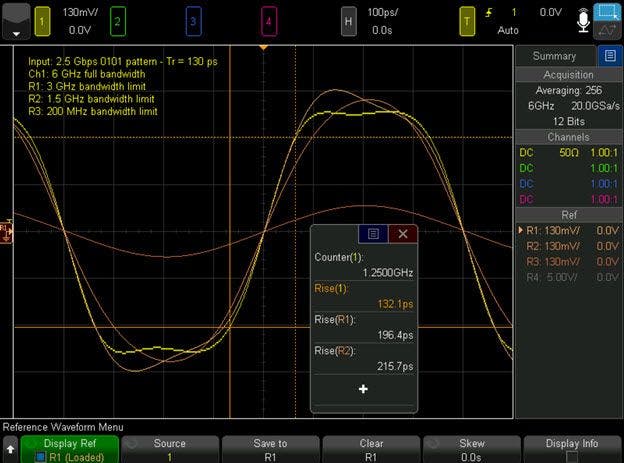
- Measuring signal timing (rise time, fall time, delay)
- Finding glitches or noise in digital systems
- Analyzing complex waveforms like modulated signals
Accuracy And Limitations
Oscilloscopes can measure frequency, but they are less precise than frequency counters. They also require careful setup and interpretation. Some signals, like very high frequency or low-level signals, need special probes or settings.

Credit: www.testequipmentdepot.com
Key Differences Between Frequency Counter And Oscilloscope
It’s easy to confuse these tools, but their main differences are clear. Here’s a comparison using a simple HTML table:
| Feature | Frequency Counter | Oscilloscope |
|---|---|---|
| Measures | Frequency only | Waveform shape, voltage, frequency, timing |
| Display | Numeric (digital) | Graphical (waveform on screen) |
| Accuracy | Very high for frequency | Moderate for frequency, high for waveform |
| Usability | Simple, plug and read | Requires setup, interpretation |
| Signal Types | Repetitive signals only | Any signal (including one-time events) |
| Cost | Lower, $100–$500 | Higher, $300–$5000+ |
When Should You Use A Frequency Counter?
A frequency counter is best for jobs where precise frequency measurement is the main goal. If you only need to know how fast a signal repeats, it’s the right tool. For example:
- Tuning radio transmitters: You need exact frequency, not waveform shape.
- Testing clock circuits: You want to check if a circuit runs at 16 MHz or 16.001 MHz.
- Service centers: Quick checks on signal generators or communication devices.
Frequency counters are usually faster and simpler for these tasks. They are also more accurate than oscilloscopes when measuring frequency alone.
Common Mistakes With Frequency Counters
- Connecting noisy signals: Frequency counters may give wrong readings if the input is noisy or unstable.
- Measuring non-periodic signals: Only signals that repeat regularly can be measured.
A non-obvious insight: Many beginners forget to set the correct trigger or threshold level, leading to false readings. Always check the input settings.
When Should You Use An Oscilloscope?
An oscilloscope is the right choice when you need to see the signal’s shape or analyze timing details. For example:
- Debugging circuits: Checking for unwanted spikes, glitches, or wrong waveforms.
- Checking signal quality: Is the sine wave clean or distorted?
- Measuring voltage levels: You want to know how high or low the signal goes.
- Analyzing timing: How long does the signal stay high? Is the pulse width correct?
Oscilloscopes are flexible and can measure many things at once. They can also capture single events, something a frequency counter cannot do.
Common Mistakes With Oscilloscopes
- Wrong probe setup: Using a probe with poor bandwidth can hide real signal details.
- Incorrect scaling: Not setting the time base or voltage scale correctly leads to confusion.
A non-obvious insight: Many users rely on automatic measurements, but manual checks can reveal hidden problems, like jitter or small glitches missed by software.
Practical Examples: Real-life Scenarios
Let’s look at some real situations where the choice matters:
- Radio Repair: You need to check if a transmitter is broadcasting at the correct frequency. A frequency counter tells you the exact number. If you also want to see if the waveform is distorted, use an oscilloscope.
- Digital Clock Debugging: You suspect a microcontroller’s clock is unstable. The frequency counter shows if the frequency drifts. The oscilloscope reveals if there are glitches or missing pulses.
- Audio Signal Testing: To measure the frequency of a tone generator, the frequency counter is perfect. To check if the audio waveform has distortion, the oscilloscope is essential.
Credit: www.keysight.com
Advanced Features: Modern Devices
Both tools have evolved with technology. Let’s compare some advanced features:
| Feature | Modern Frequency Counter | Digital Oscilloscope |
|---|---|---|
| Data Storage | Limited (logs frequency readings) | Extensive (stores waveforms, screenshots) |
| Connectivity | USB, RS-232, LAN (for remote reading) | USB, LAN, Wi-Fi (for remote control and data export) |
| Math Functions | Basic (average, max, min frequency) | Advanced (FFT, addition, subtraction, integration) |
| Automated Testing | Frequency alarms, pass/fail checks | Automated waveform analysis, triggers |
| Bandwidth | Up to 10 GHz in high-end models | Up to 1 GHz in most scopes |
Choosing The Right Tool: What Really Matters
When deciding between a frequency counter and an oscilloscope, consider:
- Purpose: Are you measuring frequency only or need to see the waveform?
- Accuracy: Do you need exact numbers (frequency counter) or visual analysis (oscilloscope)?
- Signal Type: Is your signal repetitive and stable, or complex and changing?
- Budget: Frequency counters are cheaper. Oscilloscopes are more expensive but offer more features.
- Portability: Frequency counters are smaller and lighter. Oscilloscopes can be bulky.
Buyer Mistakes To Avoid
- Overbuying features: Don’t pay extra for features you won’t use.
- Ignoring bandwidth: Make sure your device can handle your signal’s speed.
- Not considering ease of use: If you’re new, a simple frequency counter may be easier.
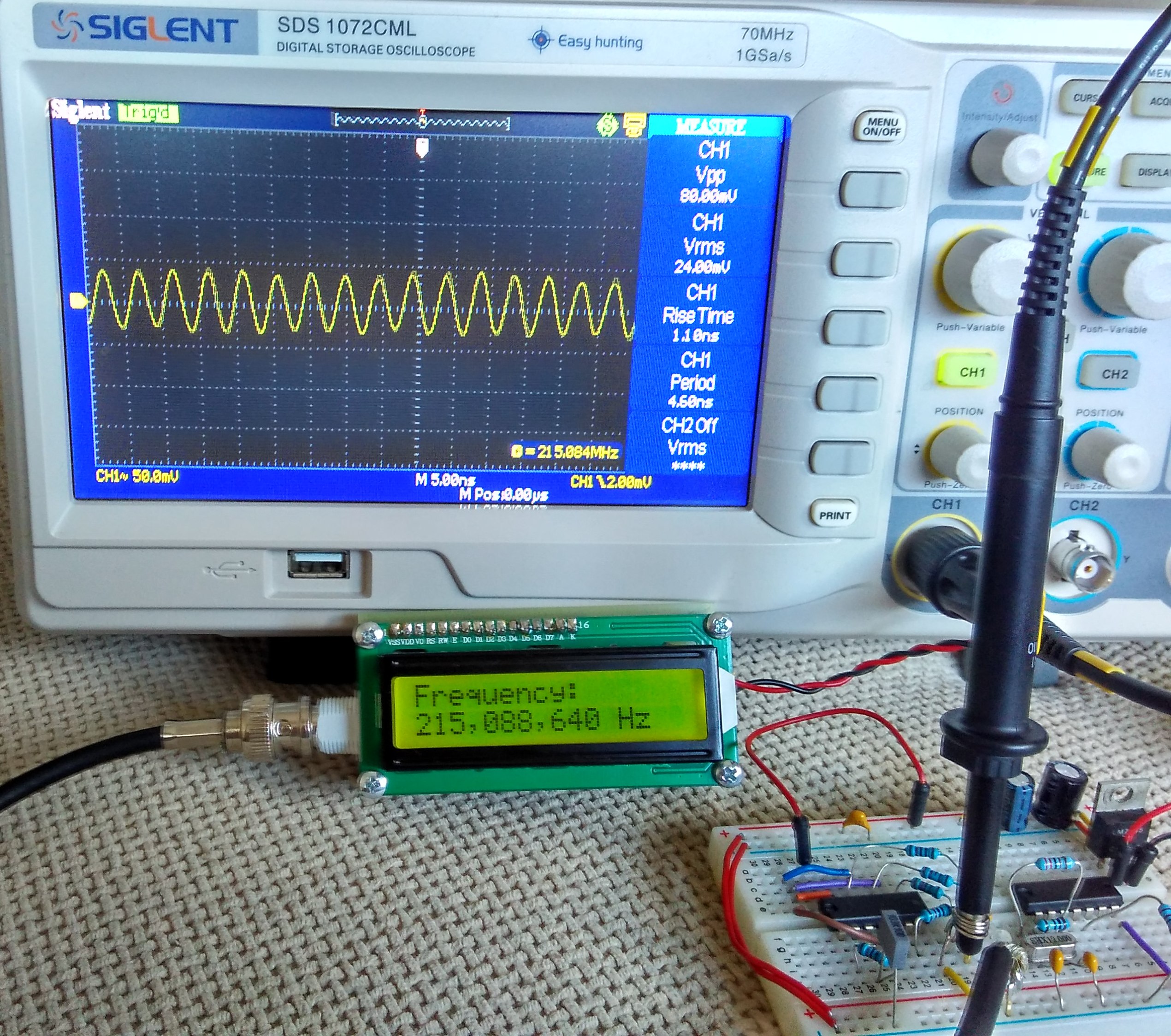
A practical tip: Many professionals keep both devices. For routine frequency checks, use the counter. For deep troubleshooting, use the oscilloscope.
Credit: www.electronics-lab.com
Data And Market Trends
The global oscilloscope market is expected to reach $2. 5 billion by 2026, driven by demand in automotive, communications, and research. Frequency counters are more niche, with sales focused in RF labs and manufacturing. Most entry-level oscilloscopes start at $300, while high-end models can cost over $5000.
Frequency counters range from $100 for basic models up to $2000 for high-precision units.
According to a survey by Electronics Weekly, over 70% of engineers use oscilloscopes daily, while only 30% use frequency counters regularly. This shows oscilloscopes are more versatile, but frequency counters are still important for specialized tasks.
How To Use Both Together
You can combine both tools for best results. For example, connect your signal to both devices:
- Use the frequency counter for quick frequency checks
- Use the oscilloscope for visual waveform analysis
This approach gives you the accuracy of the counter and the full picture from the oscilloscope. It also helps catch problems missed by one device alone.
Frequently Asked Questions
What Is The Main Difference Between A Frequency Counter And An Oscilloscope?
A frequency counter measures only the frequency of a signal, showing a numeric value. An oscilloscope displays the waveform, voltage, timing, and frequency visually. The oscilloscope gives more information, but the counter is more accurate for frequency.
Can An Oscilloscope Replace A Frequency Counter?
No. While oscilloscopes can measure frequency, they are less precise than dedicated frequency counters. For jobs needing exact frequency, like RF calibration, a frequency counter is necessary.
Which Tool Is Better For Beginners?
A frequency counter is easier for simple frequency checks. An oscilloscope requires more setup and understanding but offers more flexibility. If you need to see signals and learn more, the oscilloscope is worth the effort.
How Much Do These Devices Cost?
Basic frequency counters start at around $100. Entry-level oscilloscopes start at $300. High-end models can cost thousands. Prices depend on bandwidth, features, and brand.
Where Can I Learn More About Electronic Test Instruments?
A reliable resource is Wikipedia’s Electronic Test Equipment page. It covers many types of instruments, including frequency counters and oscilloscopes.
Final Thoughts
Both frequency counters and oscilloscopes are valuable tools in electronics and signal analysis. They serve different purposes—one for precise frequency measurement, the other for deep waveform analysis. The right choice depends on your task, budget, and experience. Understanding their strengths and limits can make your work faster and more accurate. Whether you are a hobbyist or a professional, knowing when and how to use these instruments is a skill worth mastering.