Oscilloscopes are essential tools for anyone working with electronics. Whether you’re a student, hobbyist, or engineer, you need to measure and visualize electrical signals. But when choosing an oscilloscope, you’ll quickly run into two main types: DPO (Digital Phosphor Oscilloscope) and DSO (Digital Storage Oscilloscope). What’s the difference? Which is better for your needs? This article breaks down everything you need to know—without technical jargon—so you can make the right choice.
What Is A Dso Oscilloscope?
A Digital Storage Oscilloscope is the most common oscilloscope used in labs and workshops. It converts analog signals (like voltage changes) into digital data, then stores and displays them on a screen. DSOs have become so popular because they offer flexibility and ease of use, making them suitable for a wide range of electronics tasks.
How Dsos Work
DSOs use an analog-to-digital converter to turn electrical signals into numbers. These numbers are then stored in memory and shown as waveforms on the screen. You can pause, zoom, and analyze the data. If you want to look closely at a specific part of the signal, you can freeze the display and move through the data at your own pace.
One thing that makes DSOs very useful is their ability to save data. You can capture a waveform and store it for later, either on the oscilloscope’s internal memory or by exporting it to a computer. This is helpful for creating reports, sharing results, or comparing signals at different times.
Key Features
- Storage: DSOs can save signals for later analysis, which is great for documentation and troubleshooting over time.
- Triggering: Lets you capture specific events, such as voltage spikes, by setting conditions for when the scope should “grab” a signal.
- Display: Shows a stable image, even for fast or repeating signals, so you can easily see what’s happening.
- Measurement Tools: Built-in functions for frequency, amplitude, and more, helping you analyze signals without extra equipment.
Another advantage is the variety of measurement cursors and math functions. Most DSOs allow you to quickly check rise time, fall time, or even perform Fast Fourier Transform (FFT) analysis to see frequency components.
Practical Example
Imagine testing a microcontroller output. With a DSO, you can capture the signal, pause the display, and measure the pulse width or voltage easily. This makes DSOs ideal for troubleshooting digital circuits. For example, if your circuit isn’t working, you can see if the output is at the correct logic level, or if there’s unexpected noise.
Some DSOs also allow you to set up automatic pass/fail tests, which is helpful if you need to check the same type of signal many times. For students, the ability to store signals means you can show your teacher exactly what you measured, even after the experiment is finished.
What Is A Dpo Oscilloscope?
A Digital Phosphor Oscilloscope is a newer type that builds on DSO technology. DPOs are designed to capture and display fast, complex signals—especially those with rare glitches or bursts. They’re made for modern electronics, where signals can change in microseconds and rare problems can cause big issues.
How Dpos Work
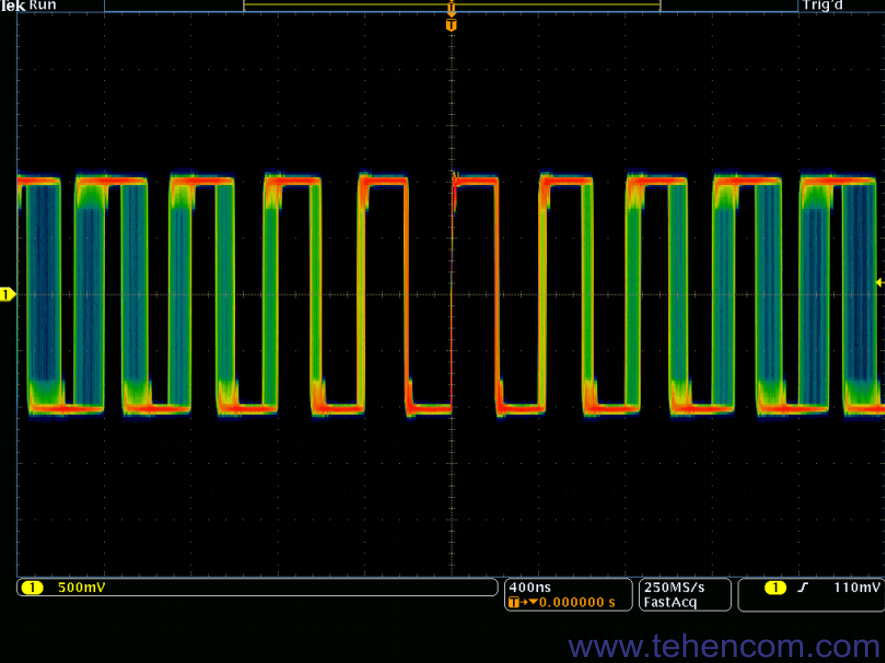
DPOs use a special processor to capture millions of waveforms per second. They create a three-dimensional display: time, amplitude, and intensity. The intensity shows how often a signal passes through a point, just like the brightness in old analog oscilloscopes.
This 3D approach helps you see not just the shape of signals, but also how often certain events occur. For example, if a glitch happens only once every thousand cycles, a DPO can make that glitch stand out as a bright spot, while the normal waveform stays dimmer.
DPOs also have more advanced data processing hardware, so they can handle a lot of information in real time. This is important when you need to analyze signals that change quickly or have unpredictable problems.
Key Features
- High Waveform Capture Rate: DPOs can show rare events that DSOs might miss, making them excellent for catching random errors or problems that don’t happen all the time.
- Intensity Grading: Shows signal frequency by brightness, so you can quickly see which parts of the signal are common and which are rare.
- Real-Time Display: Feels like watching a live movie of the signal, which helps when you’re searching for quick or hidden glitches.
- Advanced Analysis: Useful for complex or fast-changing signals, like those found in USB, HDMI, or RF circuits.
Some DPOs also offer protocol decoding for serial communications, making it easier to debug modern buses like I2C, SPI, or CAN.
Practical Example
If you’re testing a communications circuit and want to find rare glitches, a DPO helps. It reveals hidden problems by showing more signal details, including intensity changes. For example, in a high-speed USB line, a DPO can make a rare error visible as a bright spot, so you know exactly where the problem is.
Another situation is in automotive electronics, where unpredictable noise or interference can cause faults. DPOs help engineers spot these issues before they become bigger problems.
Dpo Vs Dso: Key Differences
Understanding the differences helps you choose the right oscilloscope. Here’s a side-by-side comparison:
| Feature | DSO | DPO |
|---|---|---|
| Waveform Capture Rate | Thousands/sec | Millions/sec |
| Intensity Grading | No | Yes |
| Storage | Yes | Yes |
| Triggering Options | Standard | Advanced |
| Best For | General digital work | Complex, fast signals |
| Price | Lower | Higher |
A simple way to think about it: DSOs are great for everyday tasks, while DPOs are like having a microscope for fast, unpredictable problems.
When To Choose Dso
DSOs are the go-to choice for most basic and intermediate tasks. Here’s when a DSO makes sense:
- Routine Testing: Checking microcontroller outputs, power supplies, and regular signals.
- Budget-Friendly: DSOs cost less than DPOs.
- Easy Storage: If you need to save and review signals later.
- Simple Analysis: Built-in measurement tools help with everyday troubleshooting.
For example, if you’re repairing a power supply or building a simple logic circuit, a DSO is more than enough. You can capture the waveform, zoom in to see details, and use measurement tools to check if everything works.
Typical Users
- Electronics students
- Hobbyists
- Repair technicians
- Engineers working on slower or repetitive signals
Another advantage for these users is that DSOs are usually smaller and easier to learn. You don’t need special training to use most of their features, so you can focus on your project instead of learning the tool.
Many DSOs also come with USB ports or network connections, making it easy to transfer screenshots or data to your computer for reports or further analysis.
When To Choose Dpo
DPOs are powerful but more specialized. Consider a DPO if you need:
- High-Speed Analysis: Testing RF circuits, high-speed serial buses, or communication signals.
- Finding Rare Events: Capturing glitches, bursts, and anomalies that happen quickly.
- Advanced Visuals: Intensity grading reveals signal frequency and hidden patterns.
- Complex Triggering: DPOs offer more options to capture specific events.
If your work involves signals above 500 MHz, or you need to debug protocols like USB 3. 0 or PCIe, a DPO is often necessary. Their fast capture rate and extra analysis tools save time and reduce frustration.
Typical Users
- Advanced engineers
- Researchers
- Designers of high-speed circuits
- Communication system testers
DPOs are also used in fields like aerospace and automotive engineering, where safety depends on finding rare but critical errors. Researchers appreciate the deep insight DPOs provide when developing new technologies.
Real-world Example Comparison
Let’s look at a real scenario: troubleshooting a USB data line. USB signals are fast and sometimes contain rare glitches.
With a DSO, you might see stable waveforms but miss brief errors. A DPO, however, will show these glitches as bright spots or bursts in the intensity display. This helps you find and fix problems faster.
For example, a company making USB devices might have a product that fails only once in a thousand uses. A DPO helps engineers catch those rare faults, saving time and reducing returns from unhappy customers. In contrast, a DSO might never show the glitch, making troubleshooting much harder.
Another example: in audio equipment, a DPO can reveal intermittent pops or clicks that only happen during certain conditions, helping designers improve product quality.

Credit: www.youtube.com
Technical Specifications: Dso Vs Dpo
Here’s a deeper look at the technical specs that matter most:
| Specification | DSO | DPO |
|---|---|---|
| Bandwidth | Up to 500 MHz | Up to 1 GHz (often more) |
| Sample Rate | Up to 5 GS/s | Up to 20 GS/s |
| Memory Depth | Standard | Usually deeper |
| Display Type | 2D waveform | 3D (time, amplitude, intensity) |
| Price Range | $400–$2,000 | $2,000–$10,000+ |
Memory depth is important if you need to capture long signals or analyze long data streams. Deeper memory means you can zoom in on small details without losing the big picture. DPOs often include larger displays and better color grading, making it easier to spot subtle signal changes.
Common Mistakes When Choosing
Even experienced users make mistakes when picking oscilloscopes. Here are two insights beginners often miss:
- Ignoring Capture Rate: Many assume bandwidth is everything. But waveform capture rate is just as important—especially for finding rare events. If your oscilloscope can’t capture enough waveforms per second, you’ll miss quick glitches, no matter how high the bandwidth is.
- Overestimating Needs: Some buy expensive DPOs for simple tasks. If you mostly work with slow digital signals, a DSO is enough.
Other Mistakes
- Not checking memory depth: Deeper memory means you can analyze longer signals and see more data at once, which is helpful for slow signals or long tests.
- Forgetting about trigger options: Advanced triggers help with complex tasks. Make sure your scope can trigger on the specific signals you need to capture.
- Overlooking display quality: A clear, bright screen makes analysis easier. Color grading and intensity features reduce eye strain and help you work longer.
Also, check for software compatibility and available upgrades, as these can extend the life of your oscilloscope and add new features over time.
Credit: www.tehencom.com
Dso And Dpo In The Market
Manufacturers like Tektronix, Keysight, and Rigol offer both DSO and DPO models. Tektronix, for example, introduced DPO technology to solve the limitations of traditional DSOs. Today, DPOs are used in high-end labs, while DSOs cover general needs.
Market Trends
- DSO units are more popular for entry-level and mid-range users.
- DPOs are gaining ground in research and advanced engineering.
- Prices for DPOs are slowly dropping, making them more accessible.
Another trend is the integration of advanced software in both types. Many scopes now include PC connectivity, cloud storage, and remote monitoring. Some companies offer firmware upgrades that let you unlock new features as your needs grow, so you don’t have to buy a new device every time technology changes.
Buying Tips
When shopping for an oscilloscope, keep these points in mind:
- Define Your Needs: Are you testing simple circuits or high-speed communications? Make a list of the signals you’ll measure most often.
- Check Bandwidth and Sample Rate: Match these to your signal type. If your highest frequency is 100 MHz, choose a scope with at least 200 MHz bandwidth.
- Consider Capture Rate: The higher, the better for finding glitches. Ask for waveform update rate, not just sample rate.
- Look at Memory Depth: More memory means more data. This lets you analyze long or complex signals in detail.
- Read Reviews and Specs: Compare models before buying. Look for user experiences similar to your own needs.
Example Buying Decision
If you’re a student, a DSO is usually enough. If you work in RF design, invest in a DPO with high bandwidth and advanced features.
Don’t forget to consider after-sales support, warranty, and available accessories like probes or carrying cases. These small details can make a big difference in daily use.
Technical Evolution: Why Dpo Matters
Oscilloscope technology keeps advancing. Early digital oscilloscopes were limited—they could capture only a few waveforms per second. This made it hard to see rare events. DPOs changed the game, offering millions of captures per second and real-time intensity grading.
This evolution is crucial for modern electronics. Devices like smartphones, routers, and medical equipment need high-speed, reliable testing. DPOs help engineers find hidden problems that would be missed by older scopes.
For example, in medical device design, missing a rare electrical spike could cause a device to fail in the field. DPOs provide the confidence that all events—even the rarest—are visible and can be analyzed.
Dso Vs Dpo: Quick Reference
For a fast summary, here’s an easy-to-read comparison:
| Task | Recommended Oscilloscope |
|---|---|
| Digital circuit troubleshooting | DSO |
| High-speed communications | DPO |
| Finding rare glitches | DPO |
| Student projects | DSO |
| RF analysis | DPO |
| General repair work | DSO |

Credit: www.ebay.com
Frequently Asked Questions
What Is The Main Difference Between Dso And Dpo?
The biggest difference is waveform capture rate and intensity grading. DPOs capture many more waveforms per second and show intensity changes, revealing rare events. DSOs are simpler and best for routine tasks.
Are Dpo Oscilloscopes Always Better Than Dsos?
No. DPOs are better for fast, complex signals and finding rare glitches. For basic testing or slower signals, DSOs are easier to use and more affordable.
Can A Dso Capture Rare Glitches?
DSOs can capture glitches if you set the trigger correctly, but their lower capture rate means some rare events may be missed. DPOs are designed to reveal these glitches more clearly.
Is A Dpo Worth The Higher Price?
If you work with high-speed signals, communications, or need advanced analysis, a DPO is worth the investment. For most hobby or student uses, a DSO is a smarter, cost-effective choice.
Where Can I Learn More About Oscilloscope Technology?
You can visit the Wikipedia Oscilloscope page for detailed explanations and history.
Choosing between a DPO and a DSO oscilloscope depends on your needs, budget, and the signals you want to measure. DSOs cover most everyday tasks, while DPOs shine in advanced environments. By understanding the differences, you’ll find the right tool—and avoid wasting money or missing critical data.