Checking for short circuits is an important skill for anyone who works with electronics, appliances, or home wiring. A short circuit can cause electrical fires, damage devices, or even lead to serious injuries. The good news is, with a multimeter, you can safely and accurately check for short circuits in most electrical systems. In this guide, you’ll learn everything you need to know about how to check for a short circuit with a multimeter—even if you’re a beginner.
We’ll cover what a short circuit is, signs to look for, how to use a multimeter step by step, safety tips, common mistakes, and practical troubleshooting advice. You’ll also find sample readings, comparison tables for different types of multimeters, and answers to common questions.
Whether you’re a DIY enthusiast, a student, or just want to keep your home safe, this article will give you clear, reliable guidance.
Understanding Short Circuits
A short circuit happens when electricity takes a shortcut through a low-resistance path, skipping its normal route. This causes a sudden surge of electrical current, which can overheat wires and components. Short circuits often occur due to damaged insulation, loose connections, or faulty components.
Imagine water flowing through a hose. If you poke a hole in the hose, water escapes through the hole instead of reaching the end. Similarly, in a short circuit, electricity escapes its intended path, which can cause serious problems.
Common Causes Of Short Circuits
- Damaged wires – Cuts, nicks, or worn insulation expose the wires, letting them touch each other.
- Faulty devices – Burned-out appliances or electronics often create internal shorts.
- Loose connections – Screws or terminals that aren’t tight can let wires shift and touch.
- Moisture – Water inside outlets or junction boxes can bridge connections.
- Pests – Rodents sometimes chew on wires, exposing the metal.
Why Short Circuits Are Dangerous
Short circuits are not just technical problems—they can be life-threatening. When a short occurs, the current can rise to hundreds of times normal levels. This can:
- Melt wires and connectors
- Start fires
- Destroy fuses and circuit breakers
- Damage expensive equipment
Understanding short circuits is the first step to preventing accidents and costly repairs.
What Is A Multimeter?
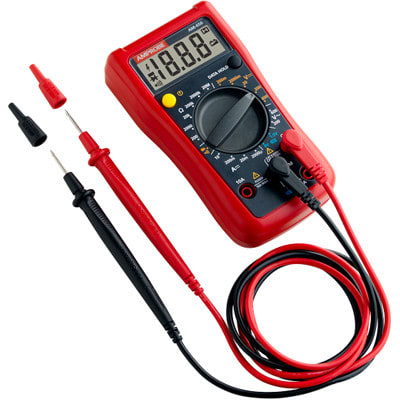
A multimeter is a handheld device that measures electrical properties like voltage, current, and resistance. It’s the main tool for finding short circuits in wires, devices, and circuits.
There are two main types:
- Analog multimeter – Uses a needle and scale. Less common today, but some professionals still use them.
- Digital multimeter (DMM) – Shows readings on a digital display. Most people use digital models because they’re easier to read and more accurate.
Modern multimeters often have extra features, like continuity checks and automatic range selection.
Main Functions Of A Multimeter
- Voltage (V) – Measures electrical pressure in volts.
- Current (A) – Measures flow of electricity in amps.
- Resistance (Ω) – Measures how much a material resists electrical flow.
- Continuity – Checks if a circuit is complete (often with a beep).
Knowing how to use these functions is essential for checking short circuits.

Credit: www.youtube.com
Signs You Might Have A Short Circuit
Before you grab your multimeter, there are warning signs that can tell you a short circuit might be present:
- Frequent blown fuses or tripped circuit breakers
- Burning smell near outlets, switches, or wires
- Visible sparks when plugging or unplugging devices
- Melted insulation or black marks on wires
- Devices overheating or not working properly
If you notice any of these signs, it’s important to act quickly. Checking with a multimeter can help you confirm if a short circuit exists.
Preparing To Check For Short Circuits
Safety must come first. Electricity is dangerous, so always take these steps before testing:
- Turn off power – Switch off the circuit breaker or unplug the device.
- Discharge capacitors – Some components, like TVs or microwaves, can store electricity even after unplugging.
- Wear safety gear – Use insulated gloves and safety glasses.
- Use the right multimeter settings – Set your multimeter to the correct function (usually resistance or continuity).
Never test a live (powered) circuit for shorts unless you are trained and using special equipment.
Step-by-step Guide: How To Check For Short Circuits With A Multimeter
Here’s a simple, step-by-step method for finding short circuits using a digital multimeter. The process is similar for analog multimeters, but readings appear as needle movement instead of numbers.
Step 1: Set Your Multimeter
- Turn the dial to the resistance (Ω) setting or the continuity setting (if available).
- Some models have an automatic continuity mode with a beep. If not, use the lowest resistance range.
Step 2: Test The Multimeter
- Touch the two probes together. The display should show 0 Ω or beep, showing the circuit is complete.
Step 3: Disconnect Power And Isolate The Circuit
- Make sure the device or circuit is unplugged or the breaker is off.
- If you’re testing a device, remove batteries or disconnect it from other circuits.
Step 4: Place The Probes
- Touch one probe to each end of the wire, connector, or component you want to test.
- For a wall outlet, touch one probe to the hot (live) terminal and the other to the neutral or ground.
Step 5: Read The Results
- If the multimeter shows 0 Ω or makes a beep, there is a complete path (short circuit).
- If the display shows infinite resistance (often marked as “OL” for overload), there is no connection (open circuit).
- A reading between 0 and a few ohms could mean a partial short or a connected load—see the tips below.
Step 6: Interpret The Results
- Zero or very low resistance between two points that should not be connected means a short circuit.
- High resistance or no beep means there is no short.
Step 7: Double-check And Trace The Short
- Move the probes to different points to find where the short begins and ends.
- If testing a device, check each component separately.
Example: Testing A Power Cord
Suppose a lamp keeps blowing fuses. To test the power cord:
- Unplug the lamp.
- Set the multimeter to continuity.
- Touch one probe to each plug prong.
- If the multimeter beeps or shows zero, the cord is shorted. If not, test between each prong and the ground pin.
This method works for most cords, outlets, and small circuits.
How To Use Continuity Mode For Short Circuit Testing
Continuity mode makes testing easier, especially for beginners. When the probes touch, the multimeter beeps, showing a path exists.
- Use continuity mode to quickly check fuses, switches, and wires.
- If you hear a beep between two points that should not connect, you have found a short.
Many electricians rely on this mode for fast troubleshooting.
Advanced Tips: Testing Complex Circuits
Short circuits are not always simple. Sometimes, you must test inside a device with many wires or circuit boards. Here are some advanced tips:
- Label wires before disconnecting anything. This avoids mistakes later.
- Test individual components like resistors, capacitors, or transistors for shorts. Remove them from the circuit if possible.
- Use the schematic (wiring diagram) to find test points.
- Divide and conquer by testing smaller sections of the circuit.
For circuit boards, check for solder bridges (unwanted blobs of solder) or burnt spots.
Practical Example: Troubleshooting A Short In A Car
Many cars develop shorts in wiring, causing blown fuses or malfunctioning lights. Here’s how you might check for a short in a car:
- Remove the fuse for the problem circuit.
- Set the multimeter to resistance or continuity.
- Touch one probe to the fuse socket output, and the other to the vehicle’s ground.
- A beep or zero reading means a short to ground.
Trace the wire to find where it touches the body or another wire. Common places are near sharp metal or moving parts.
Credit: resources.altium.com
Multimeter Comparison: Analog Vs. Digital
Choosing the right multimeter can make your work easier. Here’s a comparison:
| Feature | Analog Multimeter | Digital Multimeter |
|---|---|---|
| Display | Needle and scale | Numeric LCD |
| Accuracy | Lower | Higher |
| Ease of Use | More skill needed | Beginner-friendly |
| Extra Functions | Few | Many (e.g., continuity, auto-range) |
| Cost | Usually cheaper | Wide price range |
Most people should choose a digital multimeter for short circuit testing. It’s easier to read and safer for beginners.
Table: Typical Resistance Readings
Knowing what numbers to expect helps avoid mistakes. Here’s a quick guide for common readings:
| Test Points | Expected Resistance | Meaning |
|---|---|---|
| Wire (good) | 0–1 Ω | No short, normal path |
| Wire (shorted) | 0 Ω | Short circuit (if not intended) |
| Open circuit | OL or ∞ | No connection |
| Resistor | Marked value | Check label |
| Device input/output | Varies | Check manual |
Pro tip: Always compare your readings with the device’s specifications.
Safety Precautions When Checking For Short Circuits
Working with electricity is risky, so follow these safety tips:
- Always turn off power before testing for shorts.
- Never test high-voltage circuits unless you are trained.
- Use insulated probes and wear safety gear.
- Stand on a dry, non-metallic surface to avoid shock.
- Don’t touch metal parts of the probes during testing.
- If you smell burning or see smoke, stop immediately.
Many accidents happen because people skip these steps. Safety is more important than speed.
Common Mistakes To Avoid
Even experienced people make mistakes. Here are some errors beginners often make:
- Testing live circuits – This can destroy your multimeter or cause injury.
- Wrong setting on the multimeter – Always double-check the dial.
- Not isolating the circuit – Connected devices can give false readings.
- Reading confusion – Zero is not always a short, sometimes it’s a normal connection.
- Skipping the battery check – A weak multimeter battery gives incorrect readings.
Take your time, and always recheck your setup.
Troubleshooting: What If You Can’t Find The Short?
Sometimes, the short circuit is hidden and hard to find. Here’s what you can do:
- Check in sections – Break the system into smaller parts.
- Inspect visually – Look for burnt spots, melted plastic, or loose wires.
- Wiggle test – Gently move wires while watching the reading.
- Ask for help – If you’re stuck, consult a professional.
Some shorts only appear under certain conditions (like when a device heats up). Patience and careful testing are important.
Example: Finding A Short In A Home Outlet
Suppose a kitchen outlet keeps tripping the breaker. Here’s how you can check:
- Turn off the breaker.
- Remove the outlet cover.
- Set the multimeter to continuity.
- Touch one probe to the hot terminal and the other to neutral or ground.
- If you hear a beep, there’s a short. If not, check the wiring to other outlets in the same circuit.
Look for signs of damage—burn marks, loose screws, or old insulation.

Credit: www.allaboutcircuits.com
Table: When To Use Resistance Vs. Continuity
Choosing between resistance and continuity modes depends on the situation:
| Situation | Best Mode | Why |
|---|---|---|
| Simple wire test | Continuity | Fast, beep confirms connection |
| Component test | Resistance | Gives actual value |
| Multiple branches | Resistance | Helps find partial shorts |
| Quick go/no-go | Continuity | No need to read numbers |
Continuity is best for quick checks. Resistance is better for detailed analysis.
Real-world Insight: Why Shorts Are Hard To Find
Many beginners think finding a short is always quick. In reality, some shorts come and go, or only appear with vibration, heat, or moisture. For example, a wire behind a wall may short only when you plug in a heavy appliance.
That’s why patience, repeated tests, and careful observation are key.
Also, some “shorts” are actually low resistance loads (like a lamp filament), which can confuse beginners. Always compare your results to a known good circuit, and don’t rely on just one test.
When To Call A Professional
If you can’t find the problem, or if the circuit involves high voltage (above 50 volts), call an electrician. Some issues are too dangerous for DIY testing. Professional electricians have advanced equipment and training to handle complex or risky shorts.
Additional Resources
If you want to learn more, the Wikipedia page on short circuits offers in-depth explanations and diagrams.
Frequently Asked Questions
How Do I Know If I Have A Short Circuit?
Common signs are blown fuses, tripped breakers, burning smell, or visible sparks. You can confirm a short with a multimeter by checking for zero resistance or a beep between points that should not connect.
Can I Check For A Short Circuit Without A Multimeter?
It’s hard and risky. You might see visual signs like melted wires or smell burning, but a multimeter is the safest, most accurate way. Without a multimeter, you can only guess, which can be dangerous.
What Setting Should My Multimeter Be On To Check For A Short?
Use the continuity mode (shows as a sound wave symbol) for quick checks. If your meter does not have continuity, use the lowest resistance (Ω) setting. Always turn off power before testing.
Is It Safe To Check For Short Circuits In Live Circuits?
No. Never test for shorts in a live (powered) circuit unless you are trained and using specialized tools. You can damage your multimeter or get shocked. Always turn off power and discharge capacitors first.
Why Does My Multimeter Show Zero Resistance But There’s No Short?
Some parts of a circuit are supposed to have zero or very low resistance, like a wire or closed switch. Compare your results to the circuit diagram or another working device to be sure.
Checking for short circuits with a multimeter is a skill that pays off in safety and peace of mind. With careful testing, the right tools, and attention to detail, you can find and fix most electrical problems—before they become disasters.