Logic Probe Vs Multimeter: What’s the Difference and Which Should You Use?
Electronics can seem complicated, but with the right tools, you can solve many problems yourself. Two of the most common tools for testing electrical circuits are the logic probe and the multimeter. Both are essential for anyone working with electronics, but they are not the same. Many beginners wonder, “Which one do I need?” or “What can each tool do?” Understanding the difference is key to picking the right tool for your project.
This article will help you see exactly how a logic probe and a multimeter work, where each one excels, and when you should choose one over the other. We’ll look at real examples, share tips that even some experienced users miss, and break down the technical details into clear language.
By the end, you’ll know not just what each tool does, but how to use them more effectively in your own electronics work.
What Is A Logic Probe?
A logic probe is a handheld test device used to check the logic levels (high or low signals) in digital circuits. It helps you see if a circuit is working properly by showing if the voltage at a point is “high” (usually 1) or “low” (usually 0). Most logic probes have lights or LEDs that indicate these states. Some can also show a “pulsing” signal, which is common in digital electronics.
Logic probes are popular with people who work with digital circuits, such as microcontrollers, computers, or other devices that use binary signals. They are simple, fast, and safe to use because they do not put much load on the circuit.
Key Features Of Logic Probes
- Detects digital signals: Shows if a wire or pin is “high,” “low,” or pulsing.
- LED indicators: Lights up to show the state.
- Pulse detection: Some can show if a signal is changing quickly.
- Safe for digital chips: Draws very little current, so it won’t damage sensitive parts.
Most logic probes are powered by the circuit under test, or sometimes by a small battery. They have a pointed tip for touching circuit points and often come with ground clips.
Example: Using A Logic Probe
Imagine you have a microcontroller project that isn’t working. You want to see if the chip is sending signals to a LED. You touch the logic probe to the output pin. If the “high” LED lights up, you know the chip is outputting a “1.
” If nothing lights up or it stays “low,” something is wrong.
What Is A Multimeter?
A multimeter is a tool that measures electrical values like voltage, current, and resistance. It is used in both analog and digital circuits. Multimeters are sometimes called volt-ohm meters (VOMs). There are two main types: analog (with a needle) and digital (with a number display).
Multimeters are extremely versatile. They can help you find broken wires, check if a battery is good, measure the resistance of a resistor, or see how much current a device is using.
Key Features Of Multimeters
- Measure voltage: Both AC and DC.
- Measure current: Often with a range of settings.
- Measure resistance: Useful for checking wires and components.
- Continuity test: Beeps if a connection is good.
- Diode test: Checks if a diode is working.
Most multimeters come with two probes (red for positive, black for negative) and a dial or buttons to select the type of measurement.
Example: Using A Multimeter
Suppose your flashlight won’t turn on. You suspect the battery is dead. Set your multimeter to DC voltage, touch the probes to the battery terminals, and read the voltage. If it’s below the rated value, you know the battery is weak.

Credit: www.itm.com
Core Differences Between Logic Probe And Multimeter
It’s easy to confuse these tools because both use probes and test circuits. But their purposes are different. Here’s a clear breakdown:
| Feature | Logic Probe | Multimeter |
|---|---|---|
| Primary Use | Digital circuits (logic levels) | Analog & digital (voltage, current, resistance) |
| What It Detects | High/Low/Pulse states | Numeric values |
| Display | LEDs or lights | Numeric screen or needle |
| Best For | Digital troubleshooting | General electrical measurement |
| Price Range | Low to medium | Wide range (basic to advanced) |
As you can see, each tool is designed for a specific job. A logic probe is excellent for “yes/no” or “on/off” testing in digital circuits. A multimeter is better for measuring actual values in both digital and analog circuits.
When Should You Use A Logic Probe?
You should use a logic probe when you need to test or debug a digital circuit, such as:
- Checking microcontroller outputs: Is the chip sending the right high or low signals?
- Testing logic gates: Are AND, OR, NOT gates working as expected?
- Troubleshooting digital clocks or counters: Is the clock signal present?
- Finding stuck or floating pins: Is a pin always high, always low, or not connected?
The logic probe will quickly show you if a signal is present and its state. This can save hours of guessing or complex measurements.
Non-obvious Insight: Pulse Indication
Many beginners overlook the pulse detection feature. Some logic probes have a third LED or a pulsing light/sound to indicate a fast-changing signal. This is useful for seeing if a clock line is working, something a basic multimeter cannot show.
Non-obvious Insight: Minimal Loading
Logic probes are designed to minimize loading on the circuit. This means they do not interfere with the digital signals, which is crucial for high-speed or sensitive electronics. Using a multimeter on a digital signal can sometimes cause problems or give a false reading.
When Should You Use A Multimeter?
A multimeter is your go-to tool for measuring almost anything in electronics. Use it when you need to:
- Measure voltage: Is there power on a wire or pin?
- Check resistance: Is a resistor the right value? Is a wire broken?
- Measure current: How much current is a device drawing?
- Test continuity: Is a connection good, or is there a break?
- Test batteries: Are they charged or dead?
- Check fuses and diodes: Are they working properly?
Multimeters are essential for both digital and analog circuits. For example, they help with power supply problems, finding short circuits, or checking the values of components.
Practical Example: Finding A Short Circuit
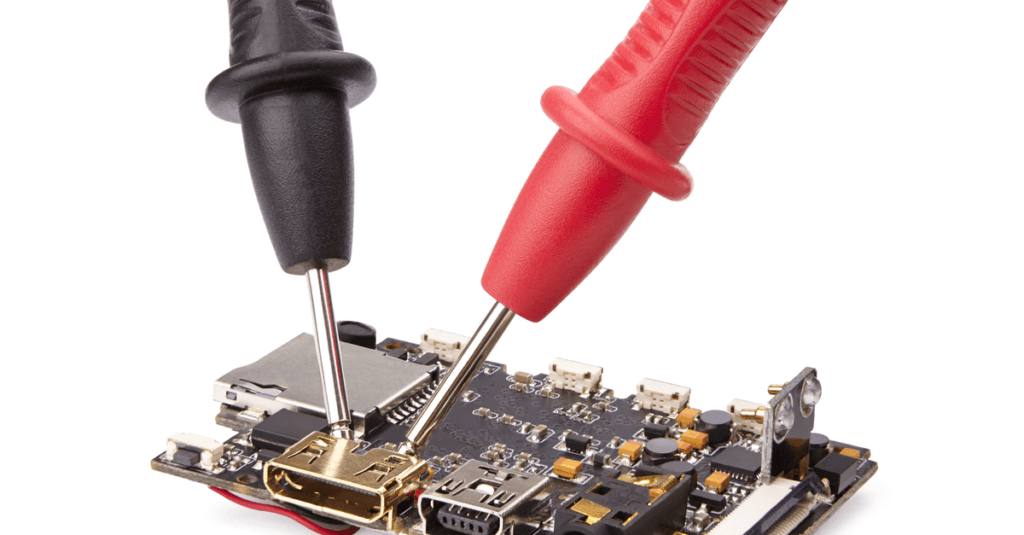
Suppose a PCB is not working, and you suspect a short. Set your multimeter to continuity mode and check across points on the board. If the meter beeps, there’s a connection (maybe a solder bridge). This is something a logic probe cannot do.
Common Mistake: Wrong Range Selection
A common beginner error is choosing the wrong measurement range. For example, measuring high voltage with a low range can damage the meter. Always start with a higher range and step down.
Pros And Cons Of Logic Probe
No tool is perfect. Here’s a balanced view on logic probes.
Advantages
- Simple to use: Just touch and read the LED.
- Fast troubleshooting: Instantly shows logic state.
- Safe for sensitive chips: Very little current draw.
- Pulse detection: Some can show activity or clock signals.
- Inexpensive: Basic models are affordable.
Disadvantages
- Only for digital circuits: Not useful for analog signals.
- No numeric values: Only “high,” “low,” or “pulse.”
- Limited to TTL/CMOS: May not work with very low voltage logic.
- Cannot measure voltage or current: For values, you need a multimeter.
Pros And Cons Of Multimeter
Here’s what you should know about multimeters.
Advantages
- Very versatile: Measures voltage, current, resistance, and more.
- Works with analog and digital: Useful in almost any circuit.
- Gives exact numbers: See real values, not just “on/off.”
- Advanced features: Some models test frequency, temperature, or transistors.
- Easy to find: Available in many price ranges.
Disadvantages
- Slower for digital logic: Cannot show pulses or quick changes.
- Can load circuits: Drawing too much current can affect small chips.
- More complex settings: Wrong setting can damage meter or circuit.
- Cannot show logic state directly: No “high/low” LED for fast checks.
Detailed Comparison: Logic Probe Vs Multimeter
To help you see the practical differences, let’s compare the two tools side by side in real-world scenarios.
| Scenario | Logic Probe | Multimeter |
|---|---|---|
| Testing a microcontroller output pin | Shows high/low/pulse instantly | Measures voltage (may be unclear for logic state) |
| Checking a resistor value | Not possible | Shows exact resistance in ohms |
| Finding a broken wire | Not possible | Continuity test with beep |
| Troubleshooting a clock signal | Pulse LED flashes | Cannot show frequency or quick pulses |
| Testing a battery | Not possible | Measures voltage directly |
Which Tool Should You Buy First?
If you are just starting with electronics, a multimeter is the better first purchase. It is useful for almost every type of circuit and helps with both digital and analog projects. Even experienced engineers use their multimeter daily.
A logic probe is a good second tool, especially if you work a lot with digital circuits, microcontrollers, or computers. It makes digital troubleshooting much faster.
Pro Tip: Build Your Own Logic Probe
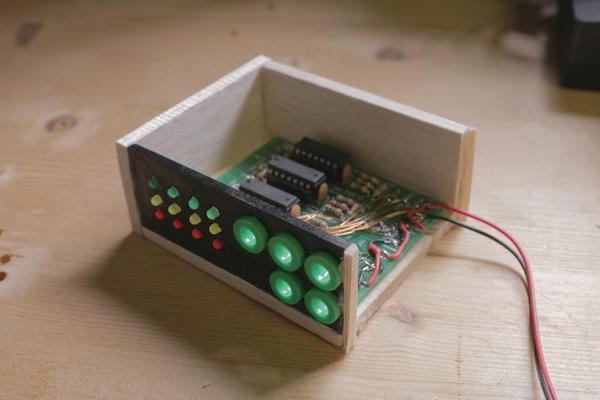
For hobbyists, building a simple logic probe is a great learning project. There are many guides online, and you can use just a few components like LEDs, resistors, and a transistor. This helps you understand how probes work and lets you customize it for your needs.
When To Use Both Tools Together
Some problems need both a logic probe and a multimeter. For example, if a digital circuit is not working, you might:
- Use the multimeter to check if the power supply is correct.
- Use the logic probe to see if the chip is outputting the right logic signals.
- If something is wrong, use the multimeter to check for broken connections or wrong resistor values.
Knowing when to switch tools can save you a lot of time and avoid frustration.
Credit: maker.pro
Logic Probe And Multimeter In Professional Work
In professional electronics labs, engineers use both tools. For quick checks on digital boards, a logic probe is faster than setting up an oscilloscope. For detailed measurements, a multimeter is essential. Some advanced multimeters now include basic logic testing, but they are not as fast or easy to use as a separate logic probe.
Professional repair technicians often keep both tools in their toolbox. In high-speed digital design, even more advanced tools like oscilloscopes or logic analyzers are used, but the basic logic probe and multimeter are still essential for first-level checks.
Key Factors To Consider When Choosing
If you want to buy or use one of these tools, think about:
- Type of circuits: Mostly digital? Get a logic probe. Mix of analog/digital? Get a multimeter.
- Budget: Multimeters come in all price ranges. Basic logic probes are cheap.
- Features needed: Do you need numeric values or just logic state?
- Skill level: Multimeters take more practice to use safely.
Avoiding Common Buyer Mistakes
- Buying a logic probe for analog circuits: It won’t help with things like audio, sensors, or power circuits.
- Choosing a multimeter without needed ranges: Some cheap meters do not measure small currents or have poor accuracy.
- Ignoring input protection: Make sure your multimeter is rated for the voltages you will test.
- Forgetting about probes quality: Cheap probes can break or give false readings.
How To Use Each Tool Safely
Working with electronics always has some risks. Here are simple safety tips:
- Always check your multimeter settings before measuring voltage or current.
- Do not use a logic probe on high-voltage circuits. They are for low-voltage digital logic only.
- Turn off power when connecting or disconnecting test leads.
- Use one hand when possible to avoid current passing through your body.
- Inspect your probes for damage or loose wires.
Real-world Examples And Case Studies
Let’s look at some real cases where the right tool makes a difference.
Case 1: Fixing A Digital Clock
A digital clock stops working. The owner suspects the chip is not receiving pulses. Using a logic probe, you quickly see that the clock line is stuck low (the “low” LED is always on). You trace back and find a broken crystal.
Replacing it fixes the clock.
Case 2: Diagnosing A Dead Power Supply
A device won’t turn on. With a multimeter, you measure the voltage at the power input and see zero volts. Checking the fuse with the continuity test, you find it is blown. Replacing the fuse restores power.
Case 3: Microcontroller Not Responding
A microcontroller board is not responding to inputs. You use a logic probe to check the input pins—they show “high” when they should change with a button press. Using the multimeter, you test the button circuit and find a broken wire.
These examples show that both tools have their place, and using them together solves problems faster.
Credit: www.techtownforum.com
Future Trends: Will These Tools Change?
Electronics are getting more complex, but the logic probe and multimeter remain important. Newer versions have more features—digital displays, sound, or even USB connectivity. Some smartphone-based multimeters and logic probes are now available.
However, the basic idea stays the same: use the right tool for the right job. Even as technology advances, learning the basics of these tools will always help you.
If you want to see how professional engineers use these tools in the field, check resources like the Wikipedia Multimeter page for more background.
Frequently Asked Questions
What Is The Main Difference Between A Logic Probe And A Multimeter?
The main difference is that a logic probe is designed to test digital signals (high, low, pulse), while a multimeter measures electrical values like voltage, current, and resistance. Logic probes give fast, simple answers in digital circuits; multimeters give exact numbers and work in all kinds of circuits.
Can A Multimeter Replace A Logic Probe?
No, a multimeter cannot fully replace a logic probe in digital troubleshooting. While a multimeter can measure voltage at a pin, it cannot easily show fast changes or pulses. A logic probe is much faster for finding problems in digital circuits.
Is It Safe To Use A Logic Probe On Any Circuit?
Logic probes are safe for low-voltage digital circuits, such as TTL or CMOS chips. Do not use them on high-voltage or mains-powered circuits. Always check the voltage rating before use to avoid damaging the probe or the circuit.
Do I Need Both A Logic Probe And A Multimeter?
If you work with both analog and digital electronics, it is best to have both tools. A multimeter handles general measurements, while a logic probe makes digital troubleshooting much faster and easier.
Are There Advanced Tools That Combine Both Functions?
Some modern multimeters offer basic logic testing, and some advanced logic probes can show voltage levels. However, they are usually not as effective as the dedicated tool for each task. For best results, use each tool for its main purpose.
Choosing between a logic probe and a multimeter does not have to be confusing. Knowing their strengths, limitations, and ideal uses will help you solve problems faster and with more confidence. Whether you are a student, hobbyist, or working professional, understanding these tools is a key step in mastering electronics.