Many auto technicians and car enthusiasts talk about Power Probe and Snap-on tools. Both names are well-known in the automotive world, but they serve different needs. Choosing between them can feel confusing, especially if you are new to car repair or want to invest in tools that last. This article breaks down what makes each brand unique, how their products work, and what you really need to know before buying. You will learn not just the basics, but also some practical tips that many beginners overlook.
What Is Power Probe?
Power Probe is a company known for its automotive electrical testing tools. Their products help mechanics trace wires, check circuits, and find problems in car electrical systems quickly. The most popular tool is the Power Probe tester, which can test voltage, continuity, and even power up components directly.
One thing that makes Power Probe tools stand out is their multi-function design. Instead of carrying separate tools for voltage, ground, and continuity, you can use one device. This saves time and space in your toolbox. Many models come with a long wire, so you can reach different parts of the car without moving the tool.
Another key point is that Power Probe devices often include a built-in flashlight and a loud buzzer. This is helpful when working under the hood or in dark spaces. You do not need to hold a separate light, which leaves your hands free to work.
What Is Snap-on?
Snap-on is a giant in the world of professional tools. The company has been making tools since 1920, and their products are famous for high quality and long life. Mechanics trust Snap-on wrenches, sockets, screwdrivers, and also their electrical diagnostic tools.
Snap-on does not focus only on electrical testing. Their catalog includes everything from hand tools to diagnostic scanners and even heavy-duty equipment. The tools are designed for daily use in busy workshops, so durability is a top priority.
A special thing about Snap-on is their lifetime warranty on many hand tools. If a wrench or socket breaks, you can often get a replacement with no questions asked. This is one reason many professionals choose Snap-on even though the price is higher.
Credit: sep.snapon.com
Key Product Comparison
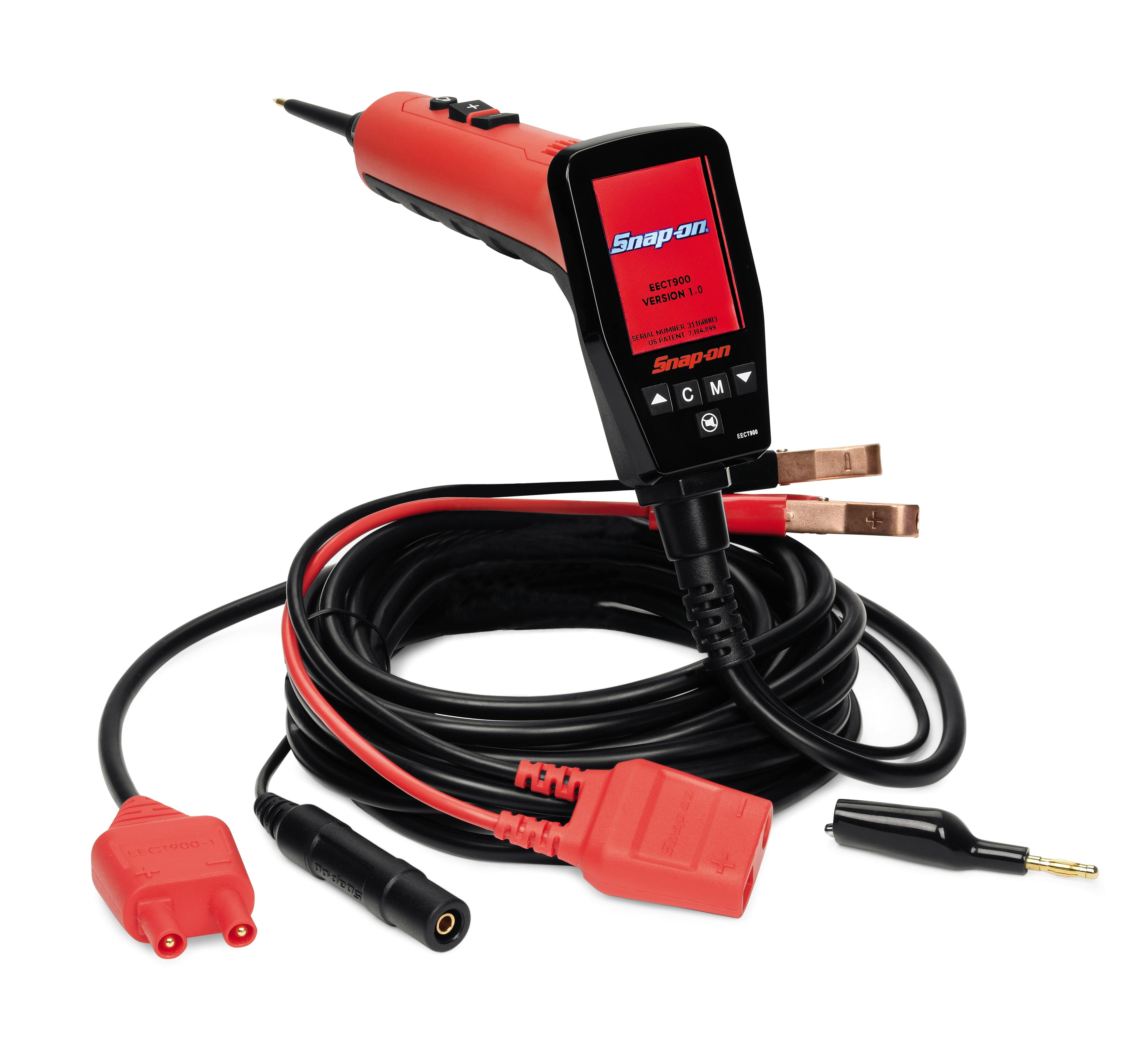
To really understand the difference, let’s compare the most popular electrical tools from each brand: the Power Probe IV and the Snap-on EECT900 Multimeter.
| Feature | Power Probe IV | Snap-on EECT900 |
|---|---|---|
| Primary Use | Automotive circuit testing | General electrical measurement |
| Voltage Range | 0-70V | 0-600V |
| Continuity Test | Yes | Yes |
| Power Supply | Car battery | 9V battery |
| Special Features | Power up components, built-in flashlight, tone | Auto-ranging, data hold, LCD backlight |
| Price Range | $$ | $$$ |
Main Uses For Each Brand
Power Probe: Hands-on Electrical Diagnosis
If you work on car electrical problems, Power Probe tools are made for you. Here’s where they shine:
- Tracing Wires: You can quickly find breaks in wires or bad connections.
- Testing Components: Power up lights, fans, or relays right from the tool to see if they work.
- Checking Grounds: Find weak grounds, which are a common cause of electrical issues.
Many beginners miss that Power Probe can inject power directly into a circuit. This means you do not need to run wires from the battery or use jumper cables for testing. It speeds up diagnosis and often finds faults that a regular multimeter would miss.
Snap-on: All-purpose Shop Tools
Snap-on tools are not just for electrical work. They cover almost every job in a repair shop:
- Hand Tools: Wrenches, sockets, pliers, and more.
- Diagnostic Equipment: Scanners for check engine lights, battery testers, multimeters.
- Specialty Tools: For brakes, suspension, engines, and other systems.
Snap-on’s multimeters and diagnostic tools are made for deep testing. They give accurate readings for voltage, resistance, and amperage. If you need to measure high voltages or do electrical repairs outside cars (like in a home), Snap-on’s range is broader.

Credit: www.youtube.com
Build Quality And Durability
Both brands have a strong reputation, but there are differences in how they build their tools.
Power Probe
- Plastic housing: Feels solid, but not as heavy as Snap-on tools.
- Wire length: Usually 20 feet or more, flexible for reaching around a car.
- Connectors: Clips and probes are sturdy, but some users report wear after years of heavy use.
Snap-on
- Metal and rubber build: Tools are heavier and feel premium.
- Electrical tools: Designed to survive drops, spills, and daily rough use.
- Lifetime warranty: Covers most hand tools, but not all electronics.
A non-obvious insight: Power Probe’s design is very focused. It is great for cars but not always the best for motorcycles or boats, where connectors and voltages might differ. Snap-on’s tools are often more universal but do not always have the “one-touch” features of Power Probe.
Price Differences
Many buyers notice Snap-on tools cost more. Is the higher price worth it?
- Power Probe IV: Usually around $150-$200.
- Snap-on EECT900: Often $250 or more.
- Hand tools: Snap-on sockets and wrenches can be 2-3 times more expensive than standard brands.
The extra cost of Snap-on comes from their warranty, build quality, and brand reputation. For a professional mechanic who uses tools all day, every day, this can make sense. For DIY or beginner users, Power Probe offers more features for the price.

Credit: www.youtube.com
Practical Scenarios: Which Should You Choose?
Scenario 1: You Mostly Repair Car Electrical Problems
A Power Probe IV is often the better choice. It can quickly test wires, find bad grounds, and power up parts. You finish jobs faster, and the tool pays for itself with saved time.
Scenario 2: You Need A Tool For Many Types Of Electrical Work
The Snap-on EECT900 multimeter is more flexible. It works in cars, motorcycles, boats, and even home circuits. It is also safer for higher voltages.
Scenario 3: You Want The Best Hand Tools For Your Shop
Go with Snap-on. Their sockets, wrenches, and pliers are top quality and last for decades. If you are starting a shop or plan to work as a mechanic long-term, Snap-on tools are a solid investment.
Scenario 4: You Are On A Tight Budget
Power Probe gives you more features for less money, especially if your main need is car electrical testing. You can always add more Snap-on tools as your skills and budget grow.
User Experience And Learning Curve
New users sometimes think a Power Probe is just a fancy test light. In reality, it does much more. The learning curve is gentle, but you should read the manual and watch a few online videos to get the most out of it.
One mistake beginners make is not understanding the power injection feature. If used carelessly, you can short out a circuit or damage a control module. Always check the wiring diagram before sending power.
Snap-on’s multimeters are similar to other brands, so if you have used a basic multimeter before, you’ll feel at home. The advanced features (like min/max data hold or true RMS) might take extra practice. Snap-on often provides training for their diagnostic scanners, but not always for hand-held meters.
Table: Common Features At A Glance
Here’s a quick look at features you find on most Power Probe and Snap-on electrical tools.
| Feature | Power Probe IV | Snap-on EECT900 |
|---|---|---|
| Continuity Check | Yes | Yes |
| Diode Testing | No | Yes |
| Component Activation | Yes | No |
| Auto-ranging | No | Yes |
| Backlight | Yes | Yes |
| Data Hold | No | Yes |
| Safety Ratings | CAT III 48V | CAT III 600V |
| Battery Test Function | No | Yes |
Hidden Benefits And Downsides
Power Probe
Hidden Benefits:
- Saves time by combining many tests into one tool.
- Long wire lets you reach fuses, taillights, and under-dash wiring without moving.
- Great for finding parasitic drains, which can kill a car battery overnight.
Downsides:
- Not safe for high-voltage circuits (like hybrids or home wiring).
- If you inject power in the wrong place, you can damage a computer module.
Snap-on
Hidden Benefits:
- More universal—can be used in cars, homes, and industrial settings.
- High accuracy and auto-ranging make it safer for beginners.
- Warranty covers accidental damage for most hand tools.
Downsides:
- Higher cost, especially for full sets.
- Some advanced features may go unused if you only work on cars.
What Matters Most When Choosing?
Choosing between Power Probe and Snap-on depends on several key factors. Here are some things to consider:
- Type of Work: If you mostly fix cars, Power Probe is more specialized. For general electrical, Snap-on’s range is better.
- Budget: Power Probe costs less for the same job, but Snap-on tools often last longer.
- Frequency of Use: Daily use in a busy shop? Snap-on’s durability pays off. Weekend DIY? Power Probe is enough.
- Training and Support: Snap-on has better training for complex tools. Power Probe is simpler to learn.
- Warranty: Snap-on’s hand tool warranty is legendary. Power Probe covers defects but not the same way.
A common mistake is buying a tool just because it is famous. Think carefully about your real needs. A tool is only valuable if you use it often.
Real-world Examples
Example 1: Diagnosing A Dead Headlight
With a Power Probe, you can check for voltage at the bulb, the switch, and the fuse in seconds. You can also send power directly to the bulb to see if it lights up. With a Snap-on multimeter, you would check voltage at each point but cannot power up the bulb unless you use jumper wires.
Example 2: Checking Home Outlets
A Snap-on meter is safe for 120V or 240V outlets. Power Probe tools are not rated for home AC circuits and could be dangerous.
Example 3: Finding A Parasitic Battery Drain
Power Probe can help find small drains by checking each fuse and circuit. However, Snap-on’s clamp meters or ammeters are more precise for very low currents.
How Do Professionals Decide?
Most professional mechanics own both brands. They use Power Probe for quick car electrical jobs and Snap-on for everything else. Many shops buy Snap-on hand tools as a set, then add Power Probe devices for diagnosis.
One insight that many new techs miss is that shops often allow techs to finance Snap-on tools. This spreads the cost over months, making it easier to own high-end tools early in your career.
Customer Support And Warranty
Snap-on is famous for their warranty. If your wrench breaks, a Snap-on truck visits your shop and swaps it. For electrical tools, the warranty is shorter—usually one year. Power Probe offers a one-year limited warranty. For most users, both companies respond quickly to emails or phone calls.
Updates And Technology
Snap-on’s diagnostic tools and meters are updated regularly. Their scan tools get new software every year. Power Probe also updates their testers, adding features like better displays or faster power-up. Before buying, check if you are getting the latest version.
Community And Resources
You can find many guides, forums, and YouTube videos about both brands. Snap-on has a bigger community, so if you need help with a tool, it is easier to find answers. Power Probe’s official site also has training videos, but the user community is smaller.
For more background on both brands and their history, visit Wikipedia.
Frequently Asked Questions
Is Power Probe Safe To Use On All Vehicles?
Power Probe tools are safe for standard 12V and 24V automotive systems. You should not use them on high-voltage hybrid or electric car circuits, or on home electrical wiring. Always read the manual and check the voltage rating before testing.
Does Snap-on Really Offer A Lifetime Warranty On Everything?
Snap-on offers a lifetime warranty on most hand tools like wrenches, sockets, and screwdrivers. Diagnostic and electrical tools usually have a one-year warranty. Always check the specific policy for your tool.
Can I Use Power Probe Tools For Home Electrical Work?
No, Power Probe testers are not rated for home AC circuits. They are designed for low-voltage DC automotive systems only. For home wiring, use a tool with a higher safety rating, such as a Snap-on multimeter.
Why Are Snap-on Tools More Expensive?
Snap-on tools cost more because of high-quality materials, advanced engineering, and strong warranties. They are built for daily use by professionals, which requires higher durability.
Should I Buy Both Power Probe And Snap-on Tools?
If you do a wide range of repairs, owning both can be helpful. Power Probe is great for quick car electrical diagnosis, while Snap-on covers general testing and other shop needs. Many professionals use both for maximum flexibility.
Final Thoughts
Choosing between Power Probe and Snap-on is not just about brand loyalty. It comes down to your real needs, the type of work you do, and your budget. Power Probe offers speed and simplicity for car electrical problems, while Snap-on provides universal tools with unmatched durability. Many experts recommend starting with a Power Probe for basic diagnosis, then adding Snap-on tools as your skills and workload grow. Remember, the best tool is the one you understand, use often, and can trust to do the job right every time.