Sanwa Vs Fluke: A Detailed Comparison For Every Multimeter User
If you work with electronics, electricity, or even simple DIY repairs, a reliable multimeter is your best friend. Two brands stand out in this field: Sanwa and Fluke. Both have loyal fans and strong reputations, but which one is better for you? This article will give you a clear, complete comparison—so you can choose with confidence. Whether you’re a student, a beginner, or an experienced professional, you’ll find practical advice and real-world insights here.
Why Sanwa And Fluke Are So Popular
Before comparing, let’s understand why these two names come up again and again.
Fluke is often called the “gold standard” for multimeters. The company started in the US in 1948 and quickly built a reputation for tough, accurate, and innovative tools. Electricians, engineers, and technicians around the world trust Fluke for both industrial and home use.
Sanwa is a Japanese company with over 70 years of history. They are famous for making reliable, easy-to-use meters at a reasonable price. Many people start with a Sanwa, but professionals use them too, especially in Asia and Europe.
You’ll see both brands in toolboxes—from classrooms to factories. But what sets them apart? Let’s look deeper.
Build Quality And Durability
Build quality is often the first thing people notice. If your meter feels cheap, you won’t trust it for long.
Fluke meters are famous for their solid, rugged design. Most models use high-impact plastic, rubber protection around the edges, and sturdy buttons. They can handle drops, knocks, and harsh environments. For example, the Fluke 87V can survive a 1-meter drop onto concrete. Some Fluke models are even rated for more extreme use—like the Fluke 28 II, which is waterproof and dustproof (IP67).
Sanwa meters also offer good build quality, but usually not as heavy-duty as Fluke. The plastic is strong, the screens are clear, and buttons feel solid. However, most Sanwa models are lighter and less “tanky.” This makes them easier to carry but sometimes less robust for tough jobs. Still, Sanwa is much better than cheap no-name brands.
Non-obvious insight: Many users overlook the importance of rotary switch quality. On Fluke, the dial clicks with authority and lasts for years. On Sanwa, it’s smooth but can feel looser on older or cheaper models. If you use the meter daily, this small difference matters over time.
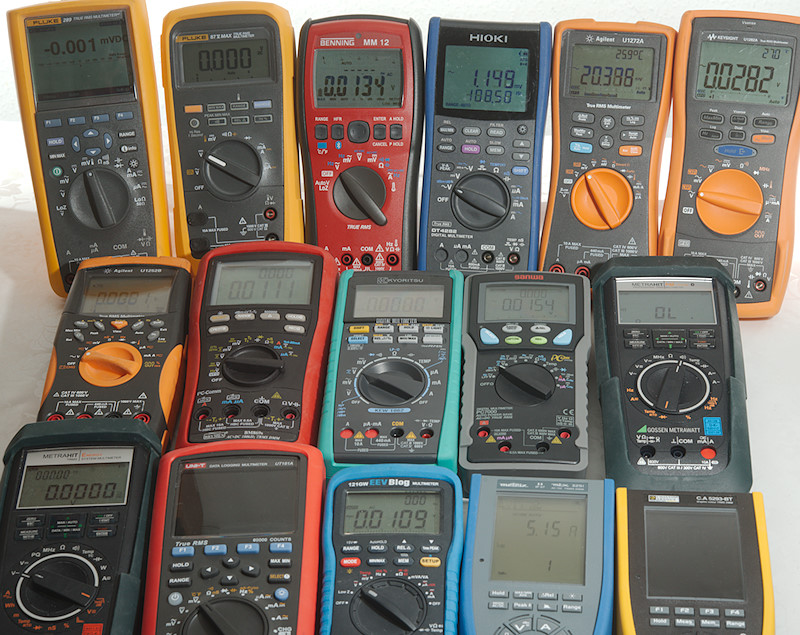
Credit: www.eevblog.com
Accuracy And Measurement Ranges
Accuracy is critical in a multimeter. You want numbers you can trust, especially for safety and precise work.
Fluke leads in this area. Most of their models have basic DC accuracy of 0.05% to 0.5%, depending on the model. Fluke meters also hold calibration longer, so your measurements stay reliable for years. They offer True RMS on many models, which means they measure both “normal” and “messy” AC signals correctly—a must for modern electronics.
Sanwa also gives good accuracy, especially on their higher-end models. The Sanwa CD800a, for example, has 0.7% DC accuracy, which is enough for most tasks. But cheaper Sanwa models (like the YX360 analog series) can be less precise—sometimes 1% or more. Not all Sanwa meters have True RMS, so check before you buy if you work with variable AC signals.
Here is a quick side-by-side comparison of typical specs:
| Feature | Fluke 115 | Sanwa CD800a |
|---|---|---|
| DC Voltage Accuracy | 0.5% | 0.7% |
| AC Voltage Accuracy | 1.0% (True RMS) | 2.0% (Not True RMS) |
| Resistance Accuracy | 0.9% | 1.0% |
| Max Voltage | 600V | 600V |
| Auto Ranging | Yes | Yes |
Practical tip: For most home and hobby use, both brands give enough accuracy. But if you need to measure small signals or work in safety-critical jobs, Fluke’s higher accuracy and True RMS are worth the extra cost.
Safety Features
Electrical work can be dangerous. Good meters protect you from shocks, fires, and wrong readings.
Fluke is famous for safety. All modern Fluke meters meet CAT (category) safety ratings—like CAT III 600V or CAT IV 1000V. These ratings mean the meter can survive big voltage spikes, such as those caused by lightning or industrial equipment. Fluke also uses fused inputs to prevent damage if you accidentally connect the leads wrong.
Sanwa meters also have safety ratings, but usually lower than Fluke. Many Sanwa models are rated CAT II or CAT III, which is fine for most home and light commercial use. Some do have fused inputs, but not all. Always check the back of the meter for the CAT rating—it’s printed there.
Here’s a comparison of safety features:
| Model | Max CAT Rating | Fuse Protection | Input Alert |
|---|---|---|---|
| Fluke 87V | CAT IV 600V / CAT III 1000V | Yes (High Energy) | Yes (Beep/Warning) |
| Sanwa CD800a | CAT III 600V | Yes (Standard) | No |
Non-obvious insight: Some users forget to check probe quality. Fluke probes are thick, well-insulated, and rated for high voltage. Sanwa probes are good, but often thinner and less grippy. Cheap probes are a common cause of accidents—always use the originals.
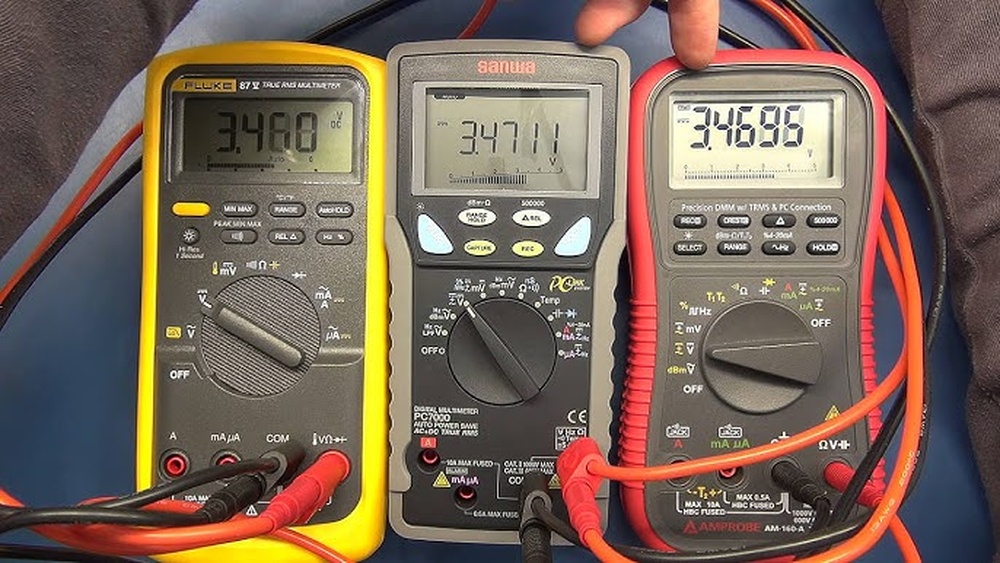
Credit: electrozlab.com
User Interface And Ease Of Use
A simple, clear display and intuitive controls make a big difference, especially if you’re learning or working fast.
Fluke meters usually have large, backlit displays with bold digits. The rotary selector is clear, and buttons are well-labeled. Models like the Fluke 117 add handy features—like a “VoltAlert” to detect live wires without touching.
Sanwa also does well here. Their screens are easy to read, although backlighting is less common on lower-priced models. The controls are straightforward. On some analog Sanwa meters (like the YX360), you get a moving needle instead of a digital readout—great for watching trends, but harder for exact numbers.
Practical tip: Backlight and large digits are a big help if you work in dim places—like inside panels or cars. Fluke usually wins here, but some Sanwa models (CD800a, CD772) now include backlight.
Price And Value For Money
Sanwa is known for being affordable. Most of their digital multimeters cost between $20 and $70. Their analog meters are even cheaper. For students, beginners, or budget-conscious buyers, Sanwa offers great value.
Fluke costs more. Entry-level models (like the Fluke 101) start around $45–$60, but popular models (Fluke 115, 117, 87V) range from $120 to $400. You pay for higher accuracy, better build, and more features.
So, is Fluke worth the extra money? If you use your meter every day, in tough jobs, or need top safety, most professionals say yes. For hobby or home use, Sanwa gives more than enough performance for much less cash.
Common mistake: Some buyers choose the cheapest meter they can find—even from unknown brands. These can be inaccurate and unsafe. Sanwa and Fluke both have a long track record, so stick to one of these if you care about reliability.
Features And Special Functions
Modern meters do more than just measure voltage and current. Let’s compare common and advanced features.
- Auto-ranging: Both Sanwa and Fluke offer auto-ranging models. This means you don’t have to set the measurement range—just select the function, and the meter finds the right range automatically.
- Continuity test: Fluke meters beep loudly when there’s a connection—fast and clear. Sanwa meters also have continuity beep, but sometimes with a short delay.
- Capacitance and frequency measurement: Mid-range and higher Fluke models measure capacitance (for checking capacitors) and frequency (for signals). Some Sanwa models do this too, but it’s less common on cheaper models.
- Data hold: Both brands have a “hold” function to freeze the reading—handy if you can’t see the display while measuring.
- Backlight: Most Fluke meters have a backlit screen. Only some Sanwa models do.
- Non-contact voltage detection: High-end Fluke meters can sense live wires without touching. Sanwa rarely offers this.
Here’s a feature comparison:
| Feature | Fluke 117 | Sanwa CD772 |
|---|---|---|
| Auto-Ranging | Yes | Yes |
| Backlight | Yes | Yes |
| Capacitance | Yes | No |
| Frequency | Yes | No |
| Non-contact Voltage | Yes | No |
Practical tip: Write down which features you actually need. Many beginners buy “feature-packed” meters but only use voltage and continuity. Sometimes simple is better.
Customer Support And Warranty
Fluke offers strong support. Most of their meters come with a 3-year to lifetime warranty (depending on the model and country). If something goes wrong, Fluke can repair or replace the meter. Their website has manuals, videos, and technical support.
Sanwa gives a 1-year warranty on most products. Support is good in Asia, but sometimes slower in other regions. Manuals are clear, but not always in perfect English.
Non-obvious insight: Check if your local distributor offers after-sales service. Warranty can be useless if you have to send the meter overseas for repair.

Credit: www.youtube.com
Real-world Examples And User Experiences
Many people wonder: “Which meter is best for me?” The answer depends on how and where you use it.
For Students and Beginners: A Sanwa CD800a or CD772 is ideal. These meters are accurate enough, safe for low-voltage work, and not too expensive if damaged or lost. Many engineering schools in Asia give Sanwa meters to students.
For Homeowners and DIYers: Both brands work. Fluke 101 or 106 is compact, simple, and very reliable. Sanwa’s YX360 is popular for basic home repairs, especially if you like an analog needle.
For Electricians and Field Technicians: Fluke 115, 117, or 87V are favorites. They meet high safety standards, survive tough use, and have features for modern electrical systems. Sanwa can work if your jobs are not too demanding, but Fluke is the safer bet.
For Electronics Hobbyists: Both brands are good. Fluke’s higher-end models let you measure frequency, capacitance, and even temperature. Sanwa offers good value, but advanced features are less common.
Non-obvious insight: Many professionals own both brands. Fluke for tough jobs, Sanwa as a backup or for lighter tasks.
Common Buying Mistakes
- Ignoring CAT ratings: Some buyers don’t check the safety rating. If you work on high-voltage or industrial circuits, using a low-rated meter is dangerous.
- Choosing too many features: Extra features are nice, but often unused. Focus on accuracy, safety, and durability first.
- Overlooking support and warranty: Saving a few dollars on a “gray market” meter can cost more if something breaks.
- Not considering battery life: Fluke meters often last longer on a single battery due to better efficiency.
- Not checking probe quality: Good probes are as important as the meter itself.
Pros And Cons At A Glance
Here’s a quick summary to help you decide:
Fluke Pros:
- Very durable and rugged
- High accuracy and True RMS
- Strong safety ratings (CAT III/IV)
- Long warranty and good support
- Backlit display, advanced features
Fluke Cons:
- Higher price
- Heavier and larger
- Overkill for basic tasks
Sanwa Pros:
- Good accuracy for the price
- Lightweight and portable
- Affordable, great for students
- Simple and easy to use
- Reliable for basic to medium tasks
Sanwa Cons:
- Lower safety ratings on some models
- Fewer advanced features
- Shorter warranty
- Not as rugged as Fluke
Which Should You Choose?
The best meter is the one that fits your real needs, not just your dreams. If you’re just starting out, or do mostly low-voltage work, Sanwa offers top value. If you work in the field, need maximum safety, or want a meter that lasts for years in tough conditions, Fluke is the way to go.
For many, the answer is not “Sanwa vs Fluke” but “Which one first, and which one next? ” Many professionals eventually own both—a trusty Fluke for serious work, and a handy Sanwa for lighter jobs.
If you want to see technical details and user manuals, visit the official Fluke website: Fluke Official.
Frequently Asked Questions
What Does Cat Rating Mean On A Multimeter?
CAT rating stands for “Category rating.” It shows how much electrical energy the meter can safely handle. CAT I is for electronics; CAT II is for appliances; CAT III is for distribution panels; CAT IV is for outdoor or industrial use. Always match the CAT rating to your job for safety.
Are Sanwa Multimeters Safe For Home Electrical Work?
Yes, most Sanwa meters with CAT II or CAT III ratings are safe for home repairs and basic electrical work. Just avoid using low-rated meters on high-energy circuits (like main panels).
Why Do Professionals Prefer Fluke Multimeters?
Professionals prefer Fluke for their high accuracy, rugged build, advanced safety features, and trusted reputation. In critical jobs, reliability and safety matter more than price.
Do I Need True Rms In A Multimeter?
If you measure normal household AC, standard meters are fine. But for electronics, motors, or variable speed drives, True RMS gives accurate readings on “messy” signals. Fluke offers this on many models; some Sanwa meters do, but not all.
How Long Do Sanwa And Fluke Multimeters Last?
With proper care, both brands last many years. Fluke meters often last 10+ years—even with heavy use. Sanwa meters can also last long, especially if used gently. Battery life is also good on both, but Fluke usually lasts longer between changes.
A good multimeter is an investment in your safety, your confidence, and your results. Whether you choose Sanwa or Fluke, you’re getting a tool trusted by people worldwide. Choose wisely, and your meter will serve you well for years to come.