Oscilloscopes and signal analyzers are two essential tools in electronics and communication engineering. If you work with electronic circuits or need to measure signals, you’ve probably heard of both. But what do they actually do? Which one should you use—and when?
Many beginners confuse them, but each device has a unique role. Let’s explore how they work, where they differ, and how you can choose the right tool for your needs.
What Is An Oscilloscope?
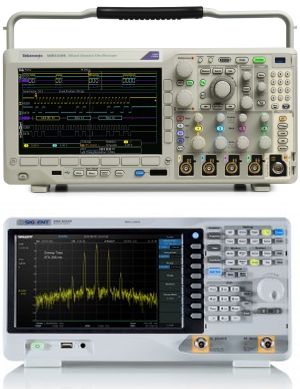
An oscilloscope is a device that shows how signals change over time. Imagine you have an audio signal or a voltage from a sensor; the oscilloscope displays this as a moving graph on a screen. You can see peaks, valleys, and patterns in real time. This is important for troubleshooting circuits, testing designs, or even just checking if a device works.
Modern oscilloscopes are digital and can store data, zoom in on details, and analyze complex waveforms. Most have screens that show amplitude vs. time, so you can see how a signal grows, shrinks, or oscillates. Some advanced models also offer math functions, automatic measurements, and connectivity to computers.
Main Uses
- Debugging circuits: Finding broken or faulty components.
- Measuring signal timing: Checking if signals arrive at the right moment.
- Visualizing waveforms: Seeing exactly what a signal looks like.
Key Features
- Bandwidth: Defines the highest frequency the oscilloscope can measure. Typical lab scopes range from 50 MHz to over 1 GHz.
- Sampling rate: Shows how many points per second are captured. Higher rates mean better detail.
- Channels: Lets you observe multiple signals at once. Standard models have 2–4 channels.
- Triggering: Helps you capture specific events, like a sudden voltage spike.
What Is A Signal Analyzer?
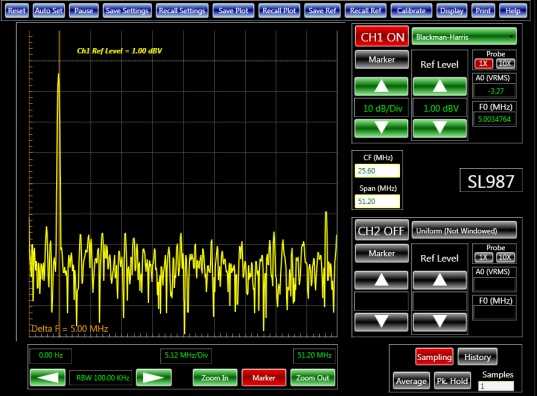
A signal analyzer focuses on what makes up a signal—its frequency, spectrum, and components. Instead of showing changes over time, it shows how much of each frequency is present. This is called frequency domain analysis. If you want to know which frequencies are strong or weak in a signal, a signal analyzer is the tool.
There are several types, including spectrum analyzers, vector signal analyzers, and network analyzers. Most display a graph with amplitude vs. frequency, revealing peaks where certain frequencies are strong. This is crucial for radio, wireless, and communication engineers who need to check signal quality, interference, or harmonics.
Main Uses
- Analyzing wireless signals: Checking if a transmitter is working correctly.
- Finding interference: Detecting unwanted signals in a system.
- Testing frequency response: Measuring how devices react to different frequencies.
Key Features
- Frequency range: Can measure from a few Hz up to tens of GHz.
- Resolution bandwidth: Shows how finely the analyzer separates frequencies.
- Dynamic range: Measures both weak and strong signals without distortion.
- Sweep speed: Determines how fast the analyzer can scan across frequencies.
Credit: www.oscopes.info
Core Differences Between Oscilloscopes And Signal Analyzers
While both tools measure electrical signals, their functions, displays, and specialties are quite different. The table below summarizes their main differences:
| Feature | Oscilloscope | Signal Analyzer |
|---|---|---|
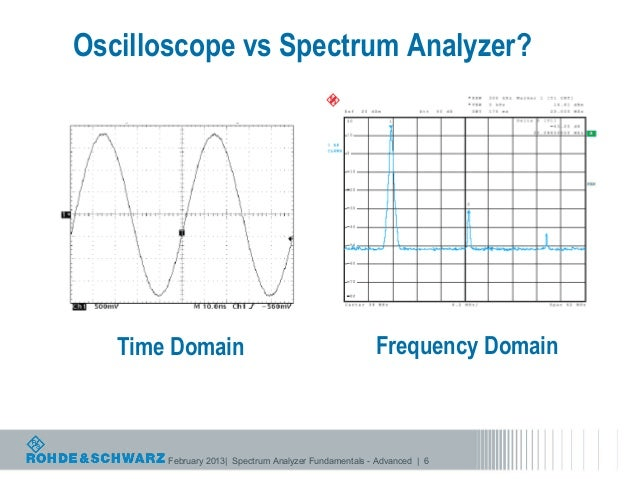
| Measurement Domain | Time domain | Frequency domain |
| Display | Amplitude vs. time | Amplitude vs. frequency |
| Common Uses | Debugging, waveform analysis | Spectrum analysis, interference detection |
| Bandwidth/Frequency Range | 50 MHz–1 GHz (typical) | Up to 26 GHz or more |
| Channels | Usually 2–4 | Usually 1 (sometimes 2) |
| Advanced Features | Math functions, triggers, storage | Modulation analysis, phase noise, channel power |
Real-life Example: Audio Signal Testing
Suppose you are designing an audio amplifier. You want to check if the output matches the input in both shape and frequency.
- With an oscilloscope, you can see the input and output waveforms side by side. If the output is distorted, you’ll spot it easily.
- With a signal analyzer, you can check if unwanted frequencies (noise or harmonics) are present. This helps you fine-tune the circuit for better sound quality.
Credit: www.testandmeasurementtips.com
How Each Device Works
Understanding how these devices operate can help you pick the right tool.
Oscilloscope Working Principle
An oscilloscope samples the voltage of a signal at very high speed. Each sample is plotted on the screen as a dot. By connecting these dots, it forms a waveform. The device can trigger on specific events, so you see only the signals you care about.
Modern digital oscilloscopes convert analog signals into digital data using an Analog-to-Digital Converter (ADC). This allows for features like storing, zooming, and advanced analysis.
Signal Analyzer Working Principle
A signal analyzer takes the input signal and processes it using a Fast Fourier Transform (FFT) or other mathematical methods. This splits the signal into its frequency components. The result is a graph showing the amplitude of each frequency. Engineers can use this to analyze spectrum, identify interference, or measure channel power.
Many signal analyzers allow deep analysis, including modulation quality, phase noise, and spurious emissions. This is especially useful for radio and wireless systems.
Which Device Should You Use?
Choosing between an oscilloscope and a signal analyzer depends on what you need to measure.
- If you need to see how a signal changes over time, use an oscilloscope.
- If you need to analyze what frequencies are present, use a signal analyzer.
Some modern devices combine both functions, but dedicated tools offer more detailed analysis. The next table helps you decide which tool fits your job:
| Task | Recommended Tool |
|---|---|
| Visualize waveform shape | Oscilloscope |
| Detect signal interference | Signal Analyzer |
| Measure timing between events | Oscilloscope |
| Check frequency purity | Signal Analyzer |
| Test radio transmitter | Signal Analyzer |
| Troubleshoot circuit | Oscilloscope |
Credit: threevista.mystrikingly.com
Key Factors To Consider Before Buying
If you’re thinking of buying one of these tools, pay attention to these factors:
- Frequency range: Make sure the device covers the signals you want to measure. Oscilloscopes have limited bandwidth, while signal analyzers can reach much higher frequencies.
- Sampling rate and resolution: Higher rates mean more detail for oscilloscopes; finer resolution means better frequency separation for analyzers.
- Portability: Bench models are powerful but heavy. Handheld versions are easier to carry but may lack features.
- Ease of use: Some devices have touchscreen interfaces and easy menus; others require training.
- Price: Oscilloscopes start under $500 for basic models, while signal analyzers often cost thousands due to complex components.
A common beginner mistake is buying a device with too low a frequency range. Always check your signal requirements before purchasing.
Advanced Features And New Trends
Both oscilloscopes and signal analyzers have seen big improvements in recent years.
Oscilloscope Innovations
- Mixed-signal oscilloscopes (MSO): Can measure both analog and digital signals.
- Deep memory: Stores long signal records for detailed analysis.
- Automated measurements: Instantly calculate rise time, frequency, and more.
Signal Analyzer Innovations
- Real-time spectrum analysis: Captures fast-changing signals instantly.
- Modulation analysis: Checks signal quality for digital communication standards.
- Remote control and connectivity: Allows operation and data sharing from anywhere.
Some companies now offer hybrid devices. These combine time and frequency analysis in one unit, which can be useful for labs or advanced testing.
Practical Insights Most Beginners Miss
- Triggering is critical: Many users ignore trigger settings on oscilloscopes, which can lead to confusing displays. Learning to set a proper trigger can make analysis much easier.
- Resolution bandwidth matters: On signal analyzers, a narrow resolution bandwidth helps you see weak signals next to strong ones. Beginners often leave this setting too wide and miss important details.
- Noise floor is key: Both devices have a minimum detectable signal—called the noise floor. If your signal is too weak, you won’t see it. Always check the noise floor when measuring low-power signals.
Data And Statistics
- Oscilloscope market size: In 2022, the global oscilloscope market reached $2.5 billion, with growth driven by automotive and communications industries.
- Signal analyzer usage: Over 60% of wireless communication labs rely on signal analyzers for spectrum monitoring.
- Bandwidth: High-end oscilloscopes can offer up to 8 GHz bandwidth, while premium signal analyzers can reach 44 GHz or more.
For a deeper look at oscilloscope and signal analyzer technology, you can visit Wikipedia.
Frequently Asked Questions
What Is The Main Difference Between An Oscilloscope And A Signal Analyzer?
The main difference is the measurement domain. An oscilloscope shows signals in the time domain (how they change over time), while a signal analyzer shows signals in the frequency domain (which frequencies are present).
Can I Use An Oscilloscope To Analyze Frequencies?
Oscilloscopes can show repetitive signals and help estimate frequency, but they are not as accurate as signal analyzers for detailed frequency analysis.
Are There Devices That Combine Both Functions?
Yes, some modern instruments offer both time and frequency analysis. However, dedicated oscilloscopes or signal analyzers usually provide more detailed features for their specific tasks.
How Much Do These Devices Cost?
Basic oscilloscopes can cost under $500, while advanced models range from $2,000–$20,000. Signal analyzers are more expensive, often starting around $5,000 and going up to $50,000 for high-frequency models.
Which Tool Should I Use For Wireless Communication Testing?
For wireless communication, a signal analyzer is usually best. It can measure frequency, check signal quality, and detect interference more accurately than an oscilloscope.
Oscilloscopes and signal analyzers are powerful tools for engineers and technicians. Understanding their roles helps you work smarter, avoid mistakes, and get accurate results. Whether you’re building a new device or fixing a broken circuit, choosing the right tool makes all the difference.