When working with electronics, engineers and technicians rely on oscilloscopes to see signals and troubleshoot problems. Today, two main types stand out: MDO (Mixed Domain Oscilloscope) and MSO (Mixed Signal Oscilloscope). If you’re confused about which oscilloscope to choose, you’re not alone. Both offer advanced features, but each is best for different tasks. Knowing their differences can save you time, money, and frustration.
This article will help you understand MDO vs MSO oscilloscope clearly. You’ll learn what makes each unique, how they work, and which suits your needs. We’ll look at real-world examples, practical tips, and common mistakes so you can choose with confidence.
What Is An Oscilloscope?
An oscilloscope is a test tool that shows electrical signals as waves on a screen. You can use it to:
- See how signals change over time
- Measure voltage, frequency, and timing
- Find errors in circuits
Oscilloscopes are essential in fields like electronics, engineering, and research. Modern models can do much more than just display voltage—they analyze digital signals, radio waves, and even complex data.
Understanding Mso Oscilloscopes
MSO stands for Mixed Signal Oscilloscope. This type combines analog and digital channels in one device. Here’s what makes MSOs special:
- Show both analog and digital signals together
- Ideal for debugging systems with microcontrollers, sensors, and digital logic
- Let you see timing relationships between analog and digital events
Key Features Of Mso
- Analog Channels: Usually 2–4, sometimes more. Used for signals like voltage from sensors.
- Digital Channels: Often 8, 16, or even 32. Used for digital data lines, clocks, or logic signals.
- Triggering: Find specific events in both analog and digital signals.
- Protocol Decoding: Decode signals like I2C, SPI, UART, CAN bus.
- Memory Depth: Store large amounts of waveform data for detailed analysis.
Typical Use Cases
- Debugging microcontroller circuits
- Checking timing between sensor data and digital outputs
- Inspecting communication buses (I2C, SPI)
- Finding glitches in digital logic
Example: An engineer uses an MSO to trace a problem in a robot’s control board. They check the analog sensor voltage and digital data from the microcontroller at the same time.
Understanding Mdo Oscilloscopes
MDO stands for Mixed Domain Oscilloscope. This type adds RF analysis to the oscilloscope’s abilities. You can view:
- Analog signals (voltage, time)
- Digital signals (logic, data)
- RF signals (frequency, spectrum)
Key Features Of Mdo
- RF Spectrum Analysis: See frequency content up to several GHz, ideal for wireless signals.
- Time-Correlated Measurements: Match events across analog, digital, and RF domains.
- Flexible Inputs: Connect probes for voltage, logic, and antennas for RF.
- Advanced Triggering: Find events in any domain (analog, digital, RF).
- Protocol Decoding: Decode both digital and some RF communication protocols.
Typical Use Cases
- Debugging wireless devices (WiFi, Bluetooth)
- Analyzing radio frequency interference (RFI)
- Checking timing between analog, digital, and RF events
- Measuring frequency drift in transmitters
Example: A technician uses an MDO to troubleshoot a wireless sensor. They check the analog temperature signal, digital communication to the microcontroller, and RF output to the radio module—all at once.
Mdo Vs Mso: Core Differences
Choosing between an MDO and MSO depends on your needs. Let’s compare the basics:
| Feature | MSO (Mixed Signal) | MDO (Mixed Domain) |
|---|---|---|
| Analog Channels | 2–4 (sometimes more) | 2–4 (sometimes more) |
| Digital Channels | 8–32 | 8–32 |
| RF Spectrum Analysis | No | Yes (up to GHz) |
| Protocol Decoding | Digital only | Digital & some RF |
| Typical Use | Microcontroller, logic circuits | Wireless, radio, mixed signals |
| Price | Lower | Higher |
Non-obvious insight: Many beginners think MSO and MDO are the same, but MDO’s spectrum analysis is a game-changer for wireless and RF work.
When Should You Choose Mso?
If you mostly work with digital systems, an MSO is likely the right tool. Here’s why:
- Digital debugging: MSOs are built for logic, microcontrollers, and digital communication.
- Budget: MSOs cost less than MDOs, since they skip RF hardware.
- Ease of use: Fewer settings make MSOs simpler for beginners.
Practical tip: For projects like Arduino, Raspberry Pi, or sensor modules, MSO is usually enough.
Common Mistakes When Choosing Mso
- Ignoring channel count: If you need to view many signals at once, check the number of digital channels.
- Overlooking protocol support: Not all MSOs decode every protocol. Check compatibility before buying.
- Assuming all MSOs are equal: Quality varies. Look for good memory depth and sample rate.
When Should You Choose Mdo?
If your work involves RF or wireless signals, MDO is the way to go. Here’s why:
- RF analysis: MDO’s built-in spectrum analyzer lets you see frequency content, find interference, and measure signal strength.
- Mixed-domain debugging: Perfect for devices combining analog, digital, and RF (like IoT gadgets).
- Advanced triggering: Can capture rare events across all domains.
Non-obvious insight: Even if you don’t work with RF now, having MDO means you’re ready for future wireless projects.
Common Mistakes When Choosing Mdo
- Underestimating complexity: MDOs have more settings. Beginners may feel overwhelmed.
- Ignoring bandwidth: Not all MDOs cover high frequencies. Check the RF range fits your needs.
- Paying for unused features: If you never use RF, an MDO might be wasted money.
Credit: www.tek.com.cn
Comparing Mdo And Mso: Real-world Scenarios
Let’s see how both oscilloscopes perform in real situations:
Scenario 1: Troubleshooting A Digital Circuit
- MSO: Shows logic states, timing, and protocol data. Easily finds glitches between analog and digital parts.
- MDO: Can do everything MSO does, but extra RF features are unnecessary here.
Scenario 2: Testing A Wireless Device
- MSO: Can check digital and analog signals, but cannot see RF transmission.
- MDO: Shows analog, digital, and RF spectrum. Finds radio interference, measures frequency drift.
Scenario 3: Debugging An Iot Sensor Node
- MSO: Good for microcontroller and sensor debugging.
- MDO: Essential if you need to check radio signal quality or troubleshoot wireless problems.
Example: An IoT engineer finds data loss. With MDO, they spot a spike in RF interference at the same moment data drops—something MSO would miss.
Technical Comparison: Specs And Performance
To help you see the differences at a glance, here’s a technical comparison of typical models:
| Spec | MSO Example | MDO Example |
|---|---|---|
| Bandwidth | 200 MHz – 1 GHz | 200 MHz – 1 GHz (Analog), 3 GHz+ (RF) |
| Sample Rate | Up to 5 GS/s | Up to 5 GS/s (Analog), Up to 3 GHz (RF) |
| Digital Channels | 16 | 16 |
| RF Input | No | Yes |
| Memory Depth | 10 Mpts | 10 Mpts (Analog), 1 Mpts (RF) |
| Price Range | $1,500–$8,000 | $4,000–$20,000+ |
Tip: Always check specs for your application, not just the price or brand.
Important Buying Factors
When choosing between an MDO and MSO, focus on these points:
- Your projects: Do you need to analyze wireless signals, or just digital logic?
- Bandwidth: Higher bandwidth is needed for fast signals or RF work.
- Channel count: How many analog and digital signals will you test at once?
- Memory depth: Deeper memory allows longer or more detailed captures.
- Triggering options: Complex triggers help capture rare or difficult events.
- Protocol support: Make sure your protocols are supported.
Example: If you work in automotive electronics, CAN bus decoding is vital. For wireless devices, spectrum analysis is key.
Future-proofing Your Choice
Technology changes fast. Before you buy, think about future needs:
- Will your projects involve wireless or RF signals later?
- Do you expect to use new digital protocols?
- Is upgradeability important (can you add features later)?
Non-obvious insight: Many buyers regret not choosing a model with upgrade options. Some MDOs let you add extra bandwidth or digital channels later.
Popular Brands And Models
Some trusted oscilloscope brands include:
- Tektronix: Known for both MSO and MDO models, high reliability.
- Keysight (Agilent): Strong RF and digital analysis.
- Rigol: Budget-friendly, good for entry-level MSO.
- Rohde & Schwarz: Advanced RF capabilities, MDO leaders.
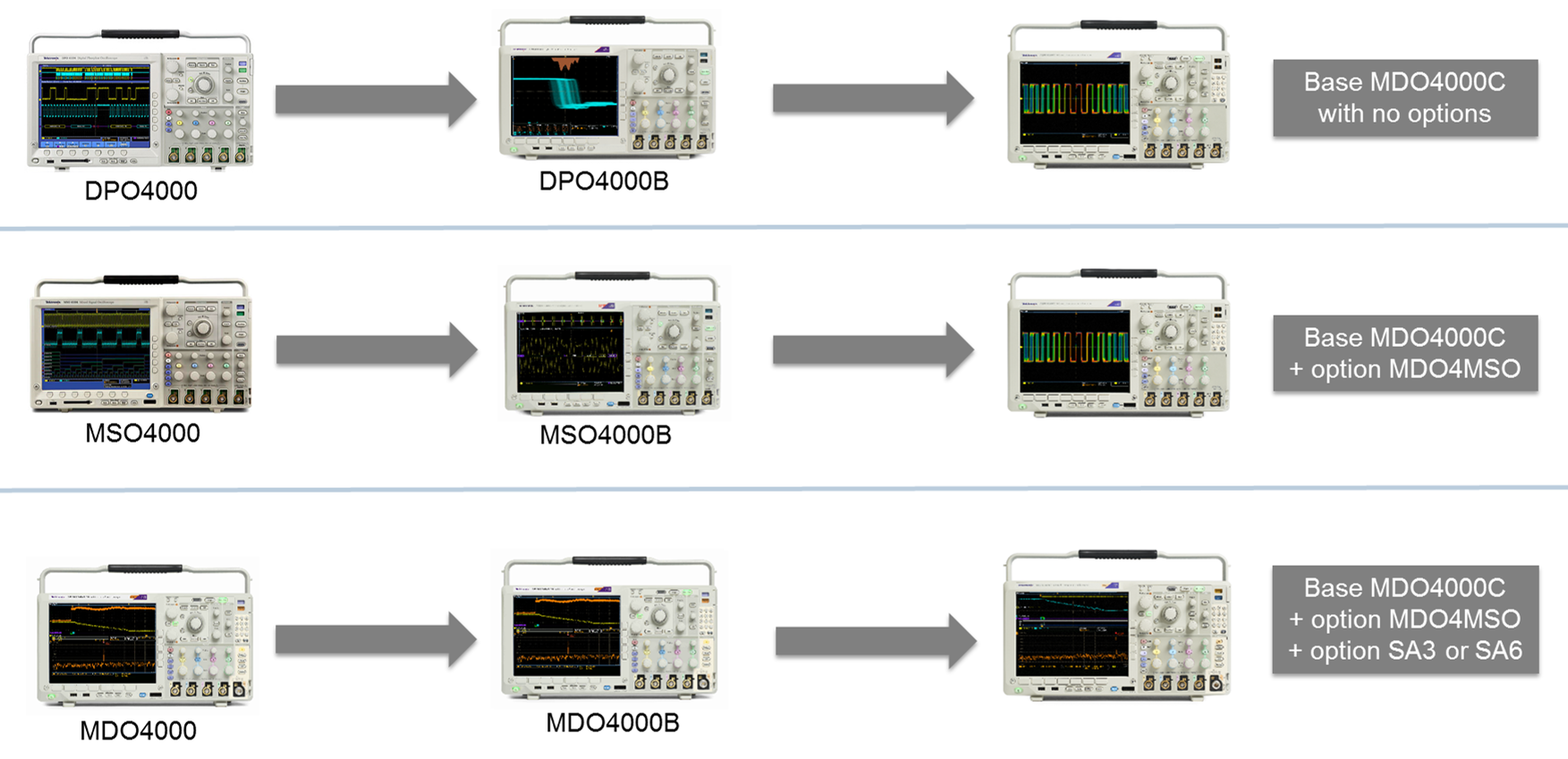
Example: The Tektronix MDO4000 series is popular for mixed-domain analysis, while Rigol MSO5000 is a favorite for affordable digital debugging.
If you want more detailed model comparisons, visit Wikipedia.
Practical Tips For Beginners
- Start simple: If you’re new, MSO is easier to use and cheaper.
- Learn triggers: Mastering triggers saves hours of troubleshooting.
- Use protocol decoding: It speeds up debugging of communication issues.
- Save data: Use memory depth to record long events for later analysis.
- Ask experts: Online forums and user groups are helpful for real-world advice.
Non-obvious insight: Many beginners ignore memory depth, but it can make or break your ability to find rare glitches.
Credit: www.tek.com
Frequently Asked Questions
What Is The Main Difference Between Mdo And Mso Oscilloscopes?
The main difference is that MDO oscilloscopes include RF spectrum analysis for wireless signals, while MSO oscilloscopes focus on analog and digital channels. MDOs are best for mixed-domain projects involving radio, wireless, or frequency analysis.
Can I Use Mso For Rf Signal Analysis?
No, MSOs do not have built-in RF spectrum analysis. They can only show analog and digital signals. If you need to see frequency content or troubleshoot wireless communication, you need an MDO.
Are Mdo Oscilloscopes Harder To Use Than Mso?
Yes, MDOs are more complex because they have extra settings for RF analysis. Beginners may find them harder to operate, but learning the basics can make them manageable. Many brands offer tutorials and guides.
Is It Worth Buying An Mdo If I Only Work With Digital Circuits?
Usually, no. MDOs are more expensive and the RF features will go unused. MSO is better for digital circuits and microcontroller projects. Only buy MDO if you expect to work with wireless or RF signals soon.
How Do I Choose The Right Oscilloscope For My Needs?
Think about your main projects, needed bandwidth, channel count, memory depth, and protocol support. If you need RF analysis, choose MDO. For digital work, MSO is enough. Compare specs and ask for expert advice before buying.
Final Thoughts
Choosing between MDO vs MSO oscilloscope is all about your projects and future goals. For digital and analog circuit debugging, MSO is reliable, affordable, and easy to use. For wireless and mixed-domain analysis, MDO unlocks powerful RF tools that MSO cannot match. Always check specs, ask experts, and plan for future needs. With the right oscilloscope, you’ll save time and solve problems faster—making every project smoother and more successful.
Credit: electrozlab.com