When you think about digital multimeters or electrical measurement tools, two names almost always come up: Hioki and Fluke. Both have strong reputations, but which brand should you trust for your work or projects? This is a common question for engineers, electricians, students, and even home users. Choosing the wrong tool can waste money, time, and even cause dangerous mistakes.
Understanding the differences between Hioki and Fluke is not just about features or price. It’s about reliability, safety, ease of use, and the type of measurements you need. Over the years, these brands have built loyal followings for good reasons.
Still, their strengths are not always the same. Let’s dive deep into what really sets them apart, where they excel, and what you should consider before buying.
Brand Backgrounds
Choosing between Hioki and Fluke is easier when you know their history and philosophy.
Hioki
Hioki is a Japanese company founded in 1935. They focus on research, innovation, and high-precision measuring instruments. Hioki’s products are known for accuracy and advanced technology. They make a wide range of tools, including digital multimeters, clamp meters, insulation testers, and data loggers. Most Hioki devices are designed for both industrial and laboratory use.
Hioki’s design approach centers on:
- High accuracy
- Advanced safety features
- User-friendly interfaces
- Long-term reliability
Hioki also invests heavily in research and development. Their meters often have unique features not found on other brands, especially in the high-end models.
Fluke
Fluke is an American brand, established in 1948. The company is famous for building rugged, durable, and reliable measurement tools. Fluke is the “go-to” brand for field electricians, HVAC technicians, and engineers worldwide.
Fluke’s strengths include:
- Heavy-duty build quality
- Safety certification for tough environments
- Simple, intuitive operation
- Global support and service
Fluke tools are often the standard in industrial and commercial settings. Many electricians trust Fluke because their meters “just work” even under rough conditions.
Product Range And Variety
Both Hioki and Fluke offer many types of electrical measurement tools, but their focus areas sometimes differ.
Hioki’s Range
Hioki’s lineup includes:
- Digital multimeters (DMMs)
- Clamp meters
- Insulation testers
- Power analyzers
- Battery testers
- Data loggers
- Earth testers
Hioki often offers more models with specialized functions. For example, their power analyzers are widely used in research labs. Hioki’s battery testers are popular in automotive and renewable energy sectors.
Fluke’s Range
Fluke’s lineup covers:
- Digital multimeters (DMMs)
- Clamp meters
- Thermal imagers
- Insulation testers
- Process calibration tools
- Electrical testers
- Scope meters
Fluke is best known for their DMMs and clamp meters, but their thermal imagers and process calibrators are also industry standards. Fluke tends to focus on robustness and ease-of-use, making their tools great for fieldwork.
Build Quality And Durability
A tool’s build quality affects its lifespan and performance. Hioki and Fluke both have strong reputations, but with different priorities.
Hioki’s Approach
Hioki meters have a reputation for precision engineering. Their construction is solid, but they are generally lighter and more compact than Fluke. Hioki focuses on materials that reduce weight but maintain strength. Many Hioki devices have reinforced cases and are drop-tested, but not always to the extreme levels Fluke uses.
Hioki also pays close attention to button layout, screen clarity, and overall ergonomics. This makes long measurement sessions less tiring. In labs or clean environments, Hioki meters often look new even after years of use.
Fluke’s Approach
Fluke is famous for making “tough” tools. Drop a Fluke meter from a ladder, and it usually survives without problems. Fluke uses thick rubber holsters around their meters. Their screens are usually recessed or protected by raised edges.
Fluke tools are designed for harsh conditions—think dusty factories, wet basements, or construction sites. Many users report using the same Fluke meter for 10 or even 20 years with only minor wear.
Real-world Comparison Table
Here’s a practical view of build quality features:
| Feature | Hioki | Fluke |
|---|---|---|
| Drop Resistance | 1 meter (typical) | 2+ meters (typical) |
| Weight | Lighter | Heavier |
| Screen Protection | Reinforced glass | Recessed, rubber edges |
| Button Durability | Soft-touch, precise | Large, tactile |
Accuracy And Measurement Performance
This is where Hioki often stands out, but Fluke is not far behind.
Hioki’s Strength
Hioki meters are famous for high accuracy and stable readings. Their high-end models can measure tiny voltage or current changes, which is important for sensitive electronics or research. Hioki often includes features like True RMS, high-resolution displays, and fast response times.
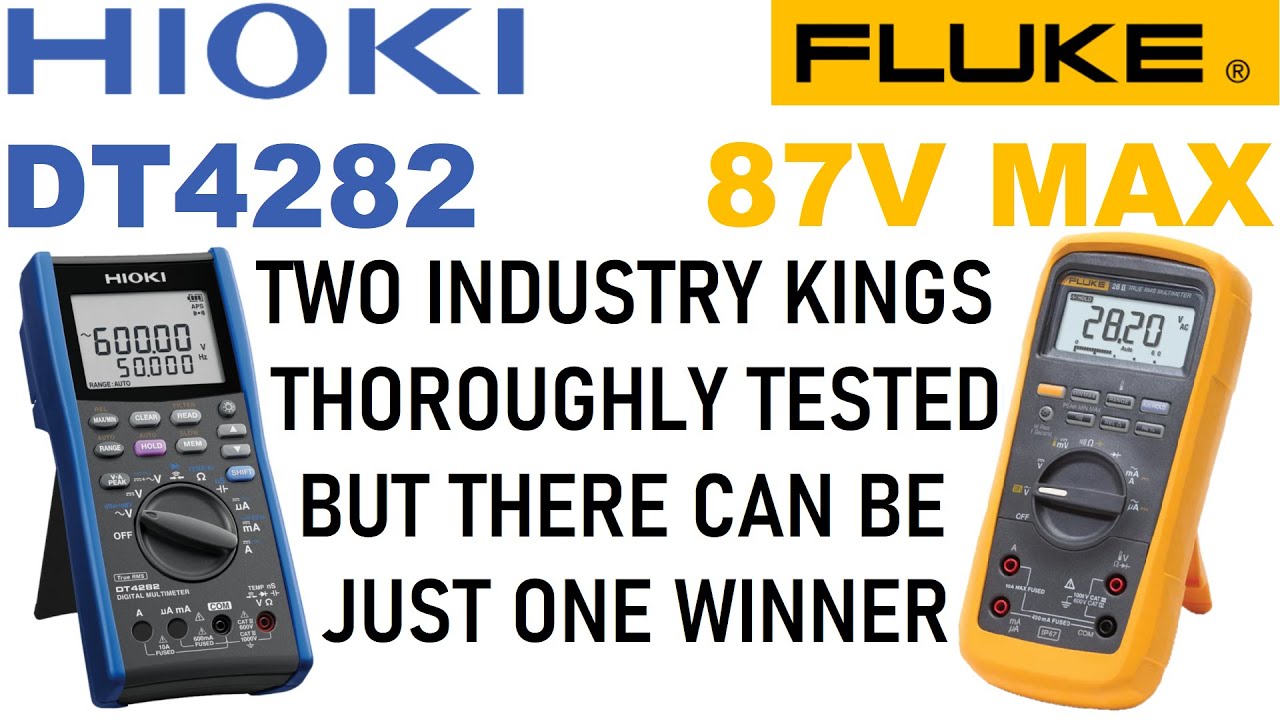
For example, the Hioki DT4282 DMM offers:
- Basic DC voltage accuracy: ±0.025%
- High-resolution display (60,000 counts)
- Fast bar graph response
Hioki is also known for low burden voltage in current measurement. This means less voltage loss when measuring current—a detail many beginners miss but is crucial in precision work.
Fluke’s Strength
Fluke meters are also very accurate, especially in their upper models. The popular Fluke 87V has:
- Basic DC voltage accuracy: ±0.05%
- 6,000/20,000 count display
- True RMS capability
Fluke meters focus on reliable accuracy in real-world settings—they stay accurate even after years of heavy use. Fluke calibrates their tools to withstand temperature, humidity, and vibration changes that might affect cheaper brands.
Practical Insight
Beginners often overlook the importance of resolution vs. accuracy. Higher resolution means you see smaller changes, but true accuracy is about how close the reading is to reality. Hioki often has higher resolution, but Fluke’s accuracy is more stable in rough conditions.
Credit: www.youtube.com
Safety Features
Electrical measurement can be dangerous. Both brands prioritize safety, but their approaches differ.
Hioki Safety
Hioki meters usually meet CAT III and CAT IV safety ratings. This means they are safe for use in industrial and utility environments. Hioki often includes features like:
- Fuse-blown indicators
- Input alerts (warn if leads are in the wrong port)
- Overload protection
- Non-contact voltage detection
Many Hioki models use double insulation and have clear warning labels. Hioki’s safety is excellent, but some models do not match Fluke’s extreme ruggedness.
Fluke Safety
Fluke is known for industry-leading safety standards. Most Fluke meters are tested for:
- CAT III 1000V / CAT IV 600V (or better)
- Independent lab certifications (UL, CSA, TUV)
- High-energy fuse protection
- Audible and visual alerts for dangerous voltage
- Overvoltage protection
Fluke often exceeds basic safety requirements. For example, their fuses are rated for higher breaking capacity, reducing the risk of internal explosions.
Safety Certification Table
Here’s a summary of typical safety features:
| Safety Feature | Hioki | Fluke |
|---|---|---|
| CAT Rating (typical) | CAT III/IV | CAT III/IV |
| Third-party Certs | Some models | Most models |
| Fuse Type | High-energy (many models) | Ultra-high energy (all models) |
| Input Alert | Yes | Yes |
User Interface And Ease Of Use
How easy is it to use a Hioki or Fluke meter? This can make a big difference in speed and comfort.
Hioki
Hioki meters often have large, clear displays with high contrast. Many models use soft-touch buttons and rotary selectors that feel smooth and precise. Hioki’s screen layouts are well organized, sometimes with color coding.
Unique features include:
- Graphical displays (on advanced models)
- Fast bar graphs for trends
- Auto-backlight (on some models)
Hioki’s documentation is usually detailed, but sometimes uses technical English, which may slow down non-native speakers.
Fluke
Fluke meters are built for intuitive, fast operation. Large rotary selectors, big numbers, and simple menus are the standard. Fluke’s screens are not always as high-resolution as Hioki, but they are easier to read in bright light.
Other Fluke interface strengths:
- Simple mode switching (just one or two buttons)
- Clear “hold” and “min/max” buttons
- Consistent layout across models
Fluke’s manuals are simple, with lots of diagrams. For non-native English users, this can be a big advantage.

Credit: mme-ae.com
Advanced Features And Innovation
Both companies are innovative, but their focus is different.
Hioki’s Innovations
Hioki often leads in measurement technology. Examples include:
- High-speed data logging (for trend analysis)
- Wireless data transfer (Bluetooth, Wi-Fi)
- Advanced filtering (to remove noise from signals)
- Specialized battery and power analyzers
Hioki also offers unique features like harmonic analysis (for power quality) and low-impedance voltage measurement (to avoid ghost voltages).
Fluke’s Innovations
Fluke focuses on safety and connectivity. Examples:
- Fluke Connect system (wirelessly send data to phone or PC)
- IFlex flexible current probes (measure big wires easily)
- Low input impedance modes (for ghost voltage elimination)
- Advanced temperature and thermal imaging
Fluke’s innovation is often about making the technician’s job faster and safer, especially in the field.
Feature Comparison Table
| Feature | Hioki | Fluke |
|---|---|---|
| Wireless Data | Bluetooth/Wi-Fi (some models) | Fluke Connect (many models) |
| Thermal Imaging | Few models | Many models |
| Harmonic Analysis | Available | Rare |
| Flexible Probes | Some | iFlex standard |
Price And Value
One of the most common questions: Is Hioki or Fluke more expensive?
Hioki Pricing
Hioki meters are usually mid-priced to premium. Their entry-level models cost a bit more than some cheaper brands, but less than Fluke. Hioki’s high-end meters (with advanced features) can be as expensive as Fluke’s top models.
Hioki offers great value for lab and research use because of their accuracy and features. For basic home or educational use, the extra features may not be necessary.
Fluke Pricing
Fluke meters are premium-priced. Even their basic models cost more than most competitors. The higher price buys you:
- Industry-best build quality
- Global support/warranty
- High resale value
For professionals, Fluke’s price is often justified because the meter will last for years, and safety is never in doubt.
Cost Vs. Value Insight
A common beginner mistake is buying a cheaper meter to “save money,” but later facing problems with accuracy, safety, or durability. With Hioki or Fluke, you pay more, but you buy peace of mind. Still, don’t overpay for features you’ll never use.
Credit: www.eevblog.com
Customer Support And Warranty
After-sales service can be as important as the tool itself.
Hioki Support
Hioki offers global support, but their best service is in Japan and Asia. In other regions, support is usually through authorized distributors. Hioki’s warranty is typically 3 years, with fast response for repairs or calibration in their main markets.
Hioki’s online manuals and resources are detailed, but sometimes less polished in English.
Fluke Support
Fluke is famous for excellent global support. Their warranty is usually 3 years (sometimes lifetime for older models). Fluke has service centers around the world, making repairs or calibration simple.
Fluke’s website has downloadable manuals, software, and troubleshooting guides in many languages.
Real-world Use Cases
Which brand is better depends on the job.
Industrial Maintenance
Fluke is the top choice for industrial electricians. Their meters are built for harsh environments and are trusted by large companies. Features like low-impedance mode and thermal imaging save time in troubleshooting.
Laboratory And R&d
Hioki is often preferred in research labs because of their high accuracy, advanced analysis features, and data logging. Their battery testers are popular with electric vehicle and solar researchers.
Education And Home Use
Both brands are good, but Hioki’s mid-range models offer advanced features at lower prices. Fluke’s entry-level meters are simple and safe for students.
Field Service
For fieldwork, Fluke’s ruggedness and long battery life are key. Service technicians like the “no-nonsense” design.
Common Buyer Mistakes
Even experienced users make mistakes when choosing between Hioki and Fluke. Here are a few to avoid:
- Focusing only on price – A cheap meter may work at first, but can fail when you need it most.
- Ignoring safety ratings – Not all meters are safe for high-voltage work. Always check CAT ratings and certifications.
- Buying too many features – Advanced features are great, but if you don’t use them, you waste money.
- Overlooking support – A good warranty and service network matter, especially for professionals.
- Assuming all meters are the same – Small differences in burden voltage, input impedance, or update speed can matter a lot in sensitive measurements.
Which Should You Choose?
It’s not about which brand is “best” overall, but which is best for your needs.
- Choose Hioki if you need advanced measurement features, highest accuracy, or do a lot of lab or R&D work.
- Choose Fluke if you want maximum durability, top safety, and easy operation in tough environments.
If possible, try the meters in person. The feel of the buttons, the clarity of the screen, and the weight in your hand can tell you a lot about which brand suits you better.
Frequently Asked Questions
What Is The Main Difference Between Hioki And Fluke Multimeters?
The main difference is that Hioki focuses on high accuracy and advanced features, while Fluke is known for rugged build quality and safety in tough environments. Both brands are reliable, but their strengths suit different users.
Are Hioki Meters As Safe As Fluke Meters?
Yes, most Hioki meters meet international CAT III/IV safety standards and have strong protection features. However, Fluke often has more third-party certifications and is known for extreme ruggedness, especially in industrial settings.
Which Brand Offers Better Accuracy For Laboratory Use?
Hioki generally offers higher accuracy and resolution, making their meters a popular choice for labs and research applications. Fluke’s accuracy is also excellent, but Hioki’s high-end models often have the edge for sensitive measurements.
Is Fluke Worth The Higher Price?
For professionals who need tools that last and work safely in tough environments, Fluke is worth the price. Their meters are built to survive drops, dust, and moisture, and come with strong support and warranties.
Where Can I Find Detailed Specifications For Hioki And Fluke Products?
You can find official specifications on the brands’ websites. For Hioki, visit their official site, and for Fluke, check the Fluke official site. For more independent comparisons and reviews, see sources like Wikipedia.
Choosing between Hioki and Fluke is not just about the brand—it’s about your needs, your work environment, and the value you place on safety, accuracy, and reliability. Both companies have earned their place at the top, and with the right choice, you’ll have a tool you can trust for years.