Measuring electricity is a serious job. The wrong measurement can cause equipment damage, safety risks, or expensive downtime. Two of the most important tools for electrical testing are the process meter and the multimeter. Many people, especially those new to electronics or industrial maintenance, wonder: “What’s the real difference between a process meter and a multimeter?” If you’ve ever felt unsure about which tool to use, or if you want to make a smart choice for your work, this guide is for you.
We’ll go deep into what makes each tool unique, their functions, how they are used, and what you should consider before buying or using one. You’ll learn not just the basics, but also advanced details that even some experienced technicians miss.
Whether you work in factories, with automation systems, or you’re a hands-on electronics hobbyist, understanding these tools can save you time, money, and headaches.
What Is A Multimeter?
A multimeter is an electronic measuring instrument that combines several measurement functions in one unit. The most common features are the ability to measure voltage, current, and resistance. Modern multimeters often include many other features like continuity testing, diode testing, and sometimes temperature measurement.
There are two main types:
- Analog multimeters – Use a moving needle and scale
- Digital multimeters (DMMs) – Show values on a digital screen
Most people today use digital multimeters because they are easier to read, more accurate, and more durable.
Main Uses Of A Multimeter
- Checking voltage in outlets or batteries
- Measuring current in a circuit
- Finding broken wires or bad connections (continuity)
- Testing resistors or fuses
- Troubleshooting home electronics
Even though a multimeter is very versatile, it is designed mainly for general electrical and electronics work. It is a must-have in every electrician’s or technician’s toolbox.
How A Multimeter Works
A multimeter works by connecting its two probes to a circuit. It measures the electrical property (voltage, current, resistance, etc.) you select. It displays the result on a screen (digital) or a needle scale (analog). Some models have auto-ranging, which means you don’t need to set the measurement range manually.
What Is A Process Meter?
A process meter is a specialized instrument used mostly in industrial environments. It does everything a multimeter can do, but it also measures and simulates process signals that control industrial equipment. This includes signals like:
- 4-20 mA current loops (the standard for sensors and transmitters)
- 0-10 V voltage signals (for control systems)
- Frequency and pulse signals
Process meters are built to work with process control systems — the technology that runs machinery and automation in factories, power plants, oil refineries, and similar places.
Main Uses Of A Process Meter
- Measuring and simulating sensor signals (for example, temperature sensors or flow meters)
- Troubleshooting and calibrating transmitters and controllers
- Checking and adjusting control loops in automation systems
- Verifying analog and digital signals in industrial networks
A process meter is more than a multimeter. It acts as a signal source (simulator), allowing you to test equipment by sending standard signals. This is something a normal multimeter cannot do.
How A Process Meter Works
A process meter connects to a control loop or field device (sensor, transmitter, controller). It can measure a signal coming from the device, or it can send out a test signal to check if the system is working properly. For example, you can simulate a 12 mA signal to see how a valve or display responds.
Most process meters have advanced features and programmable outputs.
Key Differences Between Process Meter And Multimeter
Many people think these tools are similar. While they share some basic functions, there are important differences.
| Feature | Multimeter | Process Meter |
|---|---|---|
| Measures voltage/current/resistance | Yes | Yes |
| Simulates/sources signals | No | Yes |
| Works with industrial process signals (4-20 mA, 0-10 V, frequency) | Rarely | Yes |
| General electronics testing | Yes | Yes (with limits) |
| Industrial automation/calibration | No | Yes |
| Price | Low to moderate | Moderate to high |
The main thing to remember: A process meter is like an advanced multimeter, but with special features for automation and process control.
Typical Applications In The Field
Where Multimeters Shine
- Home electrical repairs: Checking outlets, fuses, and wiring.
- Basic troubleshooting: Finding short circuits or broken wires in appliances.
- Automotive diagnostics: Testing car batteries, sensors, and wiring.
- Electronics hobbyists: Building and repairing small circuits.
Where Process Meters Are Essential
- Factory maintenance: Calibrating pressure, temperature, or flow transmitters.
- Automation system setup: Testing and adjusting PLC (Programmable Logic Controller) input/output cards.
- Industrial troubleshooting: Simulating sensor signals to check control system response.
- Validation and compliance: Verifying that control loops operate within set tolerances.
Some advanced process meters can store test results, communicate with computers, or even connect to calibration management software.
Main Functions: What Each Tool Can Do
Both tools are multi-functional, but their focus is different.
Multimeter Functions
- AC/DC voltage measurement: Up to 1000V or more
- AC/DC current measurement: Usually up to 10A
- Resistance measurement: Ohms, kilo-ohms, mega-ohms
- Continuity test: Beep or light for closed circuits
- Diode/Transistor test: For electronics components
- Capacitance and frequency (on some models): Testing capacitors or signal frequencies
Process Meter Functions
- All basic multimeter functions
- Measure process signals: 4-20 mA, 0-10 V, frequency, pulses
- Source/simulate process signals: Send out a test signal to control systems
- Loop power supply: Power a transmitter during testing (often 24V)
- Calibration: Adjust and verify accuracy of industrial instruments
- Data logging (on advanced models): Record measurements over time
A process meter is a more complete tool for the industrial world. But for general electrical work, a multimeter is usually enough.
Choosing The Right Tool: What Matters Most
Selecting between a multimeter and a process meter is not just about price. It’s about matching the tool to the job.
Factors To Consider
- Type of work: If you mostly work with home wiring or small electronics, a multimeter is perfect. If you work with automation systems, control loops, or industrial sensors, a process meter is essential.
- Required measurements: Do you need to measure or simulate 4-20 mA signals? Only a process meter can do this reliably.
- Accuracy needs: Process meters are often more accurate for current loop measurements because industrial systems need tight tolerances.
- Budget: Multimeters can cost as little as $15, while process meters range from $200 to $2000+.
- Durability and safety: Industrial environments are tough. Process meters are built to survive drops, shocks, and electrical surges.
When A Multimeter Is Not Enough
Many beginners think a multimeter can do everything. But if you try to simulate a 4-20 mA signal or calibrate a transmitter with a standard multimeter, you’ll get poor results or even damage the equipment. Process meters are designed for these tasks.
When A Process Meter Is Overkill
If you only need to check your car battery or test a wall socket, a process meter is too expensive and too specialized. You won’t use most of its features.
Example Scenarios: Real-world Comparisons
Scenario 1: Factory Automation Technician
Maria works in a food processing plant. She needs to check and adjust temperature transmitters that use 4-20 mA current loops. She uses a process meter to:
- Measure the real signal from the transmitter
- Simulate a known signal to the control panel
- Calibrate the transmitter by adjusting the zero and span settings
A multimeter cannot simulate a current signal, so Maria would not be able to do her job with just a multimeter.
Scenario 2: Home Electrician
Sam is wiring a new light fixture in his house. He checks the voltage at the wall outlet, tests the continuity of wires, and verifies that the circuit is off before working. He uses a multimeter because:
- He only needs basic electrical tests
- The cost is low
- It is simple and fast for home use
A process meter would be unnecessary and too costly for Sam.
Scenario 3: Instrumentation Engineer
Rahul works in a chemical factory. He troubleshoots control loops, calibrates flow meters, and verifies that safety systems respond correctly to test signals. He needs a process meter for:
- Sourcing 4-20 mA signals to test alarms
- Measuring and recording signal changes over time
- Powering field transmitters during maintenance
Using only a multimeter would make his work slower and less accurate.
Features That Beginners Often Miss
Many new users do not realize:
- Simulation is different from measurement – Only a process meter can source or simulate a signal. A multimeter only measures what is already there.
- Loop power supply is critical – Some transmitters need external power to operate during testing. Process meters can supply this, but multimeters cannot.
- Accuracy at low current – Multimeters may not be accurate enough for the small currents used in process control (like 4-20 mA loops).
- Safety ratings – Industrial tools have higher safety ratings (CAT III, CAT IV) for use in dangerous environments. Don’t use a basic multimeter in high-energy panels.
Understanding these differences can prevent costly mistakes and improve safety.
Advantages And Limitations
Multimeter Advantages
- Affordable
- Simple to use
- Widely available
- Good for most electrical/electronics jobs
Multimeter Limitations
- Cannot simulate or source signals
- Limited accuracy for process signals
- Not designed for industrial automation
Process Meter Advantages
- All-in-one for industrial work
- Can simulate and measure signals
- High accuracy
- Durable for harsh environments
- Often includes data logging and advanced features
Process Meter Limitations
- Expensive
- Overkill for simple jobs
- More complex to use
Cost Comparison
Let’s look at typical prices for both tools.
| Tool Type | Basic Model | Advanced Model | Industrial Grade |
|---|---|---|---|
| Multimeter | $15 – $50 | $75 – $200 | $250+ |
| Process Meter | $200 – $500 | $700 – $1,500 | $2,000+ |
The price difference is large because process meters have specialized hardware, safety ratings, and extra functions.

Credit: equipverse.com
Common Mistakes When Choosing Or Using
- Buying the wrong tool for the job – Don’t buy a process meter if you only do home repairs. Don’t try to calibrate transmitters with a basic multimeter.
- Ignoring safety ratings – Industrial work requires tools rated for high-energy circuits.
- Not calibrating tools – Both meters need regular calibration, especially in industrial settings, to ensure accuracy.
- Assuming all meters are equal – Features, accuracy, and build quality vary widely between brands and models.
How To Maintain And Use Safely
- Store meters in a dry place, away from dust and chemicals.
- Replace batteries and test leads as needed.
- Check calibration every 6-12 months, especially for process meters.
- Follow the manufacturer’s instructions for safe use.
- Never exceed the voltage/current ratings.
- Wear proper protective equipment when working in high-voltage areas.
Table Of Typical Features
| Feature | Multimeter | Process Meter |
|---|---|---|
| Voltage measurement | ✔️ | ✔️ |
| Current measurement | ✔️ (up to 10A) | ✔️ (including 4-20 mA) |
| Resistance measurement | ✔️ | ✔️ |
| Signal simulation/source | ❌ | ✔️ |
| Loop power supply | ❌ | ✔️ |
| Data logging | ❌/✔️ (some) | ✔️ (advanced models) |
| Industrial safety rating | Some | All |
Advanced Features In Modern Process Meters
Process meters have evolved a lot. Modern models can include:
- Bluetooth or USB connectivity for data transfer
- Color displays for easy reading
- Custom signal generation for special test cases
- Automatic documentation to meet industry standards
Some can even connect directly to calibration management systems, making reporting and compliance easier. For more information, you can visit the Wikipedia page on process meters.
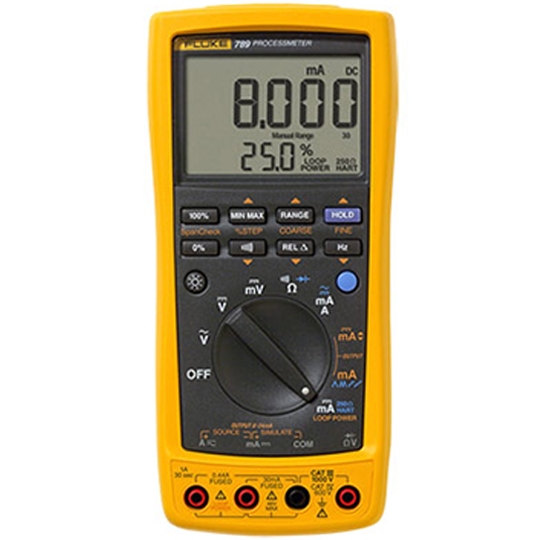
Credit: shop.byramlabs.com
Who Should Use Each Tool?
Multimeter:
- Electricians
- Electronics hobbyists
- Homeowners
- Automotive technicians
Process meter:
- Instrumentation engineers
- Automation technicians
- Industrial maintenance workers
- Calibration labs
The right tool can boost your productivity, accuracy, and safety.
Frequently Asked Questions
What Is The Main Difference Between A Process Meter And A Multimeter?
A multimeter measures basic electrical properties like voltage, current, and resistance. A process meter can do this and also measure and simulate industrial process signals like 4-20 mA, 0-10 V, and frequency, making it essential for automation and process control work.
Can I Use A Multimeter Instead Of A Process Meter For Calibration?
No. A multimeter cannot simulate or source process signals, which is required for calibrating transmitters and controllers. Using the wrong tool can result in inaccurate calibration or even damage to equipment.
Why Are Process Meters More Expensive Than Multimeters?
Process meters have specialized electronics to measure and simulate industrial signals. They are built for tough environments and require higher accuracy and safety ratings, which increases their cost.
Do I Need A Process Meter For Home Electrical Work?
No. For home electrical work, a standard multimeter is enough. Process meters are for industrial tasks like calibrating sensors and control systems.
How Often Do I Need To Calibrate My Process Meter Or Multimeter?
It depends on use and manufacturer recommendations. For process meters, annual calibration is common, especially if used in regulated industries. Multimeters used for basic work may need calibration every 1-2 years or as specified by the manufacturer.
—
Choosing between a process meter and a multimeter is more than just picking a tool off the shelf. When you know the differences and understand your real needs, you invest in safer, more efficient work. The right meter not only helps you get the job done — it can also protect your reputation and your team.
Always match your tool to your task, and you’ll never be caught unprepared.

Credit: www.fluke-direct.com