When you step into the world of electronics, you quickly encounter devices that create electrical signals. Two of the most common are the pulse generator and the function generator. These tools may look similar on the outside, but their purpose, capabilities, and the ways they shape signals are quite different. Understanding these differences is crucial if you want to test, design, or troubleshoot circuits efficiently.
If you’re new to signal generators, it can be confusing to know which device fits your needs. Many beginners assume these tools do the same job, but this isn’t true. In reality, choosing the wrong instrument can lead to poor testing results or wasted time.
Let’s dive deep into how pulse generators and function generators work, their main differences, and how to select the right one for your project.
What Is A Pulse Generator?
A pulse generator is a specialized electronic device designed to produce precise electrical pulses. These pulses are short bursts of voltage or current, often with sharp edges and well-defined durations. Pulse generators are widely used in digital circuits, communication testing, and timing applications.
Pulse generators offer control over key parameters:
- Pulse width (duration)
- Pulse amplitude (height)
- Rise and fall time (how quickly the pulse starts and ends)
- Repetition rate (how often pulses are produced)
For example, when testing a microcontroller, you might need a pulse generator to simulate button presses or create clock signals. These pulses must be consistent and clean, or the circuit might not respond correctly.
Common Uses Of Pulse Generators
- Testing digital logic circuits: Simulating inputs to check how chips respond.
- Triggering events: Starting processes at exact times.
- Timing analysis: Measuring how long circuits take to react.
One insight beginners often miss: pulse generators are essential for checking timing errors in fast digital systems. If your circuit depends on exact timing, a pulse generator is usually the best tool.
What Is A Function Generator?
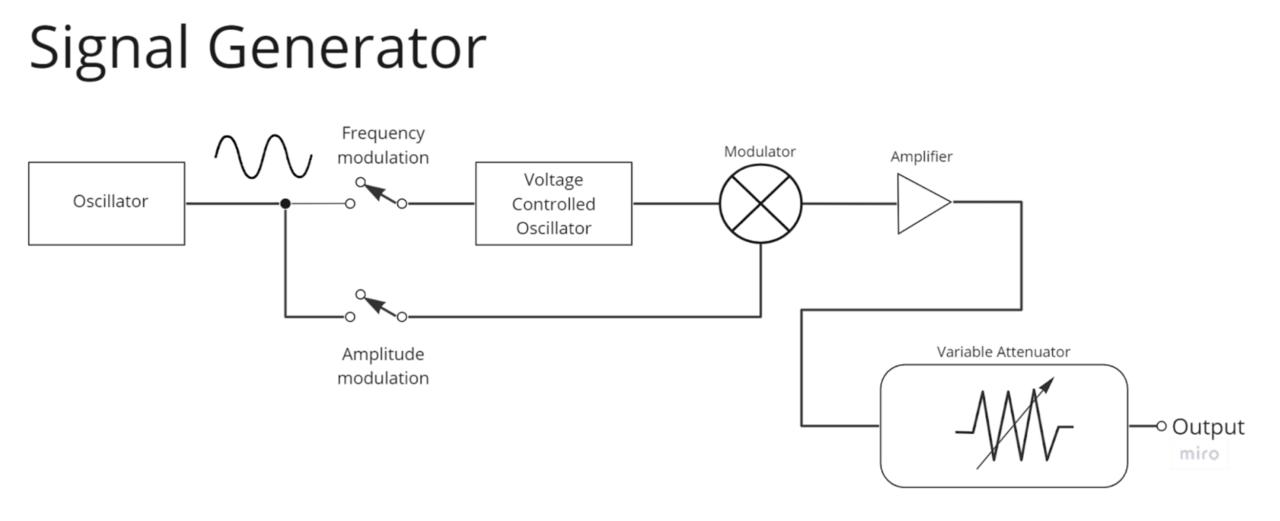
A function generator is a versatile device that creates various types of electrical waveforms. Unlike pulse generators, function generators are not limited to pulses. They can produce:
- Sine waves
- Square waves
- Triangle waves
- Sawtooth waves
- Arbitrary waveforms (in advanced models)
These waveforms are useful for testing analog circuits, amplifiers, and audio systems. You can adjust the frequency, amplitude, and sometimes the shape of the waveform.
For example, if you’re designing a radio receiver, you might use a function generator to simulate the input signal. Or if you’re testing an audio amplifier, you could create a sine wave to check the frequency response.
Common Uses Of Function Generators
- Audio and RF testing: Creating signals for radios and speakers.
- Circuit characterization: Understanding how circuits react to different waveforms.
- Education: Demonstrating signal properties in classrooms.
A non-obvious insight: function generators are popular for analog testing, but their square waves often have slower rise times than pulse generators. If you need fast edges for digital circuits, a function generator may not be suitable.
Key Differences Between Pulse Generator And Function Generator
While both devices generate signals, their focus and flexibility are quite different. Let’s break down the main differences:
| Feature | Pulse Generator | Function Generator |
|---|---|---|
| Primary Purpose | Create precise pulses | Produce various waveforms |
| Waveforms | Pulses (rectangular, single, double) | Sine, square, triangle, sawtooth |
| Rise/Fall Time Control | Very precise | Limited control |
| Pulse Width Adjustment | Very flexible | Usually not available |
| Frequency Range | Typically higher for digital signals | Wide range, includes low frequencies |
| Best For | Digital circuits, timing | Analog circuits, waveform analysis |
| Common Outputs | TTL, CMOS, custom pulse shapes | Standard analog waveforms |
Example: Digital Vs Analog Testing
Suppose you are testing a microprocessor’s clock input. You need a clean, sharp pulse with a specific width and a fast rise time. A pulse generator is ideal.
Now, imagine you are building an audio filter. You need to feed a sine wave across a range of frequencies and see how the circuit responds. A function generator is your go-to tool.
Detailed Comparison: Features And Performance
Let’s look closer at the technical specifications and performance differences. This will help you understand why these devices are not interchangeable.
| Specification | Pulse Generator | Function Generator |
|---|---|---|
| Pulse Width Range | Nanoseconds to seconds | Limited, usually not adjustable |
| Rise/Fall Time | 5 ns to 50 ns (typical) | 50 ns to 500 ns (slower) |
| Amplitude Range | 0.1 V to 20 V | 0.1 V to 10 V |
| Output Impedance | 50 Ω (standard) | High or low, selectable |
| Triggering | External/internal | Mostly internal |
| Programmability | Often supports complex patterns | Waveform shape and sweep |
Performance In Real Applications
- Pulse generators can produce single-shot pulses or repetitive bursts, often with precise triggering. This is essential for testing components that must respond to fast transitions.
- Function generators are better for continuous signals, frequency sweeps, and waveform analysis. Their outputs are smoother, but may lack sharp edges.
Another insight: Many modern function generators now offer limited pulse generation, but their timing and edge quality are rarely as good as dedicated pulse generators.
Credit: www.keysight.com
Choosing The Right Generator For Your Needs
Selecting between a pulse generator and a function generator depends on the specific requirements of your project. Here’s a practical guide to help you decide:
- Type of circuit you’re testing
- Digital circuits: Choose a pulse generator for sharp, accurate pulses.
- Analog circuits: Use a function generator for smooth waveforms.
- Signal characteristics required
- Precise timing, fast rise/fall times: Pulse generator
- Variable waveform shapes, frequency sweeps: Function generator
- Budget and versatility
- If you need both types of signals, some advanced generators combine both functions, but they can be expensive.
- For beginners, basic function generators are usually more affordable and versatile.
- Common mistakes
- Many new users try to use a function generator for digital timing tests. This often leads to unreliable results due to slow pulse edges.
- Some beginners ignore output impedance, which can cause signal distortion when connecting to circuits.
Real-world Examples And Statistics
Pulse generators are essential in fields like telecommunications, where timing and synchronization are critical. For instance, in high-speed data links, pulses must be precisely timed to avoid data errors.
Function generators are widely used in education and research. According to a survey by Electronics Weekly, over 60% of universities use function generators in their teaching labs for analog circuit experiments.
A recent market report showed that the global signal generator market is expected to grow by 5. 6% annually, driven by demand from both digital and analog testing applications. This confirms the importance of understanding which generator fits your needs.
Advanced Features In Modern Signal Generators
Technology has advanced, and now some signal generators offer hybrid features. For example, arbitrary waveform generators (AWGs) can create custom shapes, combining the flexibility of a function generator with some pulse generator capabilities.
But AWGs are typically more expensive and complex. Unless you need programmable, unusual signal shapes, a dedicated pulse or function generator is simpler to use and more reliable.
| Generator Type | Basic Features | Advanced Features |
|---|---|---|
| Pulse Generator | Pulse width, amplitude, trigger | Pattern generation, delay control |
| Function Generator | Sine, square, triangle, sweep | Arbitrary waveform, modulation |
| AWG | Custom waveforms | Digital storage, software control |
Practical Tips For Beginners
If you’re starting out, here are some practical tips to avoid common mistakes:
- Always check the rise and fall time specification before testing digital circuits.
- Use the correct output impedance setting to prevent signal reflections.
- Don’t assume a square wave from a function generator is equal to a pulse from a pulse generator. The edge quality matters.
- If you’re unsure, ask experienced users or refer to manufacturer datasheets.
Another tip: If you plan to work mostly with analog circuits, invest in a quality function generator. For digital work, a pulse generator will save you time and frustration.

Credit: www.youtube.com
Frequently Asked Questions
What Is The Main Difference Between A Pulse Generator And A Function Generator?
The main difference is that a pulse generator creates precise pulses with sharp edges and adjustable width, while a function generator produces various waveforms like sine, square, and triangle waves. Pulse generators are best for digital testing; function generators are better for analog work.
Can A Function Generator Replace A Pulse Generator?
Not usually. While some function generators can create square waves, their rise and fall times are often too slow for digital applications. If you need fast, accurate pulses, a pulse generator is essential.
Are There Signal Generators That Combine Both Functions?
Yes, some advanced instruments like arbitrary waveform generators (AWGs) can produce both pulse and standard waveforms. However, these are more expensive and complex. For most users, dedicated devices are easier and more reliable.
What Are Typical Pulse Generator Specifications?
Typical specs include:
- Pulse width: 10 ns to 10 ms
- Amplitude: 0.1 V to 20 V
- Rise/fall time: 5 ns to 50 ns
- Output: TTL, CMOS, or custom
These parameters can be adjusted for precise testing.
Where Can I Learn More About Signal Generators?
For detailed information and technical guidance, visit the Wikipedia page on signal generators.
Final Thoughts
Understanding the differences between pulse generators and function generators is vital for anyone working in electronics. Each device has unique strengths and is designed for specific tasks. By learning when to use each one, you can avoid common mistakes, save time, and achieve more accurate test results. As technology evolves, hybrid devices are becoming more available, but knowing the basics will always help you make smart choices. Whether you’re a student, engineer, or hobbyist, the right signal generator can make all the difference in your electronic projects.

Credit: www.youtube.com