Understanding the difference between a voltmeter and an ohmmeter is important for anyone working with electronics or electrical devices. These tools might look similar, but they serve very different purposes. If you want to measure voltage or resistance, choosing the right instrument makes your work easier and safer.
This article will guide you through what each tool does, how they work, where they are used, and how to avoid common mistakes. Whether you are a student, hobbyist, or technician, you will find practical advice, examples, and insights that many beginners overlook.
What Is A Voltmeter?
A voltmeter is a device used to measure the electrical potential difference between two points in a circuit. This measurement is called voltage and is usually given in volts (V). Voltage tells you how much energy is available to move electrons through a wire or other conductor.
Most voltmeters are either digital or analog. Digital voltmeters show the voltage as numbers on a screen, while analog voltmeters use a moving needle. Today, digital voltmeters are much more common because they are easier to read and often more accurate.
How A Voltmeter Works
A voltmeter is connected in parallel to the part of the circuit where you want to measure the voltage. This means the voltmeter forms a separate path for the current, so it does not interfere much with the circuit itself. Good voltmeters have high internal resistance, so very little current flows through them. This prevents them from changing the voltage they are measuring.
For example, if you want to measure the voltage across a battery, you place the voltmeter’s probes on the battery terminals. The voltmeter reads the difference in electrical potential between these points.
Types Of Voltmeters
There are several types of voltmeters:
- Analog voltmeter: Uses a needle and scale.
- Digital voltmeter: Shows numbers on an LCD screen.
- Electrostatic voltmeter: Measures very high voltages without drawing current.
- Moving-coil voltmeter: Used for DC voltage; uses a coil and magnet.
Digital voltmeters are popular because they give fast, clear readings and can measure both AC and DC voltage.
What Is An Ohmmeter?
An ohmmeter measures electrical resistance. Resistance is the opposition to the flow of electric current and is measured in ohms (Ω). If a wire or device has high resistance, less current will flow through it.
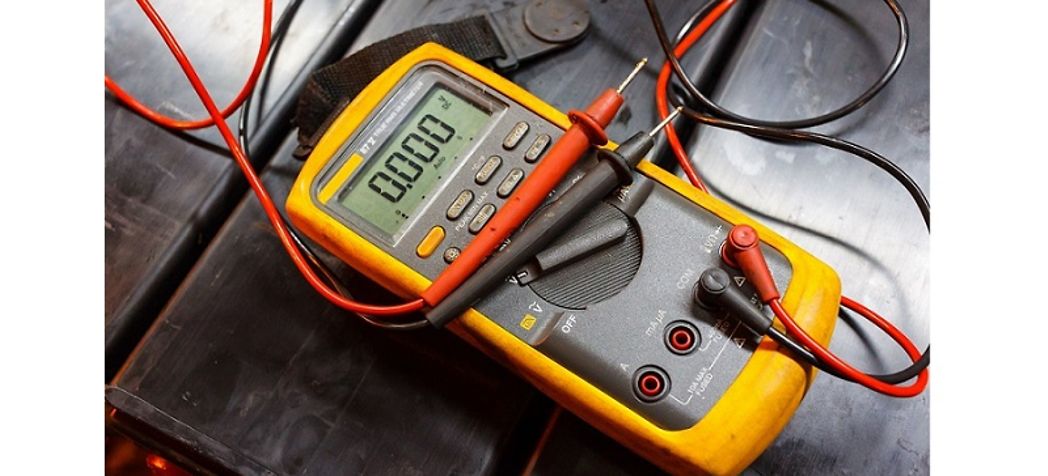
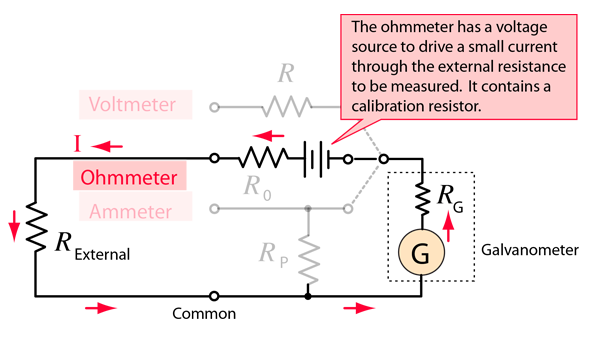
Ohmmeters can be standalone devices or part of a multimeter, which combines voltage, current, and resistance measurements in one tool. An ohmmeter works by sending a small current through the object being tested and measuring how much current flows. It then calculates the resistance using Ohm’s Law.
How An Ohmmeter Works
To measure resistance, the ohmmeter is connected in series with the component. It applies a small voltage and measures the resulting current. Using the formula:
Resistance (r) = Voltage (v) / Current (i)
The ohmmeter calculates the resistance. High resistance means low current flow, and low resistance means high current flow.
One key point: the circuit must be powered off when using an ohmmeter. If the circuit is powered, the reading will be incorrect and might damage the device.
Types Of Ohmmeters
Ohmmeters come in different forms:
- Analog ohmmeter: Uses a needle to show resistance.
- Digital ohmmeter: Displays numbers on a screen.
- Megohmmeter: Measures very high resistance, often used for insulation tests.
Most ohmmeters today are digital and are part of multimeters.
Credit: www.partstown.com
Voltmeter Vs Ohmmeter: Key Differences
While both instruments measure electrical properties, their functions, uses, and designs are quite different. Here is a clear comparison:
| Feature | Voltmeter | Ohmmeter |
|---|---|---|
| Main Function | Measures voltage (V) | Measures resistance (Ω) |
| Connection | Parallel to circuit | Series with component |
| Internal Resistance | High | Low |
| Use Case | Check battery, power supply, circuit voltage | Test wires, resistors, insulation |
| When to Use | Circuit powered on | Circuit powered off |
Understanding these basic differences helps you avoid mistakes that could damage your instruments or circuits.
Practical Uses Of Voltmeters
You find voltmeters in many places:
- Checking batteries: Is a battery charged or dead? A voltmeter tells you quickly.
- Testing power supplies: Is your charger giving the right voltage? Measure with a voltmeter.
- Troubleshooting circuits: Find where voltage drops, which can reveal faulty parts.
- Home appliances: Electricians use voltmeters to check wall outlets and wiring.
One overlooked use is for monitoring solar panels. If you measure the voltage output, you can see how well your panel is working. This is important for home solar systems.
Practical Uses Of Ohmmeters
Ohmmeters are essential when you need to:
- Check resistor values: Make sure resistors in your circuit match their labeled values.
- Find broken wires: High resistance means the wire might be damaged.
- Test insulation: High resistance shows good insulation; low resistance means possible leakage.
- Repair appliances: When a heater or motor doesn’t work, check if the internal resistance is normal.
A non-obvious use: Ohmmeters can help find hidden corrosion in wires and connectors. Sometimes, a wire looks fine but has high resistance because of corrosion inside.
Common Mistakes And Safety Tips
Many beginners make mistakes when using these meters. Here are some points to remember:
- Wrong connection: If you connect a voltmeter in series, it won’t work. If you connect an ohmmeter to a powered circuit, you risk damaging the meter.
- Ignoring polarity: For DC measurements, connect the red probe to positive and black to negative.
- Not zeroing the ohmmeter: Before measuring, touch the probes together and check for zero resistance. If not, adjust or note the error.
- Using damaged probes: Old or broken probes give wrong readings.
- Skipping safety: Always turn off power before using an ohmmeter. Wear gloves and avoid wet areas.
Most people forget that environmental factors like humidity can affect resistance readings. If you test insulation in wet conditions, the ohmmeter might show lower resistance than normal.
Choosing Between Voltmeter And Ohmmeter
When deciding which tool to use, think about your goal:
- If you want to know how much energy is available in a circuit or battery, use a voltmeter.
- If you need to check how easily current flows through a wire or component, use an ohmmeter.
It’s helpful to have a multimeter, which combines both functions and can measure current too. But even with a multimeter, you need to select the correct mode and follow the right connection method.
Here is a quick guide:
| Measurement | Tool | Correct Connection | Power On/Off? |
|---|---|---|---|
| Voltage | Voltmeter | Parallel | On |
| Resistance | Ohmmeter | Series | Off |
Examples In Real Life
Let’s look at two simple examples:
Example 1: You want to know if your phone charger is working. Plug it in and use a voltmeter to check the output. If it reads 5 volts (for USB), the charger works.
Example 2: Your lamp does not turn on. You suspect the cord is broken. Use an ohmmeter to measure resistance across the cord. If it shows very high resistance or “infinite,” the wire is broken.
These examples show how voltmeters and ohmmeters help solve problems quickly.
Credit: hyperphysics.phy-astr.gsu.edu
Advanced Insights For Beginners
Many beginners miss these points:
- Internal resistance matters: Cheap voltmeters with low internal resistance can affect the circuit and give wrong readings. Always use quality meters.
- Temperature changes readings: Resistance changes with temperature. For example, a cold wire has lower resistance than a hot wire.
- Multimeter mode confusion: If you use a multimeter, always double-check which mode you are in. Accidentally measuring resistance in a live circuit can damage the tool.
Another tip: When measuring low resistance, use short probe wires and clean contacts. Long or dirty wires add extra resistance and make readings less accurate.
Data And Statistics
Modern digital voltmeters and ohmmeters are accurate to within 0.1% to 1% of the reading, depending on the quality. The average price for a basic digital multimeter is between $15 and $50. High-end professional meters can cost over $200.
According to the US National Institute of Standards and Technology (NIST), the most common error in measurements is incorrect connection. This causes about 30% of failures in student labs.

Credit: www.allaboutcircuits.com
Voltmeter And Ohmmeter: In Education And Industry
In schools, voltmeters and ohmmeters are used for teaching basic electrical concepts. Students learn how to measure, calculate, and understand circuits. In industry, these meters are used daily for maintenance, quality control, and safety checks.
For example, electricians use voltmeters to check if power is available before repairing equipment. Engineers use ohmmeters to test cable quality and insulation. Without these tools, it would be nearly impossible to maintain safe and reliable electrical systems.
If you want to learn more about electrical measurement standards, visit the NIST Electrical Measurements resource.
Frequently Asked Questions
What Happens If I Use An Ohmmeter On A Powered Circuit?
Using an ohmmeter on a powered circuit can damage the meter and give wrong readings. Always turn off the power and disconnect the component before measuring resistance.
Can I Use A Voltmeter To Measure Resistance?
No, a voltmeter cannot measure resistance. It only measures voltage. You need an ohmmeter or a multimeter set to the resistance mode.
What Should I Do If My Voltmeter Shows Zero Volts?
If your voltmeter reads zero volts, check the connection and make sure the circuit is powered. If everything is correct, the component may be faulty or not receiving power.
Why Does My Ohmmeter Reading Change When I Touch The Probes?
If the reading changes, it could be due to poor contact, dirty probes, or fluctuating environmental conditions. Clean the probes and make sure you are not touching metal parts with your fingers.
Are Analog Meters Still Useful?
Analog meters can be useful for seeing rapid changes and trends, but digital meters are usually more accurate and easier to read. Some technicians prefer analog meters for certain tasks.
Choosing the right instrument and using it correctly saves time, prevents damage, and improves safety. Voltmeter and ohmmeter are essential tools in every electrical toolkit. Once you understand their differences and proper use, you will work more efficiently and confidently with any electrical project.