Signal Generator Vs Function Generator: Differences, Uses, and Choosing the Right Tool
If you work with electronics, you will often see two devices: the signal generator and the function generator. Both are used to create electrical signals, but they are not the same. Many beginners think these tools are similar, but understanding their differences can help you make better choices for your projects, testing, or learning. In this article, we’ll explain how these generators work, what makes them different, and how to choose the right one. We’ll also share practical examples and clear data to help you decide.
What Is A Signal Generator?
A signal generator is an electronic device that produces electrical signals of different frequencies, amplitudes, and waveforms. These signals are used for testing, troubleshooting, and designing electronic circuits. Signal generators are common in laboratories, research centers, and manufacturing.
Most signal generators can produce:
- Sine waves (smooth, repeating curves)
- Square waves
- Pulse waves
- RF (radio frequency) signals
Some advanced models can create very high-frequency signals, even up to several GHz (gigahertz). This makes them useful for testing radios, televisions, wireless devices, and other equipment that needs accurate frequency control.
Key Features Of Signal Generators
- Wide frequency range (often from a few Hz to several GHz)
- Precise frequency control
- Adjustable amplitude
- Ability to create modulated signals (AM, FM, PM)
- High stability and low distortion
Common Uses
- Testing radio receivers and transmitters
- Measuring frequency response of amplifiers
- Calibrating instruments
- Developing communication systems
What Is A Function Generator?
A function generator is another type of electronic signal generator, but it is designed mainly for producing basic waveforms. The most common waveforms are:
- Sine
- Square
- Triangle
- Sawtooth
Function generators are usually used for lower frequency ranges, from a few Hz up to a few MHz (megahertz). They are popular in schools, labs, and repair shops because they are easy to use and affordable.
Key Features Of Function Generators
- Generates multiple simple waveforms
- Lower frequency range (usually up to 20 MHz)
- Adjustable amplitude and frequency
- Sometimes includes sweep and burst modes
- Easy to operate
Common Uses
- Testing audio circuits
- Simulating sensor signals
- Teaching electronics
- Checking filters and amplifiers
Signal Generator Vs Function Generator: Main Differences
Let’s compare these two tools side by side. Here is a clear table showing their main differences:
| Feature | Signal Generator | Function Generator |
|---|---|---|
| Frequency Range | Up to several GHz | Up to 20 MHz |
| Waveforms | Sine, square, pulse, RF, modulated | Sine, square, triangle, sawtooth |
| Precision | High | Moderate |
| Modulation | AM, FM, PM | Usually not supported |
| Price | Higher | Lower |
| Typical Applications | Communication, RF testing | Audio, teaching, basic circuit testing |
Technical Specs: A Closer Look
To help you see the real-world differences, here is a comparison of popular models:
| Device | Frequency Range | Waveforms | Accuracy | Price Range (USD) |
|---|---|---|---|---|
| Keysight 33500B (Function Generator) | 1 mHz – 20 MHz | Sine, square, triangle, pulse, arbitrary | ±0.1% | 600 – 1,200 |
| Rigol DG1022 (Function Generator) | 1 μHz – 20 MHz | Sine, square, triangle, pulse, arbitrary | ±0.5% | 350 – 600 |
| Rohde & Schwarz SMB100A (Signal Generator) | 100 kHz – 6 GHz | Sine, square, modulated RF | ±0.01% | 5,000 – 20,000 |
| Tektronix TSG4106A (Signal Generator) | 1 Hz – 6 GHz | Sine, modulated RF | ±0.01% | 4,500 – 8,000 |
As you can see, signal generators are much more expensive and have higher frequency ranges. Function generators are more affordable and good for basic tasks.
Which One Should You Choose?
Choosing the right generator depends on your needs. Here are important factors to consider:
1. Application
- If you need to test radio frequency circuits, wireless devices, or need modulated signals, choose a signal generator.
- If you are working with audio circuits, basic analog electronics, or want to generate simple waveforms, a function generator will be enough.
2. Frequency Range
- Signal generators go up to GHz frequencies.
- Function generators are limited to MHz ranges.
3. Precision
- Signal generators offer high stability and low distortion.
- Function generators are precise enough for most basic tasks but not for advanced RF work.
4. Budget
- Function generators are suitable for hobbyists, students, and basic labs.
- Signal generators are more expensive and are usually found in professional labs and industry.
5. Modulation
- If your work needs AM, FM, or PM modulation, signal generators are the answer.
- Function generators rarely support these features.
Real-world Examples
Here are two practical scenarios:
- Testing a radio transmitter: You need to check how your transmitter responds to different frequencies and modulations. A signal generator lets you produce accurate RF signals and modulate them, so you can test the radio’s performance under real conditions.
- Building an audio amplifier: To check if your amplifier works well, you can use a function generator to send a sine wave or square wave through it. This helps you find distortion, frequency response, and other issues.
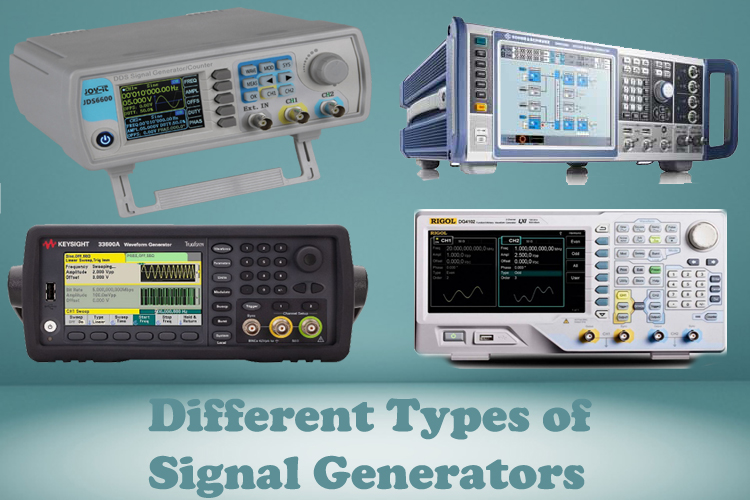
Credit: circuitdigest.com
Common Mistakes Beginners Make
Many new users confuse these tools or use the wrong one. Here are two mistakes to avoid:
- Using a function generator for RF testing: Function generators cannot reach high frequencies or create modulated signals needed for RF work. This will result in inaccurate tests.
- Buying an expensive signal generator for simple tasks: If your work is limited to basic analog circuits, you do not need to spend thousands of dollars. A simple function generator is enough.
Advanced Features To Look For
Some modern generators offer extra features:
- Arbitrary waveform generation: You can create custom signals, not just basic shapes.
- Sweep and burst modes: Useful for testing how circuits respond to changing signals.
- Digital connectivity: USB, LAN, or GPIB ports for remote control and data logging.
- High stability: Internal clocks and temperature compensation for accurate signals.
How To Test And Calibrate Using Generators
To get reliable results, you must use your generator correctly:
- Set the frequency and amplitude exactly as needed.
- Use proper cables and connectors to avoid signal loss.
- If possible, use a frequency counter or oscilloscope to check the signal output.
- Avoid running the generator at maximum settings for long periods, as this can cause overheating or drift.
Comparison: Signal Generator Vs Function Generator In Labs
Let’s look at their roles in laboratory testing:
| Test Type | Preferred Generator | Reason |
|---|---|---|
| RF device testing | Signal Generator | High frequency, modulation support |
| Audio circuit testing | Function Generator | Basic waveforms, affordable |
| Communication system design | Signal Generator | Precise control, modulated signals |
| Sensor simulation | Function Generator | Simple signals, easy setup |

Credit: www.youtube.com
Not-so-obvious Insights
- Signal purity matters: For sensitive measurements, the level of noise and distortion from the generator can affect results. Signal generators are built for minimal distortion, but function generators may add unwanted artifacts to your signal. If you need clean signals for calibration, choose carefully.
- Waveform flexibility: Some advanced function generators offer arbitrary waveform generation, which bridges the gap between basic and complex testing. If you need custom signals but don’t need high frequencies, these models can be a smart compromise.
Trusted Brands And Models
When choosing a generator, it’s wise to pick reliable brands. Some respected names include:
- Keysight Technologies
- Rohde & Schwarz
- Tektronix
- Rigol
- B&K Precision
These brands are known for durability, accuracy, and support.

Credit: www.youtube.com
How Generators Are Used In Industry
Large companies use signal and function generators for many tasks:
- Telecoms: Testing mobile networks and antennas
- Automotive: Simulating sensor signals for testing ECUs
- Medical devices: Calibrating equipment like ECGs and ultrasound machines
- Aerospace: Verifying communication systems and sensors
According to a 2021 industry report, the global market for signal generators was valued at over $800 million, with steady growth expected as wireless technologies expand (MarketsandMarkets).
Frequently Asked Questions
What Is The Main Difference Between A Signal Generator And A Function Generator?
The main difference is their frequency range and waveform capability. Signal generators produce high-frequency signals and support modulation, while function generators are limited to basic waveforms at lower frequencies.
Can A Function Generator Be Used For Rf Testing?
No. Function generators cannot reach the high frequencies or provide the modulation needed for RF testing. For radio frequency work, a dedicated signal generator is required.
Are Signal Generators More Accurate Than Function Generators?
Yes. Signal generators are designed for high precision and low distortion, making them better for sensitive measurements and calibration. Function generators are accurate enough for most basic tasks but not for advanced applications.
How Much Does A Signal Generator Cost Compared To A Function Generator?
Signal generators typically cost $4,000 to $20,000 or more, depending on features and frequency range. Function generators usually range from $200 to $1,200. The price reflects their complexity and intended use.
Is It Possible To Generate Custom Waveforms?
Yes. Many modern function generators and some signal generators offer arbitrary waveform generation, letting users create custom signals. This feature is useful for testing unique circuits or simulating real-world signals.
Final Thoughts
Understanding the difference between a signal generator and a function generator is important for anyone working with electronics. While they may look similar, their capabilities, accuracy, and price are very different. For high-frequency and complex testing, signal generators are the right choice. For simple waveform testing and education, function generators are ideal. Think about your needs, budget, and the type of signals you want to generate before making a decision. With the right tool, you can test, learn, and build with confidence.