
A continuity tester and a voltage tester are both essential tools for anyone working with electrical circuits. But many people confuse their purposes or use them incorrectly. If you want to understand the difference, know when to use each, and avoid common mistakes, this article will give you clear answers.
Whether you are a beginner, hobbyist, or even a professional, understanding these testers can help you stay safe and solve electrical problems faster.
What Is A Continuity Tester?
A continuity tester is a tool that checks if there is a complete electrical path between two points. In simple terms, it tells you if the circuit is “closed” (connected) or “open” (broken). Most continuity testers are small, battery-powered devices with a probe on each end. When you touch both probes to two parts of a circuit, the tester lights up or beeps if electricity can flow between them.
How Continuity Testers Work
Continuity testers use a low voltage from a battery inside the device. When both probes touch a wire or connection, the tester sends a tiny current through the circuit. If the current can flow freely, the tester signals with a light or sound.
If there is a break, nothing happens.
This makes continuity testers perfect for checking:
- Broken wires
- Faulty switches
- Damaged connections
- Fuses
Practical Example
Imagine you have a lamp that won’t turn on. By using a continuity tester, you can check if the wire inside the cord is broken. Touch one probe to the plug and one to the lamp’s terminal. If the tester doesn’t beep or light up, the wire is broken.
Key Features
- Simple operation
- Audio or visual signal
- No risk of electrical shock (uses battery power)
- Used only on circuits without live voltage
What Is A Voltage Tester?
A voltage tester is a device that checks if there is electrical voltage present in a circuit. This means it can tell you if a wire, socket, or terminal is “live” (has power) or “dead” (no power). There are several types of voltage testers, from simple pen-like devices to advanced digital meters.
Types Of Voltage Testers
- Non-contact voltage testers: These look like pens and can detect voltage without touching bare wires. You just hold the tester near the wire, and it lights up if voltage is present.
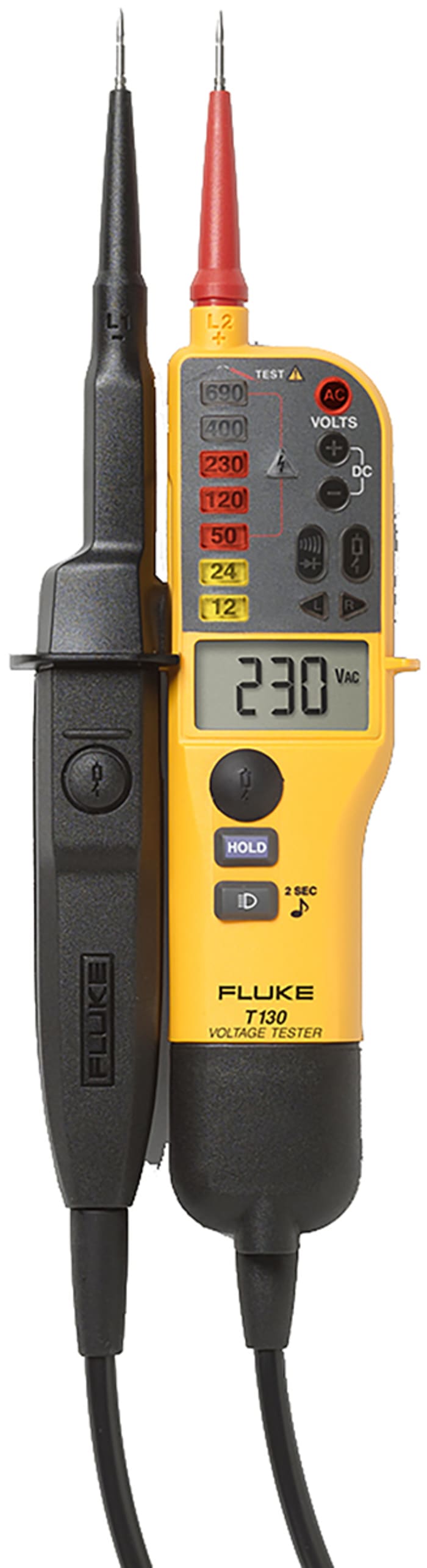
- Contact voltage testers: These require touching the tester to the wire or terminal. They show voltage through a light or display.
- Multimeters: These can test voltage, continuity, and other electrical properties.
How Voltage Testers Work
Voltage testers sense the electrical potential between two points. They either detect the electric field or measure the difference in voltage. Non-contact testers are safer, but sometimes less precise. Contact testers and multimeters give exact numbers.
Practical Example
Suppose you want to fix a wall socket, but you’re not sure if it’s still connected to the power. Using a voltage tester, you can check if the socket is live. If the tester lights up, there is voltage and you must turn off the power before working.
Key Features
- Detects live voltage
- Can be used on live circuits
- Available as non-contact or contact types
- Some models show exact voltage
Continuity Tester Vs Voltage Tester: Key Differences
Understanding the differences helps you pick the right tool for each task. Here’s a direct comparison:
| Feature | Continuity Tester | Voltage Tester |
|---|---|---|
| Main Purpose | Checks for closed circuit/path | Checks for presence of voltage |
| Operation | Uses internal battery | Uses circuit’s power |
| Safety | Safe to use on dead circuits | Can be dangerous on live circuits |
| Signal | Light/beep for continuity | Light/beep/display for voltage |
| Usage | Finding broken wires, switches | Checking live wires, sockets |
| Types | Simple probe tester | Non-contact, contact, multimeter |
When To Use Each Tester
Knowing when to use a continuity tester versus a voltage tester can save time and prevent accidents.
Use A Continuity Tester When:
- You need to check if a wire or connection is broken.
- The circuit is NOT powered (no voltage).
- You are testing fuses, switches, or connectors.
- Diagnosing why a device isn’t working.
Use A Voltage Tester When:
- You want to know if a wire or socket is live.
- The circuit is powered.
- Before working on any electrical installation.
- Checking if power has been restored after a repair.
:max_bytes(150000):strip_icc()/testing-receptacles-for-grounding-1152807-09-a8d0d86032134209999e334d024f7235.jpg)
Credit: www.thespruce.com
Step-by-step: How To Use A Continuity Tester
Using a continuity tester is simple, but you must make sure the circuit is not powered.
- Turn off the power to the circuit you want to test.
- Set up the tester by making sure the battery is working.
- Touch one probe to one end of the wire or component.
- Touch the second probe to the other end.
- If the tester lights up or beeps, there is continuity. If not, the circuit is broken.
Common Mistake
Beginners sometimes use a continuity tester on a live circuit. This can damage the tester and cause injury. Always turn off the power first.
Step-by-step: How To Use A Voltage Tester
Voltage testers are used on live circuits, so safety is key.
- Wear safety gear like gloves and goggles.
- Set the tester to the correct voltage range (for multimeters).
- Touch the probe to the wire or socket.
- If the tester lights up or shows a number, the circuit is live.
Practical Tip
Non-contact voltage testers are safer for beginners. They reduce the risk of touching live wires.

Credit: www.fluke.com
Real-life Applications
Let’s look at two common scenarios to see how these testers are used.
Scenario 1: Home Wiring Repair
Imagine you are fixing a light switch. First, use a voltage tester to check if the wires are live. Once you confirm the power is off, use a continuity tester to see if the switch is broken or the wire is damaged.
Scenario 2: Car Electrical Troubleshooting
In cars, continuity testers help find broken wires or blown fuses. Voltage testers can check if a battery or alternator is supplying power.
Data: Popularity And Usage Statistics
According to industry data, voltage testers are more commonly used in home repairs, while continuity testers are preferred for detailed troubleshooting. A recent survey showed:
- 68% of electricians use voltage testers for safety checks.
- 52% use continuity testers for wiring repairs.
- Multimeters are used by 45% for advanced testing.
| Tester Type | Common Usage (%) | Main Purpose |
|---|---|---|
| Voltage Tester | 68% | Safety, detecting live wires |
| Continuity Tester | 52% | Finding broken circuits |
| Multimeter | 45% | Multiple functions |
Choosing The Right Tester
When buying a tester, consider:
- Your needs: Are you checking for live voltage or broken wires?
- Safety: Non-contact voltage testers are safer for beginners.
- Accuracy: Multimeters offer more data but are more complex.
- Budget: Simple testers are affordable, advanced models cost more.
Buyer Mistakes
- Using a voltage tester to check for continuity (it won’t work).
- Using a continuity tester on a live circuit (dangerous).
- Buying expensive multimeters when only basic tests are needed.
Advanced Tips For Beginners
- Label wires before testing. This avoids confusion.
- Test on known working circuits first to learn how your tester works.
- Check batteries in continuity testers regularly.
- Don’t rely only on testers. Always double-check power is off before touching wires.
Non-obvious Insights
Many beginners miss these important points:
- Continuity testers can’t find partial shorts. They only check full connection. Sometimes a wire is damaged but still passes continuity. Use a voltage tester to check for proper voltage.
- Voltage testers don’t check circuit quality. A wire can have voltage but still be faulty. If a device doesn’t work, always check both continuity and voltage.
Comparison Table: Typical Tester Prices And Features
Here’s a quick overview of average prices and features for common testers:
| Tester Type | Price Range (USD) | Main Features |
|---|---|---|
| Continuity Tester | $5–$20 | Simple, beep/light, battery powered |
| Voltage Tester | $8–$30 | Non-contact/contact, light/beep, range settings |
| Multimeter | $15–$80 | Voltage, continuity, resistance, display |
Safety And Best Practices
Electrical testing always involves risk. Follow these best practices:
- Always turn off power before using a continuity tester.
- Use insulated gloves when working with voltage testers.
- Check your tester on a known circuit before testing.
- Never use damaged testers.
- Read the instructions for your specific tester.
For more detailed safety guidelines, visit the OSHA Electrical Safety site.
Frequently Asked Questions
What Is The Main Difference Between A Continuity Tester And A Voltage Tester?
A continuity tester checks if a circuit is complete, while a voltage tester checks for the presence of electrical voltage. Continuity testers are used on dead circuits, voltage testers on live circuits.
Can I Use A Continuity Tester To Check If A Wire Is Live?
No, continuity testers are only for checking connections. They do not detect live voltage and should never be used on powered circuits.
Are Voltage Testers Safe For Beginners?
Non-contact voltage testers are safer because you don’t need to touch bare wires. Always follow safety instructions and use proper protective gear.
Why Does My Device Show Continuity But Doesn’t Work?
Sometimes a wire or connection passes continuity but is still damaged inside. Always check both continuity and voltage. If voltage is present but the device doesn’t work, there may be a hidden fault.
Do Multimeters Replace Continuity And Voltage Testers?
Multimeters can perform both tests, but they are more complex. For simple checks, basic testers are easier and safer to use.
Credit: sa.rsdelivers.com
Final Thoughts
Choosing between a continuity tester and a voltage tester depends on the task and your experience. Each tool solves a different problem. Understanding their differences helps you stay safe and fix electrical issues faster. Remember, always use the right tester for the job, double-check your circuits, and never ignore safety.
By learning how to use these testers properly, you can handle most electrical troubleshooting with confidence.