
Venous Vs Capillary Lead Test
Lead poisoning is a serious health problem, especially in children. Detecting lead in the blood quickly and accurately can make a big difference in treatment and outcomes. Two main methods are used for blood lead testing: venous blood tests and capillary blood tests. While both aim to measure the amount of lead in the body, they differ in how the blood is collected, their accuracy, and their best uses. Understanding these differences helps both patients and healthcare providers choose the right approach.
What Is A Blood Lead Test?
A blood lead test checks how much lead is in a person’s blood. Lead is a toxic metal that can harm almost every organ, especially the brain and nervous system. Even low levels of lead can cause learning problems, behavior issues, and slow growth in children. Adults exposed to lead can develop high blood pressure, kidney problems, and reproductive issues.
Blood lead tests are the only reliable way to know if someone has been exposed to too much lead. These tests are especially important for young children, pregnant women, and people who live or work in older buildings or areas with known contamination.
Overview Of Venous And Capillary Testing
There are two common ways to collect blood for lead testing:
- Venous blood test: Blood is drawn from a vein, usually in the arm.
- Capillary blood test: Blood is taken from a fingertip or heel prick.
Both methods are used in clinics and hospitals, but the choice depends on age, situation, and the need for accuracy. Let’s look at each method in detail.
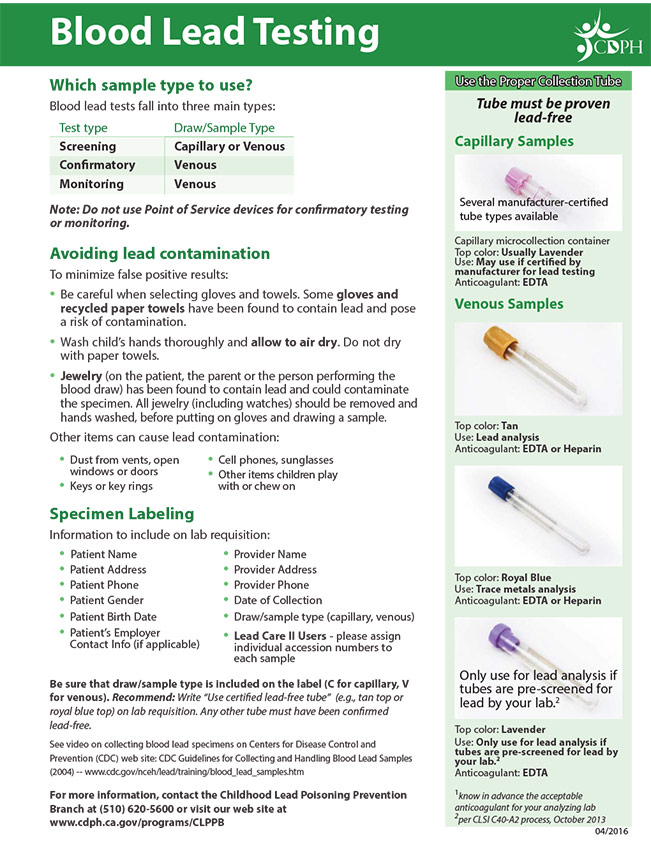
Credit: thealliance.health
Venous Lead Test
How It Works
A venous lead test involves collecting blood from a vein, usually in the arm. A healthcare worker cleans the skin, inserts a small needle, and draws blood into a tube. The sample is then sent to a laboratory for analysis.
Advantages
- High accuracy: Venous tests are considered the “gold standard” for lead testing.
- Less risk of contamination: Skin dirt or dust is less likely to affect the results.
- Required for confirmation: If an initial capillary test shows high lead, a venous test is used to confirm.
Disadvantages
- More discomfort: Drawing venous blood can be more painful, especially for small children.
- Requires trained staff: Only professionals can perform venous draws safely.
- Takes more time: The process is slower and more complex than a finger prick.
When Is It Used?
Venous tests are recommended for:
- Confirming elevated results from a capillary test
- Routine screening in clinics or hospitals
- Cases where the most accurate result is needed
Common Challenges
Drawing venous blood from infants and toddlers can be hard. Veins are small and may be hard to find, which can cause stress for both the child and the caregiver.
Capillary Lead Test
How It Works
A capillary lead test uses a small lancet to prick the fingertip (or heel in infants). A drop of blood is collected into a tiny tube. The process is quick and usually less painful than a venous draw.
Advantages
- Less invasive: Easier and faster for children and infants.
- Can be done outside clinics: Useful for mobile testing or community screenings.
- No need for special equipment: Only a lancet and collection tube are needed.
Disadvantages
- Higher risk of contamination: Lead dust on the skin can get into the blood drop.
- Less accurate: Results may be higher than the true level if the skin is not cleaned well.
- Positive results need confirmation: Any elevated finding must be checked with a venous test.
When Is It Used?
Capillary tests are popular for:
- Initial screening of large groups (like school children)
- Home visits or fieldwork in high-risk areas
- Rapid checks when venous draws are not practical
Common Challenges
Capillary testing can give false positives if the skin is not cleaned carefully. This can cause worry and require extra testing.

Credit: www.researchgate.net
Key Differences At A Glance
Here’s a direct comparison to help clarify the main differences:
| Feature | Venous Lead Test | Capillary Lead Test |
|---|---|---|
| Sample source | Vein (usually arm) | Fingertip or heel |
| Accuracy | High | Moderate |
| Risk of contamination | Low | Higher |
| Pain level | More discomfort | Less discomfort |
| Who collects | Trained professionals | Can be trained staff or self |
| Best use | Confirmation, diagnosis | Screening, field tests |
Why Accuracy Matters In Lead Testing
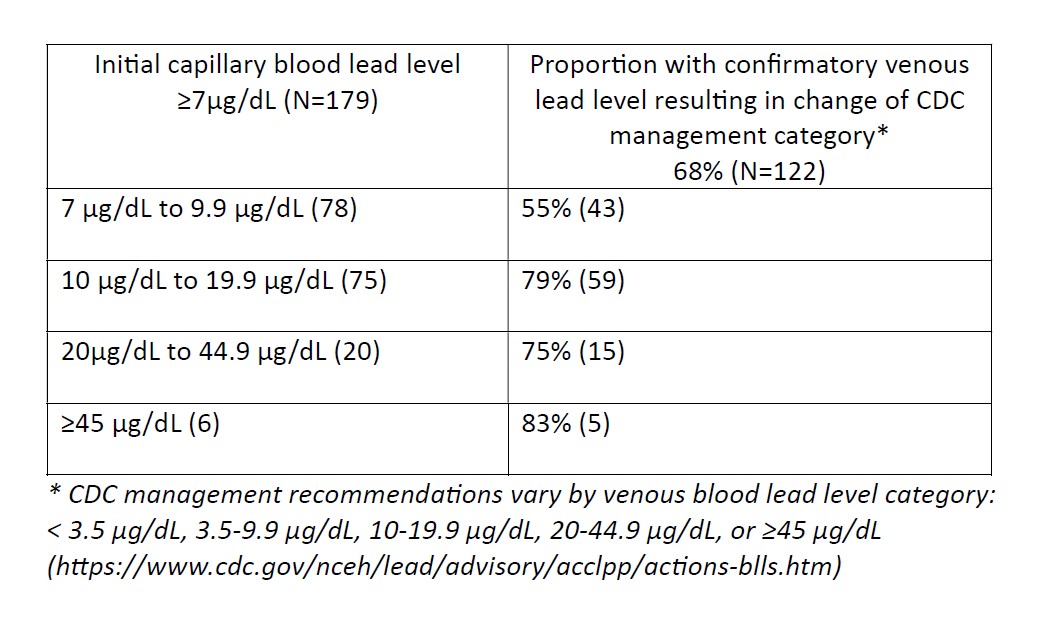
Even small differences in lead test results can change a child’s treatment plan. For example, the Centers for Disease Control and Prevention (CDC) says there is no safe level of lead in children. Treatment and home inspections often start when blood lead levels reach a certain point (often 3.5 micrograms per deciliter or higher in the US).
If a test result is falsely high, a family may face stress and extra procedures. If a test is falsely low, a child may not get the help they need. That’s why confirmation with a venous test is so important after an elevated capillary result.
Credit: 2024.pas-meeting.org
How To Reduce Errors In Capillary Testing
Healthcare teams can make capillary tests more reliable by:
- Thorough cleaning: Scrub the finger or heel with soap and water, then alcohol, before pricking.
- Drying the area: Moisture can affect the blood drop.
- Training staff: Proper collection technique reduces mistakes.
One insight many people miss is that capillary tests are more likely to show false highs in homes with peeling paint, dust, or renovation work. Even tiny bits of lead dust on the skin can change the result.
Which Test Is Right For You?
The choice depends on your situation:
- Children under age 6: Start with a capillary test for screening; confirm with venous if high.
- High-risk exposure: Go directly to venous testing.
- Routine checks: Capillary is fine for first screening, especially at schools or community events.
Doctors often follow this process:
- Screen with capillary test (fast, easy, good for large groups)
- If lead is detected above reference level, confirm with venous test (for accuracy)
Real-world Example
Let’s say a preschool runs a capillary screening for 100 children. Five children have results above 3. 5 mcg/dL. Each child gets a venous test for confirmation. Two of them have normal levels, showing the capillary test gave a false positive.
The other three have confirmed elevated lead, and their families are given help and further testing at home.
This example shows why both tests are important but serve different roles.
Data: Sensitivity And Specificity
Studies show that capillary tests have high sensitivity (they catch most children who have lead), but lower specificity (they give more false positives). Venous tests have both high sensitivity and specificity.
| Test Type | Sensitivity | Specificity | Practical Use |
|---|---|---|---|
| Venous | 98-100% | 98-100% | Diagnosis, confirmation |
| Capillary | 95-99% | 85-90% | Screening |
High sensitivity means few cases are missed. Lower specificity means more people get flagged as positive when they are not.
Costs And Accessibility
Venous testing is often more expensive because it needs laboratory analysis, trained staff, and more supplies. Capillary testing is cheaper and can be done in schools, homes, or mobile clinics.
| Test Method | Average Cost (US) | Where Available |
|---|---|---|
| Venous | $30–$100 | Hospitals, clinics |
| Capillary | $10–$30 | Clinics, schools, home visits |
If you live far from a hospital or have limited resources, capillary testing may be the only practical choice for screening.
Potential For Home Lead Testing Kits
Some companies offer home lead test kits that use capillary collection. These are simple to use, but there is a risk of contamination if instructions are not followed exactly. Results from home kits should always be confirmed by a healthcare professional, especially if they are high.
A non-obvious tip: If you use a home kit, wash your hands and the child’s hands with soap and water, and avoid all painted surfaces before collecting the sample.
New Developments In Lead Testing
Researchers are working on more portable, accurate devices for lead testing. Point-of-care analyzers can give fast results from small blood samples. While promising, these devices still face challenges with accuracy and cost.
For up-to-date recommendations on blood lead testing, you can visit the CDC website.
Frequently Asked Questions
What Is The Most Accurate Test For Blood Lead Levels?
The venous blood lead test is the most accurate. Blood is drawn from a vein, and the risk of contamination is very low. Capillary tests are helpful for screening but should be confirmed with a venous test if elevated.
Can Capillary Tests Give False Results?
Yes, capillary tests can give false positive results if the skin is not cleaned well before collecting blood. This happens because lead dust on the skin can mix with the blood drop.
How Do I Prepare My Child For A Lead Test?
Wash your child’s hands and the fingertip (or heel) with soap and water before a capillary test. For a venous test, try to keep your child calm and explain that it will only take a few seconds.
How Often Should Children Be Tested For Lead?
Children in high-risk areas or homes built before 1978 should be tested at ages 1 and 2, or as recommended by their doctor. Additional testing may be needed if there is known exposure or symptoms.
Are Home Lead Test Kits Reliable?
Home kits can be useful for initial screening but are less reliable than clinic tests. Any high result from a home kit should be checked with a professional venous blood test.
Blood lead testing is an essential tool for protecting your family’s health. Both venous and capillary tests have important roles in screening and diagnosis. By understanding their differences, strengths, and limits, you can work with your healthcare provider to get the most accurate results and the right care.
Always confirm elevated lead results with a venous test and follow medical advice closely.