Choosing the right oscilloscope brand is a critical decision for electronics enthusiasts, engineers, and hobbyists. Rigol, Siglent, and Hantek are three names that often top the list when people search for affordable yet reliable oscilloscopes. Each brand has built a strong reputation, but their products are not identical.
To make a smart choice, you need to understand what sets these brands apart, what they offer, and which one fits your needs best.
In this in-depth comparison, you’ll discover how Rigol, Siglent, and Hantek differ in features, performance, build quality, software, customer support, and much more. Whether you’re a beginner buying your first scope or a pro looking to upgrade, this guide will help you make an informed decision—without getting lost in technical jargon.
Brand Overview
Rigol
Rigol Technologies is a Chinese company founded in 1998, quickly rising to global recognition. Rigol is known for producing cost-effective test and measurement equipment, most notably digital oscilloscopes. Their products often blend advanced features with budget-friendly pricing, making them a top choice for both educational and professional environments.
Siglent
Siglent Technologies, also from China, started in 2002. They focus on delivering high-performance instruments at reasonable prices. Siglent’s oscilloscopes are recognized for their solid build, accurate measurements, and frequent firmware updates. The company is popular among users who want a step above entry-level without paying premium prices.
Hantek
Hantek is another Chinese manufacturer, established in 1999. They are best known for their USB-based oscilloscopes and compact, portable designs. Hantek’s products are often chosen by beginners, students, and DIYers due to their affordability and portability. However, their feature set is sometimes more basic compared to Rigol and Siglent.
Core Product Lineups
Understanding each brand’s main oscilloscope ranges helps narrow down your options.
Rigol
- DS1000Z Series: Widely used in labs and by hobbyists. Offers up to 100 MHz bandwidth, 4 channels, and deep memory depth (up to 24 Mpts).
- DS2000A Series: Mid-range, higher sample rates, advanced triggers.
- MSO/DS7000 Series: Advanced features, logic analyzer integration, up to 500 MHz bandwidth.
Siglent
- SDS1000X-E Series: Popular for high performance-to-price ratio, 100/200 MHz bandwidth, 4 channels, 1 GSa/s sample rate.
- SDS2000X Plus Series: Higher bandwidth (up to 350 MHz), faster waveform capture, touchscreen options.
- SDS5000X Series: Professional-grade, up to 1 GHz bandwidth, advanced analysis tools.
Hantek
- DSO5XXX Series: Affordable benchtop scopes, up to 200 MHz.
- DSO2D10/DSO4D10 Series: Compact and entry-level, basic features.
- USB Oscilloscopes: Plug into PC, making them portable and low-cost.
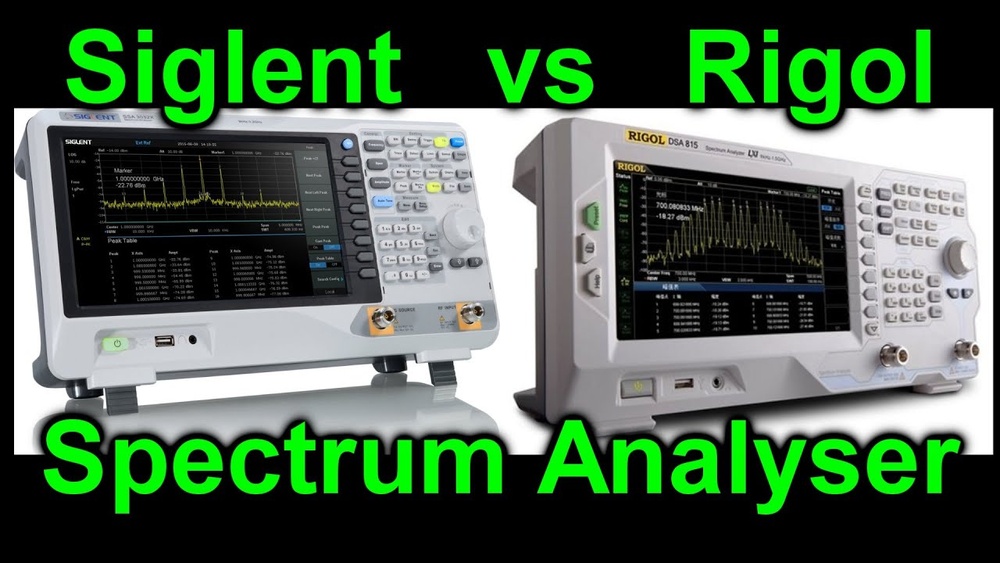
Credit: electrozlab.com
Key Feature Comparison
Comparing the main features side by side is essential. Here’s a direct look at what you get from similar models in each brand:
| Brand | Popular Model | Bandwidth | Channels | Sample Rate | Memory Depth | Display |
|---|---|---|---|---|---|---|
| Rigol | DS1054Z | 50 MHz | 4 | 1 GSa/s | 24 Mpts | 7” WVGA |
| Siglent | SDS1104X-E | 100 MHz | 4 | 1 GSa/s | 14 Mpts | 7” TFT |
| Hantek | DSO5102P | 100 MHz | 2 | 1 GSa/s | 40 Kpts | 7” TFT |
Non-obvious insight: Memory depth can be more important than bandwidth for detailed signal analysis. Rigol’s DS1054Z offers 24 Mpts, allowing you to capture longer signals at full sample rate—a huge advantage for debugging complex circuits.
Performance And Accuracy
Performance is not just about numbers on paper. Real-world accuracy, responsiveness, and reliability matter.
Rigol
Rigol scopes are often praised for their deep memory and robust triggering options. The DS1054Z, for example, is famous for its value and features. However, the user interface can sometimes feel slow when handling large memory depths. Still, measurements are consistent and reliable for most applications.
Siglent
Siglent’s SDS1000X-E series stands out with faster waveform update rates (up to 400,000 wfm/s) and superior noise floor. This means you see glitches and anomalies better. Their scopes also support advanced decoding for protocols like I2C, SPI, and UART, sometimes as standard features, not paid upgrades.
Hantek
Hantek oscilloscopes generally perform well for basic tasks. Their sample rates and bandwidths are adequate for audio and low-speed digital work. However, users often note lower memory depth and fewer advanced triggering options. For critical timing analysis or high-speed signals, Hantek may fall short.
Non-obvious insight: Siglent’s scopes often have less “display lag” when changing time base or zooming, which can make a big difference in comfort during long debugging sessions.
Build Quality And Design
How a scope feels in your hands, and how it survives daily use, is easy to overlook—until something breaks.
Rigol
Rigol’s benchtop scopes are solidly built, with sturdy plastic cases and good button layouts. The controls and rotary knobs feel precise, though the internal fans can be noisy. Their scopes are designed to handle heavy lab use, and most users find them durable over years.
Siglent
Siglent’s cases are slightly heavier and feel a bit more premium. Buttons are well-spaced, with a tactile response. The scopes are engineered for professional environments, often passing stricter EMC and safety tests. Details like better screens and quieter fans make a difference in daily use.
Hantek
Hantek’s benchtop models feel lighter and sometimes less robust. Rotary encoders can feel loose, and cases may flex under pressure. However, their USB-based models are very portable—perfect for quick setups on the go. These are best for light use rather than rough lab conditions.
Software And Connectivity
Oscilloscopes today are as much about software as hardware. Good software extends the value of your scope, while poor software can be a deal-breaker.
Rigol
Rigol provides UltraSigma and UltraScope software for remote control and data logging. Their scopes have USB and LAN ports, supporting SCPI commands for automation. Firmware updates are regular, though not as frequent as Siglent.
Siglent
Siglent’s EasyScopeX software is modern and stable. They support USB, LAN, and sometimes Wi-Fi connectivity. Siglent leads in supporting advanced protocols and APIs, allowing integration with automated test setups. Firmware updates often bring new features, not just bug fixes.
Hantek
Hantek’s PC software is simple but functional. USB scopes depend entirely on this software, which can feel outdated and sometimes unstable. Updates are rare. Connectivity is typically limited to USB, with less support for automation or scripting.
Pro tip: If you want to automate measurements or log data over a network, Siglent models often offer the easiest integration.
Display Quality And User Interface
Clear, bright screens and an intuitive interface can speed up your work and reduce mistakes.
Rigol
Rigol’s screens are sharp, with good color depth and contrast. Their interface is logical, but some menus are deep, requiring multiple steps to reach certain features. The display update rate is decent, though some users wish for smoother performance at high memory settings.
Siglent
Siglent displays tend to be brighter with wider viewing angles. Their interface is more modern, with faster response and less menu digging. Touchscreen options are available in higher-end models, which speeds up setup and navigation.
Hantek
Hantek’s displays are functional but not as sharp or bright. Some entry-level models have grainy resolution and narrower viewing angles. The interface is basic, focusing on essential functions, which can help beginners but may frustrate advanced users.
Price And Value
Budget often drives the final decision, but lowest price is not always best value.
Rigol
Rigol scopes are very affordable for the features, especially the DS1054Z, which became famous for offering 4 channels under $400. Their mid-range models compete well against more expensive brands, offering a good balance between cost and features.
Siglent
Siglent is sometimes slightly more expensive than Rigol at the entry level but often delivers more performance, especially in sample rate and update speed. Their higher-end models are usually less expensive than Western brands like Tektronix or Keysight, but close to Rigol in price.
Hantek
Hantek is hard to beat for low prices. Many USB models are under $100, and even benchtop scopes are significantly cheaper than Rigol or Siglent. However, you trade advanced features and robustness for cost savings.
Non-obvious insight: The cheapest scope might not be cheapest in the long run if you outgrow it quickly and need to upgrade. Buying slightly above your current needs can save money over time.
Customer Support And Community
When things go wrong or you need advice, support can be as valuable as hardware.
Rigol
Rigol’s global presence means you can usually find support in many countries. Response times are reasonable, though not always fast. There’s a large online community, with forums, YouTube tutorials, and third-party resources for hacks and upgrades.
Siglent
Siglent offers strong customer support, especially in the US and Europe. Their official reps are active on forums and social media. Firmware updates are frequent, and their manuals are clear and detailed. Community support is growing, with many online guides and discussions.
Hantek
Hantek support is limited, especially outside China. Email responses can be slow, and English documentation is sometimes lacking. Community forums exist, but are smaller and less active. Many users rely on third-party blogs or videos for troubleshooting.
Pros And Cons: Quick Summary
Here’s a quick overview to help you remember what each brand does best (and worst):
| Brand | Key Strengths | Weaknesses |
|---|---|---|
| Rigol | Deep memory, 4 channels, affordable, large user base | Slower UI, noisy fans, fewer firmware updates |
| Siglent | Fast update rates, bright screens, frequent updates, pro features | Slightly higher price, fewer entry-level models |
| Hantek | Lowest prices, portable USB models | Basic features, lower build quality, limited support |
Practical Buying Tips
Choosing between Rigol, Siglent, and Hantek depends on your needs, budget, and how you plan to use your scope. Here are some practical tips to guide you:
- For beginners or those on a tight budget, Hantek USB models are tempting. They are good for simple tasks or learning, but you may outgrow them quickly if you do more advanced work.
- Hobbyists and students often find Rigol’s DS1054Z or Siglent’s SDS1104X-E the best value. These offer four channels, enough bandwidth for most audio and digital projects, and deep memory for serious debugging.
- Professional engineers or advanced users should consider Siglent’s SDS2000X Plus or Rigol’s MSO/DS7000 series. These have higher bandwidth, faster update rates, and features like logic analysis and protocol decoding.
- If portability matters, Hantek’s USB scopes are hard to beat. They fit in a bag and run off your laptop, perfect for field work or quick repairs.
- Don’t forget after-sales support. If you’re in a country with weak support for one brand, consider another—even if specs are similar.
- Check the software. Download and try the PC software before buying if possible, especially for Hantek. Clunky software can ruin the experience.
- Plan for the future. If you think you’ll need higher bandwidth or more channels soon, buy a scope that can grow with you. Upgrading later usually costs more.
Real-world Examples
A few scenarios help show which brand might fit your needs best:
- A university student learning electronics needs a scope for lab reports and homework. Rigol’s DS1054Z or Hantek’s DSO5102P are both affordable, but the Rigol offers more channels and deeper memory—better for group projects and future needs.
- A field technician repairing industrial machines values portability. Hantek’s USB scopes are lightweight and easy to carry, even if they lack advanced features.
- A professional embedded engineer working with SPI and I2C protocols will benefit from Siglent’s SDS1000X-E series, which includes protocol decoding and a fast update rate for catching random glitches.
- A hobbyist designing guitar pedals or audio gear can use any entry-level model, but should check for low noise and deep memory—areas where Rigol and Siglent are stronger than Hantek.
Unique Features And Innovations
Each brand has introduced unique features that help them stand out:
- Rigol popularized deep memory and four channels at a low price point, making complex debugging accessible to more people.
- Siglent leads in waveform update rates and often includes protocol decoding at no extra cost, while most competitors charge extra.
- Hantek dominates the portable and USB scope market, making test equipment available to people with limited space or tight budgets.
Important tip: Don’t get distracted by bandwidth alone. For many digital and analog projects, memory depth, channel count, and update rate matter just as much.
Firmware Updates And Hackability
Some users enjoy modifying their scopes or unlocking extra features:
- Rigol DS1054Z became famous for firmware hacks that unlock higher bandwidth—though this may void the warranty.
- Siglent is less hackable, but releases official updates that add real features, reducing the need for risky modifications.
- Hantek rarely updates firmware, and their models are less discussed in the hacking community.
If you enjoy tinkering and are willing to accept some risk, Rigol offers more possibilities. For those who want official support and updates, Siglent is safer.
Credit: insist-network.com
Common Buyer Mistakes
It’s easy to make missteps when choosing your first oscilloscope:
- Focusing only on bandwidth: For most users, 50–100 MHz is enough. Deep memory and multiple channels are often more useful.
- Ignoring software quality: Bad PC software can make data capture and analysis painful.
- Overlooking support: Cheap hardware is little help if you can’t get it fixed or don’t understand the manuals.
- Assuming future needs won’t change: Many users regret buying the cheapest option when their projects get more complex.
- Not comparing display quality: Eye strain from poor screens is real, especially during long sessions.
Frequently Asked Questions

Credit: www.youtube.com
What Is The Main Difference Between Rigol, Siglent, And Hantek?
The main differences are in build quality, features, and price. Rigol is known for deep memory and four channels at a low cost. Siglent offers faster update rates, better displays, and frequent firmware updates, though at a slightly higher price. Hantek focuses on affordability and portability, especially with USB scopes, but often has fewer advanced features and lower build quality.
Are Rigol Oscilloscopes Good For Professionals?
Yes, especially the higher-end models like the MSO/DS7000 series. Even the popular DS1054Z is used by many professionals for everyday tasks. However, for high-speed or specialized work, you may want to consider Siglent’s higher-end options or brands like Keysight.
Can Hantek Usb Oscilloscopes Replace Benchtop Models?
For basic tasks, yes. Hantek USB scopes are great for learning, simple repairs, and field use. But for advanced debugging, protocol analysis, or high-frequency work, benchtop scopes from Rigol or Siglent are more capable and reliable.
Which Brand Has Better Software Support?
Siglent usually leads in software stability and features. Their EasyScopeX software is modern, and they regularly release firmware updates that add new capabilities. Rigol’s software is good, but not updated as often. Hantek’s software is more basic and less frequently updated.
How Do I Decide Which Oscilloscope Is Right For Me?
Consider your budget, future needs, and support availability. For most beginners, Rigol or Siglent entry-level models are best. If you need portability and low cost, Hantek is a good option. Think about the features you’ll really use, not just headline specs.
For further technical details and reviews, you can check the Oscilloscope Wikipedia page.
Choosing between Rigol, Siglent, and Hantek does not have a one-size-fits-all answer. The best oscilloscope is the one that matches your needs, experience, and future ambitions. With the right information, you can avoid common pitfalls and invest in a tool that will serve you well for years.