If you work with electronics, you have probably heard about Scopemeters and Oscilloscopes. Both are tools for measuring electrical signals, but their features, uses, and designs are quite different. Choosing the right tool can make your work easier, safer, and more accurate. In this article, you’ll learn the key differences, strengths, and weaknesses of each device. You’ll also see practical examples, comparisons, and real-world advice to help you decide which tool is best for your needs.
What Is An Oscilloscope?
An oscilloscope is a device that shows voltage signals as waveforms on a screen. It helps engineers, technicians, and students see how signals change over time. Oscilloscopes are often used in labs, schools, and repair shops.
Most oscilloscopes have a large screen, several control knobs, and multiple input channels. You can measure signal amplitude, frequency, noise, and much more. Today’s digital oscilloscopes can also store data, analyze waveforms, and connect to computers.
Types Of Oscilloscopes
1. Analog Oscilloscope
Uses electron beams and phosphor screens. Good for simple tasks but less accurate than digital models.
2. Digital Oscilloscope
Converts signals into numbers. Offers more features, like memory, data analysis, and easier sharing.
3. Mixed Signal Oscilloscope (mso)
Combines analog and digital channels. Useful for testing devices like microcontrollers and embedded systems.
Core Features
- Bandwidth: The range of frequencies it can measure, usually from a few MHz to several GHz.
- Sample Rate: How fast it records data, often millions of samples per second.
- Channels: Most have 2 or 4, some offer more for complex testing.
- Screen Size: Larger screens show more detail and are easier to read.
Example Use Cases
- Diagnosing faults in a circuit board
- Viewing audio signals in music equipment
- Testing power supplies for stability
What Is A Scopemeter?
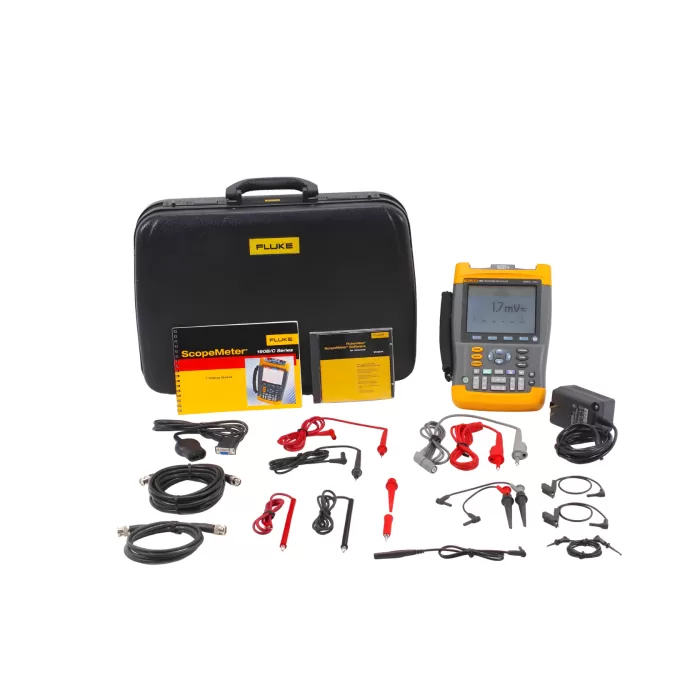
A Scopemeter is a portable oscilloscope designed for field work and industrial environments. It combines the functions of an oscilloscope, multimeter, and data logger in one handheld device. Scopemeters are ideal for troubleshooting machines, electrical panels, or anything outside the lab.
Scopemeters are built to survive tough conditions. They have rugged casings, battery power, and safety features for working near high voltages.
Main Features
- Portability: Small, lightweight, and battery-powered.
- Multimeter Functions: Measures voltage, current, resistance, and more.
- Data Logging: Stores readings over time for later analysis.
- Safety Ratings: Designed for industrial use, often rated CAT III or CAT IV.
Typical Applications
- Checking power quality in factories
- Fixing motors and industrial equipment
- Inspecting electrical panels in commercial buildings
Credit: www.cartoli.com
Key Differences Between Scopemeter And Oscilloscope
Understanding the differences will help you pick the right tool. Here’s a direct comparison:
| Feature | Oscilloscope | Scopemeter |
|---|---|---|
| Portability | Usually bench-top, not portable | Handheld, portable |
| Environment | Lab and classroom | Field and industrial |
| Measurement Functions | Oscilloscope only | Oscilloscope + Multimeter |
| Safety | Lower CAT ratings | High CAT ratings |
| Bandwidth | Up to several GHz | Usually below 200 MHz |
| Price | Can be expensive | Affordable for basic models |
| Screen Size | Large, detailed | Small, simple |
Advantages And Disadvantages
Oscilloscope
Advantages:
- High accuracy and bandwidth
- Detailed waveform analysis
- Good for complex signals
Disadvantages:
- Not portable
- Needs stable power supply
- Can be expensive
Scopemeter
Advantages:
- Portable and battery-powered
- Multimeter included
- Durable and safe for high-voltage work
Disadvantages:
- Lower bandwidth and accuracy
- Smaller screen
- Limited advanced analysis

Credit: www.itm.com
Choosing The Right Tool For Your Needs
Selecting between a scopemeter and an oscilloscope depends on your work. Here are some points to help you decide:
When To Choose An Oscilloscope
- You work in a lab or classroom
- You need high bandwidth for fast signals
- Detailed signal analysis is important
- You don’t need to move the device often
When To Choose A Scopemeter
- You work in the field or on-site
- You need quick tests on machines or panels
- Portability and safety are important
- Multimeter functions are useful
Practical Tips
- Think about your environment: If you often move between sites, a scopemeter is better.
- Check signal speed: Fast digital signals need an oscilloscope with high bandwidth.
- Budget wisely: Scopemeters are usually cheaper, but high-end oscilloscopes offer more features.
- Safety matters: Industrial environments require tools with high CAT ratings.
Real-world Example: Troubleshooting A Motor
Let’s look at a practical situation. Suppose you need to fix a motor in a factory. You have two choices:
- With a Scopemeter, you can quickly measure voltage, current, and check waveforms. It’s safe to use near high voltages and easy to carry.
- With an Oscilloscope, you get more detail, but the device is big and not meant for dirty or dangerous places. You might need extra gear for safety and mobility.
In most cases, the scopemeter is the smart choice for field repairs. But if you need deep analysis (like checking signal noise or timing issues), you might bring the motor back to the lab and use an oscilloscope.
Comparing Performance And Specifications
Performance is where these tools really differ. Here’s a look at common specs:
| Specification | Oscilloscope | Scopemeter |
|---|---|---|
| Bandwidth | 10 MHz – 2 GHz | 5 MHz – 200 MHz |
| Sample Rate | Up to 5 GS/s | Up to 1 GS/s |
| Channels | 2–8 | 2–4 |
| Battery Operation | No | Yes |
| Safety Category | CAT II or CAT III | CAT III or CAT IV |
Cost And Value
Oscilloscopes range from $300 for basic models to over $20,000 for advanced ones. Scopemeters typically cost $400–$3,000. High-end models add features like wireless connectivity or advanced data logging, but most field technicians use mid-range scopemeters.
It’s easy to overspend if you don’t check your needs carefully. Many beginners buy expensive oscilloscopes and never use half the features. For most industrial jobs, a mid-range scopemeter will do everything you need.

Credit: www.aaatesters.com
Safety Considerations
Safety is a big concern, especially in industrial environments. Scopemeters are designed for higher voltage work, with CAT IV ratings for electrical panels and machines. Oscilloscopes usually have lower safety ratings because they’re meant for lab use.
It’s important to check the safety category before using any tool. Using a lab oscilloscope in a factory can be dangerous, especially near high-voltage circuits.
Non-obvious Insights For Beginners
Many new users miss these points:
- Signal Integrity Issues: Portable scopemeters can pick up noise from nearby machines. Make sure to use short, shielded probes for better accuracy.
- Battery Life: Scopemeters run on batteries. If you plan to work all day, bring spare batteries or use models with long runtime.
- Data Storage: Digital oscilloscopes often have more storage and easier ways to export data for reports. If you need to share results, this matters.
Summary Comparison Table
Here’s a quick summary for easy reference:
| Aspect | Oscilloscope | Scopemeter |
|---|---|---|
| Portability | Bench-top | Handheld |
| Advanced Analysis | Yes | No |
| Multimeter | No | Yes |
| Safety | Lower | Higher |
| Typical Price | $300–$20,000 | $400–$3,000 |
Frequently Asked Questions
What Is The Main Difference Between A Scopemeter And An Oscilloscope?
The main difference is portability and environment. Scopemeters are portable and made for field work, while oscilloscopes are bench-top devices for labs and classrooms. Scopemeters also combine multimeter functions, which most oscilloscopes lack.
Can I Use A Scopemeter For High-frequency Signals?
You can use a scopemeter for signals up to about 200 MHz (some models even less). For very high-frequency signals, like RF or fast digital circuits, an oscilloscope with higher bandwidth is better.
Is A Scopemeter Safer For Industrial Work?
Yes. Scopemeters are built with rugged cases and high CAT safety ratings, often CAT IV. This means they are safer for testing machines and electrical panels in factories and commercial buildings.
Are Oscilloscopes More Accurate Than Scopemeters?
Generally, yes. Oscilloscopes offer higher accuracy, more channels, and better analysis features. But scopemeters are accurate enough for most field work and troubleshooting tasks.
How Do I Choose Between The Two?
Think about where you work (lab or field), what signals you need to measure (slow or fast), and if you need multimeter functions. For lab and detailed analysis, choose an oscilloscope. For field work and quick troubleshooting, a scopemeter is best. For more details, you can check out the Wikipedia Oscilloscope Page.
Both scopemeters and oscilloscopes are essential tools for anyone working with electronics. Each has strengths and weaknesses. The right choice depends on your work environment, signal types, and need for portability or advanced features. With the information above, you can confidently select the best tool for your job—and avoid common mistakes that cost time and money.