Every electrician, DIY enthusiast, or technician faces the same question when testing for voltage: Should you use a contact voltage tester or a non contact voltage tester? Both tools help you detect electrical voltage, but the way they work, their safety, and their best uses are quite different. Choosing the right tester can make your work faster, safer, and more reliable. If you’re unsure which tool fits your needs, this article will help you understand the differences, advantages, and practical details—so you can make a confident decision.
What Is A Voltage Tester?
A voltage tester is a tool that helps you check if there is electric voltage in a wire, outlet, or device. It’s one of the most basic safety tools in electrical work. Using a tester helps prevent shocks, damage, and mistakes. There are two main types: contact voltage testers and non contact voltage testers. Each type has its own way of working and is suited for different situations.
Contact Voltage Tester: How It Works
A contact voltage tester must touch the electrical part you want to test. This could be a wire, terminal, or outlet. When the tester’s probe makes contact, it detects the voltage directly. Some contact testers have two probes (like multimeters), while others have one probe and a ground wire.
Common Types Of Contact Testers
- Neon Testers: Simple testers with a neon bulb that lights up when voltage is present.
- Multimeters: Advanced devices that measure voltage, current, and resistance.
- Solenoid Testers: Used in professional settings to check voltage and continuity.
Key Features
- Direct measurement: Gives a precise reading of voltage.
- Requires contact: Must touch the wire or terminal, so you may need to strip insulation.
- Can measure AC and DC: Useful for many types of circuits.
Safety Points
Because contact testers touch live wires, you must be careful. Wear gloves and follow safety rules. If you’re not trained, the risk of shock is higher.
Non Contact Voltage Tester: How It Works
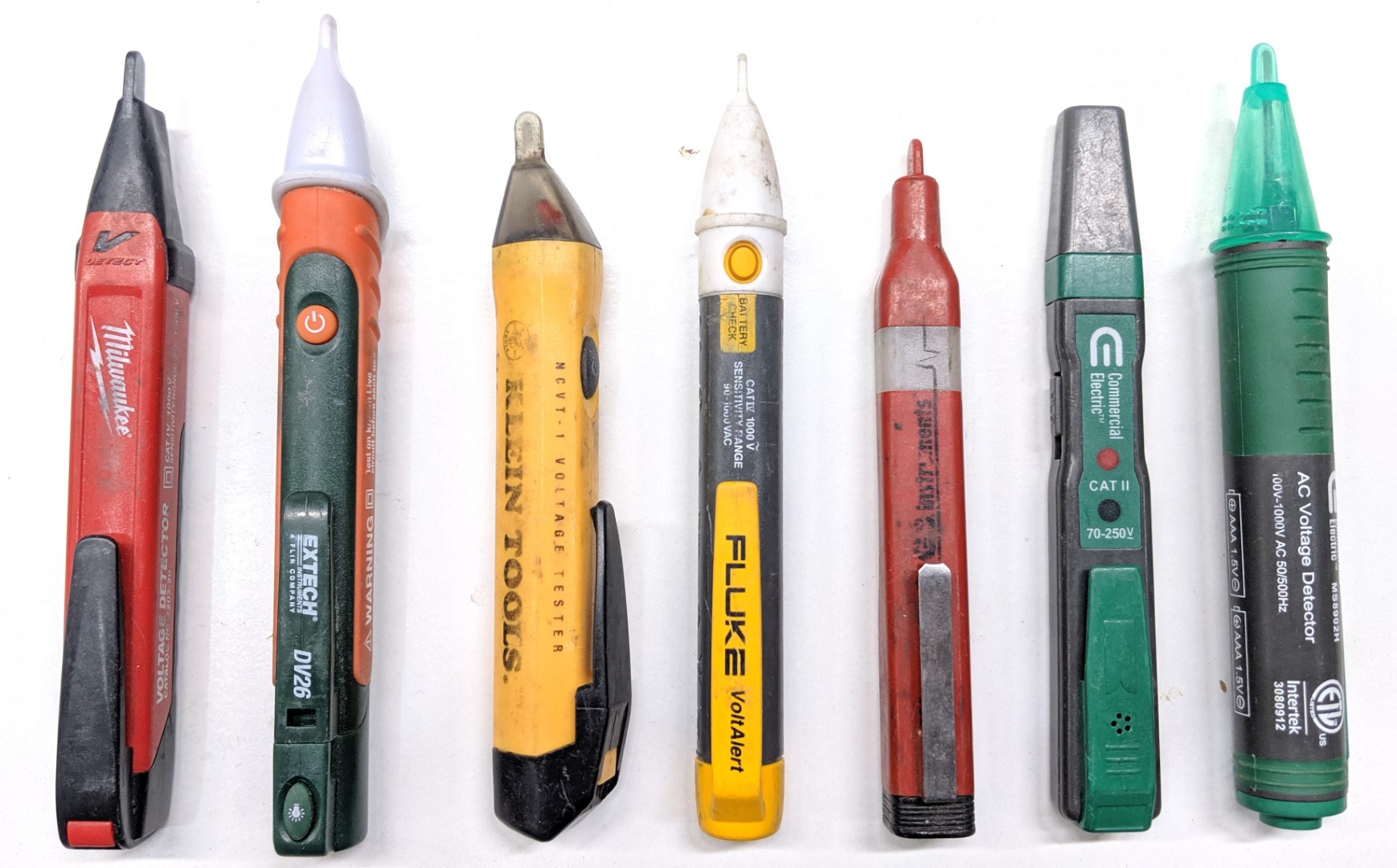
A non contact voltage tester (also called a voltage detector pen) doesn’t need to touch bare wires. You simply hold the tester near the wire or outlet, and it detects voltage through the insulation. Most non contact testers use a light or beep to signal voltage.
Key Features
- No direct contact: Works through plastic or insulation.
- Quick and easy: Just wave or hold near the wire.
- Safer: Lower risk of electric shock.
- Only detects AC voltage: Most non contact testers cannot detect DC voltage.
How Non Contact Testers Detect Voltage
These testers sense the electric field around AC wires. When the tester’s tip is close enough, the field triggers the light or sound. This makes them popular for quick checks and safety tests.
Comparing Contact Vs Non Contact Voltage Testers
When deciding which tester to use, consider the main differences. Here’s a simple comparison:
| Feature | Contact Tester | Non Contact Tester |
|---|---|---|
| Requires Touch | Yes | No |
| Measures AC & DC | Yes | Mostly AC only |
| Safety Level | Lower | Higher |
| Speed | Slower | Faster |
| Accuracy | High | Medium |
| Price Range | $10–$100+ | $10–$40 |
Practical Uses And Examples
Both testers are used in home and industry, but each shines in different situations.
Contact Voltage Tester
- Testing outlets: Find the exact voltage and check wiring.
- Diagnosing faults: Useful for finding breaks or shorts.
- Working with DC circuits: Needed for cars, solar panels, and electronics.
- Measuring exact values: For troubleshooting or repairs.
Non Contact Voltage Tester
- Checking live wires: Quickly see if a wire is energized.
- Safety checks: Before starting work, confirm power is off.
- Finding hidden wires: Detect voltage behind walls or panels.
- Everyday use: Great for quick tests, even for beginners.
Real Data: Accuracy And Reliability
Studies show that contact testers are more accurate. For example, a digital multimeter can measure voltage within 1% of true value. Non contact testers can sometimes show false positives if close to strong fields, or miss weak signals.
A survey of electricians found:
- 80% use contact testers for detailed troubleshooting.
- 90% use non contact testers for quick safety checks.
This shows that most professionals use both tools, depending on the job.
Credit: structuretech.com
Safety Comparison
Safety is a top concern. Here’s how the two testers compare in real situations:
| Scenario | Contact Tester Risk | Non Contact Tester Risk |
|---|---|---|
| Testing live wire | Shock if not careful | Very low risk |
| Working in wet area | High risk | Low risk |
| Testing behind insulation | Must strip insulation | No stripping needed |
| Checking multiple wires | Slow, must test each | Fast, just scan |
Choosing The Right Tester
Making the right choice depends on your needs, skills, and the job. Here are some tips:
- For beginners: Start with a non contact voltage tester. It’s safer and easier to use.
- For professionals: Keep both testers. Use non contact for quick checks, contact testers for detailed work.
- For DC circuits: You must use a contact tester.
- For troubleshooting: Contact testers help find exact problems.
- For safety checks: Non contact testers are best before you start any electrical work.
Common Mistakes To Avoid
- Relying only on non contact testers: They can miss dead wires or show false positives. Always double-check with a contact tester if in doubt.
- Testing with damaged tools: Broken testers may give wrong results. Inspect your tools before use.
- Ignoring calibration: Contact testers, especially multimeters, need regular calibration for accuracy.
Cost And Value
Prices for testers vary. Non contact voltage testers are usually cheaper, from $10 to $40. Contact testers range from $10 for simple neon testers to $100+ for digital multimeters. The extra cost for contact testers brings more features and accuracy.
| Type | Typical Price | Main Benefit |
|---|---|---|
| Non Contact Voltage Tester | $10–$40 | Safety and speed |
| Neon Contact Tester | $10–$20 | Basic voltage detection |
| Digital Multimeter | $30–$100+ | Precision and multi-use |
Non-obvious Insights
Many beginners miss these important points:
- Non contact testers can detect voltage in nearby wires. This means you may get a signal even when testing a wire that’s not directly connected. Always check for cross-interference, especially in crowded panels.
- Contact testers can be damaged by high voltage spikes. For example, testing a wire in a lightning-prone area without proper protection can ruin the tester. Use surge-protected models for industrial work.
Maintenance Tips
- Clean tester tips after each use.
- Store testers in dry, safe places.
- Replace batteries in non contact testers before they are fully drained.
- Check calibration every few months, especially for multimeters.
Professional Advice
Experienced electricians recommend using both types, but knowing their limits. For any detailed work, always confirm with a contact tester after using a non contact one. This double-checking helps avoid mistakes and boosts safety.

Credit: www.fluke.com
Where To Learn More
If you want to dig deeper into how voltage testers work or view detailed safety guides, visit the official Wikipedia page on Voltage Detectors.
Frequently Asked Questions
What’s The Main Difference Between Contact And Non Contact Voltage Testers?
Contact testers touch the wire or terminal to measure voltage directly, giving exact values. Non contact testers sense voltage from a distance, usually through insulation, and signal with light or sound.
Can A Non Contact Voltage Tester Detect Dc Voltage?
Most non contact voltage testers are made for AC voltage only. They cannot detect DC voltage, which is common in batteries and some electronics.
Are Contact Voltage Testers Safe To Use?
They are safe if you follow proper procedures. Always wear gloves, use insulated tools, and never touch live wires with bare hands. Beginners should start with non contact testers for safety.
How Do I Know If My Tester Is Accurate?
Check your tester against a known power source, like a wall outlet. For multimeters, regular calibration is needed. If your readings are off by more than 2%, consider replacing or calibrating your tester.
Do I Need Both Types Of Testers?
If you work with electricity often, yes. Non contact testers are best for fast safety checks, while contact testers are needed for detailed measurements and DC circuits. Using both gives you the best mix of safety and accuracy.
Choosing between a contact voltage tester and a non contact voltage tester is not just about price—it’s about safety, speed, and accuracy. By understanding how each tool works, their strengths and limits, and how professionals use them, you can make the right choice for every job. Always respect electricity, double-check your results, and keep your testers in good shape. With the right tools and knowledge, you’ll work safer and smarter every time.

Credit: www.nytimes.com