Power Meter Vs Spectrum Analyzer: Which Tool Fits Your Needs?
If you work with radio signals, telecommunications, or electronics, you have probably heard about power meters and spectrum analyzers. These instruments are both essential for measuring signals, but they serve different purposes. Choosing the right tool can save you time, improve accuracy, and help you solve technical problems faster. Many beginners think these devices are similar, but they are actually quite different in how they work and what they can show you. Let’s break down what each device does, their main differences, and how you can decide which is best for your application.
What Is A Power Meter?
A power meter is an instrument designed to measure the amount of power in an electrical or radio frequency (RF) signal. Think of it as a tool that tells you, “How strong is this signal?” It’s often used in telecommunications, wireless research, and electronics labs.
Key functions of a power meter:
- Measures the average power or peak power of a signal
- Works with continuous wave (CW) and pulsed signals
- Typically gives you a single reading: The total power level over a period of time
Power meters are often used for tasks like:
- Verifying the output power of a transmitter
- Adjusting amplifiers for correct power levels
- Testing antennas to see how much power they receive or transmit
Non-obvious insight: While power meters seem simple, accuracy depends on the type of sensor used (thermal, diode, or thermocouple), the frequency range, and the calibration process. Many entry-level users forget that using the wrong sensor can give misleading results.
What Is A Spectrum Analyzer?
A spectrum analyzer is more complex. It shows you how signal power is distributed over different frequencies. Instead of just one number, you see a graph: frequency on the horizontal axis and amplitude (power) on the vertical axis.
Main roles of a spectrum analyzer:
- Displays the frequency spectrum of a signal
- Identifies which frequencies are present and how strong they are
- Helps detect interference, harmonics, spurious signals, and signal distortion
Common uses include:
- Troubleshooting wireless networks
- Checking for unwanted signals in a transmitter
- Measuring the purity of a radio signal
- Analyzing audio, microwave, or even light frequencies
Non-obvious insight: Many beginners overlook the importance of resolution bandwidth (RBW) in a spectrum analyzer. A narrow RBW reveals more detail but takes longer to scan, while a wide RBW is faster but can hide weak signals.
How Do They Work?
Understanding the working principle helps in choosing the right tool.
Power Meter Operation
A power meter connects directly to the signal source using a special sensor. The sensor converts the RF energy into a readable value. There are two main sensor types:
- Thermal sensors: Measure heating caused by the signal; very accurate, but slower.
- Diode sensors: Faster, good for lower-level signals, but less accurate for complex waveforms.
The device then displays the power level, usually in watts or dBm (decibels referenced to 1 milliwatt).
Spectrum Analyzer Operation
A spectrum analyzer first receives the signal through its input port. It then sweeps across a range of frequencies, measuring power at each frequency point. The result is a graph that shows all the frequencies present and their power levels.
Some advanced spectrum analyzers can also demodulate signals, store data, and connect to computers for detailed analysis.
Key Differences Between Power Meter And Spectrum Analyzer
Many people ask, “Can’t I just use one device for everything?” The answer is no—each tool has strengths and weaknesses. Here are the most important differences:
| Feature | Power Meter | Spectrum Analyzer |
|---|---|---|
| Measurement Type | Total power only | Power vs. frequency |
| Display | Single number | Graph (spectrum) |
| Frequency Range | Sensor dependent | Instrument dependent |
| Accuracy | High for total power | Good for frequency distribution |
| Use Case | Output power, calibration | Troubleshooting, interference |
| Cost | Lower | Higher |
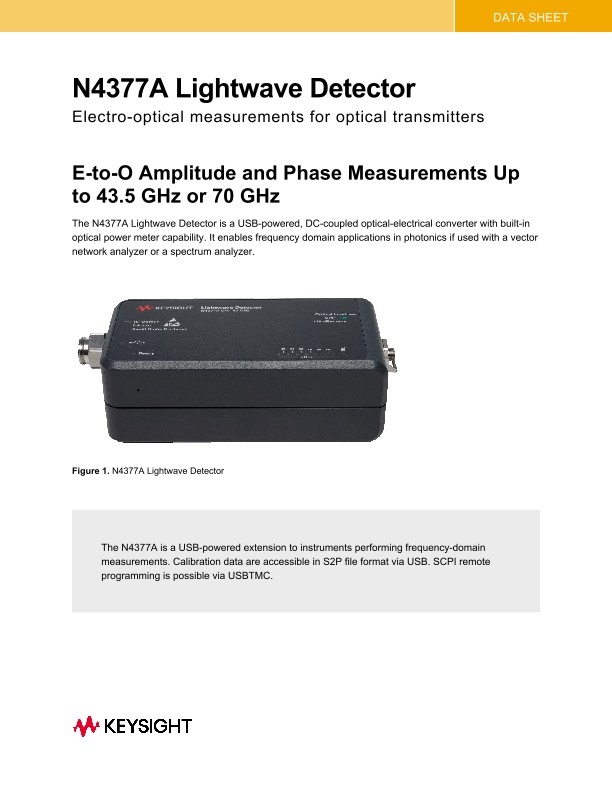
Credit: www.keysight.com
When To Use A Power Meter
A power meter is perfect when you only need to know how much total power is coming from a device. For example:
- Transmitter Testing: After building or repairing a radio transmitter, you must ensure it outputs the correct power level. Too little power means weak signals; too much can damage equipment or break legal limits.
- Antenna Measurements: Engineers use power meters to check antenna efficiency. They measure the power going in and the power coming out to see if the antenna is working well.
- Device Calibration: Many labs use power meters to calibrate other instruments, because of their high accuracy.
Common mistake: Some users try to check signal purity with a power meter. But a power meter cannot reveal if there are unwanted frequencies or interference present.
When To Use A Spectrum Analyzer
A spectrum analyzer is best when you want to see the frequencies inside your signal. It’s the go-to tool for:
- Finding Interference: If your wireless network is not working properly, a spectrum analyzer can show if another device is causing problems in the same frequency band.
- Checking Signal Quality: Radio transmitters sometimes send out extra frequencies (harmonics or spurious emissions). A spectrum analyzer helps you spot these unwanted signals.
- Measuring Bandwidth: You can quickly check how “wide” a signal is, which is important for meeting regulations and avoiding overlap with other users.
- Debugging Circuits: Engineers use these analyzers to troubleshoot oscillators, mixers, and filters.
Common mistake: Assuming a spectrum analyzer measures total power as accurately as a power meter. In fact, spectrum analyzers often underestimate total power, especially if the signal is wide or not continuous.
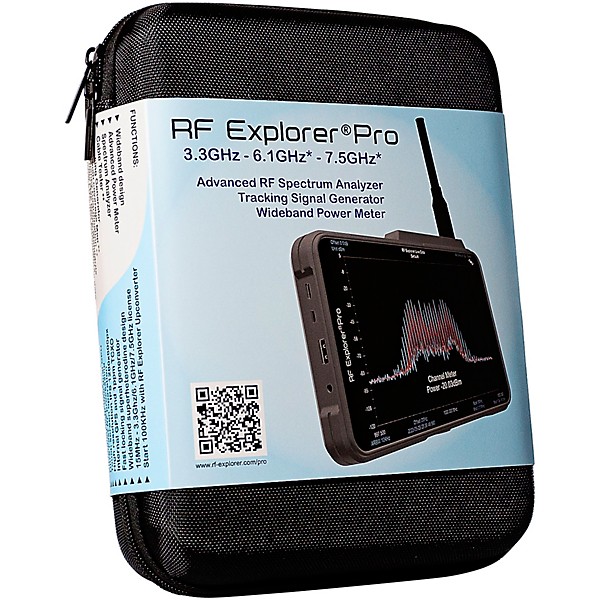
Credit: www.guitarcenter.com
Example Scenarios: Power Meter Vs Spectrum Analyzer
It’s easier to understand the differences with some real-life examples.
Scenario 1: Fm Radio Transmitter
Suppose you are building a 100-watt FM radio transmitter. You want to make sure it is transmitting at the correct power and not interfering with nearby frequencies.
- Use a power meter to measure the total output power and confirm it’s close to 100 watts.
- Use a spectrum analyzer to check for harmonics or unwanted signals that could affect other stations.
Scenario 2: Wi-fi Troubleshooting
You notice your Wi-Fi is slow and suspect interference.
- A power meter will not help because it cannot show which frequencies are being used.
- A spectrum analyzer will reveal if other devices are causing congestion or if there are illegal transmitters nearby.
Scenario 3: Antenna Testing
You are testing a new antenna design.
- Use a power meter to measure how much power the antenna transmits or receives.
- If you want to check if the antenna is resonating at the right frequencies, a spectrum analyzer will visualize its performance across the spectrum.
Cost And Practical Considerations
Power meters are generally less expensive. Basic models can cost from $500 to $2,000, depending on accuracy and frequency range. Spectrum analyzers are more advanced, with prices starting around $1,000 for handheld units and going up to $50,000 or more for lab-grade models.
Another factor is ease of use. Power meters are simple—connect, read, done. Spectrum analyzers require more setup: choosing the right frequency span, setting the resolution bandwidth, and interpreting the display. Beginners sometimes get confused by all the settings, so a bit of training is helpful.
Maintenance is also different. Power meters need regular calibration, especially if used for legal compliance. Spectrum analyzers have delicate internal mixers and filters, which may need expert servicing if damaged.
Technical Specifications To Compare
For users who want to make a smart purchase, here are the most important specs to consider:
| Specification | Power Meter | Spectrum Analyzer |
|---|---|---|
| Frequency Range | Sensor-based (few Hz to 110 GHz) | Instrument-based (9 kHz to 110 GHz) |
| Dynamic Range | Typically 90–100 dB | 70–100 dB |
| Sensitivity | Very high | Depends on settings |
| Measurement Speed | Fast for CW, slower for pulse | Adjustable; slower for high resolution |
| Display | Numeric | Graphical |
| Portability | High | Varies |
Choosing The Right Tool For Your Job
The choice depends on your specific needs:
- Choose a power meter if you only care about how much power is present, need high accuracy, and have a limited budget.
- Choose a spectrum analyzer if you need to see what frequencies are present, troubleshoot interference, or verify signal quality.
In some advanced labs, both tools are used together. For example, after measuring total output power with a power meter, engineers use a spectrum analyzer to check for unwanted signals.
Tip: If you are on a budget, some modern spectrum analyzers offer “total power” functions, but they are not as accurate as dedicated power meters.
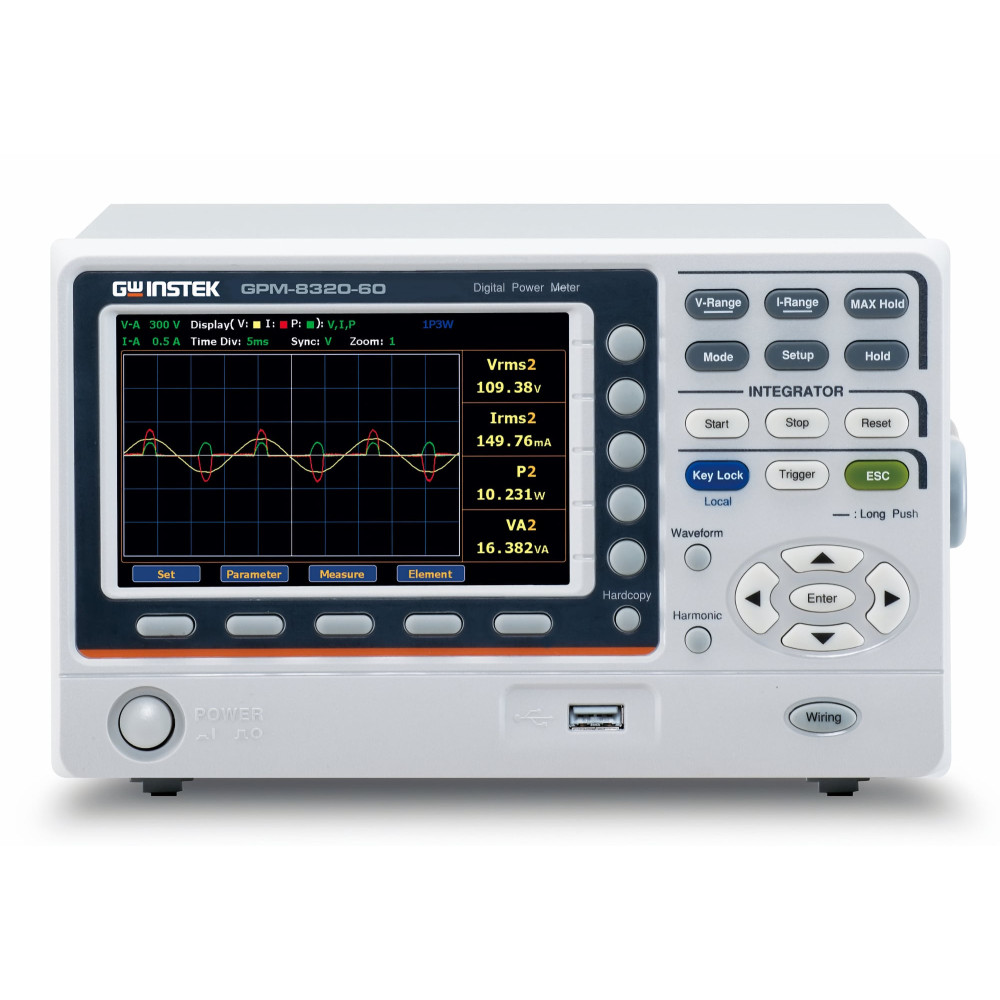
Credit: www.batterfly.com
Real-world Data: Performance Comparison
Let’s look at a simple test. Suppose you have a signal generator set to produce a 10 dBm (10 milliwatt) signal at 2. 4 GHz.
- A calibrated power meter should read almost exactly 10 dBm.
- A spectrum analyzer may read slightly lower (for example, 9.5 dBm) because of internal losses or bandwidth settings.
If you add a second signal at 2. 4001 GHz (close by), a power meter will show the total power (now maybe 13 dBm), but the spectrum analyzer will show both signals clearly separated.
This highlights their different strengths: accuracy vs detail.
Frequently Asked Questions
What Is The Main Purpose Of A Power Meter?
A power meter is used to measure the total power in a signal. It’s essential for checking if transmitters, amplifiers, or antennas are working at the correct power levels. It does not show which frequencies make up the signal.
Can A Spectrum Analyzer Replace A Power Meter?
Not always. While a spectrum analyzer can show power at specific frequencies, it’s not as accurate for measuring total power as a dedicated power meter. For legal or calibration work, a power meter is usually required.
Are There Portable Versions Of These Instruments?
Yes, many companies offer handheld power meters and portable spectrum analyzers. These are lighter and battery-powered, but may have limited accuracy or range compared to bench-top models.
What Should I Consider When Buying These Tools?
Focus on frequency range, accuracy, dynamic range, and ease of use. Also think about the environment (lab or field), calibration needs, and support. For more details, check resources like the Wikipedia page on spectrum analyzers.
Can I Use Both Tools Together?
Yes, many professionals use both. For example, after verifying a transmitter’s output power with a power meter, they use a spectrum analyzer to check for unwanted signals and ensure regulatory compliance.
In summary, both power meters and spectrum analyzers are vital for anyone working with RF or electronic signals. They answer different questions, and using the right one will make your job easier, faster, and more reliable. Understanding their roles will help you avoid common mistakes and get the most accurate measurements possible.